lion dancing

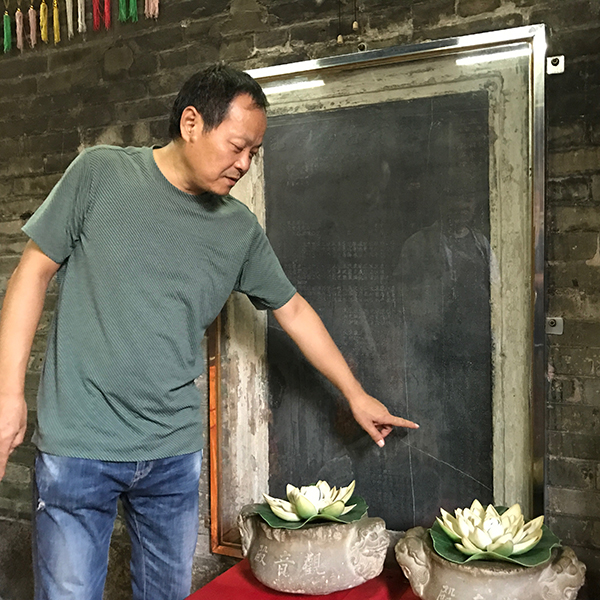
During the 1990s, when commercial housing first took off in Shenzhen, double lion gates were common. Today, they seem reminiscent of a time when the desire to muscle forward seemed the point of all this development. In retrospect, it is tempting to see in the commercial appropriation of the double lions intimations of the ways in which China Merchants is the successor the British East India Company: from chartered monopoly to state-owned enterprise in the South China Sea via US American containerization. Below, images of the EIC coat of arms and the door to the Shazui ancestral hall, circa 2010.

Coat_of_arms_of_the_East_India_Company

DSCF4769

first look at the belt and road

Its difficult when looking at a map of the proposed Belt and Road and not associate the maritime road with British colonialism, albeit in reverse and more than a century after the fact. But that’s what’s so distressing. When the British parliament dissolved the East India Company (EIC), it did not dismantle the systems of unjust and unjustifiable extraction that EIC had put in place over roughly four centuries of occupation, exploitation, and forced participation in the system. Instead, independence movements saw the rise of local elites who were determined to benefit from the system, justifying their profits with respect to local values and structures of oppression. In other words, it was never just the Brits, but also the Brits and their local running dogs (to use Mao Zedong’s felicitous phrase) and even after Independence, the dogs kept yapping, securing military support from the US and elsewhere (for the distressing tale of the fate of the Third World as a revolutionary ideal, check out The Darker Nations by Vijay Prashad).

The problem, of course, was that the profitability of the British system depended on opium; where would surplus profits (to fund industrialization, for example) come from without monopoly, forced labor, and addiction? Certainly, once India regained control of the Bihar plantations and China retook its ports, both countries were faced with the problem of “surpassing England and catching up with the United States” in the absence of captive markets and a drug monopoly to finance their industrial revolutions. And this may be why Europeans and US Americans fear the Belt and Road: if you’re not a running dog with Chinese characteristics, just what are your options in the new world dis/order (and yes, I’m looking at you, midwestern farmer)?

china-silk-road

Map from an early analysis of Belt and Road, eurasia review.

Continue reading

a special zone avant la lettre: old shajing

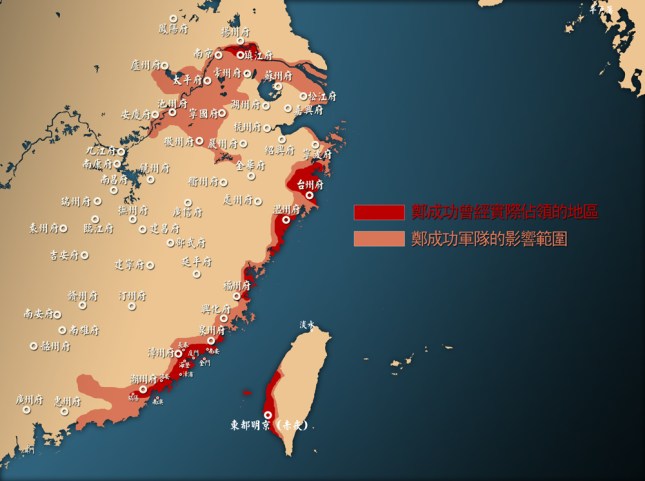
If you’ve had the privilege of walking Old Shajing with anthropologist Cheng Jian (程建), you know that the Chens settled the area during the Southern Song (960-1127). You also know that the Chen family network stretched throughout Dongguan and Xin’an Counties and that when most of Xin’an was abandoned during the Qing Dynasty relocation order (迁海令1644—1661), significant sections of Shajing remained settled despite the fact that it fell squarely within an area controlled and/or influenced by Koxinga (an honorific from 國姓爺; pinyin: Guóxìngyé; Pe̍h-ōe-jī: Kok-sèng-iâ, his name was 郑成功). Clan members also received special dispensation that allowed them to travel into the coastal no-man’s land to harvest sea salt. That’s right: administrative borders, cross border exceptions, and concomitant territorial reorganization have a deep history in the area.

Koxinga_territory

Map of coastal areas either occupied by (red) or under the influence of (orange) Koxinga.

Continue reading

sex in the chasm

In a series of responses to E.J. Eitel’s Europe in China: The History of Hongkong from the Beginning to the Year 1882, I read within and against the emergence of the Shenzhen Special Economic Zone. I am not so much interested in providing a comprehensive history of the SEZ  as I am in tracking Shen Kong, a form post-Mao post-coloniality that is one of the roots of the Belt and Road initiative. As I read, I note associations that link contemporary Shenzhen and colonial Hong Kong. In those flashes of awareness, the norms and forms of contemporary global restructuring make uncanny and distressing sense. Page citations are noted in parentheses and refer to the 1895 edition of Europe in China.

Sex in the Chasm Continue reading

migrations: home and elsewhere

Check out what happens when Handshake 302 curates an exhibition that brings community together through history and art. A brief introduction to the “Migrations: Home and Elsewhere” exhibition that was up at the Longheu P+V Gallery from Dec. 22, 2017 through Feb. 4, 2018. More videos on our FB page; written documentation of our practice here.

coming home to roost

IMG_3005

all the tea in shenzhen…

 In Shenzhen, the tea industry is worth over 1.5 billion USD and is deeply embedded in the local culture. Here tea can be thought of like how wine or fine whiskey is thought of in western countries. The whole process – from purchasing the leaves, to brewing, to drinking – is meant to be savored. Check out Shenzhen Book of Changes:

were we ever here?

I’ve been thinking about memory and how narrative turns what we think happened into something we can use to change what we think might happen, which in turn had me remembering bits and pieces of Four Quartets, TS Eliot’s wonderful meditation on time and its meaning, time as a fundamental yearning to be complete despite transience, impermanence, this movement, this quickening which is also movement toward death:

Words move, music moves

Only in time; but that which is only living

Can only die.

Continue reading

on the shenzhen farm…

As in the United States, the environmental movement in Shenzhen is a call to a different way of living. Big Tree Farm supports this call to integrate vanguard science and Chinese ideas about food and identity. Come along with Shenzhen Book of Changes for a visit to the Big Tree farm:

demolition anxieties…

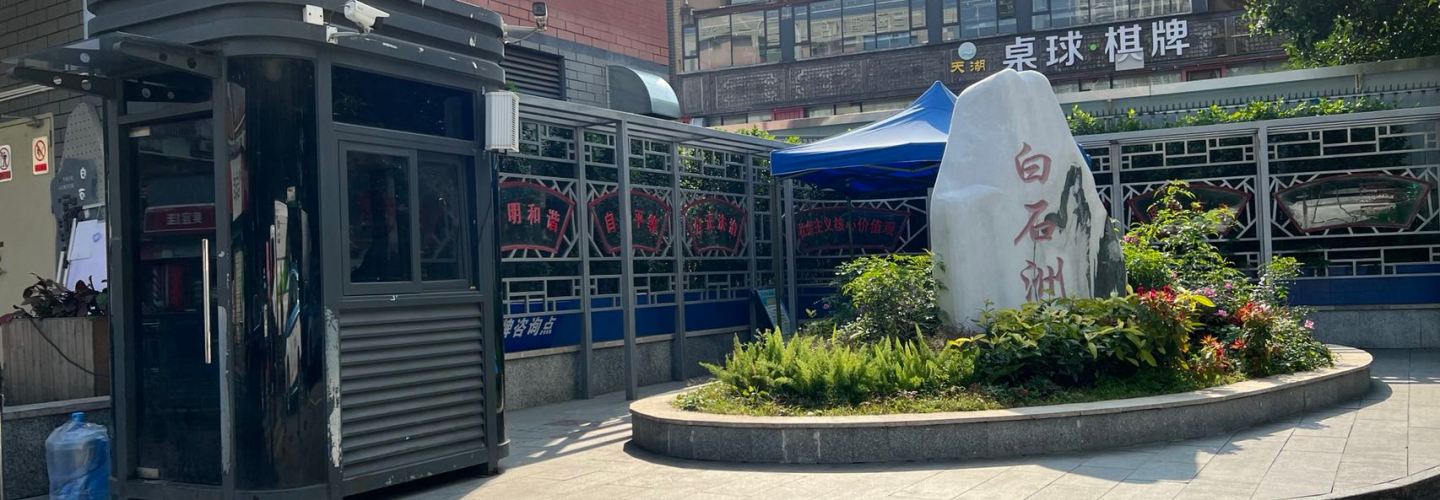
Today, I walked the village named Baishizhou, which is located south of Shennan Road and is not scheduled for demolition. This other, lesser known Baishizhou is tucked away behind Window of the World, middling housing estates, and the KK Banna Mall. Unlike the Baishizhou that is scheduled for demolition, this other, less expensive Baishizhou does not hum and pop, does not buzz with entrepreneurialism and the rush of young office workers, but rather transports us back to Shenzhen 2.0; at the turn of the millennium, most Shenzhen neighborhoods were like this: straight-forwardly residential in the middle with an outer ring of functional shops and fast food, and hardware stores that spilled into the street because the sidewalk had not yet been laid down. Continue reading