shenzhen wetlands

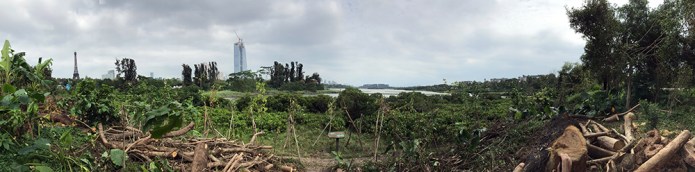
You may not be aware that there is a wetlands conservation area in downtown Shenzhen. Tucked away between Window of the World, Baishizhou, and the Binhai Expressway, the wetlands boasts the last bit of original coastline of Shenzhen Bay. Indeed, once upon a time, it was a guarded border. The city uses this small piece of land as a living classroom, inviting limited numbers of people in to learn about conservation and local ecology.

This slideshow requires JavaScript.

Continue reading

baishizhou: the city’s history through seven micro-environments

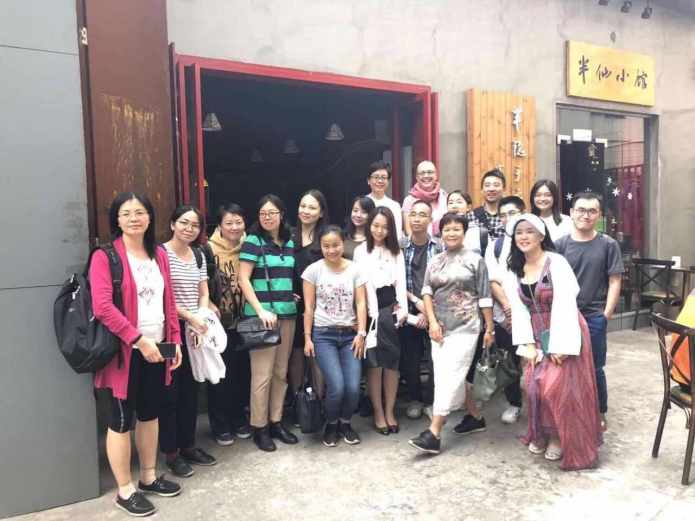
On October 14, 2018, Handshake 302 welcome a group of Chevening scholars to Baishizhou. We brought the Chevening scholars to seven of Baishizhou’s micro-environments. Each micro-environment not only illustrates the urban life of Shenzhen, but also represents an important moment in the city’s history. Continue reading

the photography of he huangyou

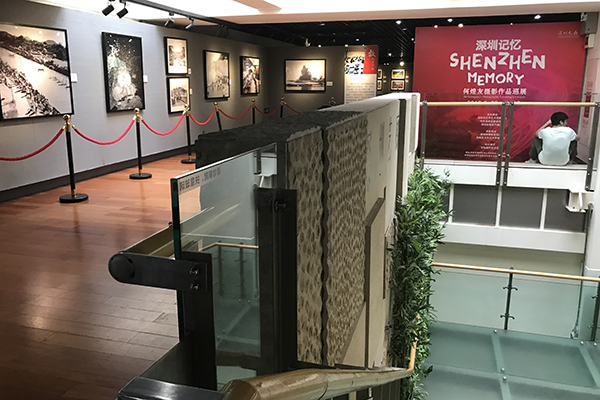
A current exhibition of the photography of He Huangyou (何煌友), Shenzhen Memory is something of a historical mashup. It includes many of He’s most-well known photographs, which have shaped our visual imagination of the Shenzhen before and at the cusp of reform. These photographs are well worth seeing in person. However, the exhibition neither contextualizes nor places the photographs in chronological order, leaving interpretation up to the viewer. This form of representation may in fact conform to what we know of how memory works–it is highly personal and unreliable–but it makes it difficult to place the images into larger histories. It feels as if we are suddenly viewing the illustrated introduction to the “fishing village to world city” narrative without bothering to mention that the exhibition includes pictures from at least three different coastlines and two different epicenters of reform (Shenzhen and Shekou).

Continue reading

longling: where the children are…

The second station on the Chinese side of the Kowloon-Canton Railway, Buji was an important Hakka market town that during the early years of reform was a center of manufacturing. Today, Buji is a street office (办事处) with an estimated population of over one million. Most Buji families live in an urban village and their children attend minban (民办) schools. A minban school is owned and operated by private companies, filling educational needs that are not met by the public school system. Elite minbans tend to be international and position graduates for university abroad. However, the most common type of minban school in Shenzhen is the urban village minban, which has been set up to educate children who are ineligible for a public education. The most common reason for being ineligible for a public education are hukou related; often families are not long-term residents of the city, which means their children are only eligible for public education back home, or the child was born outside the family planning policy and the parents cannot afford the fines to send the child to public school.

Continue reading

what water did you drink?

On Tuesday, September 11, 2018, Handshake 302 sent out a call for fifteen participants to join the first chapter of “Urban Flesh and Bones: Rediscovering Shenzhen’s Cultural Geography” series of walking tours. This chapter is called “What water did you drink?” and looked at how infrastructural relationships–pipes and container ports, for example–have replaced more immediate relationships–wells and small docks–in the local cultural geography. Kind of esoteric topic for a walking tour, but in less than an hour, the event was already completely booked! Who knew Shenzhen residents were so interested in esoteric takes on the city’s cultural geography? By Thursday afternoon, however, we were worried, would super typhoon Mangkhut land on Saturday, forcing us to cancel the event? However, the weather gods were with us, and Saturday morning was bright sun and blue skies—a perfect day for exploring the Shenzhen’s cultural history from the perspective of “water.” Continue reading

shekou car free festival

So it’s that time of year when Shekou celebrates its still walkable neighborhoods with a car free Saturday. In addition to promoting environmental awareness, the festival includes games and food and a parade. This year, Handshake 302 worked with Shekou Primary School #1’s after school art club to design and make large puppets to carry from Seaworld to the Sanyo / E-cool area and back again. Below are pictures from the three-days of happiness that was making giant puppets with 8 and 9 year olds.

This slideshow requires JavaScript.

坑梓: what to do with all this history?

Outer district urban villages generally comprise four sections–the historic village settlement, the new village settlement, a commercial center, and an industrial park. As in the inner districts, in the outer districts demolition and forced evictions have transformed new villages even as mandated deindustrialization and participation in the creative economy have reshaped industrial parks. However, the question of what to do with the historic settlements is much more acute in the outer districts, especially in Kengzi (坑梓) and Pingshan (坪山), where large Hakka compounds have been condemned, but not scheduled for preservation. Up until five or six years ago, the compounds were still occupied and collectives managed them as rental properties. Today, however, although sections of the compounds have been opportunistically repurposed, nevertheless, the overall sense is increasingly one of ruin, as if we were waiting for the compounds to collapse and solve the problem of surplus history for us. Impressions from two of the Huang family compounds in Kengzi, below.

This slideshow requires JavaScript.
 

the left behind

Here’s the thing about the retreat of manufacturing from the townships and villages of the Pearl River Delta; these areas have urbanized, migrants have settled in and are raising families, but as the low-end jobs and shops that once sustained local and migrant communities follow the factories elsewhere, these neighborhoods are withering. Consider, for example, the older section of Dongguan–莞城, which only twenty years ago was a vibrant community and today is an abandoned reminder of the area’s complicated history with Ming pirates and British opium, its deep relationships with the late Qing Chinese diaspora, and the Pearl River Delta’s urban village origins. Old Dongguan has become a focus of concern for urban planners and concerned citizens: how to revitalize an “old street” that is no longer viable, but sits on prime real estate, or more precisely, inquiring minds want to know: to raze or not to raze historic areas and landmark buildings? Continue reading

only connect

The two-day event was called “Only Connect.” We emphasized the infrastructure that makes neighborhoods out of houses and buildings. Yes, every building had an electrical light, water tubes, sewage tubes and access to the main road. And yes It’s also true, every time that Handshake 302 holds an event at the P+V Gallery, the kids rock our world. Take a look at the smiles that creativity brings! More about Handshake 302 here and here.

This slideshow requires JavaScript.
 

lion dancing

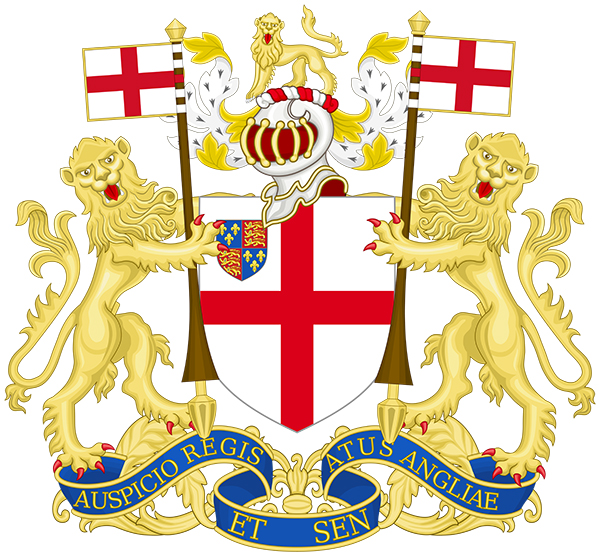
During the 1990s, when commercial housing first took off in Shenzhen, double lion gates were common. Today, they seem reminiscent of a time when the desire to muscle forward seemed the point of all this development. In retrospect, it is tempting to see in the commercial appropriation of the double lions intimations of the ways in which China Merchants is the successor the British East India Company: from chartered monopoly to state-owned enterprise in the South China Sea via US American containerization. Below, images of the EIC coat of arms and the door to the Shazui ancestral hall, circa 2010.

Coat_of_arms_of_the_East_India_Company

DSCF4769