the “village” thing

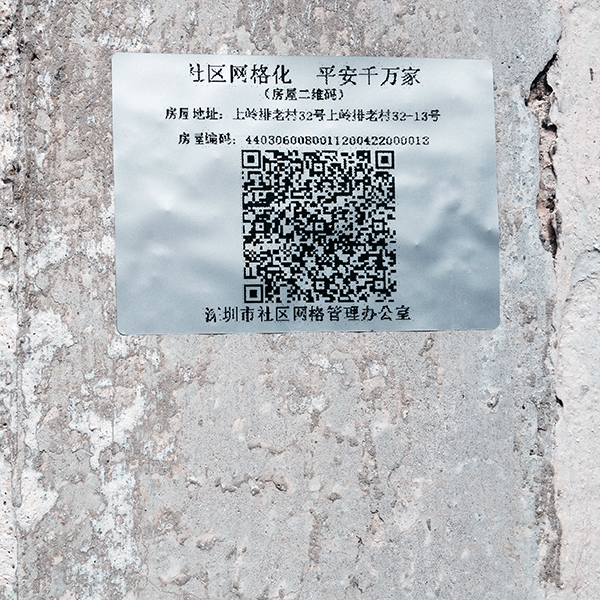
This past week, I toured Shangling Old Village (上岭村) in Dalang. Decaying villages like Shangling contextualize the “what came after” success story that is SHENZHEN! And yet. This contextualization depends upon one, standardized (and quite frankly boring) narrative of rags to riches, sudden wealth, boom boom boom, etcetera etcetera and so forth.  Continue reading

this also happened…

A strange week that hasn’t coalesced into a statement so much as it has become fragments in search of glue; thinking as pastiche, and underneath it all a throbbing fear. Continue reading

handshake 302: this is what we do

A short video about “Of a Piece”, the project that Handshake 302 brought to the Shenzhen Art Museum, June 1-19, 2015.

深二:growing pains

Last weekend I met two young men, 18 and 19 years old, who are filming interviews with and about “Shenzhen’s Second Generation”. We talked about the actual definition of a “Shen 2 (深二),” which I have tended to think of in terms of immigrant generations. In contrast, they were specifying the term also with respect to decades: they consider the 80s and 90s generations to be members of Shen 2, while 70s kids and millennials are not. They also noted that Shekou’s Second Generation (蛇二) is even more precisely defined; these are the children of utopian Shekou, who lived in the old China Merchants housing developments, and attended the original Yucai School.

So what defines Shen 2 kids? Continue reading

stuck.

I have been applying for a grant. The US based foundation asks for a CD-rom of work samples, while it is still illegal in China to send CD-roms overseas (domestic mailing no problem.) Here’s the thing. It is perfectly possible to send mega-files from China anywhere in the world, even without a VPN. It’s also possible for foundations to store information on clouds and have a protocol for deleting extra information after a round of submissions. But instead of a simple information transfer, I’m stuck between two outdated systems for archiving (or not) information. Continue reading

week in review: Sunday October 11 through Saturday October 17

I’ve decided to try posting weekly reviews; I’ve been busy, but missed the blog. I’m hoping that by scheduling a week in review post, I’ll reach a happy medium. Today, I’m publishing a short review, after today, I will be publishing the week in review on Friday mornings, Beijing standard time, which is conveniently the standard time for the whole country!

Bureaucratic hoop jumping:

Last week to extend my visa, I went to the police department. It is necessary to fill out the forms online, but those forms can only be accessed in the building. However, before I was permitted to enter my data, I had to show one of the officers that my documents were complete. They weren’t, so I went upstairs to make a photocopy. After I filled in the form, online, I took a picture of the screen so that an officer could print out my application by reading the registration number. This is necessary because it is impossible to enter more than one letter (A B C) in the line. Then I got my number and waited. Everything was okay, except that I had to bring my husband to the police department to fill our a guarantee letter that day, other wise I would have to do it again. We persevered and documents were submitted and accepted. Continue reading

handshake 302 at berkeley!

Happy happy to have been part of the wonderful exhibit, Art+Village+City. Margaret Crawford and Winnie Wong curated the exhibition. Featuring the work of the Art+Village+City Research Studio, SHIMURAbros (as researchers at Studio Olafur Eliasson), Sascha Pohle, Jing Wen, and José Figueroa. The exhibition is on in Berkeley and Shanghai; those in either area, check out the challenges and opportunities that urban(izing) villages in Hong Kong, Shenzhen, and Guangzhou present.

Main Exhibition:
Wurster Gallery, Wurster Hall, UC Berkeley
October 13-November 14
Tuesdays-Saturdays 12-6pm

Satellite Venue:
Shanghai West Bund Biennale/Urban Art Space Season
West Bund Cultural Center, Shanghai
October 1-December 31, 2015

my white wall compulsions PDF!

We are here, we are here! The hardworking team at Handshake 302 has finished another PDF, this time introducing the project, My White Wall Compulsions. AND it’s bi-lingual. How cool is that?

《墙迫症/My White Wall Compulsions》

shatou renovations. again

So, as the Xiasha Kingkey project finishes up, another urban renovation project begins in neighboring Shangsha. Below, impressions of the Xiasha plaza, the Kingkey complex along Binhe Road, and the state of unmaking in Shangsha.

This slideshow requires JavaScript.

the shenzhen anti-terrorism campaign

Although China has been strengthening its anti-terrorism campaign over the past year or so, the Shenzhen anti-terrorism campaign is recent. Ideologically, the campaign promotes a Neo-Confucian message of family first–a value that terrorists are purported not to share. Unfortunately, terrorists are more or less consistently represented as Muslim. In fact, the stereotypes used in the campaign are familiar from conversations I’ve had with friends over the past decade, when I have been told that Islam is not a religion but a terrorist organization. More alarmingly, as in the United States, Chinese anti-terrorism feeds anti Muslim sentiments and justifies increasing militarization of public life. Sigh.

Of note: the May 22, 2014 attack (in which men in ski masks jumped out of two vans to attack people in Urumqi) has become the stereotype of terrorist attack in the campaign. The following Inside Story by Aljazeera attempts to understand the increasingly violent situation.