和谐深圳:building a harmonious society II

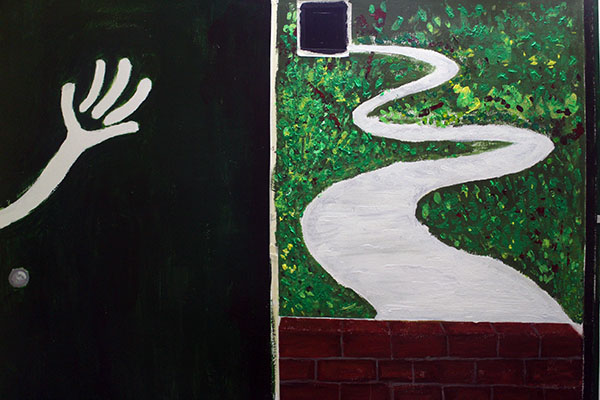
To continue the 10 year anniversary celebration of Shenzhen Noted, I’m reposting “和谐深圳: building a harmonious society” an early post on what might be called “disorderly” Shenzhen. The accompanying pictures illustrate the underlying fears that have permeated Shenzhen’s development.

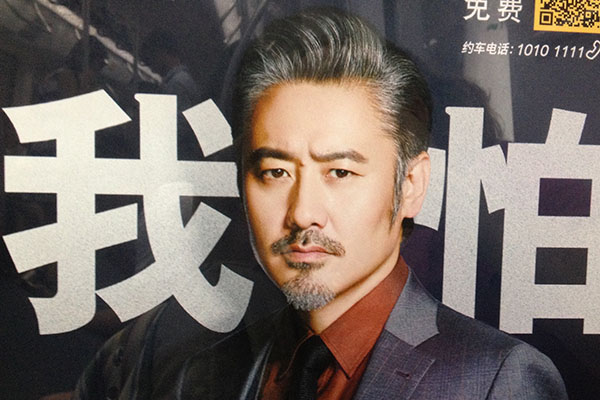
On a distressing note, 10 years after I first documented signs of anxiety throughout the emergent city, these generalized fears have left the unofficial sphere and have entered the official sphere of anti-terrorism campaigns and fear-based advertising for private taxi companies. Unfortunately, it seems that the anxiety produced by in-your-face inequality of ten years ago has been displaced onto the bodies of Chinese Muslims, who (in much of the propaganda) are represented as “generalized” Middle Eastern Muslims.

The anti-terrorism campaign warns the Chinese public that terrorists have no human feelings and ruthlessly destroy family life, which is described in Confucian rhetoric–a not so subtle reminder that the “Chinese” nation is Han. This impression is further heightened in an anime anti-terrorist campaign that explicitly associates terrorism with Islam and China’s Muslim province, Xinjiang. The Shenzhou taxi campaign plays upon fears of techy house invasions, showing film stars claiming that, “I fear” how technology allows strangers to know where one lives. The tie-in with the anti-terrorist campaign is familial well-being: because they have your address, these strangers can prey upon your children or wife. The Shenzhen add campaign also extends the anxiety of ten years ago: gates are no longer enough to keep predators away.

Mary Ann O'Donnell's avatarShenzhen Noted

Yesterday, I was walking in one of the new sections of Houhai. On my left, behind the walls of an elite gated community, children frolicked in a recently completed swimming pool. On my right, migrant workers hung out at a corner kiosk of a construction site shantytown. The juxtaposition of these two spaces, common throughout Shenzhen, symbolizes the class structure that has enabled the construction of the city. On the one hand, urban residents (whether from other cities or long term Shenzhen residents) occupy the new buildings and spaces—upscale housing, high-rise offices, and shopping malls bulging with designer goods. On the other hand, rural migrants build these spaces, inhabiting temporary structures that vanish at the end of a project. Indeed, it is not uncommon to see children playing or women cooking in front of a row of construction site shanties. Unlike the enclosed lives of the gated community, shantytown lives…

View original post 430 more words

thermometer: opening impressions

The ThermoMatter (温度) opening was well attended, despite the distances–geographic, class, and interest–that separate the Shenzhen Art Museum from the rest of Shenzhen. There was a general conversation with participating artists after the opening ceremony and there seemed to be a consensus that this show was “local”; all artists had some connection to the city. There were 2nd generation participants, long-term immigrants, and projects that were explicitly about the city itself. In the Chinese 温度 can refer  to “temperature” as well as to actual and emotional warmth. All agreed that these meanings were fully on display.

General impressions from the opening:

This slideshow requires JavaScript.

Snippet from “of a piece”, hands:

handshake 302 at the shenzhen art museum!

3:00 this afternoon at the Shenzhen AT Museum, Handshake 302 presents “Of a Piece”, an interactive project that includes sewing, conversation, and relief from the summer heat. We’re also organizing pamphleteers (see above) to generate an audience for the project in the neighboring park. That’s right, SZAM is located in the East Lake Park/ Reservoir at the very edge of what (in 1982) was the eastern edge of the SEZ.

Please join us at S(ha)ZAM! The museum and its location (East Lake Park/ Resevoir) are “Old Shenzhen” from its 1980s’ incarnation. There’s even a nearby dim sum restaurant that as old as the SEZ just outside the park’s main gate. Below, a video snippet from the Dongmen Fabric emporium:

“scold” arrives in shenzhen

Shenzhen’s most recent Party Secretary, Ma Xingrui (马兴瑞) infamously told Shenzhen and its boosters to get over the jubilation for its recent rise in international prestige. On the one hand, there is something snarky and mean spirited about Party Secretary Ma’s scolding. After all, Shenzhen’s raison d’etre has been to make a place for itself in the emergent world order and for most of its existence, Shenzhen has been ignored by Beijing-centric views of China (both in and outside China). On the other had, many agree with his assessment that Shenzhen is not yet a first rank world city.

The new Party Secretary’s surname—Ma—is a homophone with the character for “scold / tell off” (骂)”. In that spirit, the OCT Lifestyle website put out an article in which Shenzhen clearly comes in second behind world class cities such as Beijing, Hong Kong, Taiwan, Japan, and Singapore. With Beijing the comparison is about the internet. Hong Kong stands for level of globalization, Taiwan a sense of well-being, Japan for professionalism, and Singapore for the ability to attract and keep talent. In other words, Shenzhen wants to be best at all of that, which may in fact be its charm—composite rather than first rank across categories. Continue reading

dragon boat festival preparations

This past week I have been in Shuiwei learning to wrap zongzi (粽子) for the upcoming Dragon Boat Festival. What is apparent is not simply the re-invention of tradition, but also the unpaid work that women do to create that solidarity. The zongzi making takes place over 10 days—two prep days and then 8 days of wrapping and boiling. The hours are long: 6:30 a.m. to midnight or later. Of note: Continue reading

China’s Troubling Robot Revolution

More about why Shenzhen–and the forms of creativity that are being developed here–has far, far reaching effects. Full article over at the NYTimes, snippet, below.

Ethics Asylum's avatarEthics Asylum

Image Credit: Kristian Hammerstad

OVER the last decade, China has become, in the eyes of much of the world, a job-eating monster, consuming entire industries with its seemingly limitless supply of low-wage workers. But the reality is that China is now shifting its appetite to robots, a transition that will have significant consequences for China’s economy — and the world’s.

In 2014, Chinese factories accounted for about a quarter of the global ranks of industrial robots — a 54 percent increase over 2013. According to the International Federation of Robotics, it will have more installed manufacturing robots than any other country by 2017.

Midea, a leading manufacturer of home appliances in the heavily industrialized province of Guangdong, plans to replace 6,000 workers in its residential air-conditioning division, about a fifth of the work force, with automation by the end of the year. Foxconn, which makes consumer electronics for Apple and other…

View original post 498 more words

寻找深圳真相/searching for the real shenzhen

Recently, “Handshake with the Future” curator, Liu He talked with Shenzhen Middle School Teacher Zhong about the current exhibition at Handshake 302. Here’s what she said:

Q: 让学生们参与《与未来握手》的初衷是什么?/ What did you hope to see happen when by having your students participate in “Handshake with the Future”?

A: 我认为城中村是城市发展中一个很特别的存在,希望学生能通过302项目,有一个走入城中村契机,对自己生活的城市有更进一步的了解和加深认识。/ I think that urban villages are a special aspect of urban development. I hoped that by way of this 302 project, students would have an opportunity to go into an urban village, becoming more aware of the city they live in and developing a deeper understanding about it. Continue reading

Jack Ma: World War III is coming, but in a good way

Thinking about hi-tech and Shenzhen? Well, actually Alibaba isn’t based in Shenzhen, but that said, the idea of setting up platforms to enable exchange and small-scale business is a very Shenzhen strategy of development. Indeed, according to David Li, this strategy distinguishes the Huaqiangbei model of shanzhai maker-ship from the Silicon valley model of R&D. Full article, here.

Ethics Asylum's avatarEthics Asylum

Image Credit: CNBC

World War III is coming, but it will be a good thing, according to one of Asia’s richest men.

Jack Ma, founder and executive chairman of Alibaba Group (NYSE: BABA), said Tuesday that the Internet and its various platforms will usher in a wave of global conflict. It will not, however, pit countries against each other, but instead will see the likes of China and the U.S. teaming up to defeat societal ills.

“The third world war is going to happen, and this war is not between nations,” Ma said during a speech hosted by the Economic Club of New York. “In this war we work together against the disease, the poverty, the climate change-and I believe this is our future.”

Ma said working to incite such a conflict is his life’s passion, and Alibaba’s mission of globalizing e-commerce can help.

“It’s not about the…

View original post 360 more words

寻找前途/the road not taken

Recently, “Handshake with the Future” curator, Liu He talked with Xin’an Polytechnic professor He about the current exhibition at Handshake 302. Here’s what she said:

Q: 让学生们参与《与未来握手》的初衷是什么?/What did you hope to see happen when by having your students participate in “Handshake with the Future”? Continue reading

dalang experimental school: manhole cover graffiti art

The Dalang Experimental School comprises elementary and middle schools for the children of migrant workers in Dalang New District. On June 8, they held a festival for their 30+ clubs, which range from art to karate and debate. The point, of course, is simple: at school in their uniforms painting, dancing, and helping each other, they look like every other young Shenzhener because they ARE just like the Shenzhen Middle School students we are working with at the Handshake for the Future exhibition. Well, except for access to high school, which is regulated through the upcoming High School Entrance exam (for a point by point on why in Shenzhen this exam is more important than the college entrance exam).

Two weekends ago, Handshake 302 collaborated with Dalang New District on the Graffiti Festival (the amazing stair mural at the Youth Dream Center). We also worked with the Experimental School to bring murals and graffiti into the schoolyard. Young Mr. Ye, a second generation Shenzhener via Gangxia, organized the event through the art club. Students started on designs early. For the festival, the club asked groups of students to submit a design proposal, 17 groups from both the elementary and middle schools made the cut.

Impressions of the festival, below, and yes, many, many pictures of kids being great:

This slideshow requires JavaScript.