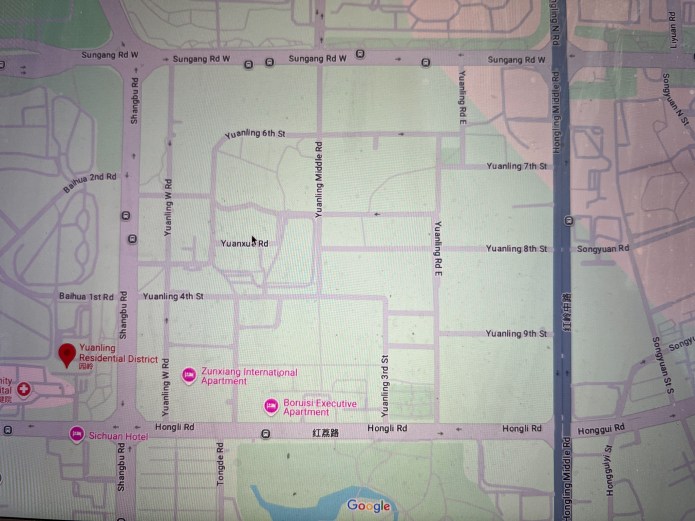
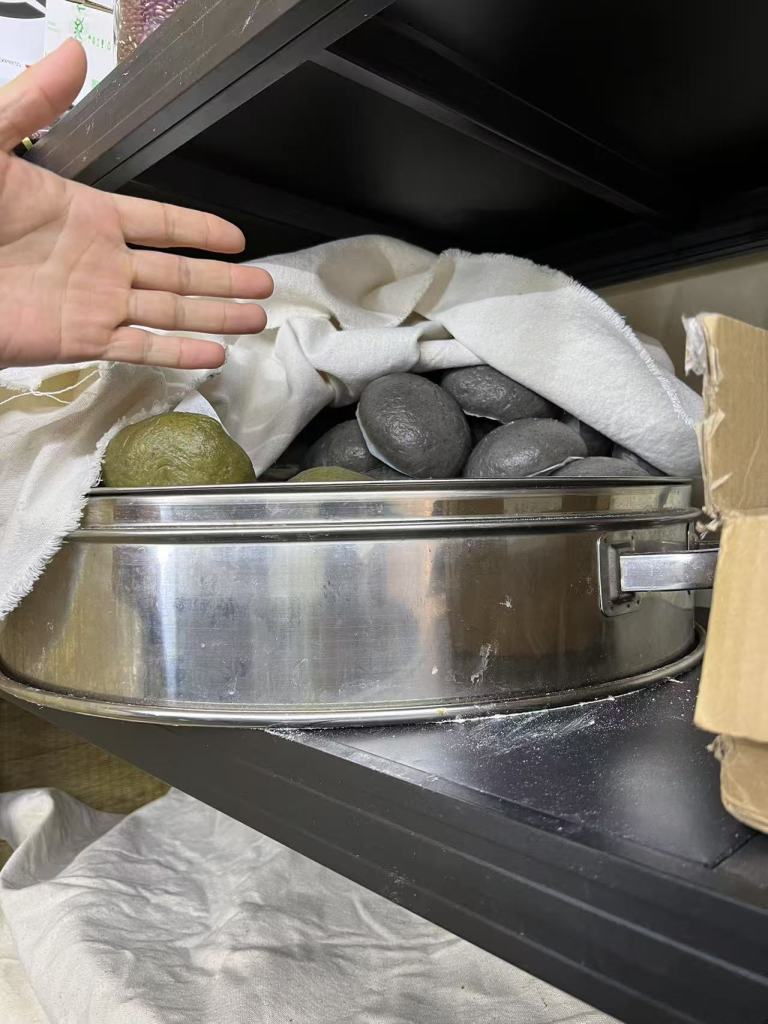
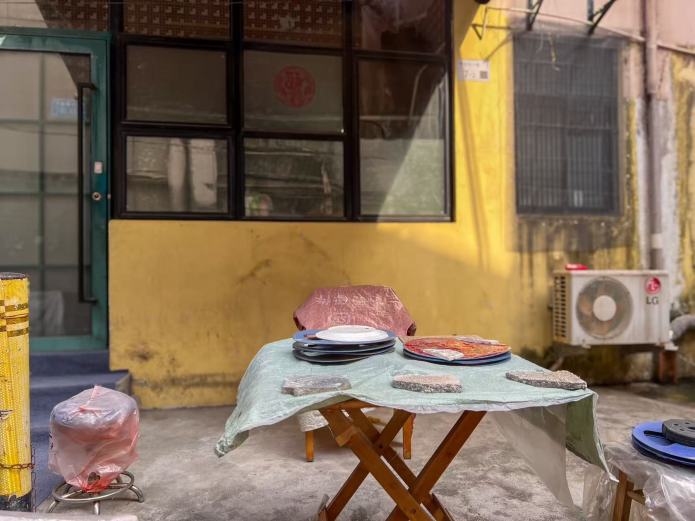
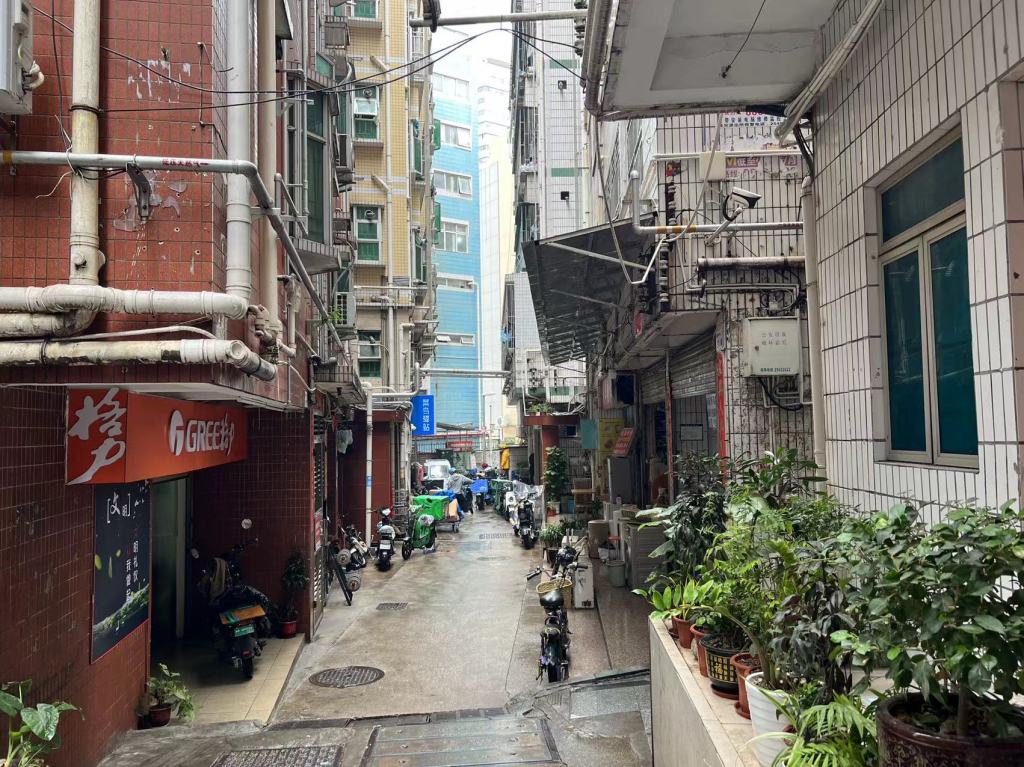
Originally a farmer, in Shenzhen CY worked in a kitchen at the Shangri-la Hotel in Xili and then went to eastern Huizhou to run a small, organic farm. Unfortunately, he couldn’t make a living as a farmer. Now he’s selling organic organic congee, buns, and medicinal teas. and sourcing his material through a network of “farm friends 农友.” CY’s restaurant used to be a first story apartment, which has been divided. In the other section of the house, a bike repairer lives. It’s the low rent that brought them to Yuanling. A two- or three-bedroom apartment can rent for as little as 5,000 rmb a month. He pays 3,100 for his section of the divided apartment.
So, rumors before pictures. They say Lvgem 绿景 is bleeding. I’ve been told that the company can’t pay back the interest on its loans, let alone make a dent into the principal. Moreover, its become a problem because they are also unable to pay for the housing for the villagers who will move back 回迁 to Baishizhou, once the first buildings are complete. Nevertheless, on the ground its difficult to see any problems. The buildings are going up, and two developments–Century City and World Garden Milanju–are open for residents.
These past few days we’ve been “eating melons,”–the colloquial expression for watching other people’s drama. This time, its an internecine melodrama starring the Shuiwei and Huanggang Zhuangs.
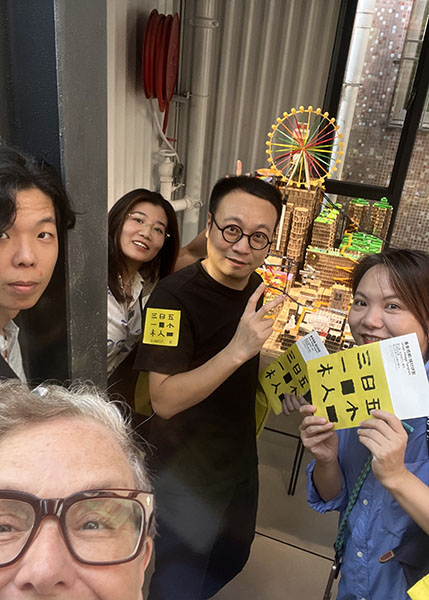
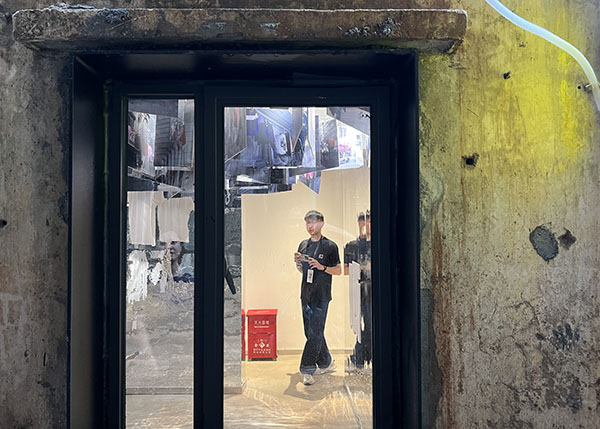
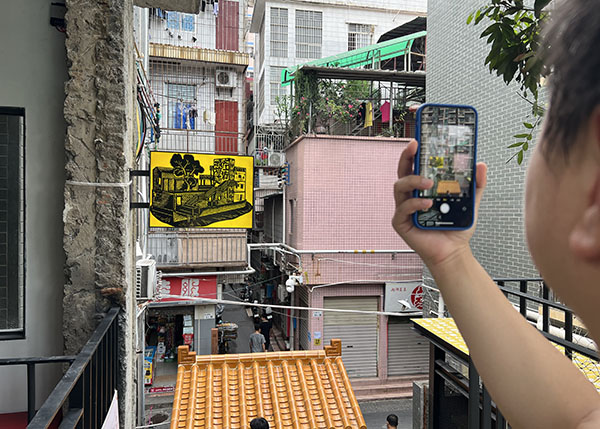
So the Nantou venue of the 2023 UABB finally opened on August 16. Rumor has it that the reconstruction of several handshakes was delayed. And delayed. And delayed. But. The results hover at the edge of critique, where showing is itself already taking a position, especially as what we can show and how it can be shown have been increasingly restricted. What I came away with was a sense of how windows function in tight, crowded spaces. We catch glimpses of our neighbors and strangers on their way, peeping across (necessary?) divides. Impressions of a walk through official biennale and adjacent spaces, below:
Yesterday, I walked Huangbeiling, which is located on the eastern section of Shennan Road. Before the construction of the subway system, Huangbeiling felt like the end of the accessible SEZ; there was more beyond, but getting there required a car or plans for a day trip. Today, Huangbeiling is a major transportation transit hub, linking the downtown area to the eastern coast.
Looking west along Shennan Road East from the Huangbeiling bus station toward Hubei Village and Dongmen.
Huangbeiling still feels like a golden era urban village, albeit recovering from Covid shutdowns. The layout of the village is against and up the Wutong Mountain Range, with enough nooks and crannies for unexpected encounters: a household temple to Guanyin, a mountain park with feral cats hanging out in tree branches, and good, relatively cheap food.
Sixteen years ago, one of the earliest Fat Bird guerrilla performances was held at the Huangbeiling pet market. Dogs and cats were just becoming fixtures–like cars and branded items–of the middle class Shenzhen lifestyle. Fat Bird “rented” a large dog cage for about five minutes before security guards and village leaders appeared and asked us to leave In the video of the post-performance interview you can also glimpse what this section of Shennan Road used to be like. After the performers were asked to leave, we jumped on a bus and went across the city to Chiwan. The short performance gives a sense of both the transformation of the area, as well as the relative openness of the city at the time compared to the present moment.
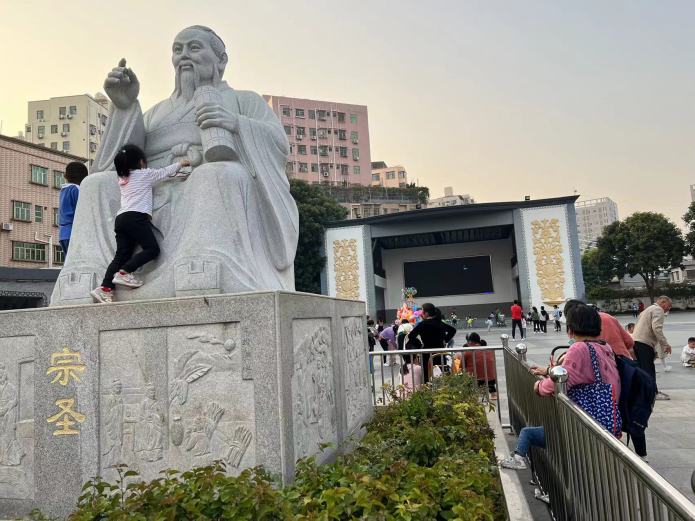
Shenzhen has more art-adjacent villages than one might think. There’s Dafen, Aohu, Wutongshan, and Shangwei (上围). There’s also Baoyuan, which is not an art village per se but located next to the F518 space. So. You decide. 4? 5? Do we also include any of the villages that have veered into creative industries? Guimiao, the village next to Shenzhen University and now crumbling to the excavators of progress, for example, was once home to artists and bibliophiles. Anyway. Shangwei.
One of the driving forces behind cultural preservation Xinqiao (新桥) and neighboring Yulv (玉律) is the 新桥曾氏仕贵公理事会, which for the moment I’m translating as the Xinqiao Zeng Surname Council, rather than Zeng Family or Zeng Clan. The reason I’m opting for literal translation of 氏 is that during the times that I have visited Xinqiao and now Yulv, the emphasis has been on the family connection, rather than on explicit kin connections.
I think about this question, a lot. Because there are two ways of being public: providing public services and allowing for critical public spaces. Sometimes, when my mind drifts into thoughts about chimerica, I wonder if the US has critical public spaces because it refuses basic public services to many of its people, while China lacks robust critical spaces because its so busy trying to secure public services for its residents, urban and rural. Priorities, right? Anyway, thoughts below (full citation: The Emerging Public Realm of the Greater Bay Area, Miodrag Mitrašinović and Timothy Jachna, eds., Routledge, 2021, chapter 7.):
Long ago, when Handshake 302 was in Baishizhou and Baishizhou was the city’s most icon urban village, we ran a residency program. The first iteration of the residency was “Village Hack.” Several years ago, I reflected on the program and what it taught us about how Shenzheners were formed (paper can be downloaded, below).












 Shenzhen Noted