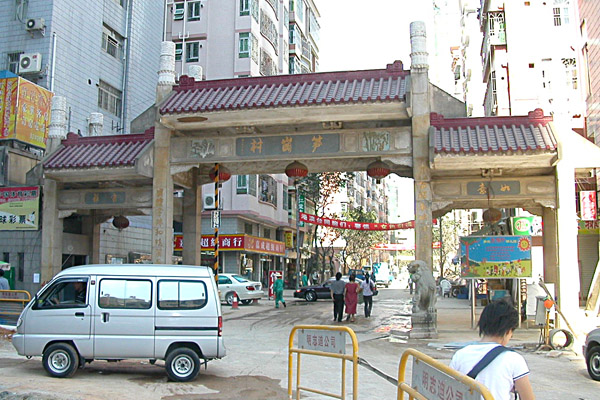
yumin village: changing meanings of “farmer housing”

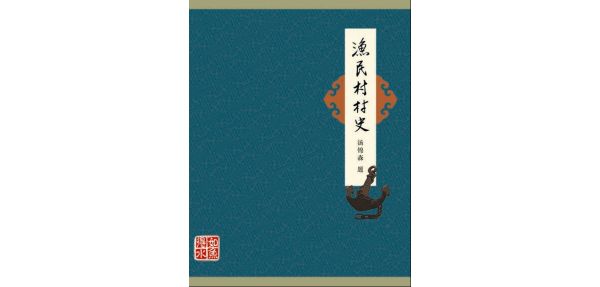
Just recently got my paws on “The History of Yumin Village (渔民村村史)”. Yumin Village, of course, was the village that Deng Xiaoping visited in 1984, during his first inspection trip to the SEZs. Xi Jinping followed up with a visit in 2012. So yes, this village has played an important symbolic role both in the ideological construction of post-Mao society and in representations of  pre-reform Shenzhen Bao’an County. What struck me as I flipped through the pages was how this transformation can be readily represented in the changing typology of “farmer housing (农民房)”. Continue reading

minjian history

Inquiring minds want to know: what is minjian (民间)?

On Sunday, I became part of the scholarly committee (学术委员会) of the Devout and Chaste Girls’ School (虔贞女校)–a minjian organization. Other members in the group included architects, an archaeologist, an editor at a history journal of Bao’an District, an artist, and the Director of the Dalang Culture Office. The Dalang Vice Secretary of Culture also attended the meeting, but left early. In addition, clerical workers from the Department of Culture served tea and insured that the meeting ran smoothly. So what made us a minjian organization? Continue reading

cold war guangming

Today, I am trying to figure how to think about a series of historically discrete events that in retrospect clearly aligned the landscapes of Hanoi, Houston, and Shenzhen. Continue reading

shajing oysters

Today I learned about cultivating oysters. I also visited Shajing, the town that oysters built even though oysters are no longer cultivated here. Instead the oyster babies are sent to Taishan where they are raised and returned to Shajing for processing. It’s almost like assembly manufacturing, except its agricultural production. Continue reading

can renters become stakeholders in shenzhen?

I like meeting and talking with visiting urbanists because the conversation is refreshingly straight forward about constructing society (via environmental interventions). Who are the stake holders, they ask. Where can we find them? What should we ask them? These clear and solid questions help me think more precisely about Shenzhen because identifying stake holders entails (1) acknowledging competing rights to the city and also (2) mapping the fraught and unformed territory of Shenzhen identity; who does have rights to this city of immigrants? And how did might they claim them?

Today, I’m thinking about approaching these questions through the construction and allocation of rental property.  Why do urban village handshakes — despite constituting the demographically significant residence in the city — why don’t they transform migrants into stakeholders? Continue reading

rural construction: can law serve china’s peasants?

While in Xi’an, I once again visited the Terracotta Soldiers in Lingtong, once upon a time center of Qin power. The First Qin Emperor (秦始皇 ) installed this death monument during his life. This seems to have been the way of ancient Emperors and Pharohs — a longing to control everything, as if making the world in our own image was (a) possible and (b) a means of achieving immortality. However, we don’t really know what the mass grave meant to him because we haven’t found his grave — just indications that he wanted to be safe in death. But maybe it was a ruse to distract observers from his actual gravesite. That said, we do know that he conquered unified six warring states and became the model for those future Chinese leaders who yearned to bring everything under heaven under themselves. Personally. Indeed, the visit sparked a conversation about the meaning of 法律, its historical constitution, and whether or not law can serve China’s peasants. Continue reading

the violence of rural (re)construction (3): living genealogies

If you google “Hakka” all sorts of information comes up, ranging from Wikipedia’s Hakka People brief through the overwhelming comprehensive blog 客家风情 to more academic takes such as “The Secret History of The Hakkas: the Chinese Revolution as a Hakka Enterprise“.

These articles emphasize that the Hakka left the central plains for Southern China in a series of migrations. Hakka literally means “Guest People” and in the anthology, Down to Earth: The Territorial Bond in South China, for example, David Faure, Helen Siu and their colleagues nicely track the differentiation of Han Chinese into various ethnic groups, including the Dan (boat people not allowed on land), the Hakka, and dominant Cantonese.

image

Over time, the Hakka developed a distinct culture and history, including unique roles in the Taiping Rebellion (Hong Xiuquan was a Hakka) and subsequent Chinese Revolution; Sun Yat-Sen, the Soong sisters, and Deng Xiaoping, for example, were all Hakkas. Distinguishing features of Hakka identity include language, food, architecture, and a commitment to tradition and education that is said to exceed that of neighboring groups. Importantly, however, given the geographic range of Hakka settlements both within and outside the Chinese mainland, there is much diversity within the group. The Hakka standard is set in Meizhou, the county seat of Meixian, which brings us back to what’s at stake with the forced evictions in Meizhou.

The Hakka have lived in large compounds, where extended patrilineal families resided in organized proximity. These complexes have functioned as material genealogies with hierarchy emphasized through one’s room(s) within and location relative to the ancestral shrine, which has pride of place in any Hakka homestead. Indeed, even after compounds have been abandoned for newer buildings, often the ancestral shrine continues to host rituals and family matters, such as death memorials.

Many of the large homes that have been or are threatened with forced demolition in the Meizhou suburbs are low-income realizations of the larger ideal of bringing one family line together in one place. Overseas family members have contributed funds to build the homesteads, where several generations do live together. Importantly, those at home hold it for family members who are working either overseas or in cities like Shenzhen. Indeed, memories of and anticipated arrivals of absent family members characterize these homes. As does the cherished expectation of reunion, when the homestead will be filled and the family complete.

Also of note, many of the people standing guard over a family’s living history are women, who have married into the line and are therefore not considered part of the genealogy. So when the householder is female, she holds it for her sons, rather than explicitly for her husband. It became clear in conversation, that many of the women wanted a house for their families–children and maternal relatives, rather than explicitly to continue a particular line. Moreover, while the women told stories of their lives in these homes, the men would emphasize how these homes held a larger family together. Thus, the 5 or 6 women I spoke with were spoke of the need to keep a place for memories and future visits, while the men were more likely to demand compensation that would allow them to reproduce the building itself.

The unmaking of the multi-generational family has been one of the most obvious consequences of rural urbanization. After these homes are razed, they are replaced by smaller homes for China’s version of the nuclear family–an elder or two who take care of the only child of two working parents. In terms of traditional history, this breakdown clearly causes suffering and disorientation as family members try to make sense of a life without a shared root, even as it is also clearly that another uprooting has already taken place; the young people spoke Mandarin while their elders spoke Hakka. The results of centralized education and migrating populations contextualize the violence of rural reconstruction with respect to an ongoing state project to remake the countryside in Beijing’s image.

This slideshow requires JavaScript.

Part I/ Meizhou: The Violence of Rural (re)Construction

Part II/ Meizhou: Hoodlum Government

Part IV/ Meizhou: What Gets Preserved

Part V/ Meizhou: Lessons from Shenzhen

Meizhou VI/ Meizhou: Selected Translations

ten years ago…

I have been reviewing my photo archives and came across pictures of new village gates that I took roughly ten years ago. The pictures show village gates old and new and point to the persistence of community identity precisely because it is malleable to the needs of the present.

This slideshow requires JavaScript.

is shenzhen history a good investment?

8322696_1200x1000_0

On December 28, 2013 Da Ken Art Center (大乾艺术中心) opened an exhibition on the Devout and Chaste Girls School (虔贞女校), which was built as part of the Basel Mission. The opening brought together a strange but uncannily representative demographic — young Shenzhen gallerists (Da Ken specializes in early photography), Dalang officials, Hakka Christians, aging villagers who went or taught at the school, activists in Shenzhen’s literacy movement, and representatives from the Basel Mission in Hong Kong. There were also a good number of public intellectuals who came out to show support ongoing efforts to re-member Shenzhen history, Christian, nationalist, and pedagogical.

After the opening, Yang Qian and I had coffee with Zhang Yibin (张一兵) and Li Jinkui (李津逵), two of Shenzhen’s more active public intellectuals. Their interventions, however, take very different, albeit supplementary forms. Zhang Yibin is interested in objects — blunt and silent, stubborn bits of matter and how they become meaningful through archaeological speculation and what might be glossed as “cultural capitalism”. Zhang Yibin was responsible for rediscovering the school, which had been closed in 1986 and making its historic importance known to the Dalang government. He has been involved in the reconstruction and preservation movement for over six years.

In contrast, Li Jinkui is relentlessly and charmingly verbal. An economist by training, Li Jinkui came of intellectual age in the 1980s, when “economic reform” was a code for “social liberalization”. For several years now, he has organized a salon at Yinhu, where intellectuals gather to debate issues that range from urbanization through phenomenology and economics to the historic meaning of Shenzhen and include pedagogy in all its permutations — the social role of education, the importance of raising the level of education throughout Shenzhen specifically and the country more generally, the history of education, and the need to reform the Chinese system of education. In fact, Li Jinkui gently moderated our after opening coffee talk, which focused on the historic production of cultural ecologies.

Zhang Yibin’s analysis of the current Shenzhen preservation movement hinged on a two-pronged analysis of (1) non-material culture and (2) 闲钱, which can be translated as spare money, disposable money, or leasured money. Zhang Yibin noted that most cultural history is non-material, composed of stories and impressions and feelings and suppositions, while less than 1% of the archaeological record is actually material. He then reminded us that although the shapes, textures and sizes of objects vary, there is no meaningful difference between them in terms of historic preservation. Instead, we distinguish between relics and garbage, because of the stories we tell and how much “disposable money” is at hand; the more disposable money, he emphasized forcefully, the more we invest in objects and their social transformation into relics. The way disposable money mediates the social transformation of objects into relics clearly frustrated Zhang Yibin, who has failed more often than he has succeeded to bring Shenzhen’s archaeological record into the public sphere. Instead of an intellectual pursuit that helped to enrich a society’s cultural ecology, he suggested, historic preservation has become yet another instance of collecting relics. As such, it hinges on the whims of leaders rather than on a consensus over what constitutes history and archaeological research.

The background for his frustration is the robust Shenzhen antiquities market and concomitant disinterest in the area’s history. In Shenzhen, there are two primary agents accumulating relics — individuals and state cultural institutions, such as the Dalang Street Office. As elsewhere in the world, wealthy Shenzhen individuals collect for personal reasons that range from desire and taste to economic investment. At the same time, municipal cultural institutions have shown little interest in the area’s past, preferring to showcase the Municipality’s role in modernizing Post Mao China. Moreover, attempts at historic preservation at Nantou Old Street, Dapeng Fortress and the Hakka compounds, for example, have not been embraced by the general public, which remains largely ignorant of Shenzhen’s modern and imperial history. Indeed, even the call to preserve old Hubei Village, an example of a wealthy late imperial and republican architecture (located immediately east of Dongmen) has slipped well under public radar.

This background also explains Li Jinkui’s support for the collaboration between the cultural bureau of Dalang Street Office, the Lankou Christian community, literacy activists and Da Ken. Li Jinkui advocates a broader and more ethical understanding of public culture. To achieve this, he sees an important place for non-material cultural — not simply story-telling, but rather and fundamentally, education. For Li Jinkui, one of the roles of government is to use its disposable money in order to curate the City’s historical understanding. Although he agreed that only stories and money allow humans to differentiate between relics and garbage, it did not follow that all garbage ought to be transformed into a relic because not all stories were worth telling; we define ourselves, he suggested, through these stories. Moreover, the choice of how to dispose of one’s money, especially at the level of government, is for Li Jinkui and like-minded intellectuals a question of public ethics and the concomitant creation of social value. In this sense, the Dalang Street Office decision to preserve a school as well as the history of extending education to girls was a story that should be commemorated with objects and disseminated in public forums, such as Da Ken. In turn, Christians and literacy advocates can use this history and its objects to shape an ethical and heterogeneuos public sphere.

The exhibit itself integrates photography, examples of Republican textbooks, blue shutters from the school, and a virtual model of the planned reconstruction. The curatorial statement comes from a Christian apology for girls’ education:

China favors boys over girls. It is a custom with a long history. Many say that a lack of education is a virtue in a woman. But they do not realize that God made men and women as one body. God did not only give souls to men, but also to women. There were men, and then women were created. However, there were women, and then boys and girls could be born. In front of God, men and women are equal. Men strongly love education. But women love education even more because they are the nation’s mothers and they carry a heavy responsibility for the country. The country is made of customs. The people can have high or low character. Their words can be true or false. Their morality can be complete or lacking. All of this is created by the country’s mothers. The responsibility that women carry is therefore extremely heavy. It is an important moral obligation, which must be at the front of all future efforts to create the best model of moral words and deeds. We must work until we succeed.

For the curious, Tengxun has uploaded 22 photographs from the exhibition, which documents the cultural geography of fin-de-siecle South China. There are young Hakka girls, Western missionaries and their families, as well as impressions of the already globalized rural landscape — traditional row houses, fields, and the new school, shimmering white beneath elegant hills. The show itself is up at Da Ken Art Center, located in the northern section of Ecological Park, OCT (just above the AUBE offices and row coffee shops and restaurants). Hours, 10:00-6:00. Unlike the online exhibit, the actual exhibition includes objects and a model of the restored school and church.
price list, shekou, early 1980s

IMG_3454A price list from the Shekou Industrial Zone Life Services Bureau, early 1980s.

Of note? Uniform prices throughout the industrial zone, although some prices were “approximate (左右)”. The reason? typhoons determined availability of food and goods. Also, prices are modified with the characters for renminbi (人民币) because at the time, Hong Kong dollars and Foreign Exchange Certificate (or waihui 外汇), a surrogate currency used by foreigners also circulated. Long ago and far away, one industrial zone, three currencies.

Not only the typeset makes this list seem like it came from another place and time. The prices seem so cheap its hard to remember that these prices were expensive relative to neidi, where monthly salaries still ranged between 20 to 50 rmb.

During the early 1980s, coming to the SEZ and/or Shekou Industrial Zone was considered hard, but nevertheless resulted in opportunities to earn more elsewhere. In fact, by the 1990s, Shenzhen and Shekou boasted a substantial wage (both white and blue-collar ) differential with the rest of the country. And today Shenzhen along with Beijing and Shanghai continues to have the highest lowest minimum wage in the country (see China Labour bulletin report).

Shenzhen’s economic success remains one of the key symbols of the success of post Mao reforms. It is no surprise, therefore that both Guangdong and Shenzhen have been central to Xi Jinping’s ongoing efforts to middle class-ify China. But. The extent to which rural China — both in the form of migrant workers and urban villages — has enabled Shenzhen’s success remains left out of these rags-to-riches scenarios.