czc entr’acte

The entr’acte between a thriving urban village and its gentrification into mall-burbia occurs as developers scramble to get the last hold outs to sign compensation packages. To ensure that noone moves into buildings that have already been acquired by the developer, windows and doors are often cemented over and 拆 the character for “raze” is painted in bright red stencil.

In Nanmendun, Buji (布吉南门墩), for example, the entr’acte has been in progress since May 26, 2011, when the Kaisa Group announced that it had begun the renovation project. According to the announcement, 18,879 people lived in 479 buildings (mostly handshakes, but some early 80’s and Mao era dormitories). Of this population, roughly 10% were Nanmendun residents and entitled to relocation and compensation. Roughly two years later, the process of getting holdouts to sign and stragglers to move on is still in progress.

This slideshow requires JavaScript.

Nanmendun is one of five renovation projects in Buji and the usual suspects — Vanke, China Merchants, Huarun, and Xinyi are also busy gentrifying the area. What the map below makes clear, however, is how extensive rural urbanization has been in Buji. Indeed, it is hard to speak of an “urban village” when handshake buildings and unregulated development have been the dominant form of urbanization for over thirty years.

Lay of the land:
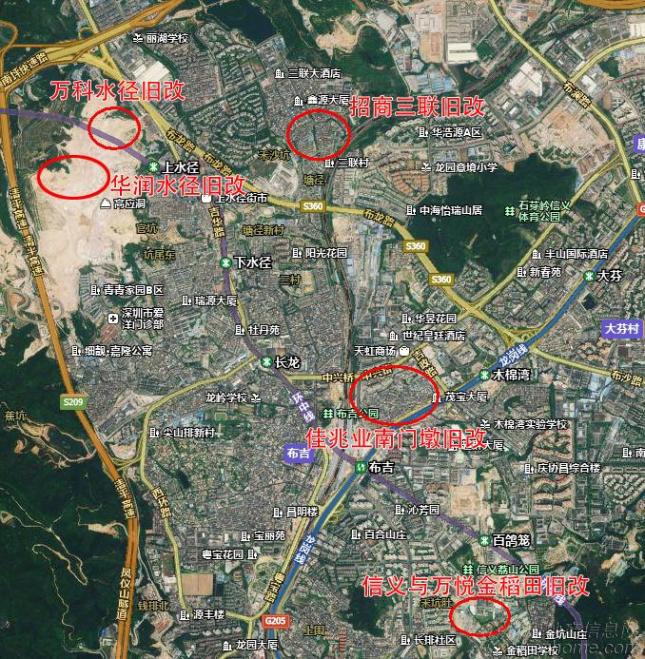
4 renovationsin buji

nationalism despite the state

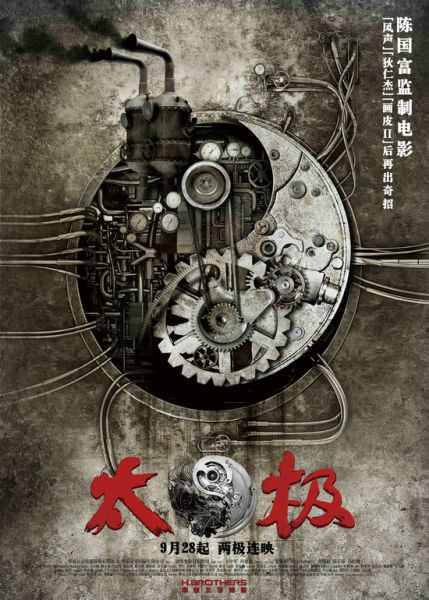
Steampunk + kung fu + colonialism + the Qing Dynasty = Tai Chi 1: Start At Zero (太极1:从零开始).

The plot is simple and the pace full-throttled. There is a village, where kung fu is treasured and passed down from generation to generation, but only to village members — no sharing traditional culture. There are masters who fly through the air and defeat mechanical trojan horses, which bring railway tracks and seductive foreign women. There is a phoney foreignor, who betrays his village and first love to redeem his personal honor. There is a latent hero, who learns kung fu despite the village’s prohibition against teaching outsiders, shuts down the trojan horse despite ignorance about things mechanical, and marries the village kung fu beauty despite being unconscious. All in 90 minutes of whirling feet and spinning hands, punctuated by moments of sudden stillness and insight into what happens to human hearts when forced into a corner. Continue reading

old trees

It’s true, there’s a category of cultural relic known as “old tree (古树)”. These old trees root the community in histories that stretch back to the late Ming Dynasty (early 1600s). Moreover, their beautiful limbs create poetic interludes throughout the remnants of Shenzhen’s old village homesteads. Buildings may decay through lack of care, but the trees grow despite threat of urban renewal.

This slideshow requires JavaScript.

the difficulty of representing shenzhen’s urban “villages”

Talking about Shenzhen’s urban villages is difficult because legally they are not villages, but “communities (社区)” that have been integrated into the urban state apparatus. Moreover, depending on their location, these neighborhoods have different social functions — slums, gateway communities, and affordable housing for both the working poor and recent college graduates.

Mark Leung‘s photo essay,  Welcome to Wuwucun, a Village in the City offers a detailed and sympathetic look at life in Wuwucun, a Shenzhen urban village and is well worth checking out. However, the images beg contextualization, illustrating the difficulty of interpreting images  in the absence of historical knowledge. Is Wuwucun poor? Are these villagers? Is manufacturing a good thing?  On the one hand, a shorter version of the same essay, for example, explained that these images showed how manufacturing in Shenzhen was providing small steps forward to improve the lives of China’s rural millions. On the other hand, these images depict one of the more peripheral villages in Shenzhen, where the level of poverty depicted justifies ongoing campaigns to raze working class neighborhoods in other parts of the city. In other words, these images can be used either to show that industrial manufacturing in Shenzhen has been good for the country or to justify the Municipality’s ongoing program of razing urban villages in the inner districts. Continue reading

Focus on China: Fat Bird on experimental performance

Mary Mazzilli interviews Yang Qian and me about work with Fat Bird. Focus on China: Fat Bird on experimental performance (1/2).

tea time stories

Old Sui makes starkly whimsical woodblock prints the old fashioned modernist way — by hand, alone, and in a studio that is open to friends who drop by for tea and chats. He has collected over 1,000 teapots that when individually shelved and arranged seem oddly menacing. Not a first mind. At first, one sees artistry in the smooth lines and soft glow of each pot. However, as Old Sui opens a drawer to show part of the collection, and then another, and then says that the majority of the collection is elsewhere, the care and time necessary to make and care for a teapot gives way to numbers games and ranking; here are 50+ teapots, here are several dozens, the top  twenty or so have been displayed on a shelf that stretches around the room.

And the rest?

In a room at home.

I know the feeling of insatiable desire. I also enjoy aesthetic displays of objects. But. I am not a collector. Learning that Old Sui has set aside a room for private delectation? The intimacy of this knowledge startles me and my eye settles on a teapot crafted in black clay with flecks of golden sand. Continue reading

shenzhen new year’s flower market

Shenzhen’s largest and oldest new year’s flower market is located on Aiguo Road, which has been closed for the bustling street fair. For a good quarter mile, several hundred venders hawk fresh and artificial flowers, Brazilian turtles, Chinese medicine, and plastic bubble hammers that read “Diaoyu Island belongs to China”. To join the festive multitudes, take the Third Line Subway to  the Cuizhu Station and exit onto Yijing Road. Follow the crowds one block to the Main Gate, where photo opportunities abound. So go and get your snake on! Portraits, below:

This slideshow requires JavaScript.

double bind urbanization

At dinner last night a friend asked me, “If you had to choose between living in a 50 story building or an urban village walk-up, where would you live?”

This question illustrates the kind of double bind thinking that current debates about urban villages generate. As posed, the question compels us to choose between either high end futurism or unsanitary crowded settlements. But all too often the question itself becomes rhetorical justification for ignoring other examples of more successful urbanization. What’s more, the question also blinds us to what we can learn from the  tight organization and convenience of the villages, while using high tech knowledge and skills to imagine low-rise, more environmentally friendly settlements. Continue reading

luohu culture park: the antidote to mall-burbia

DSCI0079 I prefer early Shenzhen urban planning to the rush to mall-burbia that is the current trend. Early planning assumed small scale, low cost urban living that promoted street life. In contrast, mall-burban developments raze central areas of the city to build large scale, high cost gated communities and attached mall, where security guards keep out the riff raff, effectively suburbanizing densely populated urban areas.

Luohu Culture Park (罗湖文化公园) exemplifies the latent urbanity of early Shenzhen planning. The 2,000 sq meter park includes underutilized cultural infrastructure, a lake, and my favorite kind of public art — a sculpture that children can easily appropriate. Continue reading

population number games

There are three resident statuses in Shenzhen: Shenzhen hukou, long term residence permit (常住证), and illegal residents or the floating population (流动人口). In turn, these different statuses are reflected in two kinds of population statistics: the long term population (常住人口) and the administrative population (管理人口).  The long term population is divided into those residents with hukou and those with permits. The administrative population refers to the number of renters who have been registered at a local police station. In practice, the difference between the long term and administrative populations provides insight into how large the floating population is.

Here’s the rub: Cities and districts usually only release population statistics, even though the actual population is on record via individual precincts, which report their statistics to the District. In turn, reporting practices vary widely between districts, making it difficult to ascertain how many people actually live and work in a district, let alone in an urban village. Continue reading