Yesterday I had the honor and pleasure of participating Shenzhen: From Factory of the World to World City, a conference hosted by the International New Town Institute. What did I learn? Continue reading

Yesterday I had the honor and pleasure of participating Shenzhen: From Factory of the World to World City, a conference hosted by the International New Town Institute. What did I learn? Continue reading

This week while helping to install the next edition of “My White Wall Compulsions (墙迫症)”, Laura Belevica’s beautiful “Threshold (生死之门)”, I was struck by the beauty of collaboration within small, shared spaces. Indeed, our exploration of what can be done with the walls of an efficiency apartment has revealed unexpected vastness and implicit conversation. Continue reading

After several months of hard work and time off for summer vacation, the 白薯笔记/Village Hack PDF is available for download. Wu Dan designed the layout, each of the hackers reflected on their experience, and many friends contributed images to make the PDF a wonderful introduction to Baishizhou lived otherwise. The village hack was about discovering possibilities, both one’s own and those of the urbanized village. Enjoy!
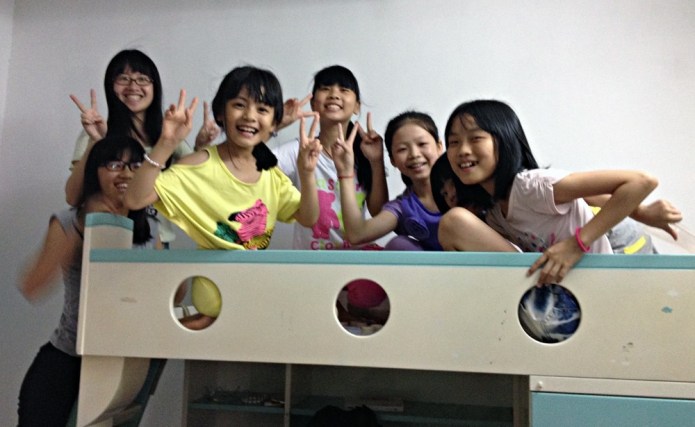
Tadeas had a lovely sharing, and his engagement with Baishizhou is fun and real. Honestly joyfully playfully real. He commented, for example, that the dark brought out all sorts of imaginary monosters, such as a ten meter snake and rats so sick they had gone bald. He then handed over the key to Huihui and Qiangqiang, who will partner up for their hack. Check out Tadeas’ colorful notes at 白鼠笔记/Village Hack. Below, impressions from the afternoon.

Several weeks ago, Shenzhen hosted the Maker Faire, bringing tech savvy makers together to explore, discuss and extend hardwire creativity and innovation. This past week, Beijing has hosted Social Innovation Week, bringing changemakers together to explore, discuss and extend social creativity and innovation. In Chinese one character separated the two events. The Shenzhen hosted 创客 or “maker guests” while in Beijing the guest list comprised 创变客 or “make change guests”.
Inquiring minds might paraphrase Gregory Bateson and ask: is this a difference that marks an important cultural difference between the two cities?
As in English, the Chinese shift from the vocabulary of “hacker” to “maker” has signaled the increasing respectability of the techno-nerds. The Chinese is even more explicit in this respect. To my knowledge, the earliest translation of “hacker” was 黑客, literally “black guest”. The term highlighted the outlaw romance of hacking at (at least) two levels. First the obvious 黑 which describes renegades and their possibly illegal activities as in the expressions “mafia (黑社会)”, “no hukou child (黑户)”, and “black heart (黑心)”. Second, 客 refers not only to guests in the modern sense of the term, but also clients in the medieval sense of the term, the dependents on a lord who would provide service in return for protection. Unlike, the English, however, the expression “changemaker” is more obviously related to the hacker movement because the word is made (!) by inserting the character 变 or change into the net-popularized expression 创客.
The more pertinent question, however, seems to be: Almost a decade after China began promoting creative industries, do the respective localizations of these two events tell us anything interesting about how Beijing and Shenzhen function within the Chinese cognitive mapping of creativity and innovation?
The pomp and circumstances of the two events did not differ radically–both were located in marginal spaces (Anhuili and Shekou, respectively) that are nevertheless within the city center, broadly defined. The demographic of the organizers was similar, with generations 80 and 90 running the show, and a shared emphasis on networking nationally and globally. The staging of talks was different. Beijing opted for TED style talks, with speakers having 15 minutes to share their projects. This was supplemented by round table discussions. In contrast, Shenzhen opted for more traditional keynotes, with salon style question and answer sessions.
The important difference seems to coalesce around funding sources and industry support. Beijing garnered support from not-for-profits and international foundations. In contrast, Shenzhen had industry support, generally through China Merchants, which is rebranding Shekou and specifically through Shenzhen based companies and international think tanks that focus on techno innovation. In other words, while young people of both cities deployed creativity to claim a space for and to legitimate the status of Generations 80 and 90, the Beijing event constituted itself with respect to society broadly defined, while Shenzhen defined society with respect to entrepreneurship narrowly defined.
Impressions from opening events, below.
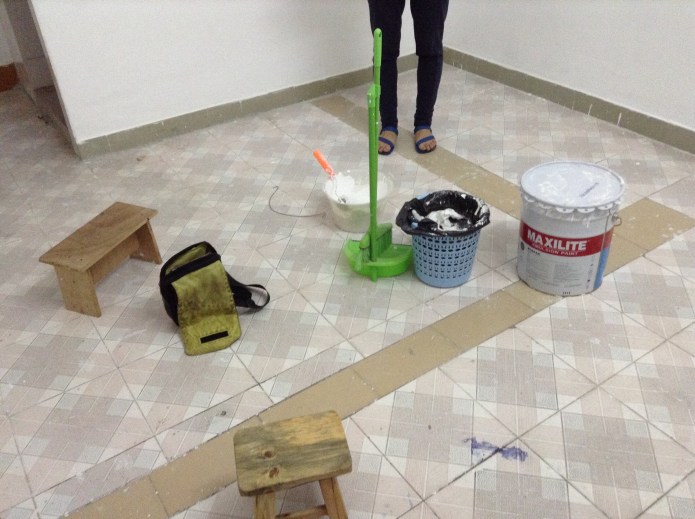
Handshake 302 has been transformed into a dormitory for the Village Hack Artist Residency. Tomorrow, our first hacker Liu He moves in for a week of exploring architectural forms in Baishizhou. Below, impressions of the new room.
51 seconds in Baishizhou.
For those who have been following Shenzhen’s expansion, you have noted the correspondence between the establishment of an administrative category, the announcement of an economic sector, and the full on government led reappropriation of folk investments and small scale development.
The opposition in play is the contradiction between 官方 and 民间 I’ve translated 官方 as government led because the appropriating entity is often government appointed or a state owned enterprise, but there is diversity and even discord therein, as will become apparent below. I’ve translated 民间 as folk because it captures something of the quaint and small and outdated notion of the public that seems to operate during these transitions. Moreover, the public is itself an important sphere of government led action.
Dapeng constitutes Shenzhen’s one remaining strip of relatively undeveloped coastline. It has been a site of 民间 development. The forms of folk development, for example, have included seafood restaurants in Nan Ao, and the strip of cheap inns at Jiaochangwei (较场尾). Jiaochangwei is a coastal village, as is evident from the mash-up of various generations of what are colloquially known as “farmer housing (农民房). And yes, Jiaochangwei is technically an urban village, with an emphasis on village and nature, rather than urban a la Baishizhou). Previous large scale development has been undertaken by Vanke (万科) which opened Shenzhen’s first yacht clubs far, far from the city. Or so it seemed.
In theory the Dapeng Peninsula is a conservation area, but so was the original Mangrove Park. However, in 2011 the Municipality designated Dapeng a New District (discussed earlier). Since then, there has been all sorts of investment in roads and even a national level geological museum slash park. This has been part of a movement to encourage the development of the coastal economy, including government led real estate development, which (as in Shekou) involves infrastructural transformation and privatization of the coastline.
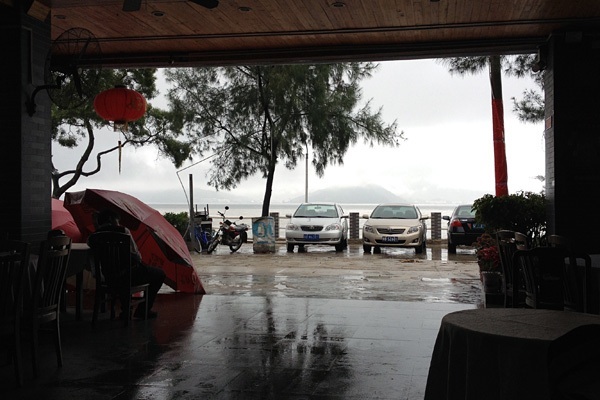
At the moment most of these areas are only accessible by car, but an express bus, the E 11 gets ordinary folk into the area and a subway line is being built. Impressions of Jiaochangwei, below. And yes, if you decide to go, go during the week. On the weekend, there can be road delays of more than an hour, and lines for restaurants and ubiquitous BBQ joints.
For the curious. “So why do foreigners go to urban villages?” is online. Please check it out and grow the conversation about Baishizhou and why it matters. For all of us.
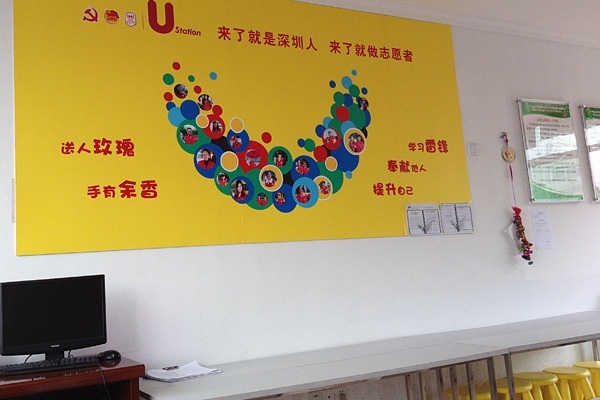
In the Summer of 2011, Shenzhen hosted the Universiade. At the time, we complained about the face projects and cost there of. In retrospect, it seems, however, that one of the more lasting effects of hosting what is basically an Olympics for college students was that volunteerism and u-stations took root and flourished.
U-stations can be found throughout the city, and are staffed by young friendly and sufficiently bi-lingual folk, who hand out bike maps to the city and introduce nearby attractions. All wear the highly recognizable Shenzhen volunteer vest. In fact, this new emphasis on volunteer citizen participation may also have contributed to an interesting renaming–Shenzhen migrant workers are now officially called “those who have come to build Shenzhen”. The phase reworks the Shenzhen volunteer slogan, “if you come, you are a Shenzhener”. The Chinese wordplay is from 来了就是深圳人 to 来深建设者.
Several days ago, I met with the director of the Baishizhou Culture Center. We spoke in a comfortable, well lit library which was also a u-station! Other programs run by the Center included an after school program, which is staffed by those young and friendly red-vested volunteers. We were in the station to talk about opening a community learning center under the auspices of this collaboration between multiple levels of government. We would be another NGO sponsored by some level of government to work in Baishizhou.
This is where the administrative structure gets interesting. The culture station is housed in the Baishizhou Five Village corporation, which represents locals’ interests and manages Baishizhou properties, electrical, sanitation, and other municipal services. However, the culture station is funded by the street government, which is responsible for implementing district policy. The volunteers are a municiple level NGO.
So here’s the a-ha moment: u-stations and volunteers have permeated even urban village regulatory structures and may have an important role in redefining citizenship and the role of the city in financing not-for-profits.
 Shenzhen Noted