and while we’re at it let’s talk about food.
let’s debunk the fishing village myth
and while we’re at it let’s talk about food.
and while we’re at it let’s talk about food.

…is big and far from the subway station that so usefully served the old ferry terminal. And yes, hidden behind reclaimed construction sites, the new terminal embodies how Qianhai–as a place and eponymous ambition–is reshaping the coast. Again.

New edges and older sections, urban tumescence overtakes low-lying hills and buries oceans. The strength of urban expansion, its righteous inevitability, shimmers and jiggles, impresses–even though eventually paths peter out and doors remain bolted.
Closed off closed out: enclosed.
This is not the city that I want. It is however the city that has shaped my dreams and fears, given form to what I think is possible, what I believe to be necessary. Continue reading
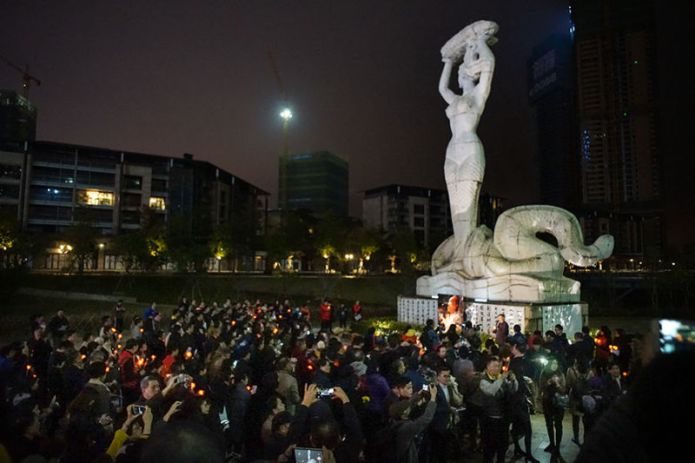
Yesterday morning, the Shekou Community Welfare Fund received word that Yuan Geng, former CEO of China Merchants Shekou had passed. They immediately set to organizing a memorial, which was held on January 31, 2016 at 8 pm. The official memorial was held earlier in the afternoon at the Shekou China Merchants Museum, which is the official mourning hall for the departed leader. “The difference,” one participant commented, “between the two memorials was obvious. At the official memorial, people were waiting for Shenzhen Party Secretary Ma Xingrui and Mayor Xu Xin to arrive and pay their respects. In contrast, at the Shekou Community memorial, Old Shekou people came to mourn the end of an era.”
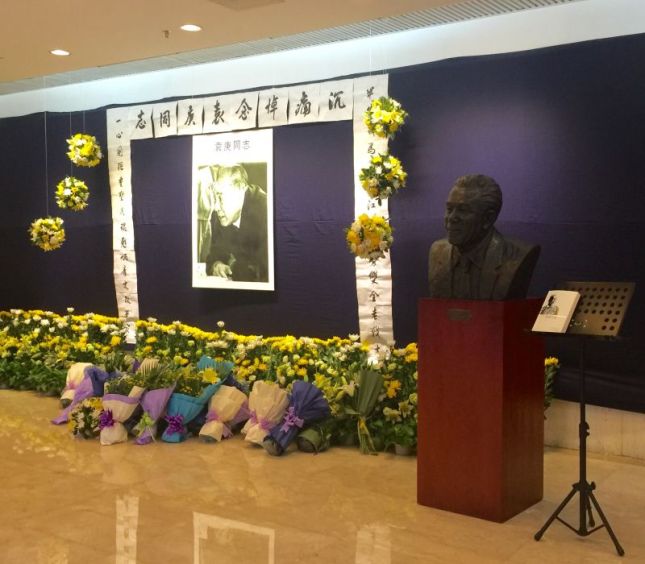

This week I have been thinking about iterations of the “local” in two sites: the 2015 Shenzhen Hong Kong Biennale of Urbanism/Architecture and the Baishizhou Street Museum. In particular, I’m thinking about the possibility of making connections from “here” to “there” when they hinge on the distance between (a) some outside understanding of what the local might be and (b) what might be interesting to actual locals. The possibility of meaningful dialogue is further complicated when “outsiders” and “locals” are organized by global hierarchies, internal class structures, and unquestioned ideas of what might be intellectually and/or aesthetically engaging. Continue reading
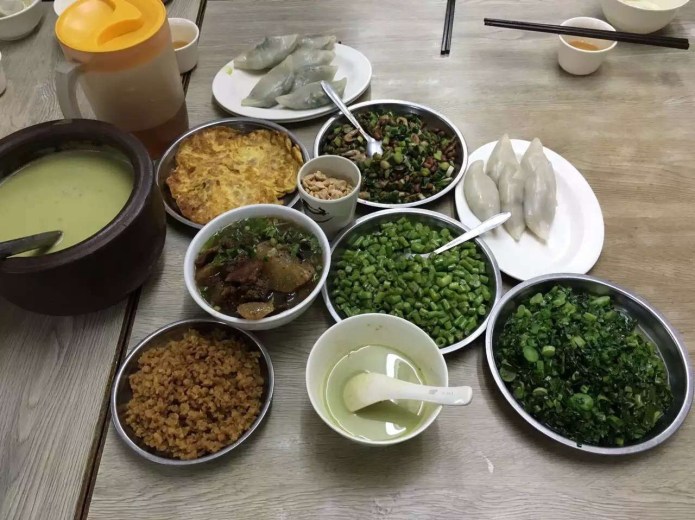
Last weekend I met two young men, 18 and 19 years old, who are filming interviews with and about “Shenzhen’s Second Generation”. We talked about the actual definition of a “Shen 2 (深二),” which I have tended to think of in terms of immigrant generations. In contrast, they were specifying the term also with respect to decades: they consider the 80s and 90s generations to be members of Shen 2, while 70s kids and millennials are not. They also noted that Shekou’s Second Generation (蛇二) is even more precisely defined; these are the children of utopian Shekou, who lived in the old China Merchants housing developments, and attended the original Yucai School.
So what defines Shen 2 kids? Continue reading
I’ve said it before and now doubt will continue to repeat myself in subsequent posts: the speed at which Shenzhen is re-creating itself makes it difficult to re-member what the city has been. Not just Boom! a city appears, but Boom! all gone. These images of Shuiwan and Wanxia villages should be looked at along with yesterday’s impressions of the reclaimed land behind Seaworld and Shekou’s new coastline. The main part of this walk is along Shekou Old Street and Wanxia Road, thoroughfares that once upon a time ran parallel to the old coastline. The remains of that old times development (and yes we’re talking early 1980s) is small scale commercial fishing, unlike the marina and yachts that have been established along the new coastline.
I walked the park area and new residential area behind the Nuwa statue in Seaworld. This entire area has been reclaimed. It is startling how the loss of physical landmarks makes it difficult to remember where I’ve been because this isn’t that place.

Yuan Geng continues to inspire hope for social reform in Shekou. Yesterday, the recently established Shekou Community Welfare Fund mounted the exhibition “Me and Yuan Geng” to celebrate the 98th birthday of China Merchants-Shekou’s first CEO. The Shekou Community Welfare Fund is the 14th such fund registered in Shenzhen, but it is the only one started by community members through donations, rather than through a government bureau. This matters because Shenzhen Municipality has called for the establishment of 100 funds, and we hope for more and more community–rather than government sponsored community–funds to emerge over the next year or two. Continue reading

Those of you following the construction of Qianhai, may or may not be aware that it’s cultural geography includes many, many fish (now buried) and Dachan Island, once upon a time home to Dachan Village. Inquiring minds want to know: just where is Dachan Village, today? Continue reading
 Shenzhen Noted