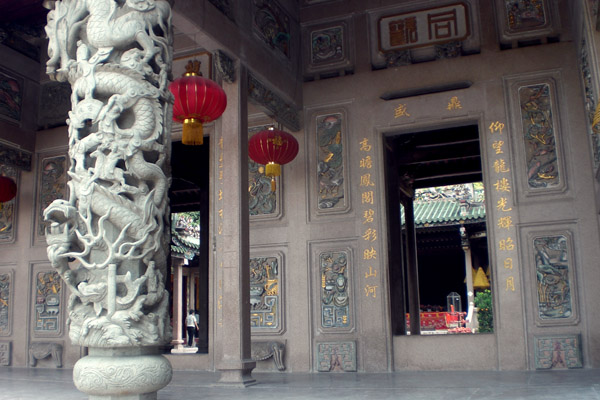
because not all villagers were created equal…

The stereotype of the second generation of Shenzhen villagers being “rich, lazy, mah johng playing, playboys (who might also do drugs)” is not only predicated on the idea that all of Shenzhen’s original inhabitants are rich, but also that their children have grown up aimless. However, Bao’an County’s original 300,000 residents and their children were not all created equal. What’s more, they increasingly find themselves belonging to antagonistic economic classes, while their children come of age grappling with problems that none of their parents imagined facing. Some second generation SZ farmers must look for wage labor in factories that (rumor has it) do not hire locals, preferring instead to hire migrant workers, even as other second generation SZ farmers are the first in their family to gone to college, and still others are, yes, struggling with too much wealth.

The inequality among locals has been created through reform era legislation and urban development projects, which have built upon and elaborated historical inequalities and traditional norms. In an earlier post, I charted the borders and corridors that have shaped economic possibility and subsequent patterns of urbanization in the SEZ, arguing that three borders have enabled urbanization in Shenzhen: the border with Hong Kong, the second line, and the city limits, which abut Dongguan in the northwest and Huizhou in the northeast. Two economic corridors have facilitated Shenzhen’s growth: the Guangshen highway corridor and the Kowloon-Canton Railway. The Guangshen highway corridor parallels the area’s riparian trade routes, which were the means of Han expansion from Guangzhou southwardly on the Pearl River and its tributaries. The KCR, of course, was the British attempt to preempt and redirect the PRD’s extensive trade network.

Not unexpectedly, proximity to a border or corridor has been a condition of reform era riches. Villages near the nexus of these borders and corridors have had disproportional opportunities to build and manage industrial parks and real estate developments. The earliest villages to get rich, for example, were all located along the Shenzhen-Hong Kong border at corridor checkpoints — Shekou (Fishing 1 and Wanxia) and Luohu (Hubei), first, but then Huanggang (Huanggang, Shuiwei, Xiasha, and Shangsha). However, guanwai villages retained land rights a full 12 years longer than did guannei villagers, with the result that largest and wealthiest village joint stock companies are now primarily located along the Pearl River Delta (Shajing and Huaide) and KCR corridors (Nanling near Buji). Consequently, many villages have remained “stuck” in between these two different modes of production, neither farming nor investing in manufacturing, let alone transitioning to the new creative economy. Areas of relative poverty include many Longgang District Villages as well as villages in Gongming and Guangming.

However, proximity to the borders and corridors has not in itself created the conditions for villages to transition from lives based on rural production to lives based on urban industrial manufacturing. In addition to the construction of infrastructure, differences in Mao-era administrative designation have also shaped current inequalities among villagers. First, successful villages have operated as collectives, rather than relying on individual efforts. These villages not only inherited Maoist organization, including management experience, but also inherited common ancestry. Thus, single surname (一姓) villages, which have renovated ancestral halls and promoted traditional rituals have generally been more organized than random surname (杂姓) villages, which were created during the Maoist era for production purposes. Second, successful villages have had traditional land rights, which were extensive. Indeed, most traditional villages have made their fortune through land deals. In contrast, fishing villages (渔村) and overseas Chinese villages (桥村) had foundation rights (宅地), but not land development rights. This meant individual villagers could build private homes, but that villages could not collectively invest in industrial parks or real estate developments. Moreover, villages did not benefit from compensation deals between developers and nearby traditional villages. Third, as recent events in Wanfeng demonstrate, some village heads have been less corrupt than others, while the success of Huaide, Nanling, Huanggang, and Xiasha Villages has been directly attributed to the foresight of the incumbent leader.

It is an open secret that legislation has been the source of Shenzhen’s competitive advantage, both for outside investors and for indigenous Bao’an villagers. What’s more, this legislation did provide the framework for many local villages and individual villagers to become rich. Indeed, when Deng Xiaoping died in February 1997, Shenzhen villagers openly wept and brought funeral wreathes to the statue at Lianhua Park and his Shennan Road billboard. Nevertheless, the emergence of class differences within and between villages directs our attention to the ways in which Shenzhen has displaced Bao’an as “the local”. Within this new locale, hometown status no longer provides a viable identity because locals have been segregated into urban classes that have disrupted traditional rural relations, even as they learn to navigate a hometown that is no longer theirs, assimilate the mores and customs of urbanites, and speak standard Mandarin, rather than local Cantonese or Hakka dialect. And in this new world ordering, poor Baoan locals embody a poignant form of global tragedy.
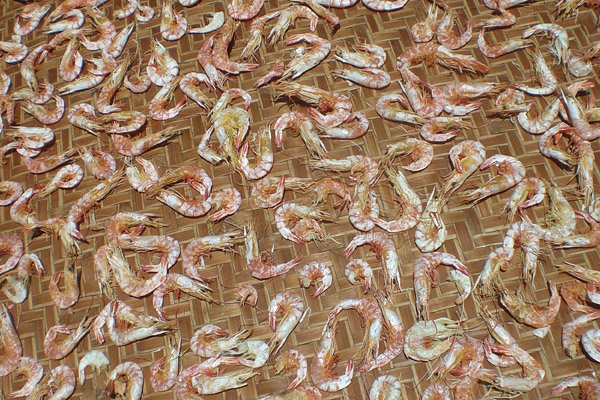
渔一村:of old men and the landfilled sea

Yesterday’s bloggy romance with the sea continues and although I have shifted my gaze from Cuba to Shekou, it is worth mentioning that the writers’ emphasis on masculine conquest continues; today, in episode 8 of The Transformation of Shenzhen Villages (沧海桑田:深圳村庄三十年), Chen Hong tells the story of Fishing Village 1 (渔一村), Shekou. Again, the story begins in a village, but this is also where similarities between the two narratives end. Hemingway figured human life through the isolated figure of an old man navigating the Caribbean on a rickety skiff and superstition. In contrast, Chen Hong figures humanity through the construction of ports, trading ventures and the world-making connections that they enable, suggesting that the opportunity to launch one’s skiff is itself a political decision which once made determines the fate of villagers. For those who remember the 1988 television documentary, River Elegy (河殇) which linked China’s decline and ultimate humiliation to the Ming decision to ban maritime activity, a not-so-subtle critique of Maoist isolation, Chen Hong’s passion for the sea and the [free trade] world it symbolizes is self-evident.

Episode 8 opens by juxtaposing images of Ming and Qing trade centered on Guangzhou with pictures of the construction of Shekou, reminding viewers that Zheng He (郑和) set forth from or loaded supplies at Chiwan Port at least five times. Lest the viewer forget the consequences of isolation, the opening sequence ends with bleak, black and white footage of a backwater port, overgrown and clogged with weeds, small wooden boats berthed in stagnant waters. Boom! The first explosion opens the door to new world order, which is also, new village order.

Traditionally, the villagers of Fishing 1 weren’t actually villagers but individual fishing families who lived on boats, coming onshore to sell the day’s catch. Families came from all over the Pearl River Delta forming a community through their livelihood, rather than through ancestry or even a common version of Cantonese. However, in 1959, the political decision was made to organize them as a brigade (生产大队). They were 90 households with a total population of 450 people and settled as four small production teams (小队) in Nantou, Gushu, Neilingding Island, and Shekou. The Fishing Brigade worked to modernize the fleet and in 1978 during a meeting on scientific production, Hua Guofeng actually gave the brigade a first place award. Indeed, at the beginning of Reform, the Brigade had 69 ocean fishing vessels, 72 transport ships, and 18 oxygen boats that fished the South China Sea and Pearl River Delta bringing in fresh seafood for Cantonese dishes and by 1992, had accumulated enough capital to invest in modern industrial deep sea fishing vessels.

From 1978 through 1986, the Fishing Brigade lived the socialist dream, which was a traditional Chinese dream; the men fished, going as far away as Guangxi, the women kept house, children went to school and had medicine, and all ate in a common canteen, where the work team provided delicious food, including squid and shrimp. The system was called the 8 provisions (八包). However, by the late 80s early 90s, the scale of urbanization and land reclamation meant that traditional fishing areas had been contaminated and fish breeding grounds buried, and it was impossible to continue living from the sea. Suddenly, the advantages of the sea declined as property values soared and Fishing 1 faced a contradiction that many other villages would eventually face — what to do when urbanization decimated the conditions of traditional livelihood?

Once the sea was gone, Fishing 1 had no way of making a living because it did not have any land, except for that which the government had given it for housing in 1959, including a section on Neidingling Island, which Fishing 1 decided to develop as a resort and in 1992 as part of the guannei rural urbanization movement, the Fishing Brigade became the Fishing 1 stock holding corporation. However, after Fishing 1 had already invested their accumulated capital and borrowed against the development, Shenzhen and Zhuhai began a court case over who actually owned the island. Traditionally, the Island belonged to Zhuhai. However, in 1955, the Center had assigned Neidingling to Baoan, but no one could actually prove whether or not the transfer had gone through until 2002, when a copy of 1955 decision was found. In 2009, the Guangdong Provincial government finally ruled in favor of Shenzhen’s claim to Neidingling Island. However, the case raged long enough to impoverish Fishing 1 as the joint stock corporation/ fishing brigade/ village could no longer fish and except for Neidingling had no other traditional land rights. Indeed, by 2009 when the case was settled, Fishing 1’s deep sea fishing rights had already been bought out by China Merchants, which in turn sold them to Wanxia, one of Shekou’s original land-based villages.

And so here’s the neoliberal twist in Chen Hong’s story of old men and their vanishing sea: Fishing 1 re-entered Shenzhen urban planning as part of the Together Rich Project (同富裕项目), and over the past decade restructured and invested elsewhere: an industrial park in guanwai Gongming and fish breeding farms in Zhanjiang, for example. In addition, the Municipality organized training for fishermen to learn new skills. Nevertheless, the members of Fishing 1 have not only been proletarianized over the past 30 years, but are still paying off one of the debts that fueled Shekou’s growth. After all, Fishing 1 had no rights to any of the coastal property developments that enriched both China Merchants and neighboring Wanxia Village. Instead, Episode 8 ends with exhortations — from the Municipality and from the filmmaker — for individual development and initiative, ironically and inexorably returning us to Hemingway’s sea, where old men struggle feed themselves because they have been isolated by .

For more on my obsession with Houhai Land reclamation, more entries, here. A wander through the earliest Shekou landmarks, including the Shekou and Neilingding fishing families settlements, below:

This slideshow requires JavaScript.

as yet shenzhen has no capital h history…

The experience of walking Shenzhen is significantly different from visiting, Beijing or Shanghai, Xi’an or Guangzhou, where the meaning of the past has already been codified, renovated, and can be consumed on a nostalgic tour. In school we learn that Beijing’s history is Ming-Qing imperial, Shanghai’s history is East-West colonial hybrid, Xi’an’s history is ancient, while Guangzhou’s history is South China sea commerce and migration. We then go to the respective tourist destination to have our knowledge confirmed and perhaps enriched by and through an appropriate activity. We walk Beijing’s hutong and the Forbidden City, drink coffee or cocktails in a stylish restaurant in Shanghai’s shikumen and the Bund, admire Xi’an’s beilin and terracotta soldiers, and wander the small shops of Guangzhou’s West Gate. Indeed, each of these tourist destinations succeeds as such precisely because the site metonymically represents the respective city’s place in China’s “5,000 years” of civilization. We leave thinking we have a deeper understanding of where we have been. Maybe we do. Most likely we don’t. But there is something reassuring in having our stereotypes confirmed, and those stereotypes are what I mean by capital h history.

Now, there are historically significant sites in Shenzhen — Old NantouDapeng Fortress, the Chiwan Tianhou TempleDongmen, and Yumin Village. However, municipal efforts to promote Old Nantou and Dongmen, notwithstanding, none of these historical sites has captured the imagination of either residents or visitors. I suspect this is in part because each of these places represents a portion of Chinese history that is already preserved elsewhere. Old Nantou and the Chiwan Tianhou Temple, for example, represent ancient efforts to develop the Chinese salt trade and settle the Pearl River Delta, but there are finer examples of that era to be imagined and seen in Guangzhou, while ancient Chinese history is more elegantly preserved in Xi’an and Jiangnan. Even the Tianhou sea cult is more closely identified with Tianjin and Xiamen than it is with South China temples and shrines. Likewise, Dapeng Fortress is an outpost of Ming-Qing military imperialism, but of a failed variety, rather than successful garrisons to be explored throughout the north.

Dongmen and Yumin Village are perhaps more representative of Shenzhen’s importance as the epicenter of early reform. However, both are historically compromised. Although Dongmin is identified with so-called Shen Kong commerce, for example, there really are more upscale malls throughout both Shenzhen and Hong Kong where one might purchase global products. And what about Yumin Village? Deng Xiaoping visited Yumin Village in 1984, inspecting one of the three-story private homes that local villagers had just built. He declared that Shenzhen speed was a good thing and that the rest of the country should follow. The 1995 exhibition to commemorate the 15th anniversary of the establishment of the Shenzhen SEZ included an installation that reproduced the interior of one of those homes, which at the time, was more luxurious than the homes of urban cadres in Beijing and Shanghai. Here’s the rub: although Yumin Village has been integrated into the Shenzhen municipal apparatus as a Luohu neighborhood, nevertheless the actual buildings that Deng saw and even the home he inspected were razed over ten years ago. There is a history board there, but nothing from 1984 remains and Yumin Village continues to function as a border urban village, with low rents for migrants who work nearby, spas and massage parlors for visiting Hong Kong people, and places where villagers play mah jong and gather to drink tea and gossip.

The absence of an agreed upon master narrative means that walking Shenzhen allows individuals to judge what does and does not represent capital h history in the SEZ. Now Shenzhen does boast upscale skyscrapers that represent achievements within this process — Guomao, Diwang, and the Civic Center all come to mind and are worth a visit. Those wanting to see the “real” capital h historic Shenzhen, I suggest visiting either an industrial park or an urban village. Early 80s work unit housing in Luohu and Shekou are also great examples of how industrial urbanization transformed the area. Personally, however, I believe that if Shenzhen has a place in China’s 5,000 years narrative it is as an epicenter of rural urbanization, including transformation of the local environment, proletarianization of rural migrants to SEZ factories, and the forms of urbanization that returned workers have promoted or their remittances enabled. However, even after over 30 years of reforming and opening Baoan villages, the city is only just starting to come to terms with this legacy and most villages, even the most famous such as Baishizhou are scheduled to be razed. All this to say that as yet, the meaning of Shenzhen’s cultural and historical inheritance is still up for grabs because we are only just starting to come to terms with the urban legacy of Reform and Opening. This means that as yet the city has no capital h history and no corresponding historical sites that one can visit and say, “Yes, I’ve been to Shenzhen and I know where I’ve been.”

Walk anyway. The Shenzhen you experience will be only loosely tethered to stereotypes about China and you might make something else of it. Below, impressions of a recent walk in Fuyong.

This slideshow requires JavaScript.

the dragon king

At the foot of Fenghuang Mountain, Fuyong, there is a small temple to the Dragon King. The Wens of Baishixia renovated the temple in 2003. Nearby, the outer row of factories in the Dragon King Temple Industrial Park have been given a faux traditional facade. Above, squatters inhabit small, concrete buildings at the foot of the stepped lychee orchard. Impressions.

This slideshow requires JavaScript.

The White Lady of Shiyan

Last week, I met Ye Enling, a 70-something Shiyan native. Mr. Ye worked in Overseas Chinese affairs for over twenty years, and his current interests include calligraphy, linguistics, architectural design, and social philosophy. Of note, Mr. Ye is a Hakka and has devoted much time and energy to promoting Hakka culture by collecting Shiyan mountain songs (石岩山歌), compiling vocabulary lists, recording Shiyan history, and composing essays on diverse topics. In fact, he has published three collections and a book of calligraphy.

Below, I have translated Mr. Ye’s retelling of The White Lady’s Temple on Yangtai Mountain (叶恩麟者《闲雅集》111-2页. Online Chinese versions, here and here). I find the story interesting because it places singing within the sentimental context of gendered yearnings, which continue to shape family life and personal desire. The fact that the story continues to circulate suggests that even if most Chinese professors have opted into modern academics and concomitant specialization, traditional intellectual life and knowledge production may be fading, but are nonetheless still kicking.

I also find the story interesting because when contrasted with Shenzhen’s contemporary arts or traditional culture fairs, the White Lady of Shiyan reveals the extent to which expressive creativity has been alienated from everyday life, an ongoing lament in modernist art. The living presence of this tradition dovetails with the Municipality’s ongoing promotion of Neo-Confucian mores as a strategy of governance. I had tended to think of Neo-Confucianism’s appeal in terms of an invented nostalgia for “good old days” sans hunger, warlords or opium. However, my meeting with Mr. Ye has me thinking that there may actually be a popular basis for Shenzhen’s decision to disseminate Confucian sayings at bus stops and other public places, cultural revolutions notwithstanding.

The actual content of the White Lady story is far more disturbing and has me thinking about structural analogies between the 1920s and contemporary Shenzhen. In Diary of a Madmen, which was published a mere ten years before the white lady’s story is said to have taken place,  Lu Xun gives a chilling representation of human desperation in which the only way to survive is to eat other people; the clearest Lu Xun overlap is, of course, Medicine. Similarly, today, we keep hearing stories of illegal transplants and the shady sourcing of human organs. Less than a hundred years separate workers of the south China diaspora from the neidi migration of workers to Shenzhen. And it seems that rumors of cannibalistic medical treatments continue to emerge out of the experience. Families are fractured, bodies broken, and loved ones vanish.

The White Lady’s Temple on Yangtai Mountain

All Shiyan elders remember that there was once a small temple on Yangtai Mountain and have passed on the following story about it.

In 1928, a Ye family lived in Shiyan Market. The man had gone to Indonesia and not returned. At the time, parents arranged marriages and in his absence he was married to another Ye. A year after their parents had organized the marriage, the wife prepared to go to Indonesia to be united with the husband she had never even seen. But the sea voyage was rough and the road long, and being afraid to travel alone, she looked for a companion. The Ye woman discovered that in another Shiyan village Liguang there was a white woman whose husband was also in Sanbaolong, Indonesia. The white woman was also preparing to join her husband. This white woman had skin the color of kneaded dough, with a hint of pink. No one knew if she had Caucasian blood or a skin disease. After so many years, we no longer know what her surname was or who her people were.

The white woman didn’t have a son and her husband had been overseas for many years. She decided to build a temple on Yangtai Mountain in order to pray for her husband’s safety abroad. While building the temple, she could also stand on the mountaintop and gaze toward Indonesia. It’s obvious how much she yearned for her husband! She said she would do it and she did. The white woman bought a load of bricks. Everyday, she shouldered four bundles of bricks on a carrying pole, and made the difficult trek from Liguang Village up Yangtai Mountain.

Whenever she paused to rest, she sang a mountain song in her beautiful, high-pitched voice, “Older Brother has drifted away on the sea, and hasn’t returned the years; I know the years of time and swallow them whole, no one understands how to open my heart. Standing beneath the mountaintop pines, tears, only tears. I have only one question of Heaven: When will my man return home? (阿哥出洋漂大海,三年五载不回来,线纱打结吞落肚,无人解得崖心开,崖在高山松树下,眼泪汗水落泪花,崖向苍天问句话,崖郎几时转屋家。)

When she reached the peak, she sang in a loud voice, “No one smokes these cigarettes, no seedlings growing in these fields. Younger sister dares climb these roads, younger sister dares view these skies” (无瘾唔食这支烟,无秧唔莳这块田,阿妹敢登这条路,阿妹敢看这重天。)

When the sun set in the west of the mountain, the hope of another day was extinguished. The white lady was deeply saddened and she cried while singing, “From dusk to dawn, I think of you, and my tears endlessly role down my cheeks, they water the mountain grass and drown the people below (黄昏想郎到明天,眼泪滴滴流不停,流到山上草变绿,流到山下浸死人).”

Her melancholy songs reverberated in the mountain valleys, startling birds and causing those who heard to cry. The white lady used her songs to relieve her yearning for her husband, and in this way, day after day, without any help she forced herself to shoulder the burden of bricks, ceramic tiles, lime, sand, and beams and carry them up the mountain. Only after bringing all the necessary materials did she hire a a builder. The temple was finally completed and although it was only several meters big, it brimmed with the white lady’s hard work, blood, sweat, and tears. The white lady also placed a censor and an idol in the temple. The first and fifteenth of every month, she climbed the mountain, undeterred by inclement weather, to pray to the gods and bow to Buddha, saying, “Every 15th or 16th the moon is full, I hope my heart is the same as my husband’s. I pray that the Lord of Heaven protects my husband, insuring that Older Brother makes a fortune (十五十六月光圆,崖同情郎心相连,崖求天公来保佑,保佑阿哥赚大钱).”

The white lady’s story spread throughout Shiyan, her spirit and will-power moving villagers, and many began climbing the mountain to see and burn incense. After many years, this place became rich with incense.

Later, the Ye woman received a letter from her husband saying that she should not go to Indonesia because he was returning to Tang Mountain. Accordingly, the Ye woman changed her plans and the white lady left alone for Indonesia. The white lady’s husband waited for months on the coast, but his wife had vanished without a trace and his heart was aflame with worry. He searched for her and finally got word that his wife suffered from motion sickness on the trip. As she thrashed unconscious, an evil person took advantage of the situation to kill her for her gallbladder because he had heard that white people’s gallbladders could be used for medicine. After removing her organ, he threw her body into the ocean. On hearing what had befallen his wife, the husband was overcome with grief.

To commemorate the white lady, the named the temple she had built “The White Lady’s Temple”. Unfortunately, during the Cultural Revolution, the temple was razed. Nevertheless, the moving love story of a devoted wife continues to be told.

Jilong Village ruins

In the ongoing rush to raze urban villages, vestiges of the actual old villages have suddenly assumed an almost mythic aura and handshakes seem classically urbane. The latest example? Remnants of Jilong Village, one of the four neighborhood/ villages that constitute Huanggang (the other three are Shangwei, Xiawei, and Huanggang New Villages) are currently being renovated in the shaded grove next to Huanggang Plaza and now flicker with ancient promise. As close as half a year ago, migrant workers rented these decaying row houses; now, visions of a Huanggang Xintiande dance in my head. A few pictures, below.

This slideshow requires JavaScript.

Shuiwei’s New Park: Commemorating Reform and Ancestor Zhuangzi

As part of its ongoing upgrades, Shuiwei has finished a small park dedicated to Zhuangzi. In fact, the village traces its genealogy back to the famous philosopher; according to the plaque, the village’s founder Zhuang Sen (庄森) was born into the 48th generation of Zhuangzi descendants. The commemoration, like others throughout Shenzhen villages, links the establishment of the village with its Reform era rejuvenation.

This slideshow requires JavaScript.

先祖立村六百载,幸福小康颂党恩,围昌万年是祈愿,和谐共荣新家园,改革开放越千秋,庄氏族系倍兴旺,水环四壁换新颜。承先启后永向前。

Our founder established the village 600 years ago, for happiness and prosperity we praise the Party’s magnanimity,

Our prayer is that our compound thrives 10,000 years, harmony, co-prosperity, a new homestead,

Reform and Opening surpasses 1,000 autumns, the Zhuang family descendants to flourish,

The moat and old walls have been replaced. We connect past and future generations, eternally going forward.

Xiasha: What continues and what fades away

Yesterday, I met Chen Hong (陈宏), executive producer of the Shenzhen Villages documentary mini-series (桑海桑田:深圳村庄三十年) and was gifted my own set of DVDs and associated book! No longer dependent on the odd youku upload, I can now finish my review of episode 5, The Background of Xiasha (下沙背景).

The opening begins with the last Song Emperor fleeing the Yuan. His grave, of course is in Chiwan, but it turns out, over 800 years ago, Xiasha villagers met the imperial refugee and his ragtag army with large casseroles of chicken, seafood, pork, and vegetables or pencai (盆菜) as they are known in Shenzhen. The mini-series narrator solemnly intones that although the Emperor died before his ninth birthday, the pencai tradition lives on in Xiasha Village.  Continue reading

Daban Bridge Road

The other day, Annette Kisling and I walked from Xiangnan Village-Neighborhood to Guantou along Daban Bridge Road (大阪桥路), which once paralleled the coastline, connecting the old Yamen at Nantou to Dongjiaotou, a small cove that geographically marked the entrance to the Shekou Port. The stone bridge went over a small tributary from the inner Pearl River Delta. Today, of course, Daban Bridge Road twists parallel to Qianhai Road and the tributary has been reclaimed. In addition, Nanshan District’s extensive road network has partitioned the villages/ neighborhoods that Daban Bridge Road used to link, creating city blocks. Unfortunately, these blocks to not conform to historic breaks between villages along Daban Bridge Road, but rather enforce a strict traffic grid. Pay attention not only to the diversity within neighborhoods, but also between. Enjoy.

This slideshow requires JavaScript.


in the aftermath of housing reform (房改)

Much of what I know about Shenzhen, I know through hearsay. How much might be confirmed through other sources — people, reports, maps, or books, for example — is a methodological question. Sometimes I can track down confirmation, other times I can’t. What I do know, however, is that most folks are willing to talk about other people’s affairs, even when not willing to disclose anything about themselves. The other day, I heard a story about the Baoping Community compound and here’s how it goes:

Built in the area around the train station and then moving north parallel to the train tracks, the earliest residences for Shenzhen cadres were small, danwei compounds. In 1980ish, the Xili Industry and Trade Enterprise bought land rights from Caiwuwei Village and built a small compound along what became Heping Road, just east of the railway. Xili went out of business and Shenzhen Travel took over the compound. However, Shenzhen began privatizing danwei houses in 1988, a full ten years before the rest of the country. Thus, China Travel employees who had housing in the residential area were able to purchase their benefit housing (福利房) at cost.

Sometime after privatization, the residential compound was renamed, Baoping. Old and small, the residential compound is no longer upscale housing. Instead, most of the homes are shared rentals (合租), in which each bedroom is rented out and then the kitchen, bathroom, and living spaces are shared. Continue reading