the dragon king

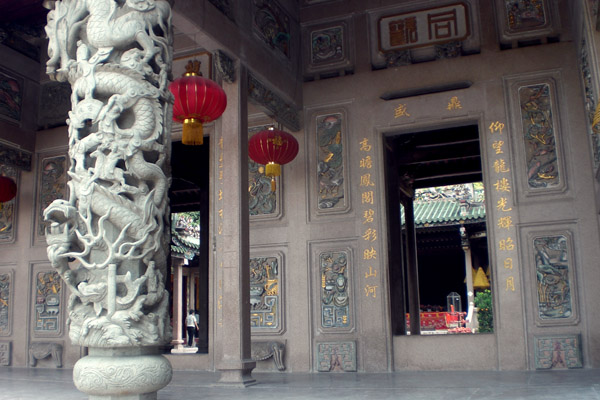
At the foot of Fenghuang Mountain, Fuyong, there is a small temple to the Dragon King. The Wens of Baishixia renovated the temple in 2003. Nearby, the outer row of factories in the Dragon King Temple Industrial Park have been given a faux traditional facade. Above, squatters inhabit small, concrete buildings at the foot of the stepped lychee orchard. Impressions.

This slideshow requires JavaScript.

Jilong Village ruins

In the ongoing rush to raze urban villages, vestiges of the actual old villages have suddenly assumed an almost mythic aura and handshakes seem classically urbane. The latest example? Remnants of Jilong Village, one of the four neighborhood/ villages that constitute Huanggang (the other three are Shangwei, Xiawei, and Huanggang New Villages) are currently being renovated in the shaded grove next to Huanggang Plaza and now flicker with ancient promise. As close as half a year ago, migrant workers rented these decaying row houses; now, visions of a Huanggang Xintiande dance in my head. A few pictures, below.

This slideshow requires JavaScript.

Xiasha: What continues and what fades away

Yesterday, I met Chen Hong (陈宏), executive producer of the Shenzhen Villages documentary mini-series (桑海桑田:深圳村庄三十年) and was gifted my own set of DVDs and associated book! No longer dependent on the odd youku upload, I can now finish my review of episode 5, The Background of Xiasha (下沙背景).

The opening begins with the last Song Emperor fleeing the Yuan. His grave, of course is in Chiwan, but it turns out, over 800 years ago, Xiasha villagers met the imperial refugee and his ragtag army with large casseroles of chicken, seafood, pork, and vegetables or pencai (盆菜) as they are known in Shenzhen. The mini-series narrator solemnly intones that although the Emperor died before his ninth birthday, the pencai tradition lives on in Xiasha Village.  Continue reading

Consuming power — Xi’an snacks

Power, its cultural incarnations, and subsequent transvaluations fascinate me. How we work with and through inequality defines us not only as an identifiable people, but also as a moral community. I understand the scholarly imperative to be discovering who, what, where, why, when, and how our appetites and assumptions, our attachments and defilements inform and transform shared worlds. That said, my interest in power tends toward the practical; I like knowing when I should pick up the tab and when silence is not a sign of respect, but a sin of omission. Continue reading

of law and hope…

The Chinese legal system and Rule of Law are emotional topics for both westerners and Chinese alike. I haven’t spoken enough with westerners to understand our emotional investment in the development of China’s legal system. However, that may be the point — we’re emotionally attached to our investments… Nevertheless, tempted though I am to pursue that line of thought, what I’m actually pondering is how the promulgation of specific laws might serve as symbols of hope. Continue reading

political subtext in chinese television: bo xilai, wang lijun, and pla history

Just after Wang Lijun was reported on “medical leave”, Bo Xilai went to Kunming on an inspection tour, with a special visit to a military museum. Chongqing news broadcast footage of the tour. Now it is probable that this tour and visit to the military museum were previously scheduled. However, within the context of the Wang Lijun debacle and the rise of the Princeling Party to power, these images of Chongqing’s Secretary inspecting toothpaste and toilet paper resonated ironically.

During the revolutionary war, the People’s Liberation established six military regions: the Northeast (东北军区), the North (华北军区), the East (华东军区), the South (中南军区), the Southwest (西南军区) and the Northwest (西北军区). Each region had a General and a Political Commissar. Bo Xilai’s father, Bo Yibo was the Political Commissar of the North, Xi Jinping’s father, Xi Zhongxun was the Political Commissar of the Northwest, and Deng Xiaoping was the Political Commissar of the Southwest. Thus, in visiting Kunming, Bo Xilai was not simply going on an inspection tour, but also retracing the revolutionary steps of his father’s generation and thereby declaring his revolutionary lineage. Continue reading

Wandering Macau’s Historic Center

Macau’s historic center presents us a fundamental conundrum. On the one hand, it’s Qing / Republican China meets Portugal spaces charm and entice; I find these older spaces beautiful in ways that the city’s casinos and glass towers are not. On the other hand, these spaces manifest colonial legacies; the East India Company’s cemetery and crucified Jesuses that adorn the Portuguese churches give visceral form to the foundational violence of the contemporary world system. Impressions of world heritage, below:

This slideshow requires JavaScript.

of dreams and consumption…

another couplet from real estate advertising, this one noted because it suggests the poetic contours of consumption: 梦想的产品,现实的冲动 (a dreamy product, a practical impulse) as if impulse buying were about satisfying dreams, rather than putting ourselves in debt. after all, the cheapest 30 sq meter condo started at 380,000 rmb, well over the minimum wage. what’s more this relatively cheap development is located in dongguan, a long ride from downtown shenzhen. so to buy into the dream one needs an upper management salary and a car. sigh.

what is luxury living?

I’ve been thinking about luxury because it permeates Shenzhen advertising, especially that for new housing estates. The definition of luxury that appears in these advertisements invariably links high-end consumption, images of happy elites, and the idea of homecoming. The strip of reclaimed land that stretches from Shekou Gongye 8 Road to Dongjiaotou, for example, is thick with malls and advertising, as well as littered with evidence that such lives don’t come cheap.

This slideshow requires JavaScript.

The characters for luxury 奢侈 reveal the extent to which inequality threads through and often sustains our desire for these objects. 奢 deconstructs to the characters 大者, or “big one”. Likewise, 侈 becomes 人多, or many people. Thus, the literal definition of shechi is big one many people, leaving the question of the verb that links big ones and the many open to interpretation. Is a luxury item something that all want but belongs to the big one? Or perhaps, it takes many to produce a big one?  Continue reading

Leaves of Book – The Work of Charles La Belle

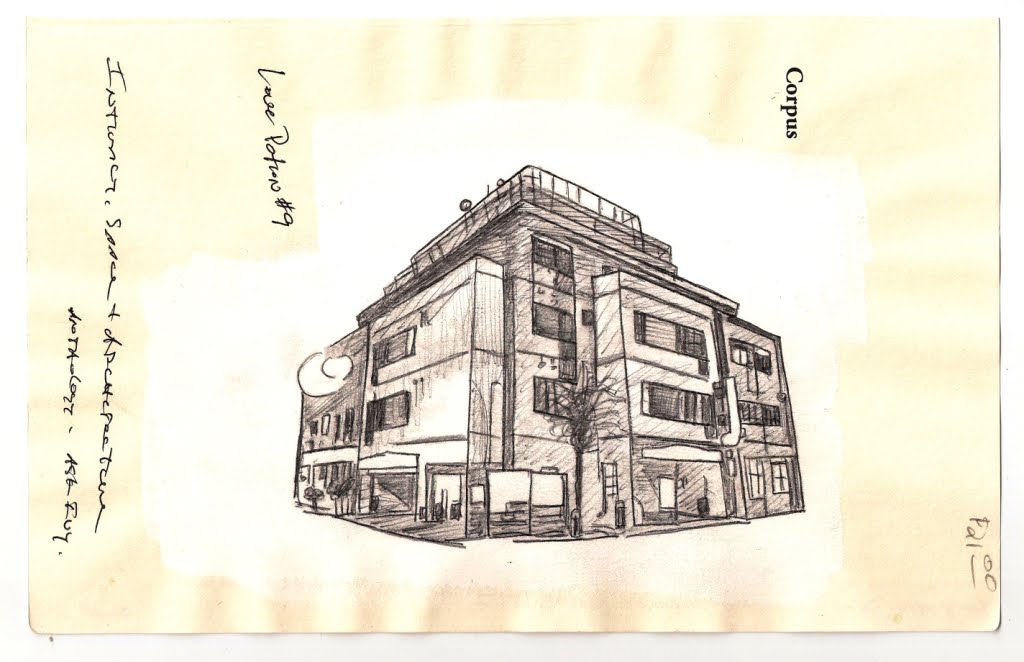
I was privileged to speak at the Dec 11, book launch for Charles La Belle‘s Corpus and Guilty. To see the show, go to Saamlung Gallery in Hong Kong. To buy a copy in Shenzhen, visit the Old Heaven Bookstore in OCT. Response, below:
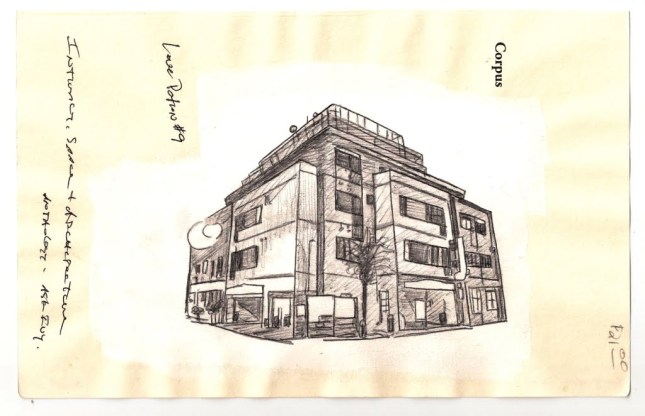
Charles La Belle’s artistic process of layering time and experience in a book that is simultaneously reread and rewritten reminded me of how Walt Wittman lived and in living wrote and rewrote, Leaves of Grass. Between 1855 and 1892, Wittman quite famously published no fewer than nine different editions of Leaves; over the past fourteen years, La Belle has published two volumes that relate to one ongoing project. This intellectual ebb and flow, the sentimental return and reevaluation, self-promotion and in-your-face jouissance enabled Wittman to voice and in voicing inhabit the expanding, teeming, writhing, and destabilizing emergence of a uniquely American identity. Likewise, La Belle also performs an artistic stutter-step to more fully inhabit the unruly emergence of post Cold War, post socialist, post modern, post industrial globalizing and globalized urban identities.

“Buildings Entered,” La Belle’s life work is best aligned with Wittman’s spiritual wandering at the level of process. Like Wittman, La Belle has chosen one medium and one theme to which he constantly returns; like Wittman, La Belle grapples with the problem of transforming mere being into the well-lived – and yes, this is the ethically well-lived – life; like Wittman, La Belle accepts the immanent mysticism of ordinary human lives. The building first entered, like the open road invites each of us to inhabit the unknown.

In terms of content, however, over a century of industrial expansion and relentless capitalist urbanization separate Wittman from La Belle. Continue reading