what is the price of a human life?

If my friends are to be believed, doctors occupy the same hated position in China that lawyers occupy in the United States; they are the white-collar workers who represent all that is wrong with the system.

Indeed, the similarities between stereotypes are striking: Chinese doctors are said to be only working for money; if you go to a public doctor, you can expect substandard care, and; the purpose of medicine is to keep you in the system, paying for unnecessary tests and medicines. Good doctors are few; they work against a system that is stacked against them, and the common people suffer for the greed of the majority of bad doctors. Similarly, not a few Americans hold the same ideas, albeit about lawyers. Private attorneys are only in it for the money; if you have a public attorney you can expect to lose your case, and; the purpose of legal advice is to keep you in the system, paying for unnecessary hours and court appearance. Good lawyers are few; they work against a system that is stacked against them, and the common people suffer for the greed of the majority of bad doctors.

Not unsurprisingly, there are all sorts of Chinese doctor shows — both for entertainment and self-help, just as there all sorts of US American lawyer shows and call-in programs. A popular trope in both countries is the renegade who addresses the injustice of the system, dispensing healthcare and legal aid without thought for his or her personal gain. In these shows, lives are at stake and doctors and lawyers save the day in happy endings and loose the day in tragedies. Likewise, an assortment of hacks lurk in these programs and take advantage of unsuspecting or desperate folk, who have nowhere else to turn. Moreover,there is generally an implied moral entitlement: good characters should receive top medical care in China or the very best representation (in the US).

Interestingly, the contempt that common Chinese and ordinary Americans feel for their doctors and lawyers, respectively, is directly related to the fact that (unlike other white-collar workers), doctors and lawyers represent the highest political values in their country. The purpose of government in China, for example, is to provide for the wellbeing of the population. This care includes healthy food, affordable homes, and timely medical care. Indeed, it is remarkable the outrage and press coverage that these three issues consistently generate in the Chinese press, online, and now through weixin (Tencent’s We Chat app).  In the US, we hold our government accountable to protect our rights, both from each other and against corporations. In China, doctors are the last line of defence in securing wellbeing. Likewise, in the US, we turn to lawyers to secure our rights. And yes, those who break the law and get away with it repeatedly show up in the headlines, while taking on the legal system and calls for particular uses there of can turn mere pundits into talk show personalities and ordinary people into national heroes.

Speculation du jour: Chinese doctors and US American lawyers have been cast as villians and heroes in national dramas because neither system is providing the “good life” for its people. In China, wellbeing is the highest value and doctors exist to maintain this wellbeing. In the US, fairness is the highest value and lawyers exist to ensure a level playing field. However, in both countries, those in most need of healthcare or legal aid are most likely not to receive it. Moreover, Chinese doctors often can’t provide adequete healthcare without bankrupting patients, just as UA lawyers can’t provide decent representation without bankrupting clients. In both cases, systemic breakdowns break ordinary lives. Nevertheless, public anger has not (yet) led for widespread calls to change either the Chinese or American systems, but rather nasty jokes about and threats against doctors and lawyers, respectively.

Sigh.

the shenzhen gospel

Swedish missionary, Theodore Hamberg arrived in Hong Kong on March 19, 1846. The following year, he joined what became known as the Basel Mission, focusing on converting Hakka communities to Christianity. Indeed, Hamberg was the first to draft a dictionary of Hakka into a western language. Hamberg died in Hong Kong in 1854, however, his efforts to bring the gospel to Hakka people prospered. Located in Langkou Village, Dalang Street, Bao’an District, Shenzhen — and yes, I do enjoy the dense specificity of Chinese place names — the Langkou Gospel Hall (or Church) was built twenty years after Hamberg first arrived in 1866.

The first pastor of the Langkou Gospel Hall was Charles Piton, who served the congregation from 1866 through 1884. The next few years, there was no foreign pastor at the Church. However, in 1891, the German missionary 骆润滋 (and if you know his Western name, please let me know) came to Langkou from the Hong Kong Mission. That same year, the mission also established the “Devout and Chaste” Girls School (虔贞学校), moving from Hong Kong further inland.

During the Mao era, the church and school buildings were used as schools and administrative centers. In 1984, the central government allowed for religious services and the Langkou Gospel Hall reopened as a church. In 2003, the community broke ground to build a new church on neighboring land. The school building was used until 1986 and then abandoned to squatters until recently, when the Dalang Street government decided to restore the school and church as historic buildings. Presumably construction will begin in several months and early next year, the school and former Gospel Hall will reopen as public cultural centers. The Church will continue its mission, including exhibitions that document the history of Christianity in Guangdong generally, but amongst Hakka communities specifically.

Below, impressions of a visit to pre-restored Devout and Chaste Girls School and Langkou Gospel Hall, which is currently occupied by a migrant worker family, who earn their living doing piecework for a nearby factory.

This slideshow requires JavaScript.

milk theory

Recent limitations on the quantity of milk powder that Chinese citizens can purchase in Hong Kong and bring back to Shenzhen have given rise to “milk theory”. As with the satiric pronounciations of China in the previous post, the humor of milk theory turns on a pun. Here 奶 can mean wife, mother, milk, or breasts, depending on context.

Milk Theory:

1)      Second wives can be found anywhere, but you can only bring two cans of powdered milk. 2) The meaning of one country two systems, is one country two breasts.  The greastest distance in the world is between the child one holds and the milk powder on the other coast. 3) You have high quality milk powder, we have high quality second wives. The quality of milk powder is in inverse proportion to the number of second wives. 4) Previously, we knew it was against the law to carry white powder, but only recently have we found out its also against the law to carry milk powder. 5) Milk, is a problem the government can’t solve; housing is another problem the government can’t solve. However, the government does have the means to deal with dairies [rufang also puns with a woman’s chest]. 6. Those who created poisonous milk powder never did jail time. Those who sold poisonous milk powder never did jail time. But people who bought safe milk powder are going to jail.

奶论

1)  二奶到处可以找,奶粉只能带二罐。2)一国两制的意思,就是一国两奶。这个世界最远的距离,使孩子在怀里,奶粉却在对岸。3)你有优质奶粉,我有优质二奶。奶粉的质量,跟二奶的数量成反比。4)以前知道带白粉犯法,现在才知带奶粉也犯法。5)乳,是政府解决不了的问题;房,更是政府解决不了的问题。至于乳房,政府官员有办法解决。6)做毒奶粉的不坐牢,卖毒奶粉的不坐牢,买无毒奶粉的却坐牢。

cancer village map

On May 6, 2009, Deng Fei (邓飞) published the “Cancer Village Map” which documented reports on villages where cancer rates were significantly higher than elsewhere in the country. Three days ago, the Chinese government officially acknowledged the existance of cancer villages.  Not surprisingly, most of the villages are located in in the prosperous areas of the country. Moreover, as in Shenzhen, these villages occuppy a grey area regulated and unregulated space. Below, I have translated the orginal post.

Cancer Village Map

cancer map

Jiangsu Province

Yangqiao Village, Guhe Township, Funing Coungy, Yancheng City (盐城市阜宁县古河镇洋桥村). According to a 2004 report in Jiannan Daily, between 2001-2004 more than 20 villagers died of cancer caused by a nearby pharmeceutical and two chemical factories. At night, villagers slept with a wet cloth covering their mouths and noses. The did not feed ducks near the water, but in the pigsties.

Dongjin Vllage, Yangji Township, Funing County, Yancheng City (盐城市阜宁县杨集镇东进村). According to a 2008 report in China Economic Report, between 2001-2006 over 100 villagers died of cancer because of pollution from a nearby chemical factory. All villegers took liver medicine. The villagers sued the factory, but were only given 70 rmb (a little over $US 10.00 today) per person compensation.

Xingang Village, Longgang Township, Yandu District, Yancheng City (盐城市盐都区龙冈镇新岗村). According to a 2009 China Youth Daily report, over the past 7 or 8 years, there were 57 reported cancer cases. All of those who died from cancer were between the ages of 50 to 60 years old.

Guangfeng Village, Guangyi Zhen, Wuxi City (无锡市广益镇广丰村). According to a 2003 China Consumer Report, the village was surrounded by liquid gas and chemical factories. Between 1999-2003, 24 people or more than one-third of village deaths were cancer related. Toxic gas and powder filled the small alleys and emited a strange oder, which fumigated relatives who visited for Chinese New Year.

Gaoqiao Village, Gaoqiao Township and Tumen Village, Huangxu Township in Dancong District, Zhenjiang City (镇江市丹徒区高桥镇高桥村、黄墟镇土门村). According to a 2004 China Environmental Report, beginning in 1997 the area showed a significant increase in tumors, with 71% of cases located in the relatively prosperous southern areas of Zhenjiang. Cases were attributed to a contamination of the  groundwater system.

Jiangxi Province

Huangxiken Nursery, Wangcheng Township, Xinjian County, Nanchang City (南昌市新建县望城镇璜溪垦殖场). According to a 2004 Jiangnan Metropolitan Daily, runoff from a chemical factory contaminated rice paddies, where the seedlings were covered in black liquid. That year, out of a total of 80 village deaths, close to 20 died of throat and lung cancer.

Guanshanqiao Village, Yanrui Township, Yushan County (玉山县岩瑞镇关山桥村). According to a 2006 People’s Daily report, 6 lime kilns located near the village emited grey powder and smoke that negatively affected over 100 mu of arable land. After a rain, vegetable leaves turned pale grey. That year of 60 village deaths, over ten were due to cancer.

Baiyefang Village, Xinsheng Xiang, Yugan County (余干县新生乡柏叶房村). According to a 2004 People’s Daily (Eastern China Edition), mercury in drinking water was 3 times greater than standard. Over ten years, at least 45 people died of mercury poisoning, while another 20 surffered from related dementia. Baiyefang is the most famous of China’s cancer villages.

Sichuan

Minwang Village, Jiancheng Township, Jianyang City (简阳市简城镇民旺村). According to a 2004 report in Democracy and the Legal System, the N-nitroso compounds of ammonia in drinking water was 30 times higher than allowed by law. The source of contamination were chemical factories that did not process runoff befor discharging into the Tuo River. Historically, Minwang was known as a Longlife village, however recently 5 beople died of cancer.

Tingjiang Village, Shuangsheng Township, Deyang Shenfang City (德阳什邡市双盛镇亭江村). According to a 2008 report in China Economic Daily, the village escaped the ravages of earthquakes but not contamination. As of 2008, fifty or sixty people had died of cancer. The mother of Yang Jia, one of the youth heroes of the Wenchuan Earthquake, committed suiced because of the pain from throat cancer.

Henan Province

21 villages including Huangmengying Village in Zhouying Xiang, Shenqiu County (沈丘县周营乡黄孟营村等21个村庄). According to a 2004 Xi’an Evening Report between 1990 through 2004, over one hundred people died of cancer, almost half of total deaths for the same period. Industrial and residential contamination of the upper reaches of the Shaying River seriously contaminated the groundwater system. Residents of all 21 villages in the area need to buy purified water.

Old North Guanzui Village, Ling County (浚县北老观嘴村). According to a 2002 report in Southern Weekend, since the 1980s, the fast development of paper factories resulted in extensive water contamination and rivers that looked like black ink. In a period of four years, 79 people died of cancer.

Qiancun East Village, Changcun Township, Changheng County (长垣县常村镇前孙东村). According to a 2007 Guangzhou Daily report, serious water contamination resulted in numerous deaths due to cancer over a period of five years. All of the fish and shrimp in the river died off and it became impossible to use river water to irrigate fields. The cause of the contamination was 21CN Science and Technology Company.

Guangdong Province

Five villages including Shangbei Village, Xinjiang Township, Wengyuan County, Shaoguan City (韶关翁源县新江镇(上坝村等5个村庄). According to a 2001 report in Legal Daily, runoff from mineral extraction contaminated the “fish and rice country” of Shangbei and Xiaozhen Villages. Arable land became a deep red color. Villagers report increasing cases of skin and liver cancer, if ducks went into the water they died within four or five hours, although some lived as long as three or four days after exposure.

Hubei Province

Cuiwan Village, Zhuji Township, Nangpan City (襄樊市朱集镇翟湾村). According to a 2006 Yangzte River Commercial Report, within a three year period, over 100 people out of 3,000 villagers died of cancer. Of these, the majority were aged 30-50 years old. Villagers claimed that deaths were due to industrial contamination of their river.

Hebei Province

Guxin Village and at least 6 or 7 other villages in She County(涉县固新村等至少6、7个村庄). According to a 2004 report in Xinmin Evening Report, since the early 1970s, this area of the Shannanpan and Ganhe river systems had higher cancer rates than other parts of the country. Statistics from the 80s, show rates of esophagus and stomach cancer 20 times higher than other parts of the country.

Xinanliu Village and 7 other villages along the banks of the Ci River (磁河两岸诸多村庄西南留村等8个村庄). According to a 2007 report by Law and Life, the eight rivers along the banks of the Ci River, the water system of over 20,000 villagers had been contaminated. Cancer related deaths accounted for almost half the deaths in the area.

Wuzhuang Village, Qianxi County, Tangshan City (唐山市迁西县吴庄村). According to a 2009 report in Science News, over a five year period, 10 members of this village with a population of less than 700 residents had cancer. All ten of the cancer patients lived within a 100 meter radius of a smelting factory.

Anhui Province

Liuzhuang Village, Shitai Township, Sheji District, Huaibei City (淮北市杜集区石台镇刘庄). According to a 2001 People’s Net report, this was a famous cancer village. In 2001, over 66 people died of cancer, and the water was as “yellow as cow piss”, earning it the name “killer water”.

Hunan Province

Quangu Village, Guangjiao Township, Nan County, Yiyang City (益阳市南县厂窖镇全固村). According to a 2008 report on China News Net, water quality in the village was so low that it would ignite when lit. It was a former bomb testing site and for over 10 years grass hadn’t grown in the area. It was suspected that chemical weapons were also tested there.

Jinhu Village, Longhui County (隆回县金湖村). According to a 2006 news report on Changsha Political Television, over a period of 20 years, that 29 members of the 285 member village died of sudden deaths, primarily spleen and lung cancer. Villagers suspect the cause was chemical fertilizers.

Hainan Province

Yinggehai New Village, Ledong Li Nationality Autonomous County (乐东黎族自治县莺歌海新村). According to a 2008 Hannan Daily report, as of 2008 118 villagers had died of cancer, resulting in high levels of concern from the Provincial Public Health Ministry and Center for Disease Control.

Xinqun Village, Wanning City (万宁市新群村). According to a 2008 by Nanhai Economic Report, rates of lung cancer death in Xinqun were 9 times greater than in other developed areas. Village drinking water was already seriously contaminated.

Shaanxi Province

Longling Village, Guapo Township, Hua County (华县瓜坡镇龙岭村). According to an undated report from Beijing Youth Weekly, since 1974, of 58 villager deaths, 29 were due to cancer. Professor Lin Jingxing and other researchers and the Chinese Geological Research Institute confirmed that flour and vegetables from this village were contaminated.

Hezuitou Village, Shangluo City (商洛市贺嘴头村). According to a 2003 Xi’an Evening News report, between 1991 and 2003, 46 villagers died of cancer, and during the highest point, there was one death a month. Before the factories were built in 1991, only one villager died from cancer ever two or three years.

Zhejiang Province

Wuli and Zhushanjie Villages, Nanyang Township, Xiaoshan District (萧山区南阳镇(坞里村、赭山街村). According to a 2004 Daily Business report, 80% of villagers had died from cancer. The 26 chemical factories had an estimated daily discharge of 2,000 tons of liquid waste.

Shandong Province

Xiaojiadian Village, Feicheng City (肥城市肖家店村). According to a 2007 report in the Chongqing Morning Report and a broadcast of the Central Economic Half Hour in 2006, 1/3 of the 90 deaths in this village were due to cancer. The average age was 48 years old, with one cancer death of a 4 year old. Dr. Wang reported these deaths, all cancer deaths were confirmed by County and higher level hospital personnel. Dr. Wang also said that these rates of cancer were definitely related to water contamination.

Inner Mongolia Province

Latehai, Baotou (包头打拉亥). According to a 2006 report from New People Weekly, hospital records show cancer deaths accounted for 70.9% of all deaths. Public documents classified water quality as level five, with particulates, sulphates, hardness, and chlorine all exceeded national standards. Further investigation linked cancer deaths to radiation contamination of water from Baotou steel production. In addition, runoff contaminated fields in neighboring villages which no longer could grow wheat. In a ten year period, 77 people had died of cancer.

Yunnan Province

Hutou Village, Laibin Township, Xuanwei City (宣威市来宾镇虎头村). According to an undated Xinhua Net “Focus Discussion” Column, since the 1970s, 6.5% of the population has lung cancer, which is over 1,000 times that of global average.

Tianjin Independent City

Xidi Village and Liukuaizhuang Village(西堤头镇西堤头村和刘快庄村). According to a 2009 China Quality 10,000 li Walk Report, in a period of five years, over 200 people developed cancer, reducing a “fish and rice” village to a cancer village. According to an investigation, over 100 large and small chemical companies surround the villages, discharging black smoke and water discharge, and toxic odors and loud noises permeate the area.

Chongqing Independent City

Huangqiao Village, Bishan Township, Liangping County (重庆市梁平县碧山镇黄桥村). According to a 2006 report in the Chongqing Daily, it seems that the villagers have been visited by the “Illness Devil”. Between 2003 and 2006, out of 500 villagers, 20 died of cancer, but know one knows what caused the deaths.

Taiwan

Wangtian Village, Dadu, Taichong County (台中县大肚乡王田村). Through 2007, since telecommunication wires were put in five years previously, over 100 villagers died of cancer, and villagers were in a panic. Villagers suspected that electro-magnetic currents had turned their village into a cancer village.

the view from the top, circa 1997

The 69th floor observatory of the Diwang Building remains an important tourist destination, albeit something of a time capsule.

The Diwang building was completed in time to celebrate the Return of Hong Kong to Chinese sovereignty. The 69th floor observatory includes a museum that commemorates Shenzhen’s history from 1980 through 1997, a kitchy “Lan Kwai Fang” bar street, and observation maps that date from 1997. The key exhibit is a wax figure installation of Deng Xiaoping and Margaret Thatcher’s iconic 1984 meeting. The installation symbolizes the ideological function of Shenzhen circa 1997 — the buffer zone between Beijing and Hong Kong, which enabled the PRC to push forward its “one country, two systems” policy.

The juxtaposition of Shenzhen then and now resonates precisely because the interior design of the museum hasn’t changed since 1997. In fact, all one has to do is look at one of the maps and compare it to the view from the observation platform to remember that in 1997 Diwang precipitated the city’s glass and steel makeover. Notably absent from the 1997 maps — the civic center, the kk 100 building, and the Binhai Expressway and Northern Loop. Obviously present in the 1997 maps — the extent to which the construction of border town urban villages such as Caiwuwei, Dengba, and Hubei had shaped urban possibility in Shenzhen . Moreover, in the 1997 images, Buji and the second line seem distant, far far away from the booming border region. Nevertheless, villages still show up in the images below — the relatively dark patches are urban villages, including the remains of Caiwuwei after the construction of the KK 100.

Visiting the museum and observatory costs 80 rmb a ticket and if memory serves (because sometimes it doesn’t), fifteen years ago the price of admission was 80 rmb.

This slideshow requires JavaScript.

nationalism despite the state

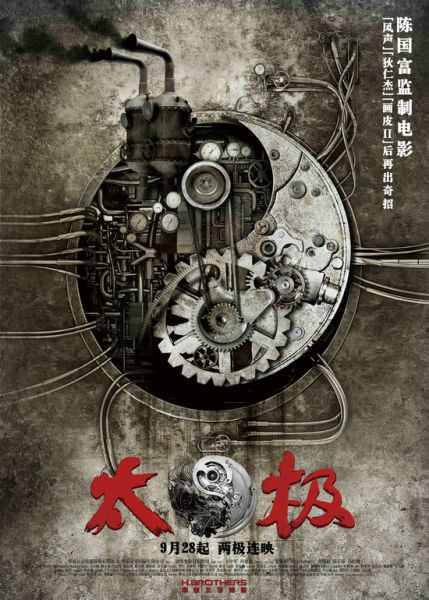
Steampunk + kung fu + colonialism + the Qing Dynasty = Tai Chi 1: Start At Zero (太极1:从零开始).

The plot is simple and the pace full-throttled. There is a village, where kung fu is treasured and passed down from generation to generation, but only to village members — no sharing traditional culture. There are masters who fly through the air and defeat mechanical trojan horses, which bring railway tracks and seductive foreign women. There is a phoney foreignor, who betrays his village and first love to redeem his personal honor. There is a latent hero, who learns kung fu despite the village’s prohibition against teaching outsiders, shuts down the trojan horse despite ignorance about things mechanical, and marries the village kung fu beauty despite being unconscious. All in 90 minutes of whirling feet and spinning hands, punctuated by moments of sudden stillness and insight into what happens to human hearts when forced into a corner. Continue reading

tea time stories

Old Sui makes starkly whimsical woodblock prints the old fashioned modernist way — by hand, alone, and in a studio that is open to friends who drop by for tea and chats. He has collected over 1,000 teapots that when individually shelved and arranged seem oddly menacing. Not a first mind. At first, one sees artistry in the smooth lines and soft glow of each pot. However, as Old Sui opens a drawer to show part of the collection, and then another, and then says that the majority of the collection is elsewhere, the care and time necessary to make and care for a teapot gives way to numbers games and ranking; here are 50+ teapots, here are several dozens, the top  twenty or so have been displayed on a shelf that stretches around the room.

And the rest?

In a room at home.

I know the feeling of insatiable desire. I also enjoy aesthetic displays of objects. But. I am not a collector. Learning that Old Sui has set aside a room for private delectation? The intimacy of this knowledge startles me and my eye settles on a teapot crafted in black clay with flecks of golden sand. Continue reading

the yaopi float glass factory

The Yaopi float glass factory hovers at memory’s edge, abandoned to ideology and chance encounters.

In 1987, the Shekou factory represented the highest level of float glass technology production in China. Today, it evokes nostalgia for the heroic romance of early industrial manufacturing. And that’s the rub. Even before it was built, the technology and mode of production used at the factory had been downgraded in terms of added value. In terms of global competitive advantage, Yaopi had been outdated even before it was built. Perhaps more telling of the ideological structure that ranks advanced and backward nations with respect to production capacity, the Yaopi factory elicits comparison with the Terracotta soldiers in Xi’an. This unhappy comparison relegates Shenzhen’s modernization efforts to the ancient past, even as it confers uncanny modernity on the First Qin Emperor’s army, which of course was mass produced on low-tech, but large-scale assembly lines.

This slideshow requires JavaScript.

xi jinping rocks shenzhen

On his first trip out of Beijing, Xi Jinping visited Shenzhen and none of the streets or areas were cordoned off. And he walked the unguarded walk with Wang Yang, proponent of ongoing neoliberal reforms (transparency and ending corruption). Weibo went wild. As the two toured, Shenzhen residents swarmed taking pictures and uploading them to weibo, taking the trip as a sign that Guangdong may be the first Chinese provence to actually take on corruption.

“Anti-corruption” is, of course, the new content of political “reform”. Hence Xi Jinping’s explicit and repeated references to Deng Xiaoping. The trip itself inscribed the cartography of neoliberal reforms that are glossed as the Shenzhen Model, visiting the Qianhai Cooperation Zone and Tengxun’s corporate headquarters — both symbolize Shenzhen’s role emergence as a leader in new forms of international investment and high technology. In addition, Xi Jinping’s southern tour not only celebrated the 20th anniversary of Deng’s 1992 southern tour, but also included a visit to Luohu’s Yumin Village, the village that became famous during Deng’s 1984 tour. And in case anyone missed the point — Deng Xiaoping reformed Maoism, Xi Jinping will reform corrupt practices — Xi Jinping laid a wreath of flowers at Deng’s statue in Lianhua Park.

It is in this context that “no cordons” between the Party Secretary and the Shenzhen People resonated so strongly. One of my friends commented on the weibo posts saying, “If the biggest (老大) is willing to go out unprotected, the rest of them won’t dare to set up cordons!”

Another replied, “Well Comrade Jiang keeps himself safe.”

“Bah,” was the immediate reply, “He’s an old man, so we’ll give him face. That’s just a question of respect.”

This brief conversation hints at the cultural context of anti-corruption / political reform in China. Both friends were correct. On the face of it, Xi Jinping and new best friend Wang Yang are anti-corruption. Yet, they confront an entrenched power structure that doesn’t retire. All this conjecture matters because many of us are hopeful that Guangdong will be the first province to require corporations and public officials to release financial records to public scrutiny. This is being called “the clean government storm (廉政风暴)”, another reference to the Shekou Model, the Shekou Storm of 1988, when Yuan Geng protected students from investigation by visiting Beijing officials.

schools at the edge

These past few days, I have visited elementary schools in the Xishuangbanna Dai Autonomous Prefecture.

The prefecture capital, Jinghong is undergoing a small (by coastal standards) boom: in 2003, Jinghong had an estimated population of 370,000 and roughly ten years later, school officials estimated a population of over 1.2 million people, suggesting that the same processes of internal migration and rural urbanization that we have seen along the coast; China’s population is not growing so much as it is redistributing (results of the 2011 Census). Indeed, the goals of China’s socialist new village campaign sound explicitly urban — “to develop production, enrich life, civilize the countryside, clean up the villages, and use democratic governance (生产发展、生活宽裕、乡风文明、村容整洁、管理民主的社会主义新农村)”.

Extraction and tourist capitalism have fueled the boom. On the one hand, the primary source of production revenue has been the expansion of rubber tree farming. However, the region also produces pu’er tea, mahogany, and has ancient jade mines. In addition, because Banna (as it is colloquially known) borders Burma, Thailand, and Laos, the prefecture also serves as an entrepôt for Burmese jade, Thai agricultural products, and Laotian hard woods. On the other hand, internal tourism to experience stylized representations of minority cultures continues to grow. Indeed, much of the building development in Jinghong involves adding stereotypical Dai flourishes to concrete buildings, which are structural heirs to Maoist dormitory and mass architecture.

The boom is a reform twist on Maoist efforts to integrate minority communities into the larger Chinese state. The situation of Yunnan ethnic minorities varies, reflecting indigenous pre-Mao state building (the Bai Kingdom at Dali, for example, in contrast to the rain forest tribes of Mengla, Banna), integration into the ancient tea trade, and the building of modern roads and transportation systems. During the Mao era, for example, it took several days to make the trip from Jinghong to the provincial capital, Kunming. Today the trip is a 40-minute plane trip and ethnic Han people hold most political positions and control access to economic opportunities. Indeed, the situation of ethnic minorities in Yunnan resembles that of villagers in Han cities like Shenzhen; whatever opportunities locals have it is tied to traditional land rights as they have been re-interpretted by the state.

However, unlike in Han settlements, where (crudely speaking) rural urbanization has meant making access to some aspects of elite Han culture accessible to peasants, while strengthening class differences, in Yunnan, rural urbanization has had a double thrust — cultural homogenization while asserting Han superiority. In other words, through new village programs, Banna minorities are both sinified and regulated to the lowest rank within Han hierarchies. Of course, many of the Banna born Han are themselves relatively impoverished, but nevertheless better placed than ethnics to capitalize on extraction and tourist opportunities. Thus, what seems to have emerged in Yunnan generally, but Banna specifically, is a situation similar to other colonial situations — on US American indian reservations and throughout the Brazilian Amazon, for example.

The Banna schools that I visited teach the national curriculum to ethnic children. The schools are not destitute, but the problems they face are similar to those faced in peripheral societies elsewhere.

  1. There are not enough students to for large scale investment in education. Consequently, in Banna there are three kinds of elementary schools — education spots (for settlements that only have resources to educate grades 1-2), early elementary schools (combined schools to educate grades 1-4), and complete elementary schools (combined schools that teach the full primary curriculum).
  2. In order for higher level education, most students must leave their home settlements at a young age, some as young as 8 years old to board at an early elementary school. However, any education beyond elementary school entails moving to a county seat; for high school, Jinghong offers the best opportunity to succeed on the gaokao. Not unexpectedly, in Yunnan, Han children, whose parents use a version of Mandarin, are most likely to achieve relative high scores, which are not so high when compared to the results achieved in coastal city schools.
  3. The low birth rate means that even when a complete elementary school exists, there are not enough children to have a class. Consequently, many students end up waiting 2 years to begin their education.

The children were wonderful. The teachers generous. The officials (mostly Han, but some ethnic representatives) determined to improve the situation. However, unless, the values motivating the integration of Banna minorities into the Han state change, I am not sure that the results will differ from other national efforts to integrate minorities elsewhere — cultural loss, relative impoverishment, and the destruction of rain forest. It bears repeating: Underdevelopment and concomitant forms of inequality are the result of human actions, which arise when we confuse profit with the common good.

Impressions from Banna schools, below:

This slideshow requires JavaScript.