what happens when memories can’t keep pace with change?

“Shenzhen Speed” has become a catchphrase amongst urban planners and journalists, makers and ordinary citizens to describe the transformation of Bao’an County into Shenzhen Municipality. In less than forty years, highways have replaced lychee orchards, high-rises have replaced oyster fields, and wi-fi has become as common as coffee shops and fast fashion. Boom!

Here’s the thing: the speed of historical transformation may be blinding us to how quickly we’re forgetting how we got here. Continue reading

what is worth passing on?

Friday August 25, 2017 I had the honor of participating in the closing meeting of the second edition of the “Shenzhen Oral History” project. It was a high level and exciting cultural event that commemorated the people who contributed to Shenzhen’s second decade, 1992-2002. A week later on Friday September 1, I attended the salon for Wu Xingyu and Zhong Yuxiao’s art project “Demolition.” Continue reading

xiasha k.k. one

Impressions of the Xiasha Plaza since the opening of the k.k. one mall. Those who follow the cycle of urban village demolition, relocation, and upgrading know the k.k. folks as 京基, the same development company involved in renovating Caiwuwei.

This slideshow requires JavaScript.

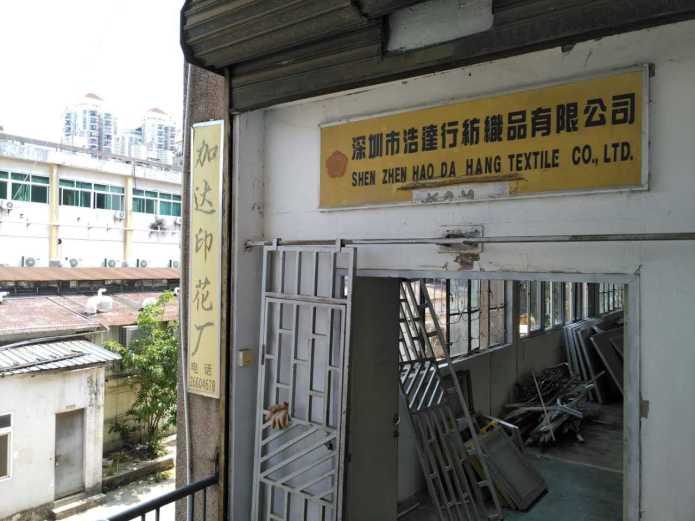
The Baishizhou Jiada Printing Factory Flash Exhibition

I am translating Deng Shijie’s We Chat post of the Flash Exhibit he created at the Jiada Printing Factory in Baishizhou. It was one of several Labor Day events organized by the current Handshake 302 Artist-in-Residence, Lao Tu. Continue reading

shenzhen in detroit@civilla

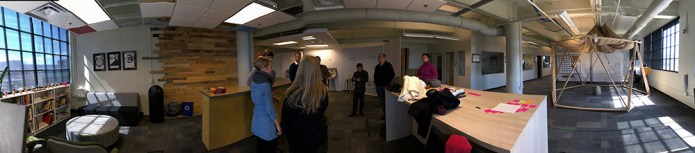
After the Contested Innovation Symposium at the International Institute, U of M, organizers Silvia Lidtner and Irina Aristarkhova brought participants on a full day, full on tour of Detroit. We visited Civilla, the Detroit Institute of Arts, the Henry Ford, and the Heidleburg project–one day, (potentially) five blog posts super tour. Today, I’m reflecting on Civilla’s practice, with an eye toward understanding what it might mean for my practice at Handshake. Continue reading

the shenzhen metro museum…

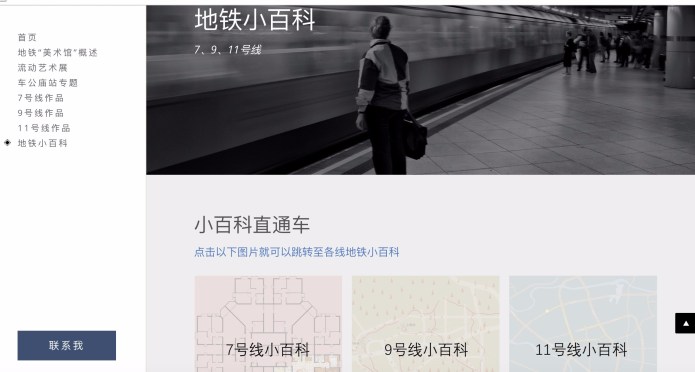
..is now online. For those interested in the maps and insights that we produced for the “mini-wiki” those images and ideas are also online. I’m working on getting the English versions up online. In the meantime, enjoy!

the new shekou cruise ship terminal…

…is big and far from the subway station that so usefully served the old ferry terminal. And yes, hidden behind reclaimed construction sites, the new terminal embodies how Qianhai–as a place and eponymous ambition–is reshaping the coast. Again.

This slideshow requires JavaScript.

children covered in garbage

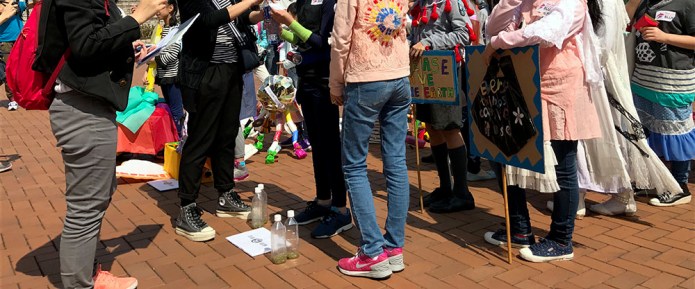
Yesterday I participated in the 蓝海生态艺术巡游 (Make Our Seas Come BLUE) parade, which was organized by CULTaMAP‘s indomitable Tracy Lee. We marched from Statue Square to the Hong Kong Maritime Museum via Victoria Harbor. The march culminated a cross-border Hong Kong-Shenzhen pedagogical collaboration to draw attention to garbage in the oceans, children’s ability to speak to issues that will shape their future possibilities, and the responsibilities of their adults to facilitate uncomfortable conversations in safe environments. Continue reading

baguang

For those who doubt that once upon a time Bao’an County was coastal, I offer images from Baguang, one of the more beautiful sections of Dapeng New District. The majority of Baguang villagers have been relocated, while land and coastline have been red-lined for environmental protection, green living and research. At the moment, Baguang shimmers at the cusp of redevelopment–not yet remade, but yet already under erasure. Boom!

This slideshow requires JavaScript.

one tradition, two villages

The entrance to Changling Village (长岭村) is located on the southern side of Luosha Road at the foot of Wutong Mountain. Before the construction of the Binhai Expressway (1999) and the opening of the East Coast Highway (2008) made traveling across Shenzhen commonplace, Changling marked the practical eastern edge of the early Special Zone. Today, however, Changling is conveniently located on the J1 bus route which connects Seaworld at the southern tip of the Nantou Peninsula to Dameisha on the eastern edge of the Dapeng Peninsula. The entire trip takes 90 minutes without traffic, but usually takes over two hours. Indeed, the J1 route traverses the entire Shenzhen-Hong Kong border, and its constituent roads—Houhai Road, Binhai Expressway, Binhe Road, Luosha Road, and Huishen Coastal Express—literally name the waterways and migrations that once shaped the area: Backwaters, Oceanside, Riverside, Luohu to Shatoujiao, Huizhou to Shenzhen. Continue reading