a special zone avant la lettre: old shajing

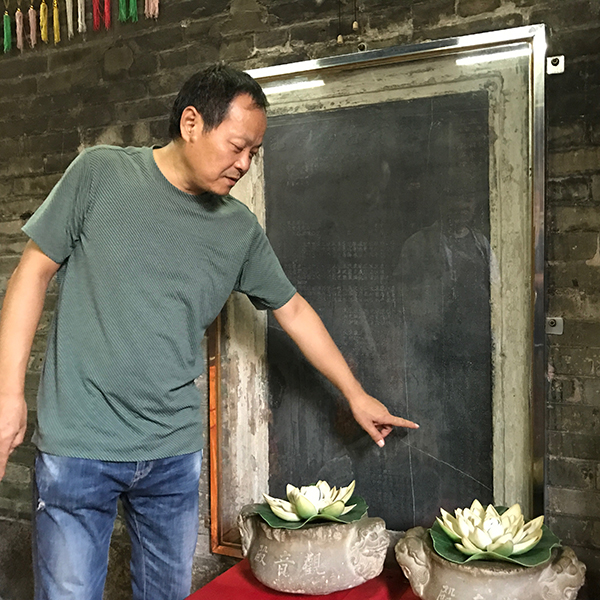
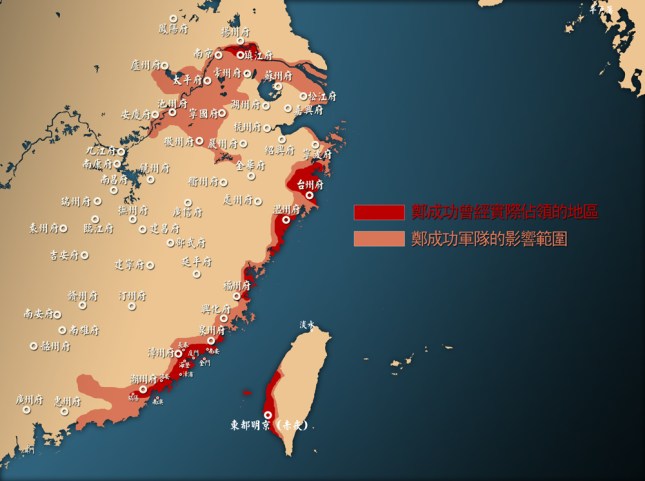
If you’ve had the privilege of walking Old Shajing with anthropologist Cheng Jian (程建), you know that the Chens settled the area during the Southern Song (960-1127). You also know that the Chen family network stretched throughout Dongguan and Xin’an Counties and that when most of Xin’an was abandoned during the Qing Dynasty relocation order (迁海令1644—1661), significant sections of Shajing remained settled despite the fact that it fell squarely within an area controlled and/or influenced by Koxinga (an honorific from 國姓爺; pinyin: Guóxìngyé; Pe̍h-ōe-jī: Kok-sèng-iâ, his name was 郑成功). Clan members also received special dispensation that allowed them to travel into the coastal no-man’s land to harvest sea salt. That’s right: administrative borders, cross border exceptions, and concomitant territorial reorganization have a deep history in the area.
Koxinga_territory

Map of coastal areas either occupied by (red) or under the influence of (orange) Koxinga.

Continue reading

sex in the chasm

In a series of responses to E.J. Eitel’s Europe in China: The History of Hongkong from the Beginning to the Year 1882, I read within and against the emergence of the Shenzhen Special Economic Zone. I am not so much interested in providing a comprehensive history of the SEZ  as I am in tracking Shen Kong, a form post-Mao post-coloniality that is one of the roots of the Belt and Road initiative. As I read, I note associations that link contemporary Shenzhen and colonial Hong Kong. In those flashes of awareness, the norms and forms of contemporary global restructuring make uncanny and distressing sense. Page citations are noted in parentheses and refer to the 1895 edition of Europe in China.

Sex in the Chasm Continue reading

migrations: home and elsewhere

Check out what happens when Handshake 302 curates an exhibition that brings community together through history and art. A brief introduction to the “Migrations: Home and Elsewhere” exhibition that was up at the Longheu P+V Gallery from Dec. 22, 2017 through Feb. 4, 2018. More videos on our FB page; written documentation of our practice here.

coming home to roost

IMG_3005

all the tea in shenzhen…

 In Shenzhen, the tea industry is worth over 1.5 billion USD and is deeply embedded in the local culture. Here tea can be thought of like how wine or fine whiskey is thought of in western countries. The whole process – from purchasing the leaves, to brewing, to drinking – is meant to be savored. Check out Shenzhen Book of Changes:

were we ever here?

I’ve been thinking about memory and how narrative turns what we think happened into something we can use to change what we think might happen, which in turn had me remembering bits and pieces of Four Quartets, TS Eliot’s wonderful meditation on time and its meaning, time as a fundamental yearning to be complete despite transience, impermanence, this movement, this quickening which is also movement toward death:

Words move, music moves

Only in time; but that which is only living

Can only die.

Continue reading

on the shenzhen farm…

As in the United States, the environmental movement in Shenzhen is a call to a different way of living. Big Tree Farm supports this call to integrate vanguard science and Chinese ideas about food and identity. Come along with Shenzhen Book of Changes for a visit to the Big Tree farm:

demolition anxieties…

Today, I walked the village named Baishizhou, which is located south of Shennan Road and is not scheduled for demolition. This other, lesser known Baishizhou is tucked away behind Window of the World, middling housing estates, and the KK Banna Mall. Unlike the Baishizhou that is scheduled for demolition, this other, less expensive Baishizhou does not hum and pop, does not buzz with entrepreneurialism and the rush of young office workers, but rather transports us back to Shenzhen 2.0; at the turn of the millennium, most Shenzhen neighborhoods were like this: straight-forwardly residential in the middle with an outer ring of functional shops and fast food, and hardware stores that spilled into the street because the sidewalk had not yet been laid down. Continue reading

thinking through old maps…

I’ve been thinking about unexpected outcomes, specifically how mapping practices shape geopolitical imaginaries. So, I’m uploading four maps to make a highly speculative point: The Sino-British buffer zone has been a long time coming and like many contemporary boundaries it is an artifact of colonial institutions, including mapping practices. The way the British mapped Hong Kong included the area that today we think of as the Shenzhen inner districts (Luohu, Futian, and Nanshan) and was once known as “the Special Economic Zone.” For a more detailed development of this argument check out the article I wrote with Viola WAN Yan, “Shen Kong: Cui_Bono.Continue reading

what’s up with “10,000 villages”?

The latest Vanke endeavor is called 万村 or “10,000 Villages,” which is a pun on the first character for Vanke (万科). Basically, Vanke has been busy demolishing and upgrading villages around China. According to Vanke founder and former CEO, “10,000 Villages” is a work of the heart. And yet. Now that 10,000 Villages has come to Shenzhen, there has been an outcry against upgrading urban villages because the effect is to eliminate the cheapest accommodations, forcing those who live there to leave the village and find housing elsewhere. Of course, there aren’t many housing options for someone who can only afford the cheapest housing in a unrennovated urban village.

One of the more interesting developments in this ongoing outrage has been the “Open Letter to Foxconn Staff,” which petitions by Foxconn for raises because employees can no longer afford to live in the upgraded villages. In fact, even monthly raise of 100-300 yuan can have serious consequences for workers’ wellbeing. For many, the increase in rent is a significant portion of the money they have been saving or sending home. In a nutshell, despite Wang Shi’s confidence game that the 10,000 Villages project is making China a warmer, better housed place, in Shenzhen the facts suggest otherwise.