In our rush to celebrate Shenzhen’s transformation from a fishing village into China’s fourth city, we emphasize a nets-to-riches fantasy. However, this origin story ignores the inequalities that structured coastal society before the establishment of the People’s Republic in 1949. In this episode of the Shenzhen Book of Changes, we visit Nan’ao and speak with the local fishing people, who before 1962 were not allowed to come on land. They floated from port to port in Dapeng Bay, relying on the fish that they could catch and the protection of the goddess Mazu to warn them when storms were rising.
Author Archives: Mary Ann O'Donnell

the left behind
Here’s the thing about the retreat of manufacturing from the townships and villages of the Pearl River Delta; these areas have urbanized, migrants have settled in and are raising families, but as the low-end jobs and shops that once sustained local and migrant communities follow the factories elsewhere, these neighborhoods are withering. Consider, for example, the older section of Dongguan–莞城, which only twenty years ago was a vibrant community and today is an abandoned reminder of the area’s complicated history with Ming pirates and British opium, its deep relationships with the late Qing Chinese diaspora, and the Pearl River Delta’s urban village origins. Old Dongguan has become a focus of concern for urban planners and concerned citizens: how to revitalize an “old street” that is no longer viable, but sits on prime real estate, or more precisely, inquiring minds want to know: to raze or not to raze historic areas and landmark buildings? Continue reading

only connect
The two-day event was called “Only Connect.” We emphasized the infrastructure that makes neighborhoods out of houses and buildings. Yes, every building had an electrical light, water tubes, sewage tubes and access to the main road. And yes It’s also true, every time that Handshake 302 holds an event at the P+V Gallery, the kids rock our world. Take a look at the smiles that creativity brings! More about Handshake 302 here and here.

opiate of the mass-market
Today’s postcard is a bit of jump jump jump–from Hong Kong free traders to the rise of openly Nazi candidates in the 2018 midterm elections via a bodice-ripper or two.
Here’s the question: Is E.J. Eitel’s Europe in Asia actually a Victorian-era pirate bromance before the fact? That’s the question that keeps bubbling up when I read his characterization of opium pushers free traders like William Jardine and James Matheson. Compare, for example, how smoothly the prologue from a popular historical romance links up with a passage from Eitel: Continue reading
a bully’s honor
As I watch the US president scream and shout and justify his socio-pathologies, as I engage low-ranking officials who change their minds and force their subordinates to work unnecessary overtime everyday, and as I argue with parents who think that their children are not “strong enough (不够厉害)” to take what they want in life, I’ve been thinking a lot about bullies and institutional forms of bullying that are misrecognized as education or leadership or honor and virtue. Like many in the United States, a significant number of Chinese people accept social Darwinism as an accurate description of “the real world,” rather than recognizing social Darwinism for the self-serving misreading of evolutionary theory that it is.
Then, after a grumble about the normalization of bullying in everyday life, I continue reading E. J. Eitel’s Europe in China: the History of Hongkong from the beginning to the Year 1882, which compounds my frustration with righteous bullies and their inability to empathize with anyone’s pain, including their own. I manage three sentences before the arrogance, misogyny and general smugness of Eitel’s text force me to consider if I really want to read over 600 pages of what must have been considered “edifying” reading material. The text does make clear is the extent to which imperial bureaucracies, colonialism and some misplaced yearning for civilization continue to overdetermine the hierarchies and injustices that characterize contemporary societies. Continue reading
in the news, eighty years ago
A bit of follow-up on the persistence of colonial structures. On the same page that The Evening Telegraph recorded the sale of four ships from China Merchants to Jardines, we see the galling legacies of geographic morality. And yes, the stories could have been tweeted today with the caveat that today we are angry and then we were smug. Sigh. Continue reading
what’s so free about free trade?
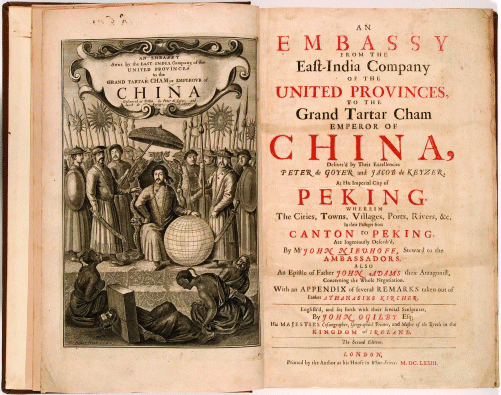
Like many late 19th century Britons, E. J. Eitel saw the East India Company (EIC) as the economic equivalent of the Qing Dynasty, asserting, “However galling this stolid assertion of self-adequacy and supremacy, and this persistent exclusivism of the Chinese Government, must have been to the East India Company’s officers and to the Ambassadors specially commissioned to bolster up the position of the East India Company in China, it must not be forgotten that the East India Company was, within its own sphere, just as haughty, domineering and exclusive a potentate, as any Emperor of China (19).”
unionization at jasic technology
Sharing a SACOM video about the situation at Jasic Technology in Pingshan (northeastern Shenzhen).
For more on efforts to help workers in China, check out SACOM’s FB page.
lion dancing
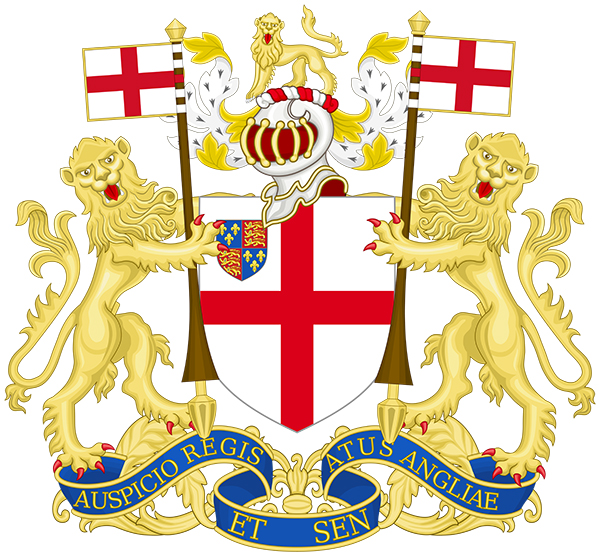
During the 1990s, when commercial housing first took off in Shenzhen, double lion gates were common. Today, they seem reminiscent of a time when the desire to muscle forward seemed the point of all this development. In retrospect, it is tempting to see in the commercial appropriation of the double lions intimations of the ways in which China Merchants is the successor the British East India Company: from chartered monopoly to state-owned enterprise in the South China Sea via US American containerization. Below, images of the EIC coat of arms and the door to the Shazui ancestral hall, circa 2010.


first look at the belt and road
Its difficult when looking at a map of the proposed Belt and Road and not associate the maritime road with British colonialism, albeit in reverse and more than a century after the fact. But that’s what’s so distressing. When the British parliament dissolved the East India Company (EIC), it did not dismantle the systems of unjust and unjustifiable extraction that EIC had put in place over roughly four centuries of occupation, exploitation, and forced participation in the system. Instead, independence movements saw the rise of local elites who were determined to benefit from the system, justifying their profits with respect to local values and structures of oppression. In other words, it was never just the Brits, but also the Brits and their local running dogs (to use Mao Zedong’s felicitous phrase) and even after Independence, the dogs kept yapping, securing military support from the US and elsewhere (for the distressing tale of the fate of the Third World as a revolutionary ideal, check out The Darker Nations by Vijay Prashad).
The problem, of course, was that the profitability of the British system depended on opium; where would surplus profits (to fund industrialization, for example) come from without monopoly, forced labor, and addiction? Certainly, once India regained control of the Bihar plantations and China retook its ports, both countries were faced with the problem of “surpassing England and catching up with the United States” in the absence of captive markets and a drug monopoly to finance their industrial revolutions. And this may be why Europeans and US Americans fear the Belt and Road: if you’re not a running dog with Chinese characteristics, just what are your options in the new world dis/order (and yes, I’m looking at you, midwestern farmer)?

Map from an early analysis of Belt and Road, eurasia review.

Map of EIC trade routes from Nick Robins (2006) The Corporation that Changed the World: How the East India Company Shaped the Modern Multinational.
 Shenzhen Noted