shenzhen comes out in favor of new attitude toward urban villages

It’s been a long time coming. Or not. Roughly a decade after Shenzhen targeted urban villages as “dirty, chaotic, and substandard” and less than five years after Gangxia changed how we thought about compensation, the official Shenzhen press has indicated its time for the city to change how it thinks about urban villages. Continue reading

shenzhen speed: nan’ao

I have this longing to believe that somehow what came before was less fragile and much less fleeting, more easily touched and grasped than is the present. The irony of this longing caught up with me in Nan’ao, where three generations of fishermen live side by side on a beach front urban village (that, yes, is scheduled for partial demolition and redevelopment). Continue reading

post-industrial villages

Last year, the last of Foshan’s famous pottery kilns was decommissioned, leaving the city poised at the edge of a complete renovation–from a dense network of markets, township and village owned industrial parks, and new villages into something bright and shiny, an amalgamation of high-rises, offices, and malls,  where products that are no longer produced in Foshan can be purchased by people who suddenly find themselves positioned to become a next generation of “urban village” landlords.  Continue reading

conference blog

I’m participating in the Urban Futures Workshop at the University of Singapore, Feb 22-23, 2016. Participant abstracts and my abstract are online. If you’re in the neighborhood and tempted by critical geology, please join the conversation.

the “village” thing

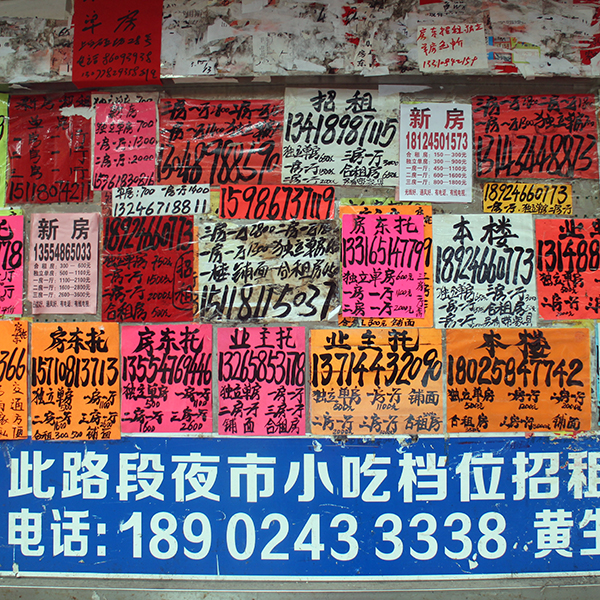
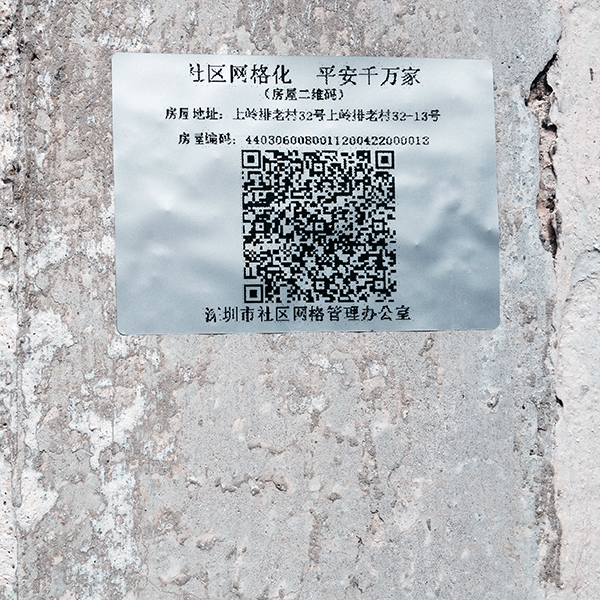
This past week, I toured Shangling Old Village (上岭村) in Dalang. Decaying villages like Shangling contextualize the “what came after” success story that is SHENZHEN! And yet. This contextualization depends upon one, standardized (and quite frankly boring) narrative of rags to riches, sudden wealth, boom boom boom, etcetera etcetera and so forth.  Continue reading

week in review: Sunday October 11 through Saturday October 17

I’ve decided to try posting weekly reviews; I’ve been busy, but missed the blog. I’m hoping that by scheduling a week in review post, I’ll reach a happy medium. Today, I’m publishing a short review, after today, I will be publishing the week in review on Friday mornings, Beijing standard time, which is conveniently the standard time for the whole country!

Bureaucratic hoop jumping:

Last week to extend my visa, I went to the police department. It is necessary to fill out the forms online, but those forms can only be accessed in the building. However, before I was permitted to enter my data, I had to show one of the officers that my documents were complete. They weren’t, so I went upstairs to make a photocopy. After I filled in the form, online, I took a picture of the screen so that an officer could print out my application by reading the registration number. This is necessary because it is impossible to enter more than one letter (A B C) in the line. Then I got my number and waited. Everything was okay, except that I had to bring my husband to the police department to fill our a guarantee letter that day, other wise I would have to do it again. We persevered and documents were submitted and accepted. Continue reading

handshake 302: WeChat connections

Handshake 302 has been we-chatting in Chinese for half a year now. We are now starting to offer updates in English as well. If you scan our barcode (above), you will receive updates in English and Chinese about one of Shenzhen’s most vibrant public arts projects. The updates also include information about upcoming events and instructions about how to join our events. Welcome to the conversation!

idiots we be…

…and yes “we” is you white man. I began this morning grappling with the problem of statistical representation and sustainable imaginaries in the Pearl River Delta, which has roughly the same GDP as Switzerland spread over an area that is only 1.3 times greater than Switzerland. So yes, I live in an important region of the global economy. But here’s the rub: the PRD has a population that is almost 8 times that of Switzerland. This means that sustainable development in the PRD entails grappling with issues at a scale much greater and with fewer resources per person than in Switzerland.  Continue reading

of migrants and immigrants, shenzheners and locals: some definitions

Talking about migrant workers in China (and throughout the world’s booming mega-cities) usually means “rural to urban migration”. However, this is not the case in Shenzhen, where “urban to urban immigration” has been as fundamental to the city’s success and growth. Indeed, the diversity of Shenzhen’s migrant population complicates easy understanding of what it means to be a Shenzhener, let alone academic debates about urban belonging and ideologies of exclusion. Continue reading

boardwalk shenzhen: jiaochangwei booms

Almost one year ago, I posted on the development of Jiaochangwei, which is probably best understood as Atlantic City or Coney Island on speed, Shenzhen speed. Continue reading