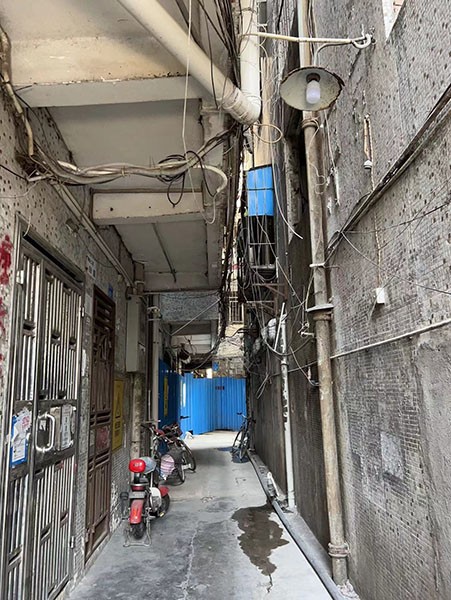
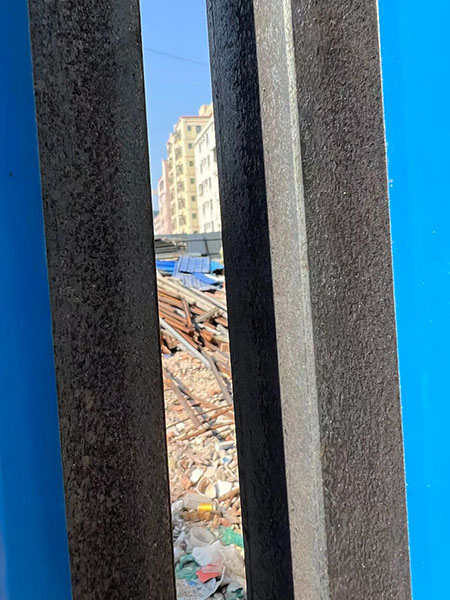
what’s the difference between a typhoon and reform and opening up?

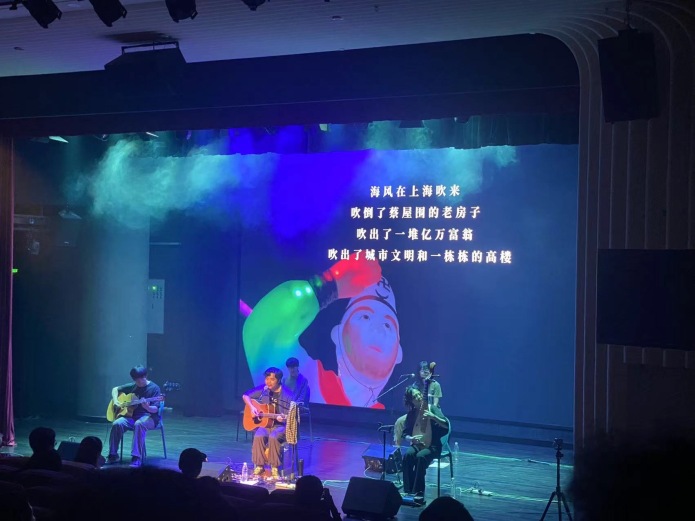
And this is not the opening to a joke, but a loose interpretation of a stanza from a new song celebrating the Shenzhen story. The stanza is:

海风在上海吹来;吹倒了蔡屋围的老房子;吹出了一堆亿万富翁;吹出了城市文明和一栋栋的高楼, which translates as: the sea breeze blew in across the seas; blew down the old houses of Caiwuwei; blew a pile of millionaires into existence; blew urban civilization and rows of high-rises into existence.

Continue reading

interview with caixin new media vice president zhou zhichen

Last week’s interview with 财新新传媒副总周智琛 is now up on the Caixin website as part of their 龙中对 series of interviews. “为城市立心” is about 35 minutes (no commercials) and gives a good sense of how the public debate on urban villages is now being framed, or more accurately how I’m now framing the conversation in terms of my own sojourn. To view the interview, ether use the VR code in the poster or follow this link.

what’s on display and who can see it?

This past week, in addition to participating in large public culture events, I also had the opportunity to visit two privately organized cultural spaces. The first was a private collection of shoushan stone carvings (寿山石) and the second was a community museum.

So some preliminary thoughts about what these spaces suggest about post COVID culture in Shenzhen.

Continue reading

bogang, shajing, bao’an, shenzhen

Shajing is a large subdistrict in northern Bao’an. Until the road system took shape and the second line ceased to operate as a strict boundary (both circa 2003-4), most locals went to Changping, a market town in southern Dongguan when they wanted to purchase or enjoy those things that were only available in a town. Historical Shajing comprises three main areas: the oyster settlements, Bogang, and Wanfeng. Indeed, one of the pleasures of visiting a Shajing neighborhood is not only its architectural and cultural diversity, but also the reminder: Shenzhen has only become important recently. Historically, the largest settlements were located along the northwestern coastline in the Fuyong-Shajing plain.

Continue reading

chegongmiao to xinzhou (another futian)

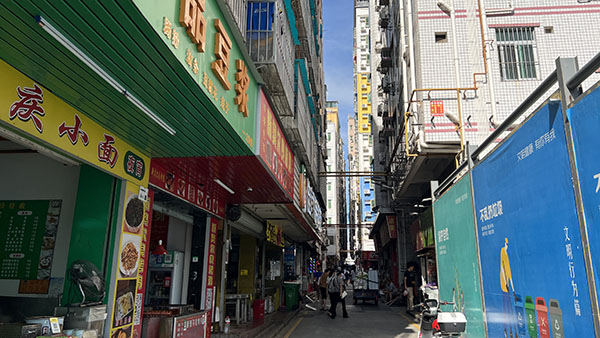
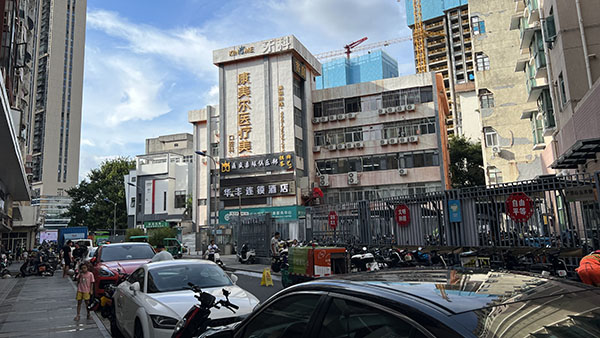
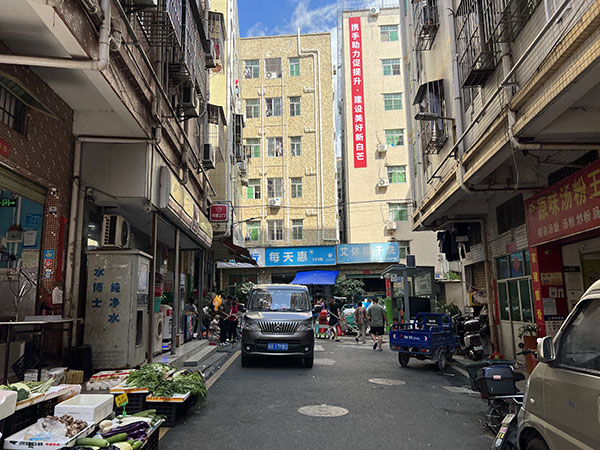
The walk from Chegongmiao to Xinzhou used to be a walk from the factories to Xiasha and Shangsha, urban villages where workers and their families lived. Then there were upgrades and a spurt of entrepreneurial redevelopment. However, this area was zoned for redevelopment before the 2018 decision to halt the demolition and redevelopment of working class neighborhoods. Consequently, during the COVID years, demolition and redevelopment proceeded, blurring the borders between high- and low-income Futian. Nevertheless, a few jagged edges remain, below:

the cultural geography of xixiang

The number 1 subway line stops at Pingzhou (坪洲), which once upon a time was a sandbar near the coast of the Nantou Sea. The station is at the edge of Qianhai, but near the former center of restored Bao’an County. The county seat of restored Bao’an was Baocheng (Bao City)-Xixiang, with administrative functions in Bao City and commercial functions in Xixiang. Indeed, the layout of Bao City-Xixiang echoes the layout of Luohu-Shagbu, with a new town going up next to the older market town.

Continue reading

同组: unified rentals

A few weeks ago, there were protests in Baimang (白芒) Village about the new “unified rental” plan. (Perhaps “consolidated” would be a better translation?) In a nutshell: the government will become the only second landlord in a village, upgrading rentals and then renting them out, preferably to college graduates. The protests came about (as in Baishizhou four years ago) because the forced eviction notices came out in late May early June, which is test month. Students and their families were being evicted after intake for the 2023-24 school year had finished, meaning that many would not only loose their homes, but also their place in school. Also as in Baishizhou, the new plan threatens family life because there are few places where families can live together and send children to school. At the moment, the village is going through a “cooling down” period, but it seems that once school is out, the process will proceed.

Sigh.

Located in what used to be a huge swathe of lychee orchards, Baimang is primarily a residential village, where commerce is geared to the everyday needs of renters–small markets and shops selling plastic household goods. At the center of the village are old village buildings, including an ancestral hall and two towers (碉楼). These row houses are surrounded by several generations of new village housing–concrete villas and tiled handshake buildings. Once one of the second line border villages, Baimang is now within Nanshan District’s “Innovation Corridor” and offers relatively easy commutes to University Town and High Tech Industrial Park.
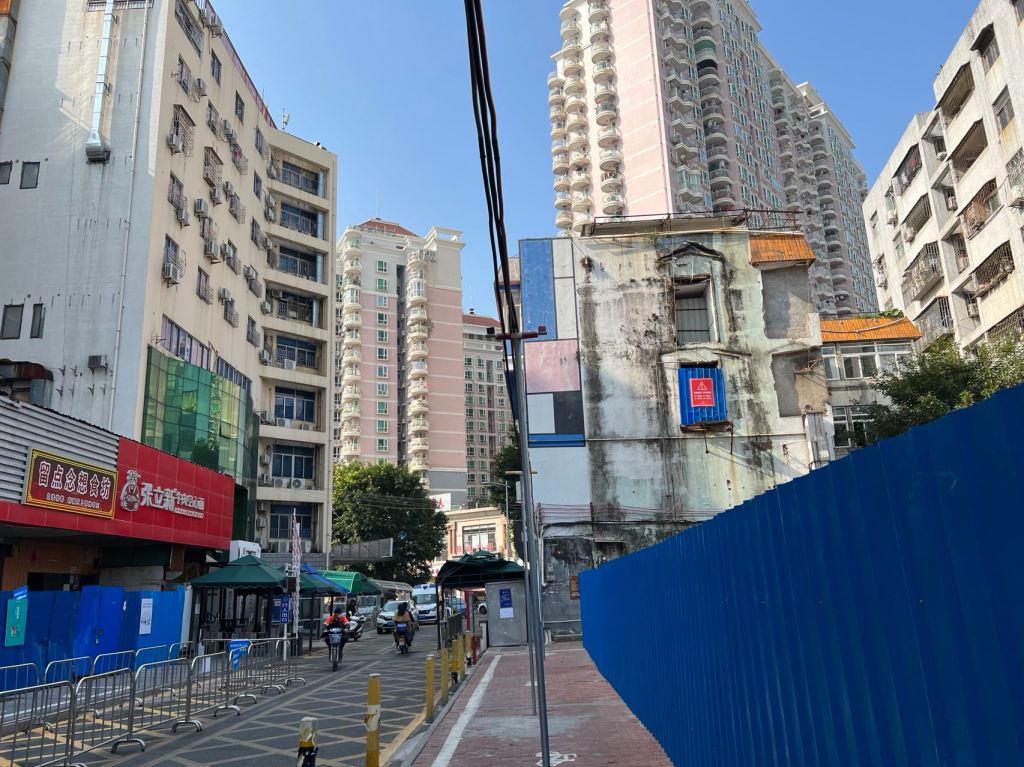
baishizhou blues

Demolishing an urban village, especially one as large as Baishizhou is a long and surreal process. Different sections of the village are at different stages of demolition, and while some buildings are still home to families and shops, others have already been replaced with temporary dormitories for construction workers because one of the main sections of the site is already going up. Impressions from yesterday’s walk:

baishizhou village: a return of the repressed-what’s in a name mash-up

Most are aware that the area we once knew as “Baishizhou” was located north of Shennan Road, comprising four villages–Shangbaishi, Xiabaishi, Tangtou and Xintang. The neighborhood’s name derived from the “Baishizhou” subway station. In turn, the station was named for the historical Baishizhou, a mudflat or sandbank, which was located south of Shennan Road. Historically, our Baishizhou was a continuation of historic settlement patterns, while Baishizhou Village seems to have emerged more recently. Nevertheless, the demolition of our Baishizhou has led to the emergence of a new Baishizhou and this new Baishizhou has a telling (and frankly distressing) general layout. Below, I give a brief overview of the layout and then a brief history of the place name, Baishizhou. And yes, its more speculative than conclusive. Reader be warned.

Continue reading

baishizhou, January 2023

Photos from Baishizhou, Dec 31, 2023. Three notes: 1, the Baishizhou mural has been replaced with a Shahe mural, suggesting that the area’s rebranding is proceeding apace; 2, the covid regulation infrastructure was solid and expensive, even though the area was already being demolished, and; 3, there are still holdouts in the village, most closer to Shennan Road, however, the center area near Jiangnan Department store, where 302 used to be is difficult to reach because mostly razed and inside the current construction site.

Impressions of the walk, below.