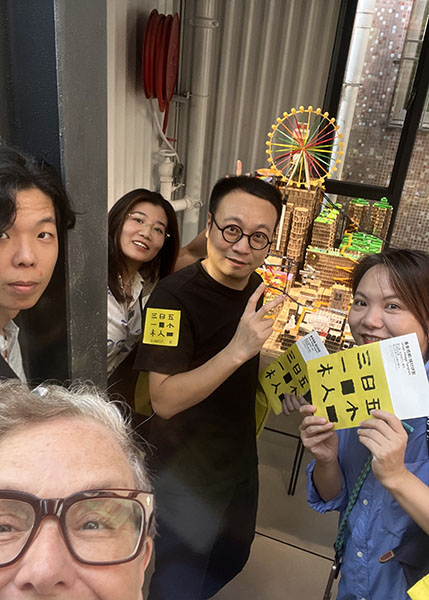
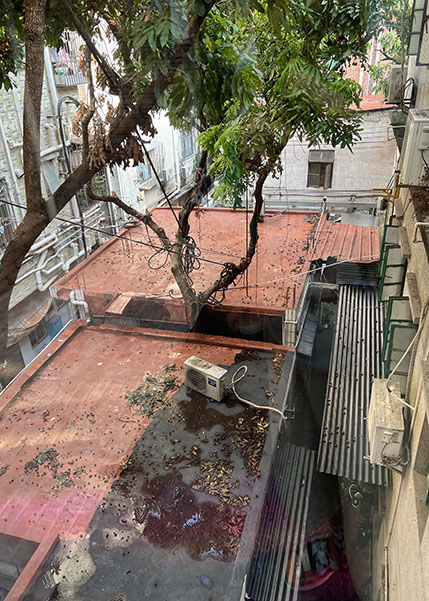
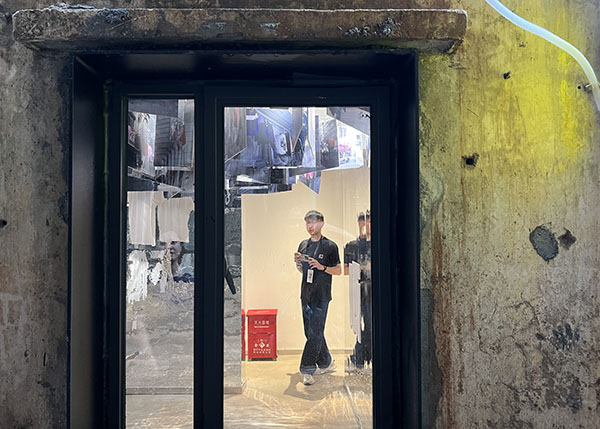
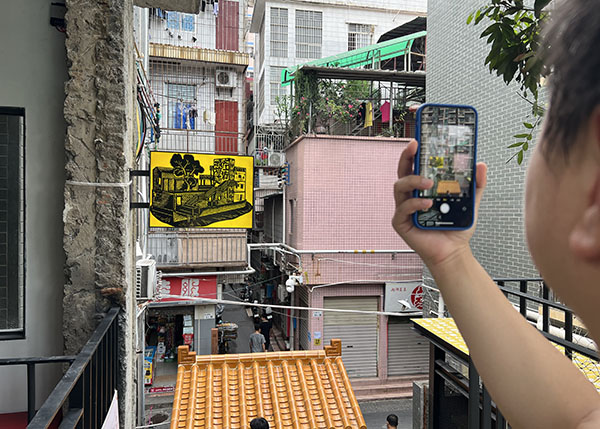
So the Nantou venue of the 2023 UABB finally opened on August 16. Rumor has it that the reconstruction of several handshakes was delayed. And delayed. And delayed. But. The results hover at the edge of critique, where showing is itself already taking a position, especially as what we can show and how it can be shown have been increasingly restricted. What I came away with was a sense of how windows function in tight, crowded spaces. We catch glimpses of our neighbors and strangers on their way, peeping across (necessary?) divides. Impressions of a walk through official biennale and adjacent spaces, below:
Tag Archives: shenzhen






dongmen / laojie
If you’ve been studying Shenzhen, you know that some of the most widely circulated images of the city circa 1980 were taken by Leroy W. Demery, Jr just before the SEZ was approved. Demery uploaded the images to flickr, where they were picked up by historians in Shenzhen, including government exhibitions. In 2013, he recalled that trip in an Insider interview. He returned three years later, and although Demery didn’t leave the general area of the railway station, nevertheless he noted that it wasn’t the same city. Boom!
Continue reading
huangbeiling
Yesterday, I walked Huangbeiling, which is located on the eastern section of Shennan Road. Before the construction of the subway system, Huangbeiling felt like the end of the accessible SEZ; there was more beyond, but getting there required a car or plans for a day trip. Today, Huangbeiling is a major transportation transit hub, linking the downtown area to the eastern coast.

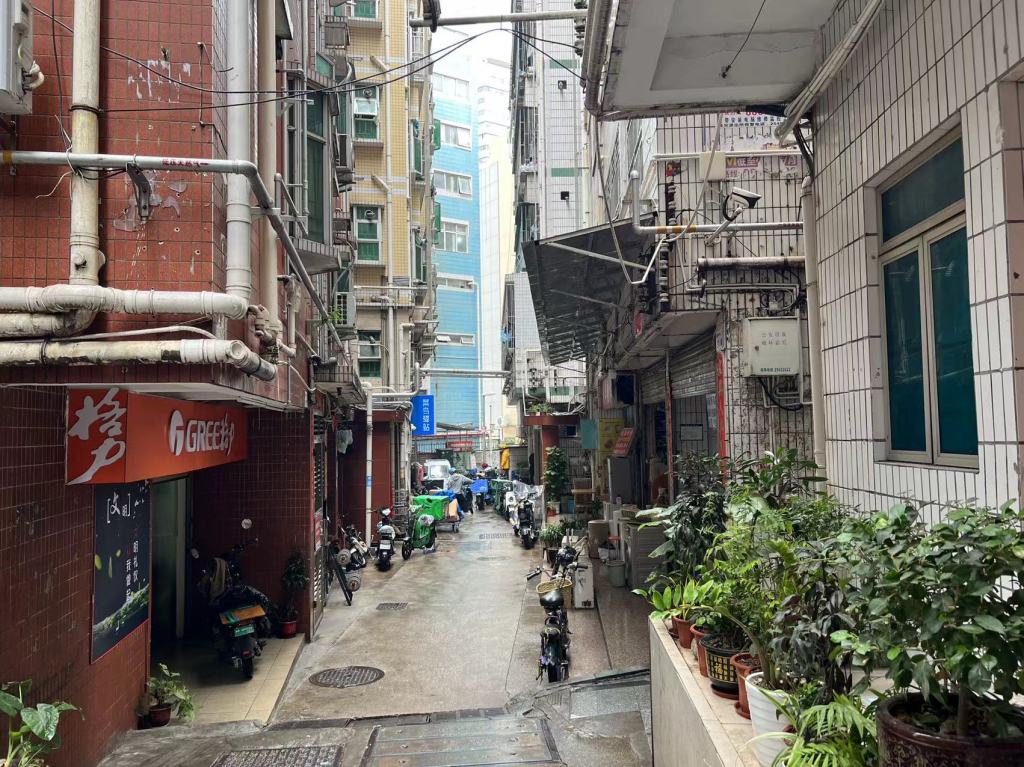
Huangbeiling still feels like a golden era urban village, albeit recovering from Covid shutdowns. The layout of the village is against and up the Wutong Mountain Range, with enough nooks and crannies for unexpected encounters: a household temple to Guanyin, a mountain park with feral cats hanging out in tree branches, and good, relatively cheap food.



Sixteen years ago, one of the earliest Fat Bird guerrilla performances was held at the Huangbeiling pet market. Dogs and cats were just becoming fixtures–like cars and branded items–of the middle class Shenzhen lifestyle. Fat Bird “rented” a large dog cage for about five minutes before security guards and village leaders appeared and asked us to leave In the video of the post-performance interview you can also glimpse what this section of Shennan Road used to be like. After the performers were asked to leave, we jumped on a bus and went across the city to Chiwan. The short performance gives a sense of both the transformation of the area, as well as the relative openness of the city at the time compared to the present moment.

baishizhou, January 2023
Photos from Baishizhou, Dec 31, 2023. Three notes: 1, the Baishizhou mural has been replaced with a Shahe mural, suggesting that the area’s rebranding is proceeding apace; 2, the covid regulation infrastructure was solid and expensive, even though the area was already being demolished, and; 3, there are still holdouts in the village, most closer to Shennan Road, however, the center area near Jiangnan Department store, where 302 used to be is difficult to reach because mostly razed and inside the current construction site.
Impressions of the walk, below.


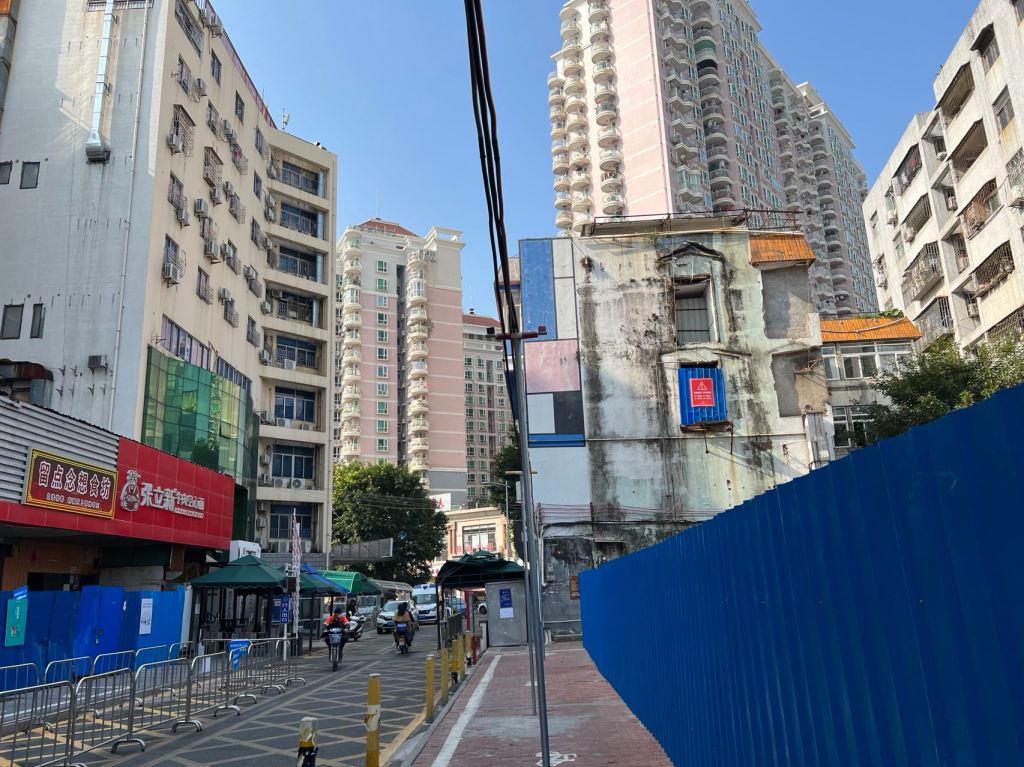


thinking about what it means that Shenzhen must needs be constantly renewed…
Yes, this is another happy collaboration with Jonathan Bach. Chapter from Neue Städte: Vom Project Der Moderne Our Authentisierung, ed. by Andreas Ludwig.

rhythms of the bug
Yesterday morning between midnight and noon, 4 positives were reported in Shenzhen. One each in Pingshan, Xiangmihu, Nanhu and Dongmen Street Offices. So basically in the east, but citywide rapid response: neighborhoods went into lockdown, emergency corona testing was mandatory in those those street offices, and everyone in the city was notified that all day Sunday, June 19 access to public transport and spaces would require a 24-hour QR code, or green horse. Government sponsored events, including a planned Handshake guided tour of Shatoujiao were cancelled. Blink. The information was delivered to our phones.
I took the above photo while waiting online to get tested. For the first time in several months, we waited over half an hour. Fortunately, it wasn’t raining. Sigh.
formalizing boundaries within the city
One of the results of grid management (see Covid Among Us for details) has been the hardening of the city’s informal boundaries. However, this process has been ongoing for several decades in part via the imposition of a second traffic grid on top of the original traffic grid. In practice, this has meant re-purposing earlier, narrow roads as the internal roads of a cordoned off housing estates 小区 and laying a wider, more extensive network around the newly isolated gated community. In other words, what was initially planned as an open city, was incrementally partitioned and closed off even before grid management came online. In some sense, 2022 zero-Covid protocols merely accelerated a process that was already underway. Once you understand the logic of how the traffic grid was re-inscribed, its possible to see how boundaries were hardened through urban expansion.


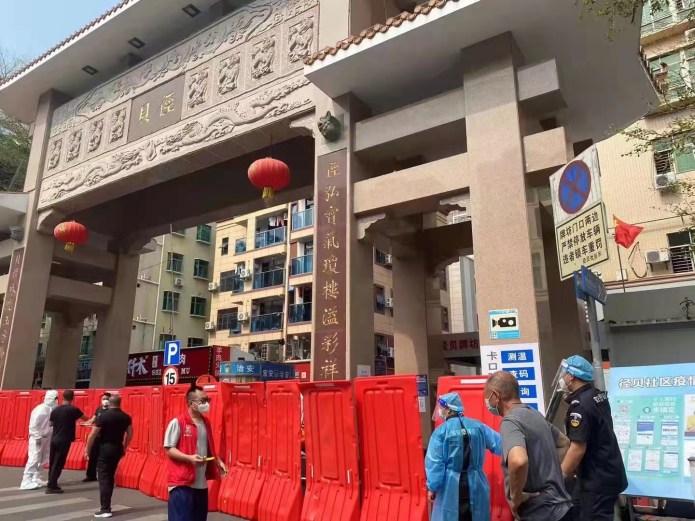
what to make of covid videos?
One of the most difficult things to figure out is what to make of video clips on WeChat. Whoever took the time to take out their cellphone and film these moments, clearly thought that they reveal some truth about Shenzhen under lockdown. But here’s the rub: these clips often circulate without captions, as if the content was self-explanatory. When they do have captions, these videos are still difficult to understand because its difficult to know who the protagonist and antagonist are. Who should we sympathize with? Who should we condemn? However, unless I actually know the person who produced the video clip, there is no way to confirm who filmed the video and why, when it was filmed, what provoked it and what came next. I watch a clip, thinking, “Now I understand.” But what I’ve understood slips away the moment I click on the next post. Indeed, the lack of third party confirmation haunts all Covid posts on Shenzhen social media, especially because there are few ways to actually visit sites and ask. We have puzzle pieces, but no way of knowing what box they came from or even if they’re part of the same puzzle. The city seems more ephemeral than ever.
So, some videos that feature Covid management teams in hazmat suits. Make of them what you will:
Continue reading
“war time” situation
The image reads: The humble wishes of Shenzheners, be able to leave their offices, be able to go home, sleep through sunrise without being woken up by megaphones. It’s true, as omicron has spread throughout Shenzhen, the city has entered what has been called in groups as a “war time situation.” Where it is required to be tested four times over four consecutive days. If a case is discovered the building is closed with people in it (can’t leave their office), the residential area is closed (can’t return home), and larger areas, depending on the routes they have taken over the course of their infection, are also closed. And yes, they have woken people up in the middle of the night and herded them outside for compulsory testing. The shut downs in Futian have made people especially nervous and some report going to buy vegetables, but the stores are empty.
Today, I’m wondering about the relationship between Russia’s invasion of Ukraine and the abrupt turn to “war time” metaphors in Shenzhen. I’m not yet sure how to think about this juxtaposition, but I can’t be the only one wondering, who does this militaristic rhetoric serve and toward what ends? Is it to take our minds off the upcoming Two Meetings? Is it to get us used to talking about war time necessities? Is it to distract us from Xuzhou? Is it to deepen levels of control and surveillance in Shenzhen? All of the above? I’ll let you know my thoughts when I have some…
of affordable housing and high-density schools
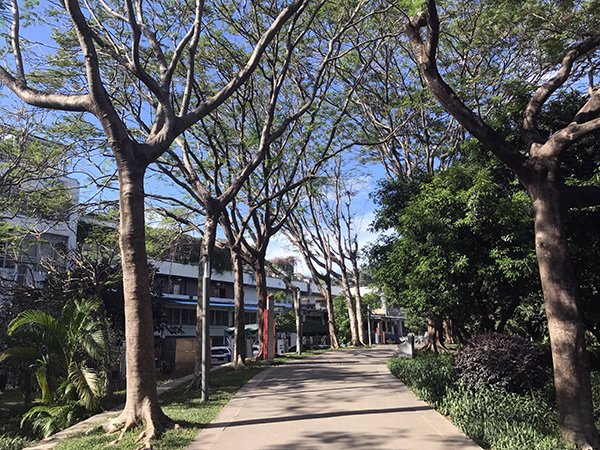
A great Shenzhen neighborhood brings together several generations and types of housing. There is usually an urban village or two, danwei housing that was built before 2000 (more or less), and a larger mall complex that brings in the subway. When these clusters of different building types are located within walking distance of each other, you end up with a thriving independent food scene, affordable housing for singletons and low-income families, and upscale spaces that provide air-conditioned comfort for a cup of coffee or a cram school.
Among 90s generation immigrants (who are twenty-something or just turned 30), Meilin has become popular because it not only provides a diversity of housing and shopping options, but also because it is centrally located; anyone who lives here is looking at relatively quick commutes to work. Nearby urban villages are also popular among low-income families, who can rent two-bedroom apartments for 3,000-4,000, which is expensive, but doable with two parents working and an elder who watches children.


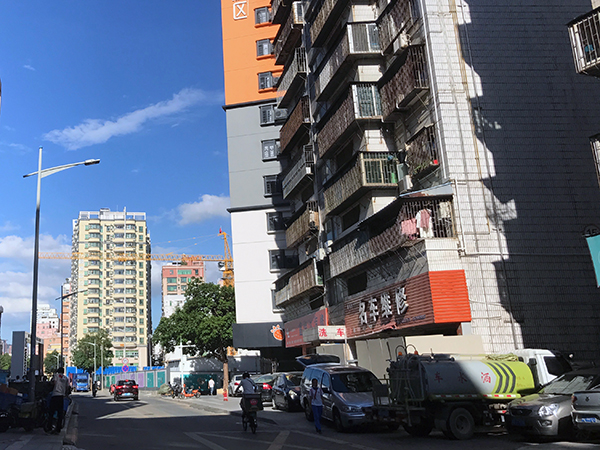


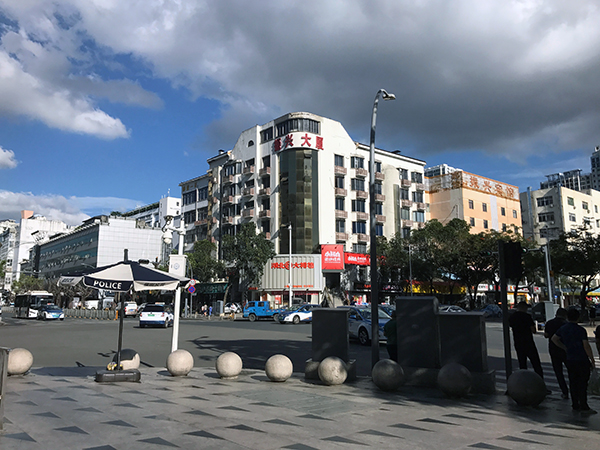
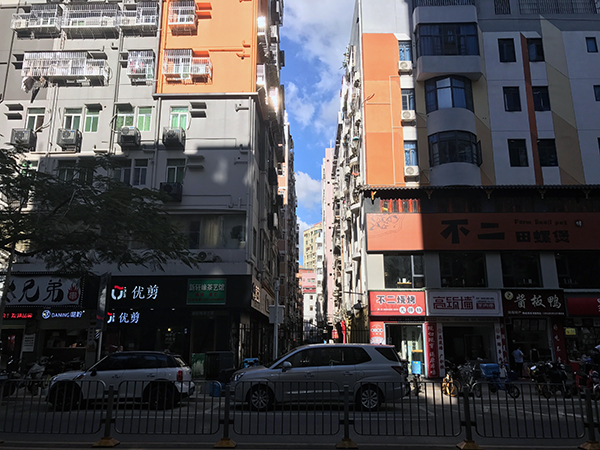
The popularity of this kind of mixed housing neighborhoods means that Shenzhen doesn’t have enough elementary school places where most families live. Historically, Shenzhen has lacked school places relative to population, but that was managed through hukou. However, since the city has allowed the children of long-term residents to attend elementary and middle school, high-density schooling has increasingly become an issue in the city, especially in neighborhoods like Meilin, where low-income families live.
 Shenzhen Noted