the new normal?

Shenzhen’s zero-Covid management system has been integrated into online maps of the city. Searching for “Shangsha Village” on my Gaode Map app (高德地图). On the map, three classes of lockdown have been clearly marked in a modified traffic light system. Red is for Locked down, no entry no exit (封 不进不出); Orange is for Control, only entries no exits (管 只进不出), and; Yellow is for Prevention a corona test is necessary for entries and exits (出入需核算).

Continue reading

tangyan, shangsha: civilized relocations

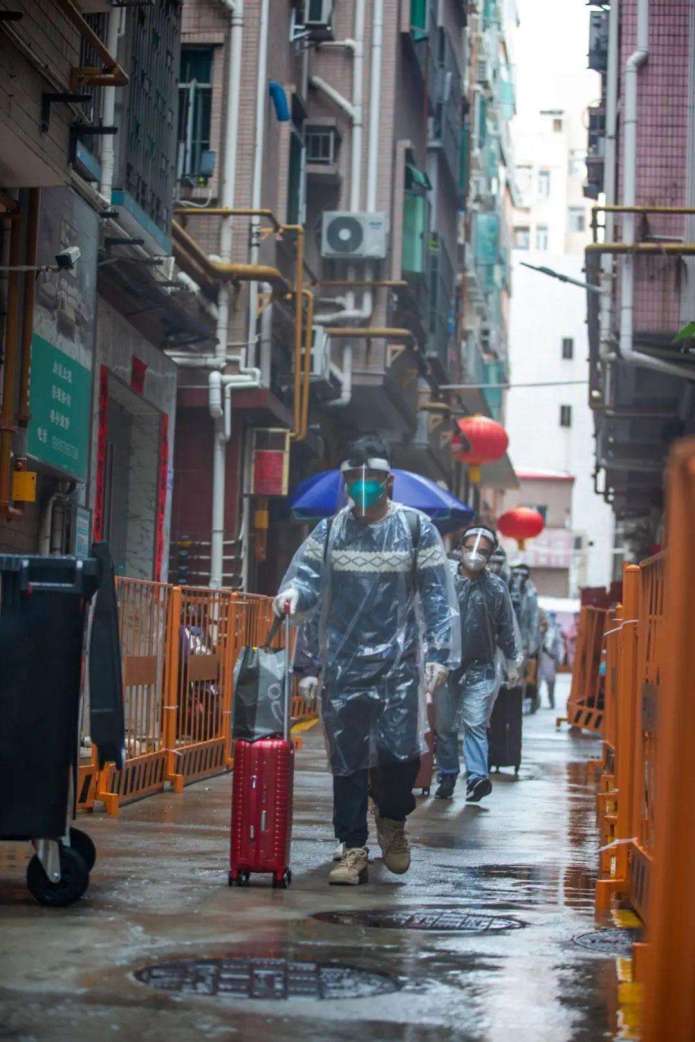
If you’ve been following the 2022 omicron outbreak in Shenzhen, then you’re aware that Tangyan Village, Shangsha (上沙塘宴村) has been one of the city’s hotspots, continuously generating positive test results. Indeed, since human factors in transmission have been controlled, the next hypothesis is environmental factors. Consequently, on March 17, 2022, the Futian Command Center (福田区新型冠状病毒肺炎疫情防控指挥部) notified residents of designated buildings in Tangyan that they would be relocated for 14 days quarantine and observation (notification #84 第84通告). While residents are quarantined, their building, its water mains and the surrounding area will be disinfected.

Continue reading

the urban planning imaginary: lessons from shenzhen

Many years ago (and it was a different world), I interviewed HUANG Weiwen about Shenzhen’s urban planning imaginary. The year was 2016, and there was a general hope that urban villages might come of age and transform the city for the better. Anyway, here’s the article.

wtf shatou?

Shenzhen’s citywide lockdown has come to an end. Kind of. Last night, there were countdowns to midnight, firecrackers set off at village gates, and then people charging out. I’m not sure where they were going at midnight, in a city that was still primarily closed. But there were thousands celebrating in the streets outside their gates. The expression for this rush is ‘冲鸭,’ which literally translates as ‘charging ducks,’ but translates as ‘go for it.’ In fact, it has been a week of poultry metaphors, as a new phrase on the web is 叮咚鸡 (dingdong ji), which is a pun for the expression ‘wait for further notification’ that ended ever. single. covid announcement. I’m not sure where the expression came from (I’ve seen debates that the original is Cantonese, but no confirmations), however, chickens are running rampant through Shenzhen memes.

Continue reading

the shenzhen diaspora in dalifornia

So, those who can afford to leave Shenzhen and escape the crazy, have. Many are hanging out in second homes in Dali, but others are young parents, who are enrolling their children in kindergartens in Dali.

Continue reading

covid among us

Inquiring minds want to know: what’s asymptomatic covid got do with anything anyway? More than you’d think, because during each day of mandatory covid testing chez SZ, one or two asymptomatic carriers have been discovered. In turn, everyone around them abruptly becoming “close contacts” of the disease and subject to lockdown. Not surprisingly, stories of absurd lockdowns circulate: A building was locked down when a plumber was fixing a toilet, so he’s spending fourteen days with the family that hired him. A mother organized a birthday party for her daughter and four friends, the building was locked down, and for the next fourteen days she was responsible for the care and feeding of five elementary schoolgirls. One man was finally able to leave his building, and while he was waiting to be tested, the neighborhood he was in was shut down and he couldn’t go home.

Continue reading

jokes in the time of covid…

A covid worker walks into a wet market…

comrade xiaoping in shenzhen

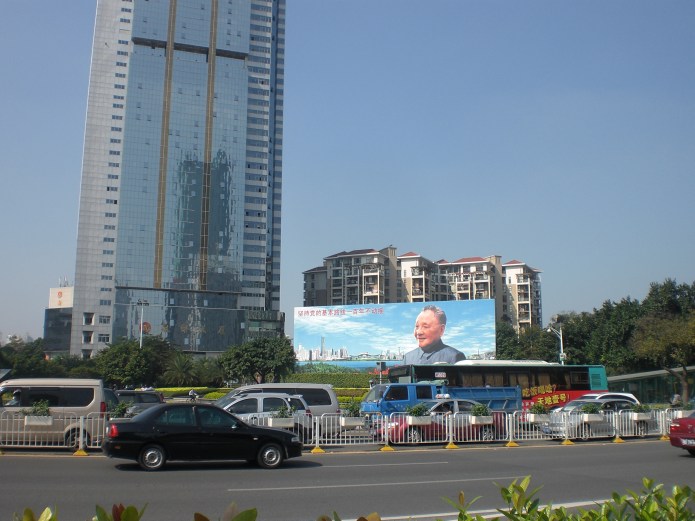
The architect of Reform and Opening Up, Deng Xiaoping died on February 19, 1997, 25 years ago. It was dank and rainy week. Shenzhen was still very much a manufacturing town, still very much under construction, and that day, very much taken by surprise. After all, commonsense du jour held that Shenzhen’s patron would hold on at least another three and a half months until midnight June 30, when he and troops from the People’s Liberation Army would march from Shenzhen across the Sino-British border into Hong Kong, signaling the formal transfer of the British colony back to China. But he didn’t make it. Instead, Shenzhen along with the rest of the country went into mourning. All Chinese television stations broadcast the 12-episode documentary, Deng Xiaoping, only interrupting archival footage and recorded memories to insert national, provincial and municipal news reports about how China, Guangdong and Shenzhen would continue the hard and necessary work of reforming and opening the county, province and city in his honor.

Continue reading

We Were Smart

So, in 2020, Chen Wenhui and I translated Li Yifan’s documentary, We Were SMART (杀马特我爱你). If you get a chance to watch the film, it provides insight into the 2000s, when a second generation of migrant workers came of age.

The film, with English subtitles, can be viewed on Danshi. If you’re interested in the filmmaker’s story, he gives an YiXi talk on Bili Bili (in Mandarin).

…this is now

Two months ago, I walked from the old Bao’an urban center to Shanghe Village. I first walked this area in 2007, taking pictures of a village renewal project, which focused on demolishing and upgrading the old village settlement. The area exemplifies the first generation of formal upgrades that occurred in the mid-2000s, beginning after rural urbanization was completed in 2004–large public spaces, residential towers, and newly constituted rural identities, comprising the village stock-holding limited company, Qing-era ancestral halls and temples. In the background, traces of the village’s manufacturing history are still visible.

Continue reading