So, Huaqiangbei is the heart of Shenzhen’s maker culture. However, China Merchants Shekou has upped the production ante, establishing “net valley (网谷)”, a company slash investment strategy to produce and deploy the latest in digital gadgetry. Friday morning, we visited their showroom in order to learn about techno-possibilities and brainstorm events for the May cultural industries fair. The point of all this investment is to stimulate creativity (创新). And yet. I kept thinking how the form of contact–a tour and a meeting–made it all seem ordinary, despite the fact that we held our meeting in a room that went from being a library to a bird’s eye view of mountain tops. If my impressions of banal sci-fi seem familiar, it’s because much of this technology was first exhibited at the Shenzhen New Media Exhibition.
Tag Archives: shenzhen identity
archi-talk
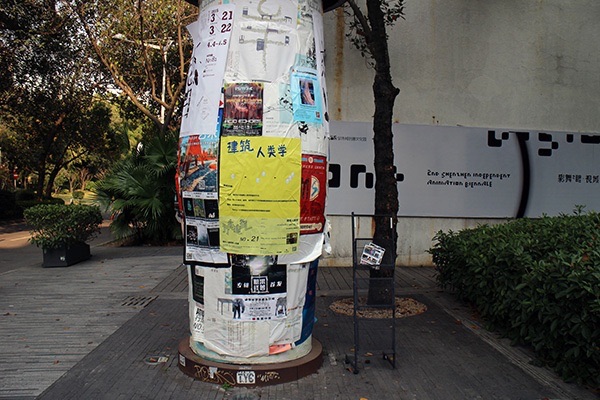
Tomorrow, at 14:30 at Guanshanyue Museum, I’m giving a talk on the U.S. American kitchen. The aim is to provoke discussion about the spread of the American dream as an architectural typology. Come join the conversation.
love, shenzhen
These past few years the numbers of foreigners in Shenzhen have not only grown, but now they also have a more engaged presence in the city. The collaborators at love, Shenzhen for example, aim to help non-Chinese speaking visitors and residents of the city leave their beaten tracks and discover what’s to love in Shenzhen. Last night they organized a vegetarian dinner at the Chegongmiao Awakening Restaurant, one of my personal favorites. More interestingly, at the dinner the cheerful force behind the group, roseinshenzhen presented me with a guide to Shuiwantou and Seaworld. The map makes the neighborhood accessible and user friendly. She and her posse are currently working on a guide to Chegongmiao.

utopian architecture
Utopian architecture in industrial Bao’an? Actually, yes. Developed over the past five years, the Wutong Island (梧桐岛–sometimes translated as Phoenix Tree Island) project combines Chinese ideas about nature, modernist architecture, and an evolving social vision for Shenzhen. Continue reading
shenzhen
So if you only have a couple hours to understand the city, you could do worse than visit the the Civic Center, its museums, the library and symphony hall, where Shenzhen asserts its global ambitions. The Museum of Modern Art is under construction, as is an urban planning exhibition hall. Impressions, below.

minjian history
Inquiring minds want to know: what is minjian (民间)?
On Sunday, I became part of the scholarly committee (学术委员会) of the Devout and Chaste Girls’ School (虔贞女校)–a minjian organization. Other members in the group included architects, an archaeologist, an editor at a history journal of Bao’an District, an artist, and the Director of the Dalang Culture Office. The Dalang Vice Secretary of Culture also attended the meeting, but left early. In addition, clerical workers from the Department of Culture served tea and insured that the meeting ran smoothly. So what made us a minjian organization? Continue reading
walking baishizhou, again
Walked a Baishizhou yesterday and noticed the difficulty of framing one object or process–no focus possible. Or if possible only through brutal cropping and similarly abrupt naratives. How to represent the constantly shifting elements of the anthropocene?

shen kong: flies, ants, termites, and locusts
In January 2014, anti-Mainland sentiment in Hong Kong resulted in protests calling for the “locusts” of Mainland smugglers to leave the territory and for border controls to be tightened against them. The expression “locusts” appeared again in a 2015 description of Mainland students studying at Hong Kong universities and “stealing jobs” from locals. A week ago, there was another burst of anger against “locusts”, this time against the small time parallel traders (“water guests or 水客“) who purchase goods in Hong Kong for resale in Shenzhen and other Mainland areas. In turn, pro-Mainland blogs have argued that “local termites harm Hong Kong more than locusts do (本土白蚁比蝗虫更损香港)”. Continue reading

guangming office: historic questions of translation
Speakers of North American English such as myself often fall into linguistic rabbit holes when reading official Chinese documents. My confusion arises from what both Western Marxists and Chinese Party members might call “historic questions/ problems of translation (翻译的历史问题)”. Thus, although their are semantic overlaps, a city is not a 城市, an office is not a 办公室, a community is not a 社区, and a collective is not a 集体 because the respective geographies of the USA and PRC have been formed through vastly different cultural ecologies and property regimes. Continue reading
star bright dalang: keeping it real
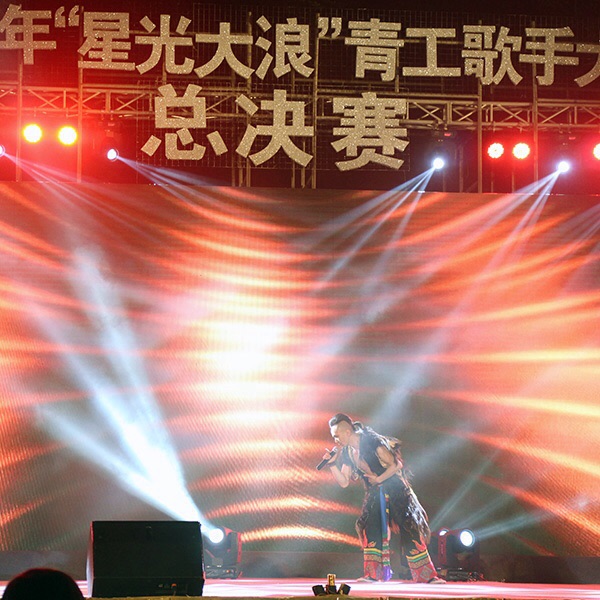
The Star Bright Dalang Singing Competition Finals took place on January 25, 2015. Despite having been abruptly postponed a week (due to government shuffles), nevertheless the production sparkled. Five LED screens adorned the temporary stage in Workers’ Park, a sixth was set up for simultaneous broadcast, lasers beamed through the nighttime sky, and glow wands had been distributed to audience members seated in the front section. The total audience was estimated to be around 3,000 people who gathered to listen to 13 migrant workers sing popular songs a la Idol. Continue reading
 Shenzhen Noted