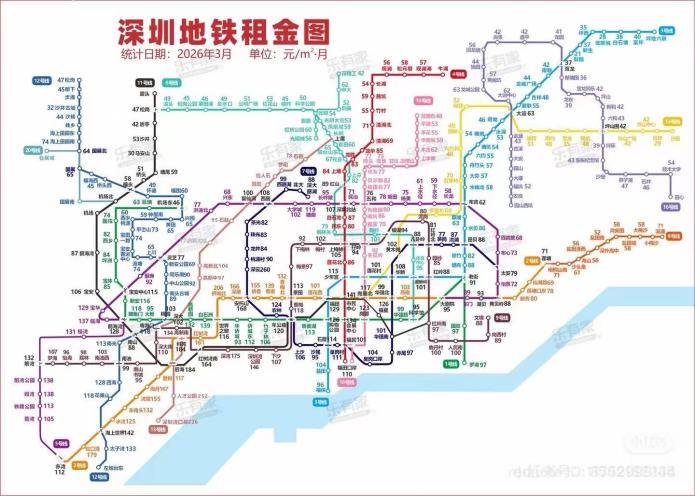
I’ve been playing with Red Note and stumbled upon a map of Shenzhen that provides price per square meter by subway station. I’ve realized that (1) I live in the cheapest part of Futian and (2) it really is cheaper to live in parts of the city that have metro connections but no real social infrastructure.
In turn, the uneven distribution of social infrastructure returns (also on Red) results in classification of beasts of burden (牛马) based on where one lives. (I’ve annotated where useful.)

宝安:机场噪音大,刚需往这扎 Bao’an: The airport is noisy, but if you must live here, its got what you need (implying social infrastructure)
光明:科学家的梦,炒房客的坑 Guangming: Scientists’ dream, speculators’ trap (refering to the Shenzhen Science and Technology Museum Zaha Hadid Architects designed as an “interstellar arc.”)
龙岗:预算有限的,还要假装在深圳 Longgang: For those on a budget and want to pretend that they’re in Shenzhen.
龙华:福田睡城,早晚高峰堵到哭 Longhua: Futian’s bedroom, but rush hour delays will drive you to tears.
坪山:比亚迪总部,进城要两小时 Pingshan: BYD’s headquarters, and a two-hour drive to the city.
大鹏:周末去一趟,平时没人住 Dapeng: Weeked getaway, but none actually lives there.
盐田:有海有山,就是没有班上 Yantian: Seas and mountains, but no jobs.
罗湖:老钱躺平,新钱看不上 Luohu: Old money is laying down, and new money can’t stand it (because Luohu was one of the city’s first boom areas).
南山:码农睡公司,房东收租爽 Nanshan: Digital peasants sleep in their offices, while landlords happily collect rents.
福田:搞金融的,看起来有钱其实也是牛马 Futian: Its where finance happens, it looks like you’ve got money, but you’re still just a beast of burden.
 Shenzhen Noted
Hi Dear Mary Ann,
I hadny heard from you in a long time and then this! How are you?? I have been thinking about you for various reasons . First of all , I was thinking it would be lovely to resume our scroll collaboration. I just moved and would be glad to do such a thing when my studios are unpacked and re arranged
But aside from that .
I met someone who speaks and reads Mandarin, so had a chance to share the article from Architectural World. Also, I am writing an article for Rain Taxi Review of Books about Homelessness and there are some excerpts from that article about Seeking Shelter that I plan to quote ( and of course cite our article in the notes!)
I will have been in the States for three months. Or so. ..
I came in Feb to be with my daughter who had to have radiation after a lumpectomy. (I basically grabbed the last Chopper out of Saigon to be here. The airport in Tel Aviv closed the day after I left, when Iran attacked) Thank God she is cancer Free and has a good prognosis!!!
I was mostly with her, in order to support and keep her company, with good results!
But now, after three years away, I am enjoying spending time in America, which I have been finding very interesting.. also, it’s just nice for me to be in an English-speaking country to something very relaxing about that .
I traveled a bit , first to be in Texas to give a . Creativity workshop (multi-faith multi cultural) for women , now am back .to work on some collaborative projects ..
Also a friend here works at SpaceX and there is a launch coming up
Then I will be visiting a friend in Nashville, and will be in New York and will depart from there at the end of my trip.
Would be glad to talk on WhatsApp if that is possible which is WiFi or if you can talk on a US phone line.
Let me know what you are up to. Would be so glad to be in touch with you again.
Also I attached some recent work to show you If you haven’t seen it.. the longest is a Graphic Narrative called Holy Crap, and three Haiku Comics.
<vimeo.com/user195155576/>
These videos are what I have been working on the longest. You may be familiar with the work about the Point, where you visited in Israel. The one called Family Secrets is in progress . I have been working on for 6’years.
Tell me what you have been doing?
And what it is like where you are living.
I hope you are well.
Take care,
JUDITH
US phone line 1-814-699-5191 What’sApp +972584903849
Art Editor, NASHIM, Journal of Jewish Women’s Studies and Gender Issues/ U.of Indiana Press <www.judithmargolis.com> <www.brightideabooks.com> https://www.womenofthebook.org/ <www.praiseemptiness.com> https://www.psupress.org/books/titles/978-0-271-08373-5.html < https://www.omnidawn.com/product/train-music-c-s-giscombe-and-judith-margolis/ > https://www.madaf.art/en/search?q=Judith+Margolis <vimeo.com/user195155576/>
https://drive.google.com/file/d/1GXHF8-ePDx6K7Cx9rgqe2y9OjapXpbSX/view?usp=drivesdk Holy_Crap_-the_Divide-Anthology.pdf https://drive.google.com/file/d/1GXHF8-ePDx6K7Cx9rgqe2y9OjapXpbSX/view?usp=drivesdk
https://drive.google.com/file/d/1rhMggbd1WQ8Ql5Waqm5zu-Aa4LCDV41u/view?usp=drivesdk workshop in texas https://drive.google.com/file/d/1rhMggbd1WQ8Ql5Waqm5zu-Aa4LCDV41u/view?usp=drivesdk
https://drive.google.com/file/d/1pjt32mDf69ysTT9u-MYDSkZDSsTNFTzo/view?usp=drivesdk Space X and me https://drive.google.com/file/d/1pjt32mDf69ysTT9u-MYDSkZDSsTNFTzo/view?usp=drivesdk
https://drive.google.com/file/d/1SHaIYNhY0MnZFfdxUs5uch32f4D7AOyA/view?usp=drivesdk Fixed_Haiku_Comic_Widows_ Lament.pdf https://drive.google.com/file/d/1SHaIYNhY0MnZFfdxUs5uch32f4D7AOyA/view?usp=drivesdk
https://drive.google.com/file/d/1L2wG4R5t36fqUBa-MV8ObjzV369FNp7c/view?usp=drivesdk Rothko_Haiku_comic.jpg https://drive.google.com/file/d/1L2wG4R5t36fqUBa-MV8ObjzV369FNp7c/view?usp=drivesdk
https://drive.google.com/file/d/1mAE3i9wTp5hGDu_bmzaNAwswsdgX2qak/view?usp=drivesdk insomnia Hailu comic.jpg https://drive.google.com/file/d/1mAE3i9wTp5hGDu_bmzaNAwswsdgX2qak/view?usp=drivesdk