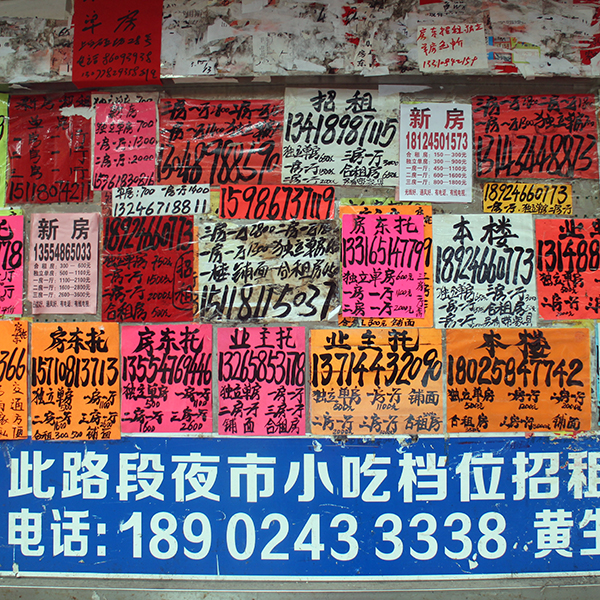
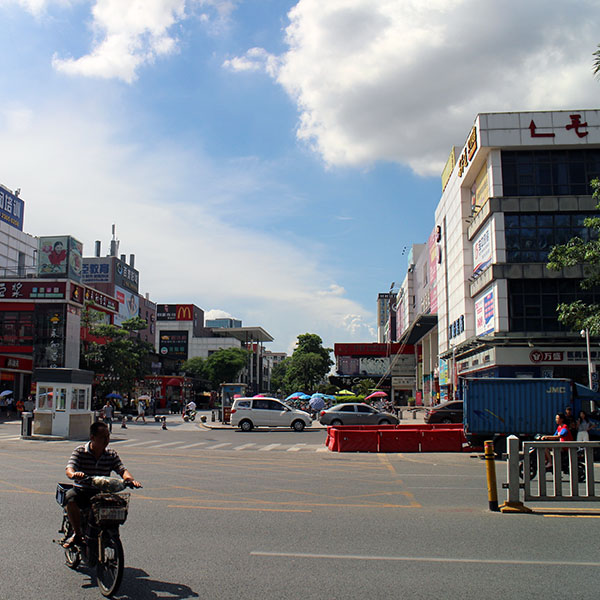
luohu, dusk: 2016.10.27

Luohu as we knew it is changing. The recent announcement that urban renewal compensation has made billionaires of Shuibei villagers, the decision to selectively preserve and redesign Hubei as a “historic” public park area, and ongoing renewal of Caiwuwei fang (坊) or “branches”–individually, each of these projects entails demolition, evictions, and rebuilding and restructuring of particular neighborhoods, but taken together these projects entail through revision of the Old Special Zone. And yes, we’ve been watching this happen all along, but enough of the earlier urban tecture remained that we could feel where we came from, as we moved between and through adjacent neighborhoods. These new projects signal something else. Continue reading

of influence and independence, power & game: thoughts on shenzhen 3.0

If memory serves (and it tends to serve some agenda), I first visited Huaqiangbei (formerly the Shangbu Industrial Park) in 1995, when it was still primarily a manufacturing and residential area, but didn’t know what I was looking at. The big ideas in my head had to with workers rights and feminism, and so I was aware of the factories, the state sponsored housing, the few department stores, including the then still operative Friendship store, and the iconic Shanghai Hotel with its surprisingly good Cantonese dim sum. I noticed that neighboring Gangxia and Tianmian were under construction, but glossed this new urban morphology as a “new village.” I didn’t realize that the scale of immigration and construction that happened during the 90s and defined “Shenzhen” for me would be different enough from the 1980s that friends who arrived during the Special Zone’s first decade laughing asserted that Shenzhen was changing so quickly that if they didn’t visit a neighborhood for several years it was easy to get lost; Shenzhen in 1989 and 1999 were two different cities. And that was almost two decades ago.

Continue reading

baishizhou demolition: the rising cost of shenzhen dreaming

Yesterday, I heard this story: A 30-something farmer from Lanzhou came to Shenzhen in 2013 in order to make his fortune. He started out working for a relative in a Lanzhou Noodle Shop, and then after a few months decided to open his own noodle shop. After looking around for a suitable place, he decided to purchase the rental rights to a noodle shop in Baishizhou, on the western side of Shahe Road. The shop had been recently renovated and came with a hefty transfer fee—180,000 rmb with a high rent. But the man was enthusiastic. So he sold his homestead land (宅基地) as an initial investment and moved his family to Baishizhou, where they worked. Only his youngest son went to school, while his oldest didn’t go to high school so he could work in the shop. As the last of the buildings in the Shahe Industrial Park are being demolished, he is being forced out without any compensation and no way back home. Continue reading

shenzhen comes out in favor of new attitude toward urban villages

It’s been a long time coming. Or not. Roughly a decade after Shenzhen targeted urban villages as “dirty, chaotic, and substandard” and less than five years after Gangxia changed how we thought about compensation, the official Shenzhen press has indicated its time for the city to change how it thinks about urban villages. Continue reading

shenzhen speed: nan’ao

I have this longing to believe that somehow what came before was less fragile and much less fleeting, more easily touched and grasped than is the present. The irony of this longing caught up with me in Nan’ao, where three generations of fishermen live side by side on a beach front urban village (that, yes, is scheduled for partial demolition and redevelopment). Continue reading

new traditions: nan’ao mazu

Yesterday, I visited the newly renovated Mazu Temple of Nanyu (南渔), which is located in Nan’ao, Dapeng (大鹏新区南澳). The temple is interesting for (at least) three reasons and the questions they beg.


  1. The temple is a local renovation of a previous existing temple. The icons from the previous temple have been moved into a nearby exhibition of the history of the village;
  2. Although the temple and the exhibition were built on land that Nanyu has claim to, the project was promoted and funded by donations from a successful Chaozhou businessman, and therefore;
  3. He contacted artisans in Chaozhou to design and build the temple according to “proper” requirements.

Questions that the temple raises include:

  1. How is “tradition” being remade at the popular level, now that long-term residents are contributing to the reconstruction?
  2. What has been the role of Chaozhou people in this reconstruction?

Chaozhou people have been involved in the reconstruction of Shenzhen tradition at two levels. First, Shenzhen is known for the shift from the planned to a market economy, but many of the people who built the literal markets (the Hubei fish market, wet markets in many villages, and the dried fish market at Nan’ao, for example) have been from Chaozhou. Secondly, many of the traditional crafts that appear in Shenzhen ancestral halls and temples have been contracted from Chaozhou, which is considered more “traditional” and therefore “authentic.”

The next post will talk about the relationship between the temple and the village. Impressions of the newly constructed Mazu Temple and the exhibition.

This slideshow requires JavaScript.

preservation ecologies

Guanhu (官湖) and Shayuchong (沙渔涌) Villages are within walking distance to each other along the Dapeng coastline. Guanhu is the village that has developed Jiaochangwei. A small settlement at the mouth of a river, Shayuchong is undergoing a complete renovation that is reminiscent of the horrific universidade paint-overs. Both villages are in various stages of redevelopment. And in the details I trace Shenzhen’s complicated preservation ecologies, where beauty, kitsch desires, and too much money take strange and curious form. Impressions from today’s walk, below.

This slideshow requires JavaScript.

hubei: recognizing “value”

The current focus on preserving Hubei Old Village obscures just how much Special Zone history and everyday life will be demolished to make way for the new China Resources development downtown. What’s at stake are competing understandings of what makes a good life for whom and who gets to decide the form and function of the city. Continue reading

dalang commercial center

Off the beaten track (or at least a 15 minute bus ride from the Longhua subway station), Dalang remains one of the manufacturing centers of Shenzhen as well as one of the few spaces where it is still possible to see container trucks of various sizes trundling about. The landscape itself is a dense mix of industrial parks, proper urban villages, collectively held property, and limited public and commercial property. In other words, the area retains much of its morphology from when Longhua was officially a market town (镇, 1986-2004) and the entire area was developed through rural institutions.

Continue reading

hubei: shenzhen identity comes of age

Those of you who have been following Shenzhen media are aware that Hubei Ancient Village (湖贝古村) has become a touchstone in debates about historic preservation, pubic participation in establishing urban planning values and goals, and the place of “life (生活)” in high-end rent districts.

Continue reading