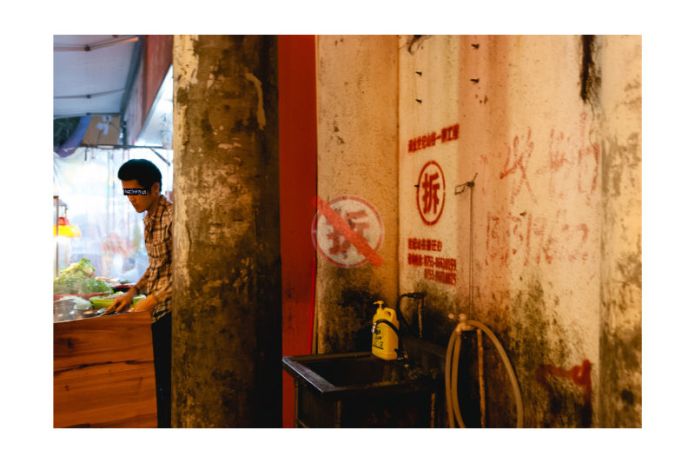
Baishizhou Soundscapes

Sunday afternoon, 4:00 at Handshake 302:

To truly listen, we must first become quiet, creating a silence proper to ourselves. When quiet, you will hear the sounds of nature. At that moment, the sound flows, and nothing remains but a trace of memory. Silence is itself the opportunity to reflect on what it means to hear.

Listening is not just a question of hearing the music, but of listening to the natural voice, which includes static. Problems come; where does the static of life come from? Why does it appear? The unavoidable sounds of daily life constitute different experiences.

During this workshop we will share sound—its creation, its documentation, and what it means to listen. We invite each participant to quiet their minds and truly listen. The screaming child and your screaming mind: are these sounds the same or different? The rustling wind and a little girls giggle: do they play your heartstrings in the same way? Listen to the soundscapes of Baishizhou and hear your heart. Beat.

more on urban villages (with pictures)!

Folks interested in high density living in Shenzhen’s urban villages have been creating some great images about how space works across different scales. Below, a sampling from around the globe. Follow links to reports.

Li.Zhang2-2

From Li Zhang’s overview of urban villages, with a focus on Gangxia.

Continue reading

thoughts on the spatial distribution of shenzhen’s population

How many people actually live in Shenzhen? The numbers vary. Current Shenzhen Party Secretary Ma Xingrui says 20 million. However, the administrative population supposedly hovers at 18 million, while the city itself has never admitted to more than 15 million. Rough estimates suggest only 4 million people have Shenzhen hukou, another 8 million have permanent residency, and another 5-8 million “float” unofficially within the city

These statistics obscure how Shenzhen’s urban villages spatially organize these three administrative classes. For example, Shi’ao (石凹) Villagehas a local population of 4 to 500 people and a renter population of 20,000, making the ratio of local to renters residents 1:40. The ratio of local to renter populations in Baishizhou is an astonishing 1:77. Moreover, it is clear that renters–even floaters–aren’t actually leaving the city. Instead, they are finding newer (and often) narrower niches within the village.

Much like US American suburbs which manage inequality through distance, Shenzhen’s urban villages do the hard (and socially productive) work of managing inequality within the city. The majority of floaters and a large percentage of permanent residents live in the villages and tend to work in service and the semi- and informal economies, while hukou residents and wealthier permanent residents occupy “official” housing estates and tend to work in the formal economy.

Continue reading

tangtou, baishizhou,may 23, 2016

Today while walking Baishizhou, I stumbled upon surveyors from the Nanshan District government. The were beginning the measurements for compensations and consequently for the first time in roughly two years the buildings were open.

Continue reading

bashizhou, may 20, 2016, dusk

Baishizhou in the early evening: buying vegetables, walking home, waiting for the demolition of the old industrial area, which will begin after the elementary schools have closed and children relocated…

This slideshow requires JavaScript.

mom and pop opportunities: yet another reason the villages matter

The distribution of villages throughout Shenzhen once afforded opportunities for low capital, small scale businesses to pop up within the urban center. It also meant that  workers could find affordable housing within walking distance or short rides to their jobs. In this sense, villages were not simply gateways to the city, but also platforms that gave low-income and working class families economic opportunities that are not available outside the city center.  Continue reading

baishizhou demolition scheduled

The demolition of the Shahe Industrial Park, Baishizhou (located west of Shahe Road) has been scheduled for April 30, 2016. The six-story factories are owned and managed by Shahe Enterprises and occupied by mid-size business owners. This area is the easiest to raze because it has a single property owner.

The image is from the ongoing “Don’t Raze Baishizhou Photography Exhibition” which meets every Saturday to photography Baishizhou’s residents and garner attention for the call for more equitable redevelopment.

let’s dance


This slideshow requires JavaScript.

at the edge of something new

Shenzhen abruptly arrives at the edge of something new, some palatable, pulsing readiness that has been growing beneath our feet, and launches us into unanticipated desires. Or so it seems today. Continue reading

the “village” thing

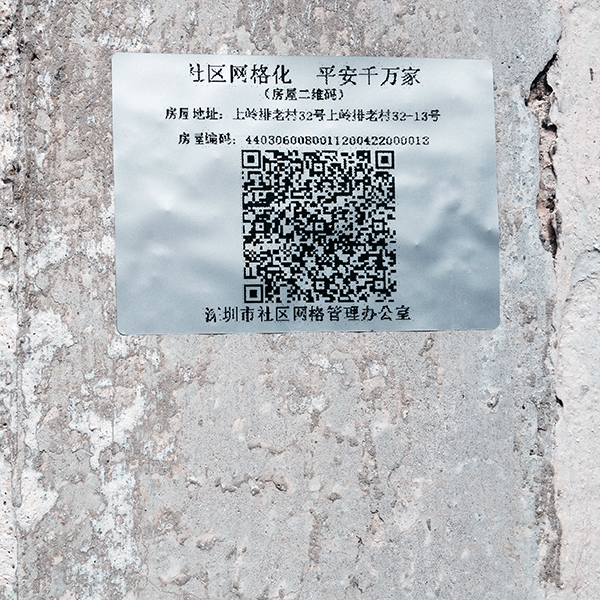
This past week, I toured Shangling Old Village (上岭村) in Dalang. Decaying villages like Shangling contextualize the “what came after” success story that is SHENZHEN! And yet. This contextualization depends upon one, standardized (and quite frankly boring) narrative of rags to riches, sudden wealth, boom boom boom, etcetera etcetera and so forth.  Continue reading