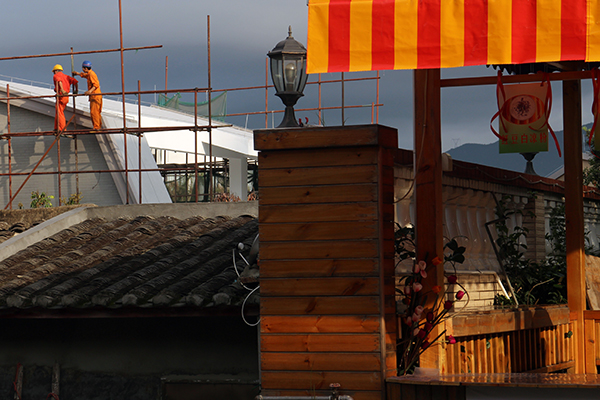
I’ve said it before and now doubt will continue to repeat myself in subsequent posts: the speed at which Shenzhen is re-creating itself makes it difficult to re-member what the city has been. Not just Boom! a city appears, but Boom! all gone. These images of Shuiwan and Wanxia villages should be looked at along with yesterday’s impressions of the reclaimed land behind Seaworld and Shekou’s new coastline. The main part of this walk is along Shekou Old Street and Wanxia Road, thoroughfares that once upon a time ran parallel to the old coastline. The remains of that old times development (and yes we’re talking early 1980s) is small scale commercial fishing, unlike the marina and yachts that have been established along the new coastline.
Tag Archives: architecture
houhai / xuefu rd
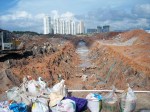
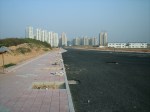
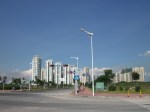
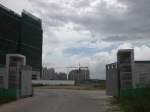
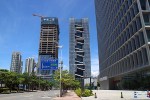
Today, I went to the Software Incubator Area and what to my wondering eyes did appear, but a landmark tried and true and watched for the past decade. It’s true and unexpected, but for years I have been documenting the land reclamation area east of Guimiao and north of Binhai (first impressions, here), and today on an errand to meet someone about the upcoming Maker Faire, I realized the road I was on–Xuefu Road–was in fact the road I had walked while documenting the emergence of New High Technology Park. Anyway, some before and after pictures:






boardwalk shenzhen: jiaochangwei booms
Almost one year ago, I posted on the development of Jiaochangwei, which is probably best understood as Atlantic City or Coney Island on speed, Shenzhen speed. Continue reading
the artron art centre / book wall
Today I joined the opening for the Atron Art Centre, which boasts the largest book collection / book display in the world. Still under construction, the building glitters, as do Atron’s ambitions to promote and propagate knowledge and culture. Impressions, below.
impressions, futian
The other day, I walked from Huaqiangbei through Gangxia and Xinzhou, where I hooked back to Shuiwei via Huanggang Park, a wonderfully unexpected urban oasis. Today, I’m uploading impressions of the diverse complexity that characterizes Futian Distict, which is home to Huaqiangbei, the central business district, and some of the most well-planned urban villages in the city.
shanghai hotel, 2005 and 2015
Pictures of the Shanghai Hotel, one of the earliest and most important landmarks on Shennan Road taken in 2005 and 2010, respectively. Other than the skies, of note: In 2005, the bus stop was being expanded and the six story Rainbow Department Store was tucked away behind the Grand Skylight Hotel. By 2010, the new Rainbow Department Store dwarfs all other buildings. This is all part of the upgrading of Huaqiangbei.


大鹏所城 (II): history in the making
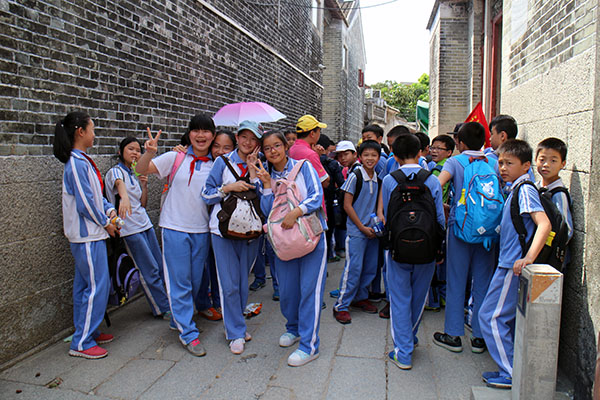
Almost seven years ago to the day, I posted thoughts on cultural history. The prompt for my speculations was Dapeng Garrison, which at the time was the lack of recognition for the site, which is Shenzhen’s only national level cultural relic. Two days ago, I returned and the space was hop, hop, hopping in all sorts of telling ways. What changes had allowed Dapeng Garrison to suddenly attract students, busloads of tourists, and random day-trippers? Like most Shenzhen stories, the answer is a twisting, convoluted story of profits, grey economies, the allure of accomplishments, and the real consequences of administrative failure. Continue reading
conspicuous construction
It turns out there’s a word for the ongoing architecture of inequality: conspicuous construction.

affordable housing II: more on dormitories
Yesterday I was talking with a tourist destination designer from the Tourism Division of OCT. He explained that each themepark hires approximately 1,000 workers who are housed in dedicated buildings in OCT holdings. From the mid-eighties through the mid 90s, these apartments were allocated to single workers in OCT management. However, as they moved into larger apartments, which they bought through housing reform policies, the use of the dormitories changed. As did living densities. Continue reading
archi-talk
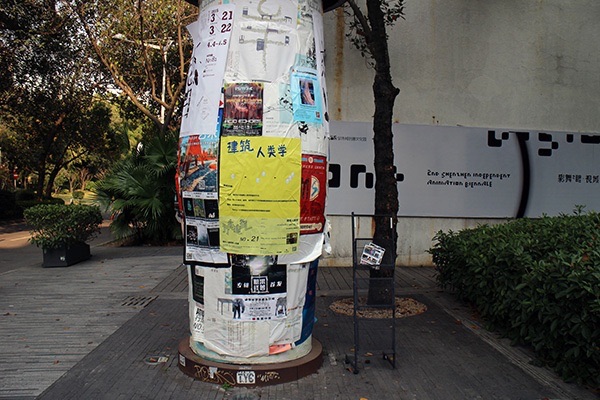
Tomorrow, at 14:30 at Guanshanyue Museum, I’m giving a talk on the U.S. American kitchen. The aim is to provoke discussion about the spread of the American dream as an architectural typology. Come join the conversation.
 Shenzhen Noted