This year we’ve started holding regular open houses at Handshake. Join us any Wednesday afternoon from 3 pm to 6. One or two of us will be there to chat and introduce our project and learn about yours.
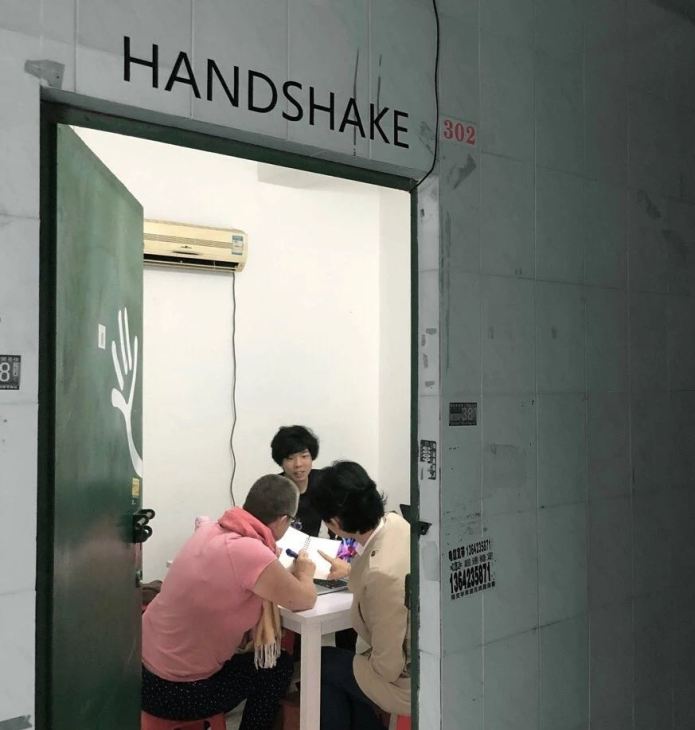


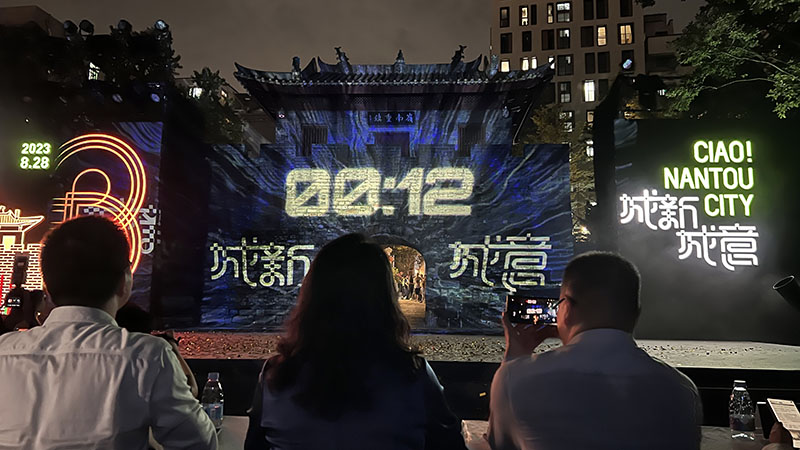


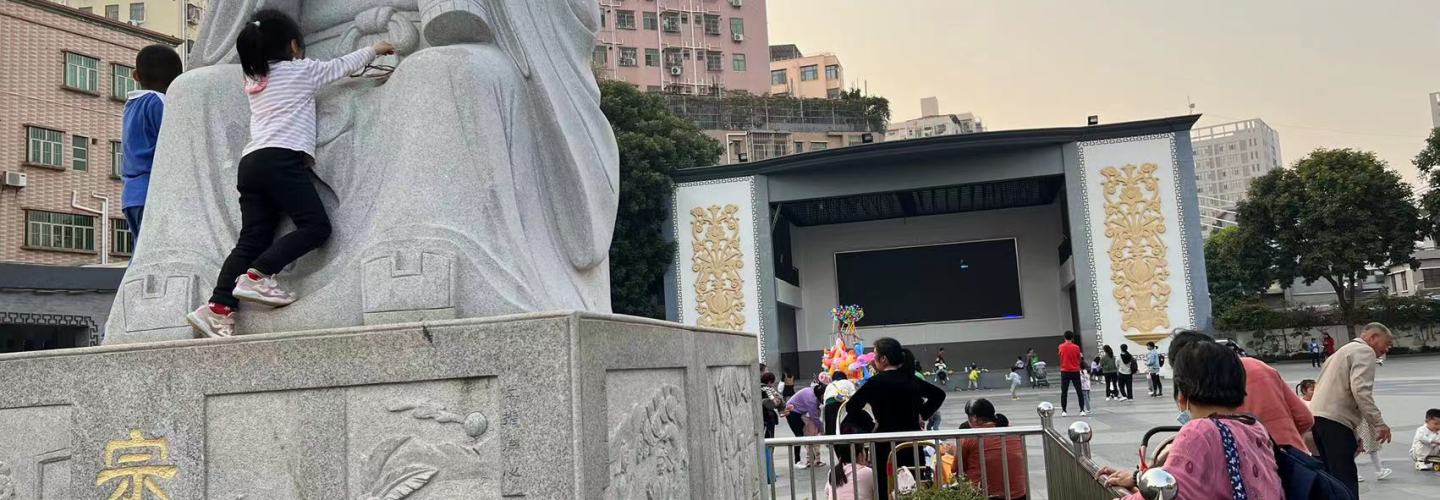
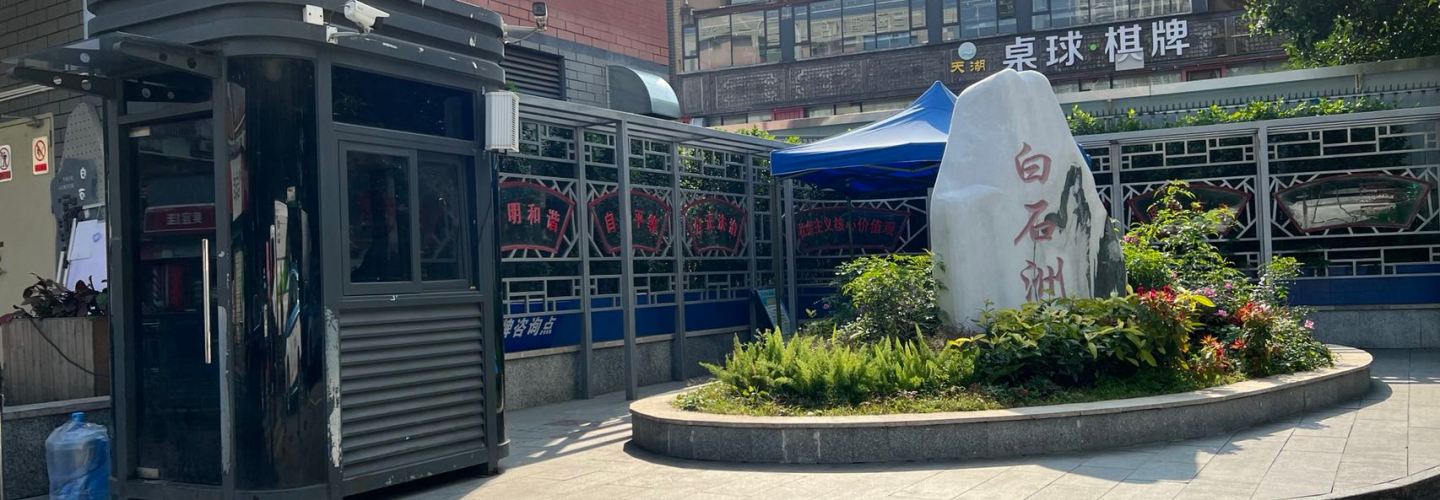

This year we’ve started holding regular open houses at Handshake. Join us any Wednesday afternoon from 3 pm to 6. One or two of us will be there to chat and introduce our project and learn about yours.

“Cut and Pastiche” has played with the logic of montage in order to tease out the experiences and logics that comprised the Special Zone. Montage helps us understand the process because “Shenzhen” comprises diverse elements–factories and work units, migrants and locals, tradition and IT, brackish water and containers–which were already in the world, but needed to be reorganized in order for China to achieve its goal to modernize. Quickly.

So, many of you know that Shenzhen has been debating what to do about urban villages. Half of the city’s population lives in one village or another, most of the city’s population has lived in a village at one point in their lives, and millions have set up mom & pops in a village, providing for themselves and their families through small capital investments. Just recently, the city approved the “Shenzhen Urban Village (Old Village) Comprehensive Remediation Plan (2019-2025) (《深圳市城中村(旧村)综合整治总体规划(2019-2025)》).” The key point, of course, is that the city is now choosing to remediate and upgrade village spaces, rather than demolishing and evicting residents. Continue reading

This is another “not all villages are equal” note, this time about access to the Guanlan Foxconn campus, which is surrounded by urban villages. These villages have differently benefited from the world’s number one maker of electronics. At the end of 2018, for example, Dashuikeng (大水坑) made international news as Vanke prepared to top-down gentrify it. Located just outside the southern entrance to the Guanlan Foxconn campus, Dashuikeng has provided more than inexpensive housing for company workers; it also offers housing for married workers, workers who want respite from company management, and workers who want more privacy. In contrast, while Jutang Community (桔塘社区) abuts Dashuikeng, nevertheless, it is not conveniently located near either of the campus’ two gates. This has meant that the neighborhoods that comprise Jutang are less commercialized, with much lower end housing available for the company’s lowest paid workers–truly just a place to sleep. Jutang occupies over 4.5 square kilometers and has a population of 40,000 people. My impressions, below:

I have been used to thinking of the Cultural Revolution as the immediate backdrop to the ideological transformations initiated by the establishment of Shenzhen. However, as I was reacquainting myself with the cultural geography of Huaqiangbei I came across the Zhenhua Industries sign on Zhenxing Road. The logo is a throwback to Third Front industrialization, when futurist aesthetics still informed nationalist dreams. But what actually caught my eye was Jiang Zenmin’s calligraphy; by providing the calligraphy (题词) for this enterprise, the former General Secretary showed explicit support for the manufacturing company. After all, the most famous example of Jiang Zemin’s calligraphy in Shenzhen was written for Window of the World in 1994, as part of Overseas Chinese Town’s transition to leisure and tourism. So I was curious: when and how did he actively support Zhen Hua specifically and the construction of the Shangbu Industrial Zone more generally?
The image that many have of Shenzhen is a collection of state-of-the-art buildings because for years, these towers have represented the city and its progress. These buildings, of course, not only represent important state-owned enterprises in the Shenzhen landscape (China Merchants and China Resources, for example), but also provide a particular map to the city: the downtown investment area, Huaqiangbei electronic markets, Overseas Chinese Town, the recently opened Hi-Tech area along Shenzhen Bay, and the Dameisha beach. The latest skyline montage includes architecture from all over the city (labeled to the best of my ability):


I know, you’re asking yourself: how is it already 2019? The date pounds like a migraine because once again we’re in the middle of a China-history countdown: 70th anniversary of the founding of the PRC, 60th anniversary of the start of the great leap forward famine, 50th anniversary of the Sino-Soviet border conflict, 40th anniversary of the “First Blast” of Reform and Opening chez Shekou, 30th anniversary of the Tian’anmen democracy movement, 20th anniversary of the crackdown against Falungong, and the 10th anniversary of Shenzhen’s decision to upgrade its “dirty, chaotic, and substandard (脏乱差)” urban villages. Continue reading
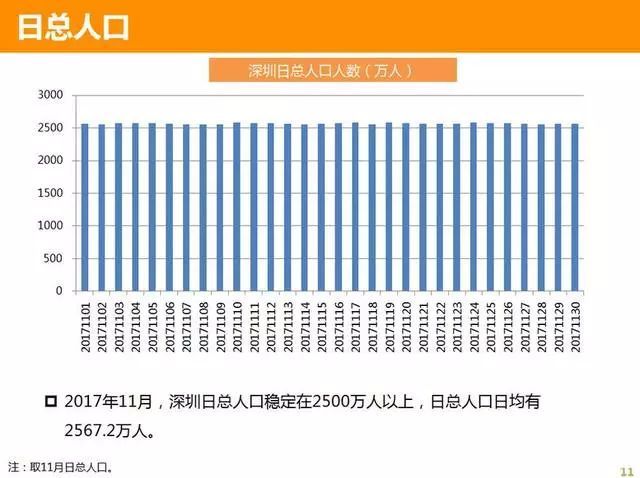
How many people are there in Shenzhen? No one actually knows and there are many ways of counting–hukou population, temporary population, and administrative population are the three most popular forms. However, according to “Guangdong Mobile Big Data Application Innovation Center,” in November last year an average of 25.67 million people were in Shenzhen. Of course, this population figure is the result of an algorithm, involving Mobile personal users over 18 years old who have appeared in Shenzhen, combined with Shenzhen mobile communication market share, one-person multi-card rate and the number of children aged 18 and under. But still, this figure is circulating on we chat.

When I first moved to Shenzhen in 1995, I lived at Shenzhen University, which at the time was located on the northern banks of Shenzhen Bay and boasted oyster farming on just beyond its campus border. In fact, for the first decade that I was in Shenzhen (1995-2005), land reclamation and the reconstruction of the coastline was one of the major ongoing infrastructure projects, even as the city shifted its economic emphasis from manufacturing to innovation. So for over a decade, I walked reclaimed land. As the landfill settled, grass grew, squatters came and went, and the city itself “washed its feet and stepped on land,” an expression that was used in the 1990s to describe the transformation of farmers into urban residents. Locally, the expression referred to how local villagers left their paddies and fish ponds to become landlords, while in terms of migrants, it referred to migrant workers who left their home villages to work in factories. Continue reading

Several days ago, I walked from Coastal City (海岸城) to Shenzhen Talent Park (深圳人才公园). Previous walks–now long ago and far away, and besides that was a different city–had me wandering the reclaimed land behind Coastal City. However, the new coastline is as firmly in place as anything on shifting sands. What’s more, its a popular destination for families and this popularity deserves comment. After all, people are walking from the old new coastline (at roughly Houhaibin Road) to its newest coastline, a walk that takes at least fifteen minutes one way. Below are images that give a sense of the layout of the new park. In the maps, the purple line is Houhaibin Road, the approximate old new coastline. Continue reading
 Shenzhen Noted