mom and pop opportunities: yet another reason the villages matter

The distribution of villages throughout Shenzhen once afforded opportunities for low capital, small scale businesses to pop up within the urban center. It also meant that  workers could find affordable housing within walking distance or short rides to their jobs. In this sense, villages were not simply gateways to the city, but also platforms that gave low-income and working class families economic opportunities that are not available outside the city center.  Continue reading

shuiwei: qingming treats

The women of Shuiwei continue to make the village, one treat at a time. For Grave Sweeping Day (清明节), they gathered in the village kitchen to make a variety of traditional snacks. The treats are steamed and vegetarian. What’s not to love?

This slideshow requires JavaScript.


Digging a Hole in China

This afternoon I had the pleasure of attending the opening of the Digging a Hole in China (事件的地貌) exhibition, curated by Venus Lau. the exhibition features a range of works that were produced from the mid-1990s forward, roughly a decade after the idea of land art had been picked up by Chinese artists and only a few years after Deng Xiaoping’s 1992 Southern Tour, where he confirmed that China would continue to liberalize its economy. The stated goal of the exhibition, which positions itself between China and the West is,

[T]o expose and analyze the discrepancies between this genre of work and ‘conventional’ land art understood in the Western-centric art historical context, thereby probing the potential of ‘land’–as a cultural and political concept–in artistic practice.

Continue reading

post-industrial villages

Last year, the last of Foshan’s famous pottery kilns was decommissioned, leaving the city poised at the edge of a complete renovation–from a dense network of markets, township and village owned industrial parks, and new villages into something bright and shiny, an amalgamation of high-rises, offices, and malls,  where products that are no longer produced in Foshan can be purchased by people who suddenly find themselves positioned to become a next generation of “urban village” landlords.  Continue reading

shenzhen population, 2015

It’s official, at least 20 million people live in Shenzhen. According to Shenzhen Secreatary, Ma Xingrui, the city’s population (as of December 2015) stats were: population with Shenzhen hukou =3.67 million; population with long-term residency = 10.77 million, and; administrative population = 20 million.


yuan geng memorial

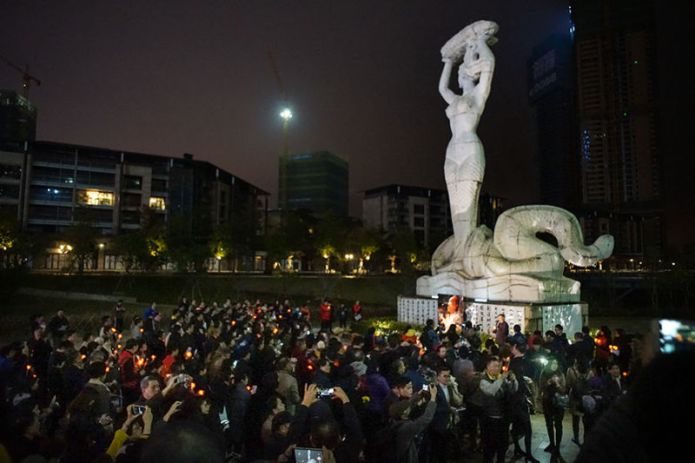
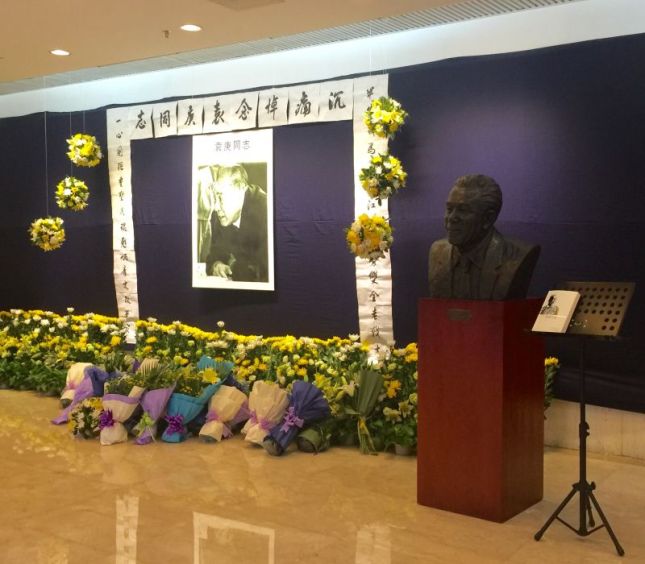
Yesterday morning, the Shekou Community Welfare Fund received word that Yuan Geng, former CEO of China Merchants Shekou had passed. They immediately set to organizing a memorial, which was held on January 31, 2016 at 8 pm. The official memorial was held earlier in the afternoon at the Shekou China Merchants Museum, which is the official mourning hall for the departed leader. “The difference,” one participant commented, “between the two memorials was obvious. At the official memorial, people were waiting for Shenzhen Party Secretary Ma Xingrui and Mayor Xu Xin to arrive and pay their respects. In contrast, at the Shekou Community memorial, Old Shekou people came to mourn the end of an era.”

16.pic

Continue reading

taipei dreaming (on such a snowy day)!

This past week, I had the pleasure of visiting the Taipei Dream Community, a fascinating place where Gordon Tsai has used real estate to push forward hippie dreams–redeveloping Xizhi (汐止), stimulating community through carnivals, and artist residencies.

This slideshow requires JavaScript.

Continue reading

let’s dance


This slideshow requires JavaScript.

will 2016 be the year of culture?

December in Shenzhen is known as “Creative December”. The city has been officially promoting culture and creative industries since 2005, moving manufacturing to the outer districts, incubating start-ups, and funding creative spaces and so forth. Many of the large-scale, government promoted events during Creative December 2015 focused on history and memory and the scale of these imaginary formations. For those who often what to do on a weekend afternoon, this past December offered an embarrassment of choices in addition to the city sponsored Shenzhen-Hong Kong Biennale of Urbanism/ architecture and the Shenzhen Public Sculpture Exhibition, every single level of government and private art spaces sponsored large-scale cultural events that ranged from the first Kylin Dance Festival (in Longhua) to the Indie Animation Festival in Overseas Chinese Town. In addition, every weekend has been filled with lectures, workshops and salons. For those of us who work in culture—we paint or run galleries or act or produce plays or think about society and take critical photographs of changes in the land—December is the month when we present a year’s worth (or not) of endeavor to the public.

In January, before Shenzhen turns its gaze back to the problem of making an industry of culture—Culture, Inc, we begin rounds of New Year’s dining privately with friends and family, as well as formally with colleagues. During these meals, culture and Culture, Inc are discussed in tandem; there is a potentially large market for culture because everyone is vaguely dissatisfied and looking for spiritual forms of satisfaction that are also economically viable.   Continue reading

bookish

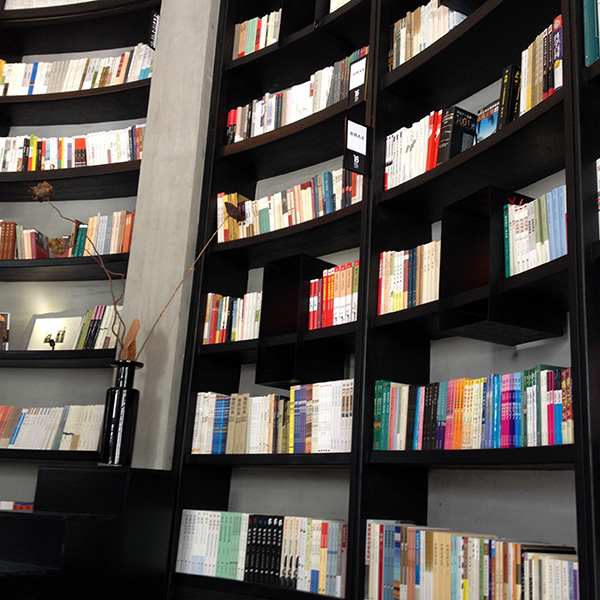
Shenzhen is a bookish city. Even a click over to the English language Alibaba site for “Book Printing in Shenzhen” suggests the extent of how many books are printed in the city. We are so awash in books that it is possible to use them instead of wallpaper when decorating. What’s more, many of my favorite cafes are not only decorated with books, but also serve as lending libraries via 青番茄, a Shenzhen based NGO. All you have to do is register online and then you are free to lend and return books at any of their almost 2,000 participating cafes in China. Continue reading