shen kong: flies, ants, termites, and locusts

In January 2014, anti-Mainland sentiment in Hong Kong resulted in protests calling for the “locusts” of Mainland smugglers to leave the territory and for border controls to be tightened against them. The expression “locusts” appeared again in a 2015 description of Mainland students studying at Hong Kong universities and “stealing jobs” from locals. A week ago, there was another burst of anger against “locusts”, this time against the small time parallel traders (“water guests or 水客“) who purchase goods in Hong Kong for resale in Shenzhen and other Mainland areas. In turn, pro-Mainland blogs have argued that “local termites harm Hong Kong more than locusts do (本土白蚁比蝗虫更损香港)”. Continue reading

handshake 302 in nyc!

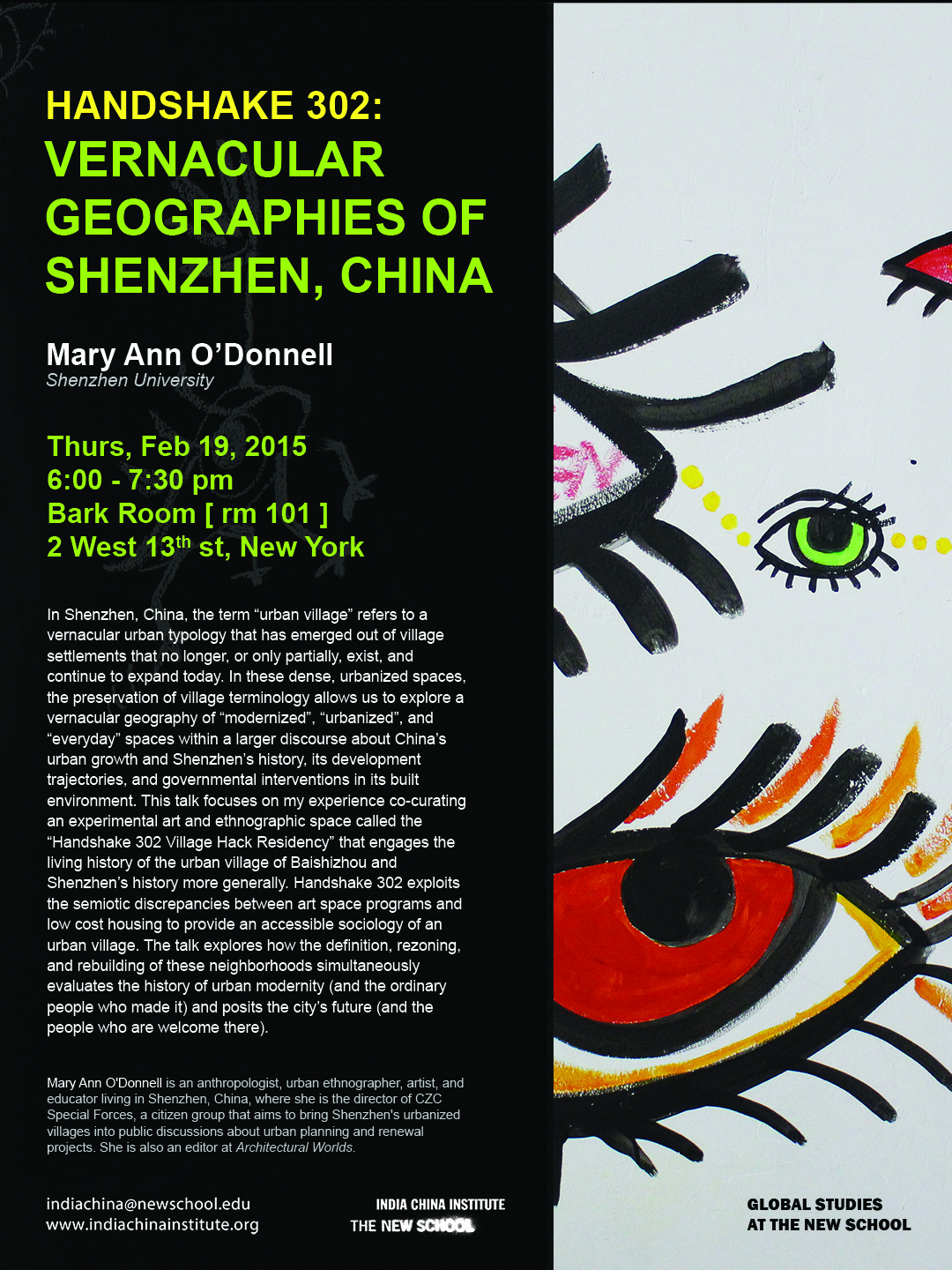
For those in NYC, please join us at the New School tomorrow, Thursday, Feb 19, 2015 from 18:00-19:30 at the Bark Room [rm 101], 2 West 13th Street, New York.

handshake302

guangming office: historic questions of translation

Speakers of North American English such as myself often fall into linguistic rabbit holes when reading official Chinese documents. My confusion arises from what both Western Marxists and Chinese Party members might call “historic questions/ problems of translation (翻译的历史问题)”. Thus, although their are semantic overlaps, a city is not a 城市, an office is not a 办公室, a community is not a 社区, and a collective is not a 集体 because the respective geographies of the USA and PRC have been formed through vastly different cultural ecologies and property regimes. Continue reading

cold war guangming

Today, I am trying to figure how to think about a series of historically discrete events that in retrospect clearly aligned the landscapes of Hanoi, Houston, and Shenzhen. Continue reading

star bright dalang: keeping it real

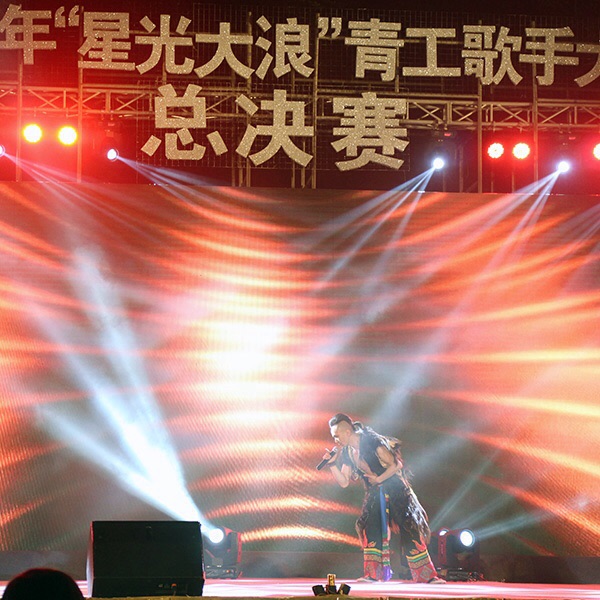
The Star Bright Dalang Singing Competition Finals took place on January 25, 2015. Despite having been abruptly postponed a week (due to government shuffles), nevertheless the production sparkled. Five LED screens adorned the temporary stage in Workers’ Park, a sixth was set up for simultaneous broadcast, lasers beamed through the nighttime sky, and glow wands had been distributed to audience members seated in the front section. The total audience was estimated to be around 3,000 people who gathered to listen to 13 migrant workers sing popular songs a la Idol. Continue reading

INTI shenzhen conference videos inline

In December 2014, the International New Tow Institute hosted the conference, “Shenzhen: From Factory of the World to World City”. Conference videos are now online.

shajing oysters

Today I learned about cultivating oysters. I also visited Shajing, the town that oysters built even though oysters are no longer cultivated here. Instead the oyster babies are sent to Taishan where they are raised and returned to Shajing for processing. It’s almost like assembly manufacturing, except its agricultural production. Continue reading

self governing trade zone, thoughts from

Speculation about what the 自贸区 (self governing trade zone) continues to shape all sorts of conversations. On Monday I participated in a public planning forum for the OCT, where comparisons between China Merchants in Shekou and Overseas Chinese Town in its eponymous neighborhood, the OCT illuminated contours of Shenzhen’s history. Four ideas of note popped up.

First, that China Merchants (in Shekou) and OCT (in the OCT) have been the two state owned enterprises most responsible for creating the Shenzhen image. During the post 1992 era, many of the images of reform (in terms of built environment) were of the OCT and its neighborhoods, tourist industry, and theme parks. Continue reading

shekou redux

For those following the shifts in Guangdong structure, you noticed that yesterday Shekou, along with Qianhai, Nansha, and a bit of Zhuhai was designated a self-governing trade zone (自贸区). Inquiring minds want to know: what does that mean? Speculation abounds and adjustments are coming, but there seem to be two key points. Continue reading

“this time, this place”: these concerns

The balmy days of installation gave way to cold winter rain for the opening of “This Time, This Place” in Shenzhen’s Central Park. Our brief as participants was to respond to the site, and in this sense the weather reminded us just how different indoor and outdoor exhibitions can be. But that’s not what I want to talk about. Today, I’m wondering: is there art that ameliorates rather than is predicated on class privilege? Continue reading