Tomorrow, at 14:30 at Guanshanyue Museum, I’m giving a talk on the U.S. American kitchen. The aim is to provoke discussion about the spread of the American dream as an architectural typology. Come join the conversation.
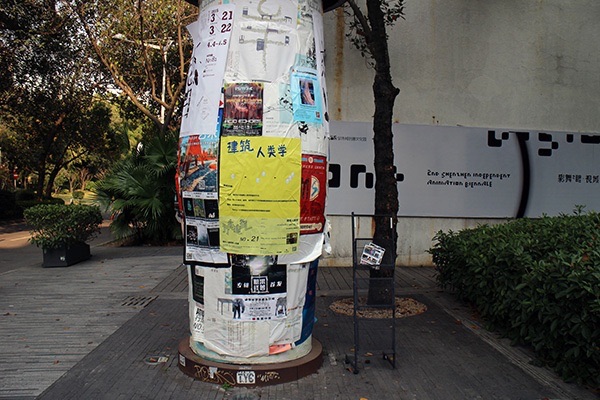
Tomorrow, at 14:30 at Guanshanyue Museum, I’m giving a talk on the U.S. American kitchen. The aim is to provoke discussion about the spread of the American dream as an architectural typology. Come join the conversation.
These past few years the numbers of foreigners in Shenzhen have not only grown, but now they also have a more engaged presence in the city. The collaborators at love, Shenzhen for example, aim to help non-Chinese speaking visitors and residents of the city leave their beaten tracks and discover what’s to love in Shenzhen. Last night they organized a vegetarian dinner at the Chegongmiao Awakening Restaurant, one of my personal favorites. More interestingly, at the dinner the cheerful force behind the group, roseinshenzhen presented me with a guide to Shuiwantou and Seaworld. The map makes the neighborhood accessible and user friendly. She and her posse are currently working on a guide to Chegongmiao.

Utopian architecture in industrial Bao’an? Actually, yes. Developed over the past five years, the Wutong Island (梧桐岛–sometimes translated as Phoenix Tree Island) project combines Chinese ideas about nature, modernist architecture, and an evolving social vision for Shenzhen. Continue reading
So if you only have a couple hours to understand the city, you could do worse than visit the the Civic Center, its museums, the library and symphony hall, where Shenzhen asserts its global ambitions. The Museum of Modern Art is under construction, as is an urban planning exhibition hall. Impressions, below.

Inquiring minds want to know: what is minjian (民间)?
On Sunday, I became part of the scholarly committee (学术委员会) of the Devout and Chaste Girls’ School (虔贞女校)–a minjian organization. Other members in the group included architects, an archaeologist, an editor at a history journal of Bao’an District, an artist, and the Director of the Dalang Culture Office. The Dalang Vice Secretary of Culture also attended the meeting, but left early. In addition, clerical workers from the Department of Culture served tea and insured that the meeting ran smoothly. So what made us a minjian organization? Continue reading
Walked a Baishizhou yesterday and noticed the difficulty of framing one object or process–no focus possible. Or if possible only through brutal cropping and similarly abrupt naratives. How to represent the constantly shifting elements of the anthropocene?
Three days ago, Premier Li Keqiang announced that 2015 was the year in which the yuan could be freely traded within an experimental area in Shenzhen. This Two Meetings (两会) announcement followed his January trip to Shenzhen, when he stated that the Central Government (中央) required three things from Shenzhen:
1) to continue to cultivate the fields of experimentation (继续种好国家改革开放的试验田);
2) to lay the road of creative development (打造创新发展的道路);
3) to become a model of a city that can accommodate development (成为包容发展的示范城市). Continue reading
Northern California skies remind me that there is enough. Full stop.
The recently published Exploring China’s “Maritime Consciousness” offers quantitative insights into public opinion on the South and East China Sea disputes. The survey was conducted in Beijing, Shanghai, Guangzhou, Chengdu, and Changsha. The survey summarizes responses to give a sense of what “urban Chinese” think about a variety of issues. Of the five cities, only Shanghai is actually a coastal city, while only Guangzhou functions within South China seas cultural formations. Beijing is, of course the national capital, while both Chengdu and Changsha are inland provincial capitals.
Yesterday I participated in an afternoon workshop and gave an evening lecture on our work at Handshake 302. I learned how “Chinese” my English has become, especially when speaking of Shenzhen society! Continue reading
 Shenzhen Noted