SZ8X80103//The_Myriad_Transformations//Cut and Pastiche: Hakka-scapes

There is this sense or perhaps compulsion to make sense of the city through its cultural history, as if history were the whole story and not some narrative, which has been retrofitted to the needs of the moment. This is not to say that the needs of the moment are unimportant, merely to highlight that what counts as history and when history may come to count (so to speak) are themselves effects of other social processes which may or may not have anything to do with what happened, but are (nevertheless) important to understanding what we think happened.  All this to say, answering the question “how did Hakka-scapes come to the foreground of Shenzhen’s current embrace of history?” requires double think: we not only need to rummage around to figure out what happened then, but also to posit why then-and-there have been positioned at the origin of here and now. Continue reading

first week of ethnographic “field camp” in heshun

The first week in ancient Heshun (腾冲市和顺古镇) was a rush to the senses. Clean air and clear skies set off renovated homes and fields of rape flowers, while at night it was possible to count stars. We ate bean porridge seasoned with local chili sauce and stood in line to eat  bean cake rolls, and as we left the restaurant we brushed our hands against the cool surface of volcanic stone. Although roads now thread through protected forest areas, nevertheless tourism has transformed Heshun’s “scenic area,” which costs 55 yuan to visit. The ticket includes entry to the town’s main historic attractions. Consequently, “scenic” Heshun is as modern as anywhere else in China: within its narrow allies, tourists navigate a smorgasbord of imported goods and plastic containers, fluffy kittens and easy-going golden retrievers, as well as stores selling luxury items such as Myanmar jade, “southern red” jade, silver jewelry, and local ceramics.

This slideshow requires JavaScript.

Continue reading

SZ8X80102//The_Myriad_Transformations//Cut and Pastiche: Of Global Bullies and Their Girlfriends

In 2006, I visited Dafen Oil Painting Village for the first time. This was several years before Dafen became an important landmark–both in and outside China–in the Shenzhen imaginary. This was also over a decade before the metro system connected Dafen to downtown. In fact, even the road signs reflected the segregation between “Shenzhen” and the rest of the city. Consequently, the first time I visited Dafen I experienced it as a typical urban village that produced an atypical product.

100_0698

In 2006, this road sign outside the main entrance to Dafen Oil Painting Village still gave directions to four market towns–Bantian, Longhua, Shiyan, and Longgang–as well as to “Shenzhen,” which referred to the Luohu “Downtown” area.

This slideshow requires JavaScript.

Continue reading

…and what happens to people after they leave shenzhen and return home?

Heshun is a township located in Tengchong, which these past few years has been heavily promoted by the Yunnan Tourist industry. Heshun is indeed a fun place to stop off and explore for a day or two. In addition to enjoying great local food, jade, hot springs, and Bai ethnicity architecture, tourists can learn about the role of Han Chinese in the history of Southeast Asia, including Vietnam, Laos, Cambodia, Thailand, Myanmar, and the mainland territory of Malaysia. In Heshun, specifically, Han families tell multiple stories of cross-border family ties with settlements in Myanmar. In fact, in the Cun Ancestral Hall, the jeweled portraits of important ancestors were produced in Myanmar, while last year the wood for renovating the ancestral hall was imported from Myanmar. According to the tour guide, the wood cost over 5 million rmb.

This slideshow requires JavaScript.

Continue reading

SZ8X80101//The_Myriad_Transformations//Cut and Pastiche: Lifestyle Leading the World

In Shenzhen, the ongoing transformation of a rural periphery into a mega-city is the latest chapter in global grabs to control  local significance. Located just north of Hong Kong, the Shenzhen area has comprised the Sino-British border since July 1, 1898, when the Convention for the Extension of Hong Kong Territory came into effect. Once upon a time, the Sino-Bbeen accomplished through a logic of practical means to endlessly churned out desires and there has been something cut and pastiche about the construction of Shenzhen. What, for example, to make of this advertisement for real east developer Vanke’s East Coast development in Yantian District? What kind of space is implied by the figure of Lifestyle Leading the People?

Continue reading

thoughts on social possibility at handshake 302

Why Singleton Lunch? Why invite someone to Handshake 302, have them prepare a meal, share it with a group of friends and strangers, and call it “art”? What’s the difference between a Singleton Lunch meal and more traditional forms of art like painting or theater or even a happening?

Continue reading

SZ8X8//The_Myriad_Transformations

The Myriad Transformations comprises sixty-four images that I created using photographs taken between 2002 and 2010. These dates are arbitrary but not random, marking the purchase of my first digital camera (August 2002) and the decision to my rudimentary photoshop skills to create a project to commemorate the thirtieth anniversary of the establishment of the Shenzhen Special Economic Zone (during an artist residency at the Sitka Center for Art and Ecology, December 2008-January 2009). I finished the images in 2010. In the process of saving and transferring these files to smaller drives with larger storage capacity, many of the original photoshop files were lost. What remains as a complete set are the files I created to print photographs of the images in 2011 or 2012. I reopened one of these files in January 2019 and  realized they were more interesting in retrospect than they had been when I made them precisely because over the past decade (2010-2020), Shenzhen has re-invented itself yet again, and suddenly, abruptly, we see the latent structure of today in images that once upon a time seemed definitive, eternal even. Continue reading

an archeology of shenzhen’s digital daze…

A ten-year retrospective of Sui Jianguo (隋建国)’s work, System is currently on display at the OCAT Art Terminal. Across the street, Hua Museum, has showcased Miao Xiaochun (缪晓春)’s work in the solo exhibition, Simulations. Both artists have played with scale and method, calling attention to the material practice of creating in an era of digitalized mass production. However, where Sui Jianguo has interrogated the relationship between the human body, clay and its digitalized transformations, Miao Xiaochun has turned his attention to the relationships between digital simulations, imagined futures, and the resulting landscapes.

Continue reading

oink! oink, oink!

Happy Year of the Pig, which begins on February 5, 2019 and ends on January 25, 2020. May you and yours thrive, eat lots of good food and sleep fitfully.

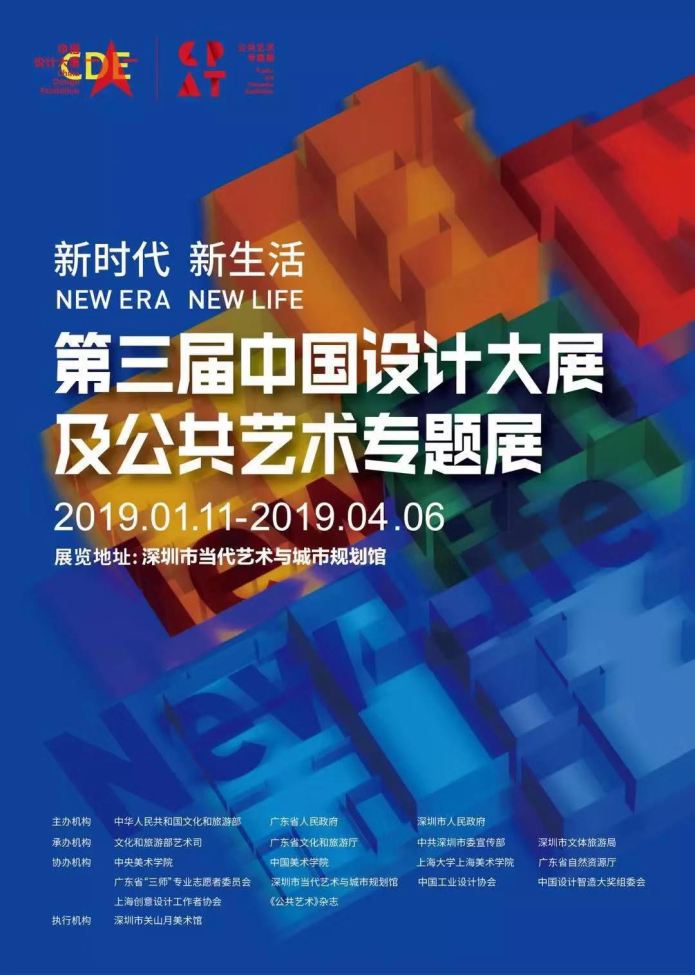
national recognition for handshake 302 “art sprouts” program

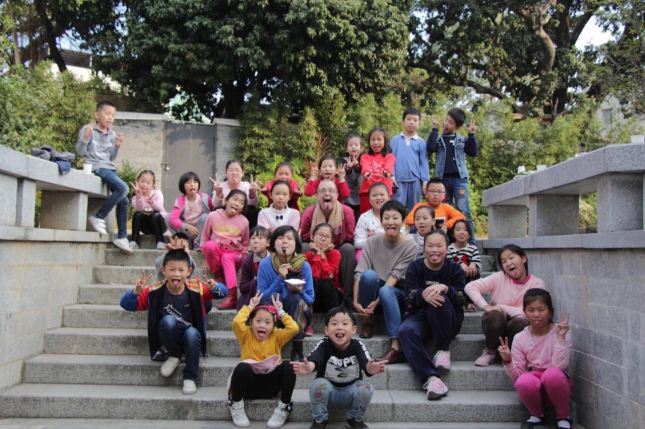
In 2016, Handshake 302 began a meaningful collaboration with the Longheu Girls’ School P+V Gallery. Through the “Art Sprouts” public art program, we aimed to provide high quality arts and creative education for the children of Dalang. For almost two years, we brought professional artists to an urban village in the outer districts in order to help migrant children develop the skills and imagination necessary to thrive in the creative economy.

6571548758830_.pic_hd

Continue reading