Impressions of the Xiasha Plaza since the opening of the k.k. one mall. Those who follow the cycle of urban village demolition, relocation, and upgrading know the k.k. folks as 京基, the same development company involved in renovating Caiwuwei.

Impressions of the Xiasha Plaza since the opening of the k.k. one mall. Those who follow the cycle of urban village demolition, relocation, and upgrading know the k.k. folks as 京基, the same development company involved in renovating Caiwuwei.

For those who doubt that once upon a time Bao’an County was coastal, I offer images from Baguang, one of the more beautiful sections of Dapeng New District. The majority of Baguang villagers have been relocated, while land and coastline have been red-lined for environmental protection, green living and research. At the moment, Baguang shimmers at the cusp of redevelopment–not yet remade, but yet already under erasure. Boom!

The entrance to Changling Village (长岭村) is located on the southern side of Luosha Road at the foot of Wutong Mountain. Before the construction of the Binhai Expressway (1999) and the opening of the East Coast Highway (2008) made traveling across Shenzhen commonplace, Changling marked the practical eastern edge of the early Special Zone. Today, however, Changling is conveniently located on the J1 bus route which connects Seaworld at the southern tip of the Nantou Peninsula to Dameisha on the eastern edge of the Dapeng Peninsula. The entire trip takes 90 minutes without traffic, but usually takes over two hours. Indeed, the J1 route traverses the entire Shenzhen-Hong Kong border, and its constituent roads—Houhai Road, Binhai Expressway, Binhe Road, Luosha Road, and Huishen Coastal Express—literally name the waterways and migrations that once shaped the area: Backwaters, Oceanside, Riverside, Luohu to Shatoujiao, Huizhou to Shenzhen. Continue reading

Tonight, I was one of roughly 2,000 people who welcomed spring in Changling Village (长岭村) by eating pencai together. Like a wedding banquet, a pencai banquet constitutes society table by table. The hosts were the 40-odd families who belong to the village, and their guests came from the Hong Kong side of the family, affines from neighboring villages, friends, street office officials, and representatives from the developer who aims to transform Changling into high end real estate on the Shenzhen River. Continue reading
They will soon begin digging the basement and putting in foundation where the Shahe Creative Park used to be. As I have yet to invest in a drone, I resort to climbing–past the five&dime, the yoga studio, the taikwando studio, and the Shahe Creative Park Office–to the top of a partially cordoned building to take pictures of the changing landscape:

Yesterday, I heard this story: A 30-something farmer from Lanzhou came to Shenzhen in 2013 in order to make his fortune. He started out working for a relative in a Lanzhou Noodle Shop, and then after a few months decided to open his own noodle shop. After looking around for a suitable place, he decided to purchase the rental rights to a noodle shop in Baishizhou, on the western side of Shahe Road. The shop had been recently renovated and came with a hefty transfer fee—180,000 rmb with a high rent. But the man was enthusiastic. So he sold his homestead land (宅基地) as an initial investment and moved his family to Baishizhou, where they worked. Only his youngest son went to school, while his oldest didn’t go to high school so he could work in the shop. As the last of the buildings in the Shahe Industrial Park are being demolished, he is being forced out without any compensation and no way back home. Continue reading

On Friday September 9, 2016, I had the privilege of visiting Nanting Village, Guangzhou with Professor Chen Xiaoyang, from the Guangzhou Academy of Fine Arts. The occasion for the visit was a screening of Zhong Shifang’s film, “From Border to Border,” a documentary on the Chinese community in Tangra Calcutta. I will discuss the film in my next post. Today, I would like to contextualize the screening of the film with a brief introduction to Nanting Village. Continue reading
Guanhu (官湖) and Shayuchong (沙渔涌) Villages are within walking distance to each other along the Dapeng coastline. Guanhu is the village that has developed Jiaochangwei. A small settlement at the mouth of a river, Shayuchong is undergoing a complete renovation that is reminiscent of the horrific universidade paint-overs. Both villages are in various stages of redevelopment. And in the details I trace Shenzhen’s complicated preservation ecologies, where beauty, kitsch desires, and too much money take strange and curious form. Impressions from today’s walk, below.
Folks interested in high density living in Shenzhen’s urban villages have been creating some great images about how space works across different scales. Below, a sampling from around the globe. Follow links to reports.

From Li Zhang’s overview of urban villages, with a focus on Gangxia.
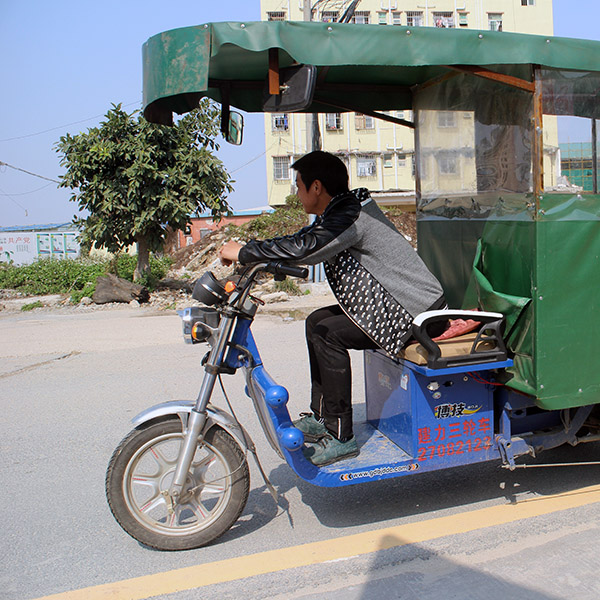
In the early spring, I arrived at the Songgang bus stop, “under the bridge”–a pedestrian overpass on the G107 expressway. The stop teemed with migrant workers and motorcycle cabbies, who screamed, “Where are you going?” Continue reading
 Shenzhen Noted