crumbling foundations

The first floor sinking, occupied by migrant workers. Above, several condos have been inhabited, but most floors remain empty, unused except as placeholders on accounting sheets. A section of Houhai Bin Road is being reconstructed. The chilly smog undulates.

This slideshow requires JavaScript.

reports from caiwuwei

The research division of Urbanus has sponsored Fu Na and Chris Gee’s research in Caiwuwei these past three years. Just recently, they released three videos that take viewers on walks through what remains of Caiwuwei. Of note: Caiwuwei has been upgraded and polished into an exemplar of the potential of high density living that can be created through appropriations of handshake buildings. So commercial opportunities and low-cost conveniently located housing, with minimal investment in public spaces and amenities. Links:

CAIWUWEI: A WALKING TOUR

对话城中村_Conversations with the Urban Village

蔡屋围24小时 / Caiwuwei 24 Hours

ten years ago…

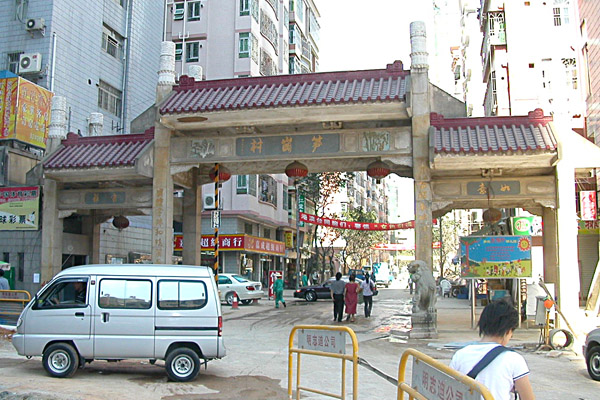
I have been reviewing my photo archives and came across pictures of new village gates that I took roughly ten years ago. The pictures show village gates old and new and point to the persistence of community identity precisely because it is malleable to the needs of the present.

This slideshow requires JavaScript.

traveling impressions/ hong kong international airport

Marc Augé famously suggested that airports are non-places because they are too transient to have an identity. Other non-places include highways, hotel rooms, and waiting rooms. Augé used the idea of the non-place to describe the dislocations and standardizations that characterize super modernity.

Of note, our shopping mall cities, Shenzhen for example, offer few concrete (literally!) objects that have particular and recognizably distinct identities. At the MixC in Luohu and coastal City in Nanshan, for example, we see the same mix of chain stores, domestic and international arranged in a space that is more luxurious than the Rockaway mall of my teenage years, but in essence no different. The comparison, chez Shenzhen is with an imagined countryside and the urbanized villages. In other words, supermodern shopping malls are a place holder in the search for something better, but not interesting in and of themselves.

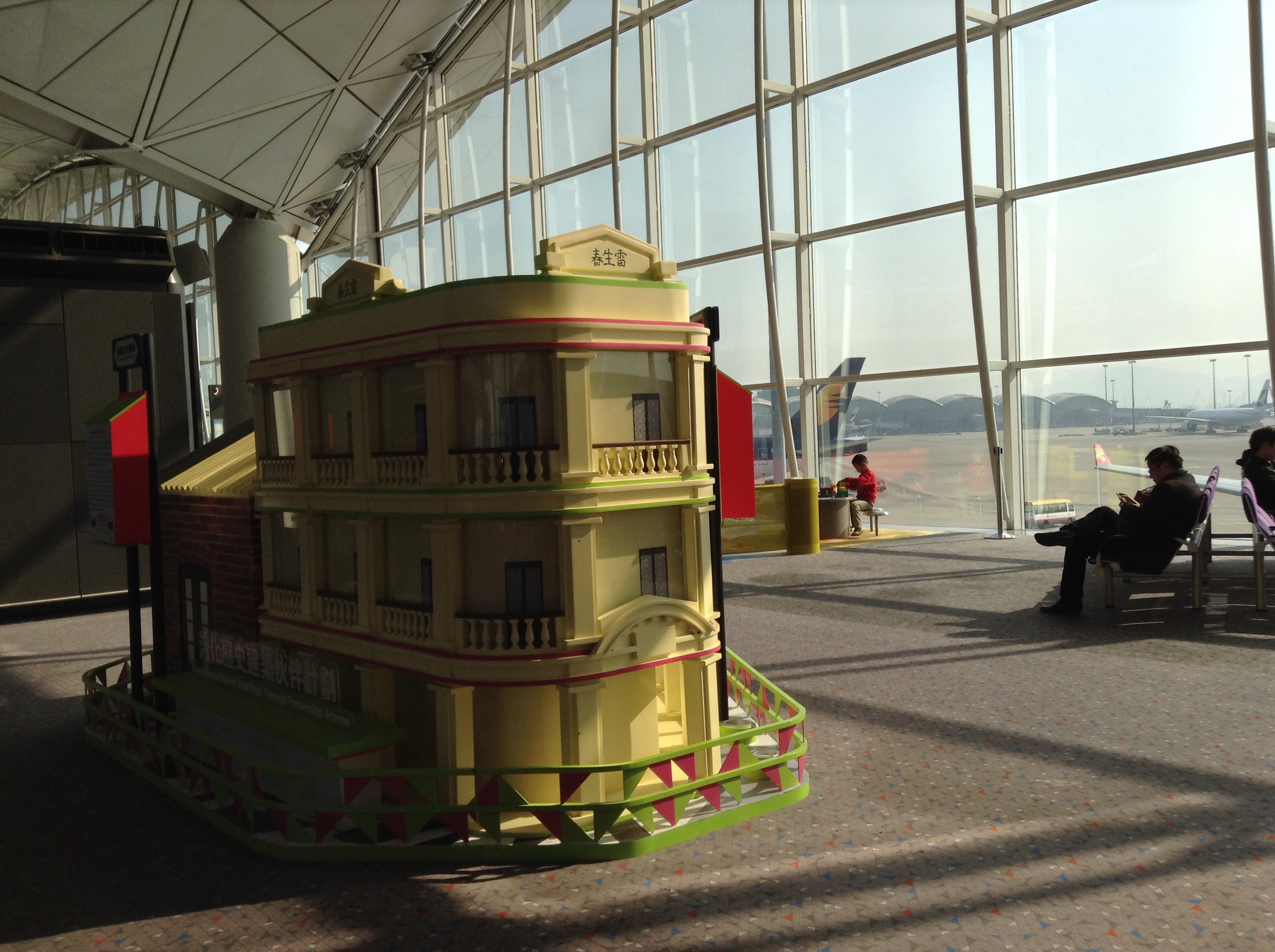
Today, I am in Hong Kong international airport and have noticed a few replicas of preserved buildings. Such is the anonymity of the super modern city that we even become nostalgic for colonial architecture — smaller and distinct from the airport, which dwarfs these toylike memories of a quaint accessible, familiar and endearing city that never was.

image

the shenzhen school uniform

Apparently the Shenzhen school uniform is the talk of the national under 18 virtual community.

All Shenzhen public students wear the same uniform, regardless of the school they attend. On buses and in the subway, students either wear the elementary uniform or the high school uniform so one doesn’t know what school they attend, only that they attend. In fact, the Shenzhen school uniform is so recognizable that in the press and online it stands for the city’s youth. Thus, for example, the scandal of the youthful parents and their baby photo (from a tv series that admits high school students are having sex) as well as the explicit sexualization of Shenzhen little sisters in their school uniforms and a website for student couples to upload pictures of Shenzhen school uniform lovers.

Elsewhere in China commonality is marked by joining Party youth organizations because schools have their own recognizable uniforms. Cui Jian famously used the Young Pioneer red handkerchief to blindfold himself and in doing so evoked the trauma of a generation. In Shenzhen, the ubiquitous school uniform has taken on a similar generalizing function to the red handkerchief. However, instead of evoking a national identity, the school uniform symbolizes an explicitly Shenzhen childhood and teenhood.

I first heard about the national significance of the Shenzhen school uniform at a biennale forum. We old folks onstage were discussing if there was a common Shenzhen culture or civic identity. A student in the audience said there was. He mentioned that young people in Shenzhen have ideas and dreams that are shared, and also that these dreams and ambitions are different from the rest of the country. He then underscored his point by citing the omnipresence of the Shenzhen uniform both online and at Chinese universities. It seems that Shenzhen students continue to wear the dark blue sweatpants even after they get to college. Part of the charm, it seems, is that the uniform really is so ugly one grows to love it.

Back in the day, there was active debate both within and outside Shenzhen over how a civic identity might be created. Fortunately for us moldy oldies, the young people of the city have done it despite us. A selection of Shenzhen school uniform pictures, including a link to the highly popular digital comic book, Days When I Wore A Shenzhen School Uniform.

This slideshow requires JavaScript.

urban fetish / baishizhou

IMG_5353

Fat Bird premieres another play!

This Saturday and Sunday afternoon at the Value Factory, Fat Bird will perform Urban Fetish / Baishizhou. After the performance, I will lead a discussion about “Life, Labor and Desire” in and around the Shenzhen Dream. The show and discussion begin at 2:30 and will end between 4:30 and 5:00, depending on how lively the discussion gets.

Here’s the curatorial statement from Yang Qian (urban fetish baishizhou curatorial statement english):

Discussion Theater
URBAN FETISH / BAISHIZHOU
A Historic Interlude that did not, will not and cannot Exist

Sun up; work
Sundown; to rest
Dig well and drink of the water
Dig field; eat of the grain
Imperial power is? and to us what is it?

The fourth; the dimension of stillness.
And the power over wild beasts.

– Canto 47, Ezra Pound

The life that Ezra Pound described was once quite close, with memories only three generations away from the present.

However, today we live in a world where you are what you own. This is a material era, transforming fetishism into poetic theater.

At 2:30 p.m. on the fourth and fifth days of January 2014, during the Fifth Edition of the Shenzhen Hong Kong Bi-City Biennale of Urbanism/ Architecture, in Venue A, Fat Bird Theatre invites each member of the audience to travel to a future Baishizhou. As one of the lucky property owners, you will experience unimaginable luxury from your seat in the theatre. Indeed, this surreal, poetic experience will make your neighbors – homeowners in Portofino, Shenzhen’s most expensive real estate development – envious because their future has already been built. But you are about to create a future that can only belong to you. Compared to them, you are successful.

In the theater, you will see a community buried, and on its ruins a dreamlike city emerge, and you and others like you will own this new world. You will see a place where 140,000 migrant workers once lived. Like you, they came to realize the Shenzhen Dream: wearing designer clothing, luxury housing, and lazy shopping mall days. But you are the lucky one; they have been pushed aside. Compared to them, you are successful.

You own a car, but sometimes you walk the streets of Shenzhen, and when you do, you see the posters that read, “When you arrive, you are a Shenzhener”. But in this theater you are sure of one truth: “Arriving you live in an urban village, when you get out, you are a Shenzhener”. So your experience in theater will tell you – the urban village is not Shenzhen. Urban village residents are not Shenzheners. Compared to them, you are successful.

If this theatrical experience confirms your belief in objects, your desires, and your optimism about the future then you should have no doubts about what you do and will obtain.

The discussion theater Urban Fetish / Baishizhou is a symbolic exploration of architecture and its objects, urban forms and what it means to create an environment. It is a meditation on the meaning of the urban village, a historically specific artifact. It is part of a search to discover the meaning and problems of urbanization.

After the performance, Dr. Mary Ann O’Donnell will lead a discussion with the audience on the topic, “Life, Labor, and Desire”.

price list, shekou, early 1980s

IMG_3454A price list from the Shekou Industrial Zone Life Services Bureau, early 1980s.

Of note? Uniform prices throughout the industrial zone, although some prices were “approximate (左右)”. The reason? typhoons determined availability of food and goods. Also, prices are modified with the characters for renminbi (人民币) because at the time, Hong Kong dollars and Foreign Exchange Certificate (or waihui 外汇), a surrogate currency used by foreigners also circulated. Long ago and far away, one industrial zone, three currencies.

Not only the typeset makes this list seem like it came from another place and time. The prices seem so cheap its hard to remember that these prices were expensive relative to neidi, where monthly salaries still ranged between 20 to 50 rmb.

During the early 1980s, coming to the SEZ and/or Shekou Industrial Zone was considered hard, but nevertheless resulted in opportunities to earn more elsewhere. In fact, by the 1990s, Shenzhen and Shekou boasted a substantial wage (both white and blue-collar ) differential with the rest of the country. And today Shenzhen along with Beijing and Shanghai continues to have the highest lowest minimum wage in the country (see China Labour bulletin report).

Shenzhen’s economic success remains one of the key symbols of the success of post Mao reforms. It is no surprise, therefore that both Guangdong and Shenzhen have been central to Xi Jinping’s ongoing efforts to middle class-ify China. But. The extent to which rural China — both in the form of migrant workers and urban villages — has enabled Shenzhen’s success remains left out of these rags-to-riches scenarios.

taihua and the emergence of a shen-zen. seriously.

I went to have tea at the Taihua Estates clubhouse in Bao’an. The estates were built in the late 1990s by Taihua Real Estate (泰华地产). But since its early success, the Taiwanese firm has re-envisioned the social role of real estate development — they are searching for designs that culturally and environmentally sustainable.

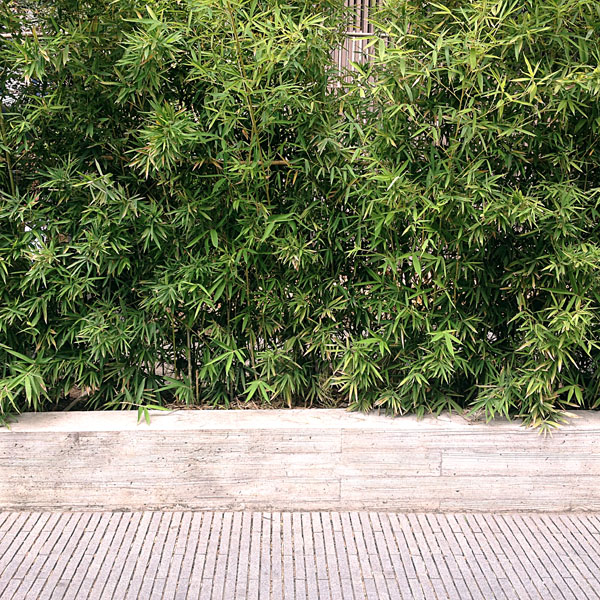
The clubhouse / office / kitchen is open to the outside and uses hanging fans rather than air-conditioning to cool the office space. Employees have lockers and laptops and they change workspaces as desired. Each day, a different department is responsible for preparing lunch for the entire team. There is a meditation room, a tea room, and as much spatial flexibility as possible. Moreover, the entire office and surrounding environment has been transformed through bamboo and water installations.

I find theirs a compelling vision. We introduced ourselves, meditated together, enjoyed two hours of tea and conversation, and then ate lunch. The space itself delights. Impressions, below.

This slideshow requires JavaScript.

moving on up…shenzhen identity and urban villages

Urban villages inform and shape popular understandings of Shenzhen, both domestically and abroad. Intellectuals, also here and elsewhere, have decried the decision to raze villages and put up new and improved postmodern housing estates, offices and shopping malls as it short-sighted and violently anti-working class. However, in Shenzhen, there has been no street level organizing as such to stop the razing; a decision is made, plans approved, people moved.

In this context, it is interesting to note the temporary nature of Shenzhen patterns of inhabitation. Even before settling in to their first dorm room or urban village share, migrants intend to move. This intention might be vague — I’ll move when I get a better job, or buy my house — but “moving on up” is one of the reasons people migrate to the city. Moreover, in practice, people move when they change jobs, they move when they get a raise, they move when they have a partner, they move when their parents come to live with them. They also move as investment strategies, from one home to the next. Indeed, as far as I can tell, people only seem to stop moving (for the time being), when their child is at a desirable school. If the school is undesirable, changing school district zones or moving to parts of the country where gaokao competition is less fierce.

In other words, inhabitation patterns seem to preclude the time necessary to grow attached to neighborhoods. The current fondness for urban villages seems overwhelming is often nostalgic (missing the challenge of first coming to Shenzhen) or political (we need housing for the working poor), but it is rarely the result of long-term living in a village. Many of the people I have interviewed who do live in a village want to leave. They want their own home (not a rental), or if they are a landlord who lives in a handshake, they want to live in a modern high-rise.

All this to say that the lack of grassroots resistance to razing urban villages in Shenzhen isn’t as counter-intuitive as it may seem from the outside. Those who want to keep the villages don’t actually live there, and those who live there are anticipating moving out. Indeed, I have come to believe that the social questions posed by urban villages have less to do with preserving these neighborhoods, as they do with making long-term inhabitation possible. If the villages were places that people actually wanted to live, raise their child, and retire, then there would be a very different political and economic response to the ongoing demolitions.

NOTE: Handshake buildings as a form of local real estate development were an artifact of the 1992 decision to transfer inner district village lands to the city. In the 1980s, villagers built free-standing homes for themselves, and some collective rental properties and dormitories. However, once the 1992 policy limited village land resources, villagers stopped building individual free-standing homes and built multi-story rental buildings. In the outer districts, where land remained under village control until 2004, villagers built neighborhoods of free-standing homes for themselves, and multi-story rental properties next door.

the party’s assets

So the investigation of the State Assets Administration Committee (国资委) Director, Jiang Jiemin (蒋洁敏) has begun. Just a day after the Bo Xilai trial ended, netizens have described Jiang Jiemin’s corruption as “unbelievable” . How much more off the top can China’s leaders go? Or are we still struggling for a vocabulary to describe the scale and scope of China’s modernization and attendent robber barons?

In point of fact, Jiang Jiemin did have access to money and resources well beyond Bo Xilai. After all, Bo Xilai only oversaw the assests of Chongqing, one city. In contrast, as Director of the State Assets Administration Committee, Jiang Jiemin oversaw , The all of China’s state-owned industries, including the country’s energy and telecommunications companies, as well as all the natural resources development companies. In everyday language, this extensive monopoly is called “the Party’s assests (党产)”.

This is the political-economic context in which Shenzhen residents speak of the city becoming more and more like the interior; as the city apparatus increases its regulatory control (through mechanisms such as the urban plan) opportunities to take advantage of the SEZ’s economic boom are increasingly monopolized by the Party State. In turn, second and third generation reds (红二代、红三代 as the children of Party leaders are called) overwhelmingly control opportunities to head these industries.