A strange week that hasn’t coalesced into a statement so much as it has become fragments in search of glue; thinking as pastiche, and underneath it all a throbbing fear. Continue reading

A strange week that hasn’t coalesced into a statement so much as it has become fragments in search of glue; thinking as pastiche, and underneath it all a throbbing fear. Continue reading

This week I have been thinking about iterations of the “local” in two sites: the 2015 Shenzhen Hong Kong Biennale of Urbanism/Architecture and the Baishizhou Street Museum. In particular, I’m thinking about the possibility of making connections from “here” to “there” when they hinge on the distance between (a) some outside understanding of what the local might be and (b) what might be interesting to actual locals. The possibility of meaningful dialogue is further complicated when “outsiders” and “locals” are organized by global hierarchies, internal class structures, and unquestioned ideas of what might be intellectually and/or aesthetically engaging. Continue reading
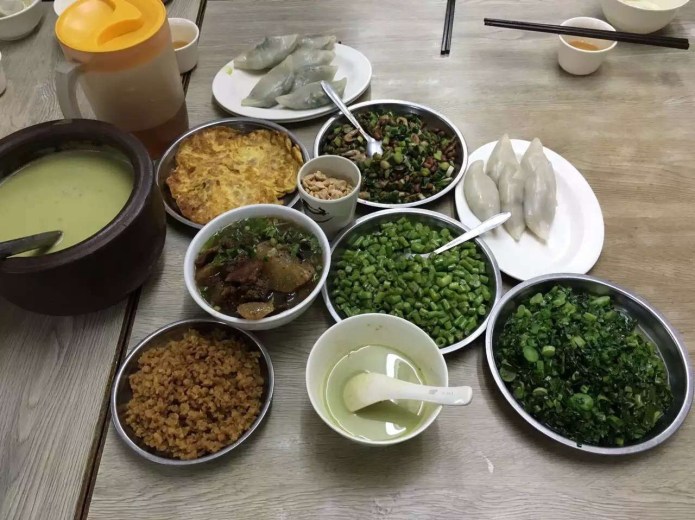
Last weekend I met two young men, 18 and 19 years old, who are filming interviews with and about “Shenzhen’s Second Generation”. We talked about the actual definition of a “Shen 2 (深二),” which I have tended to think of in terms of immigrant generations. In contrast, they were specifying the term also with respect to decades: they consider the 80s and 90s generations to be members of Shen 2, while 70s kids and millennials are not. They also noted that Shekou’s Second Generation (蛇二) is even more precisely defined; these are the children of utopian Shekou, who lived in the old China Merchants housing developments, and attended the original Yucai School.
So what defines Shen 2 kids? Continue reading
So, as the Xiasha Kingkey project finishes up, another urban renovation project begins in neighboring Shangsha. Below, impressions of the Xiasha plaza, the Kingkey complex along Binhe Road, and the state of unmaking in Shangsha.
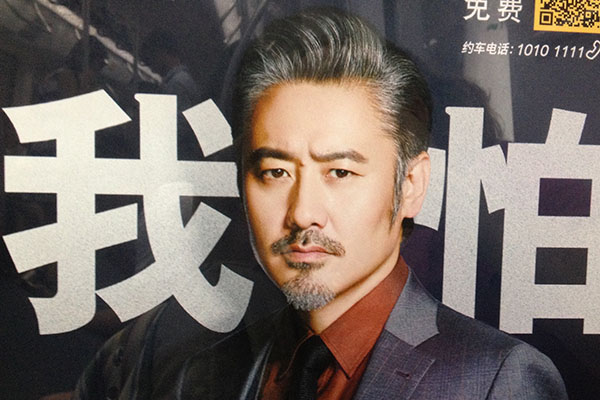
To continue the 10 year anniversary celebration of Shenzhen Noted, I’m reposting “和谐深圳: building a harmonious society” an early post on what might be called “disorderly” Shenzhen. The accompanying pictures illustrate the underlying fears that have permeated Shenzhen’s development.
On a distressing note, 10 years after I first documented signs of anxiety throughout the emergent city, these generalized fears have left the unofficial sphere and have entered the official sphere of anti-terrorism campaigns and fear-based advertising for private taxi companies. Unfortunately, it seems that the anxiety produced by in-your-face inequality of ten years ago has been displaced onto the bodies of Chinese Muslims, who (in much of the propaganda) are represented as “generalized” Middle Eastern Muslims.
The anti-terrorism campaign warns the Chinese public that terrorists have no human feelings and ruthlessly destroy family life, which is described in Confucian rhetoric–a not so subtle reminder that the “Chinese” nation is Han. This impression is further heightened in an anime anti-terrorist campaign that explicitly associates terrorism with Islam and China’s Muslim province, Xinjiang. The Shenzhou taxi campaign plays upon fears of techy house invasions, showing film stars claiming that, “I fear” how technology allows strangers to know where one lives. The tie-in with the anti-terrorist campaign is familial well-being: because they have your address, these strangers can prey upon your children or wife. The Shenzhen add campaign also extends the anxiety of ten years ago: gates are no longer enough to keep predators away.
Yesterday, I was walking in one of the new sections of Houhai. On my left, behind the walls of an elite gated community, children frolicked in a recently completed swimming pool. On my right, migrant workers hung out at a corner kiosk of a construction site shantytown. The juxtaposition of these two spaces, common throughout Shenzhen, symbolizes the class structure that has enabled the construction of the city. On the one hand, urban residents (whether from other cities or long term Shenzhen residents) occupy the new buildings and spaces—upscale housing, high-rise offices, and shopping malls bulging with designer goods. On the other hand, rural migrants build these spaces, inhabiting temporary structures that vanish at the end of a project. Indeed, it is not uncommon to see children playing or women cooking in front of a row of construction site shanties. Unlike the enclosed lives of the gated community, shantytown lives…
View original post 430 more words
Celebrating 10 years of noting changes in the urban landscape. These pictures suggest how Shenzhen looked and moved at the cusp of its transition from concrete low rises to glass and steel skyscrapers. There’s even a picture from when Huanggang Road was a major shipping artery.
I have been collecting discarded objects and then photographing them in different sections of Shenzhen, the oldest and largest of China’s special economic zones. This process has (as yet) denied me photo-ops with a Guanyin statue, but helped me see things so common that they hadn’t previously registered as “Shenzhenese”. This bike tire examplifies how what gets overlooked is often the all-too-common (even by folks who define themselves through acts of documentation).
In the early eighties, just after the PRC had opened to the capitalist West, bicycles symbolized the differences between urban China and urban “us”. I remember magazine articles on Beijing and Shanghai that featured images of hundreds of Chinese citizens biking to (or from) work, school, the market. At the time, Shenzhen had just been established and rarely featured in these articles, except as an example of the extent to which China was changing. From its establishment, however…
View original post 251 more words
The ThermoMatter (温度) opening was well attended, despite the distances–geographic, class, and interest–that separate the Shenzhen Art Museum from the rest of Shenzhen. There was a general conversation with participating artists after the opening ceremony and there seemed to be a consensus that this show was “local”; all artists had some connection to the city. There were 2nd generation participants, long-term immigrants, and projects that were explicitly about the city itself. In the Chinese 温度 can refer to “temperature” as well as to actual and emotional warmth. All agreed that these meanings were fully on display.
General impressions from the opening:
Snippet from “of a piece”, hands:

Shenzhen’s most recent Party Secretary, Ma Xingrui (马兴瑞) infamously told Shenzhen and its boosters to get over the jubilation for its recent rise in international prestige. On the one hand, there is something snarky and mean spirited about Party Secretary Ma’s scolding. After all, Shenzhen’s raison d’etre has been to make a place for itself in the emergent world order and for most of its existence, Shenzhen has been ignored by Beijing-centric views of China (both in and outside China). On the other had, many agree with his assessment that Shenzhen is not yet a first rank world city.
The new Party Secretary’s surname—Ma—is a homophone with the character for “scold / tell off” (骂)”. In that spirit, the OCT Lifestyle website put out an article in which Shenzhen clearly comes in second behind world class cities such as Beijing, Hong Kong, Taiwan, Japan, and Singapore. With Beijing the comparison is about the internet. Hong Kong stands for level of globalization, Taiwan a sense of well-being, Japan for professionalism, and Singapore for the ability to attract and keep talent. In other words, Shenzhen wants to be best at all of that, which may in fact be its charm—composite rather than first rank across categories. Continue reading

This past week I have been in Shuiwei learning to wrap zongzi (粽子) for the upcoming Dragon Boat Festival. What is apparent is not simply the re-invention of tradition, but also the unpaid work that women do to create that solidarity. The zongzi making takes place over 10 days—two prep days and then 8 days of wrapping and boiling. The hours are long: 6:30 a.m. to midnight or later. Of note: Continue reading
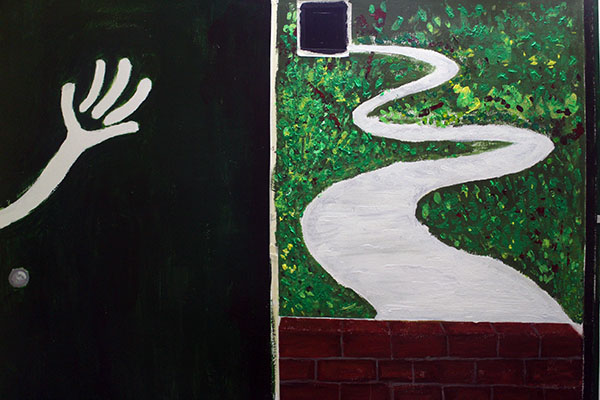
Recently, “Handshake with the Future” curator, Liu He talked with Xin’an Polytechnic professor He about the current exhibition at Handshake 302. Here’s what she said:
Q: 让学生们参与《与未来握手》的初衷是什么?/What did you hope to see happen when by having your students participate in “Handshake with the Future”? Continue reading


 Shenzhen Noted