ma hongjie’s photography

Over the past 11 years, photographer Ma Hongjie’s (马宏杰) has been photographing Chinese families and all their possessions, like the image of a Home on the Yellow River, Huayuankou Town, Zhengzhou City, Henan Province, above. On his blog, Ma said that an album of this work, titled The Family Belongings of Chinese People will be available the end of his month. The blog is primarily in Chinese, but the images–mostly from rural areas and the west of China–speak for themselves. For example, his photo-essays on monkey trainers and their monkeys, or on how Guo Fucheng makes calligraphy brushes.

Continue reading

horton hears a migrant worker

In order to grasp the moralities and consequences of social non-existence, and incidentally to demonstrate that non-existence partially registered in American understandings of its Cold War conundrums, especially our self-envisioned role in Asia, one could do worse than a close reading of Horton Hears a Who, which was published in 1954, roughly a decade after Theodor “Dr. Seuss” Geisel had transitioned from drawing editorial cartoons to writing politically charged children’s books. Continue reading

changing expectations among shenzhen workers

I just had conversation with a friend who is the CEO of a Shenzhen based fashion firm. She said that Shenzhen (and ultimately) Chinese manufacturers were facing two problems:

  • Low level manufacturing was being relocated to countries like Vietnam, where wages were lower, and;
  • Workers born in the 80s and 90s generation have higher quality of life expectations than do workers born in the 60s and 70s.

Her point, of course, was that the workers from the 60s and 70s not only built Shenzhen, but are also currently factory owners and the most active in society. Therefore they are not necessarily willing to offer workers from the 80s and 90s improved working conditions, including regular time off, air conditioned dormitories, and fewer roommates. She concluded that to be successful, Shenzhen producers needed to offer higher value, niche manufacturing that incorporated both industrial and social design into new business models.

This conversation chimes in on ongoing discussions I’m hearing about dormitories in Shenzhen. It is also reflected in Re/Code”s recently published article, “A Rare Glimpse Inside Foxconn’s Factory Gates” which shows the Taiwanese multi-national’s efforts to re-brand its Shenzhen campus, as a place where workers are well treated and therefore happy.

star bright dalang: keeping it real

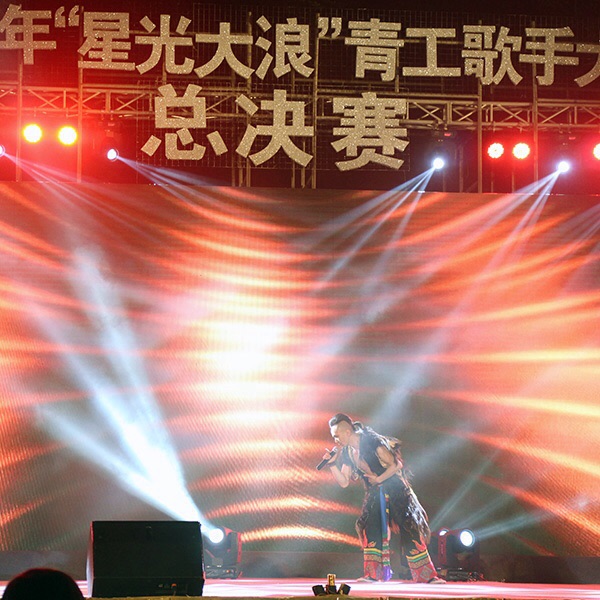
The Star Bright Dalang Singing Competition Finals took place on January 25, 2015. Despite having been abruptly postponed a week (due to government shuffles), nevertheless the production sparkled. Five LED screens adorned the temporary stage in Workers’ Park, a sixth was set up for simultaneous broadcast, lasers beamed through the nighttime sky, and glow wands had been distributed to audience members seated in the front section. The total audience was estimated to be around 3,000 people who gathered to listen to 13 migrant workers sing popular songs a la Idol. Continue reading

floating desires

Desire ravages Baishizhou.

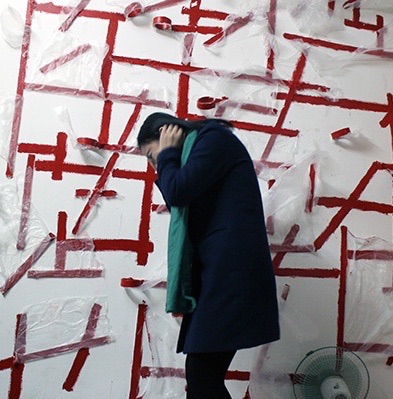
Last night at Handshake 302, Fu Honghong discussed her wall, “Floating Desires (漂浮的欲)”, the fifth installation of the series, My White Wall Compulsions (墙迫症). Fu Honghong is one of the few CZC Special Forces who lives in Baishizhou. She came to Shenzhen via a rural childhood and urban university, and now works as a graphic designer in neighboring Overseas Chinese Town. On her wall, Fu Honghong wanted to map Baishizhou in terms of the desires–to find a job, to meet a life partner, to buy a house and leave–that although immaterial, nevertheless are the reason that Baishizhou exists as it does. Continue reading

baishizhou superhero!

Baishizhou Superhero has been installed at Handshake 302. Come and see and play with the first urban village superhero photo stand-in!

superhero

Below, the curatorial statement for the installation.

Baishizhou Superhero

Superheroes navigate the debris of urban despair, haunting the rubbished alleyways and crumbling staircases that lead to cramped spaces at the end of unlit hallways. They appear as exaggerated silhouettes or bursts of neon light. They leap over tall buildings in a single bound and rescue the victims of unfettered greed and malignant desire. Most importantly, superheroes represent the fantasy of latent potential and unlimited transformation in these techno-modernized times; mild-mannered, nerdy and bureaucratically inclined Clark Kent steps into a telephone booth and strides out a decisively manly man, who rights systemic wrongs through physical prowess. Hooray!

In the installation Baishizhou Superhero, Liu Wei’s playful cartoon characters transform Handshake 302 into a magic telephone booth. Visitors step into the space and through the power of a photo stand in become one of seven possible urban village superheroes – Methane Man, Wonder Granny, Stir Fry Fly, the Amazing Beer Babe, Village Guardian, Super Dog, or Cat-a-go-go. Friends can then take pictures of each other as they model the most common social roles in any of Shenzhen’s urban villages.

At first glance, the installation seems a tacky party game until we remember that these social roles – deliveryman, child care provider, food hawker, beer waitress, and village fireman – are the vehicles through which migrant workers transform their lives. Each migrant worker undergoes the sometimes exhilarating and often bizarre transmogrification from ordinary peasant to urbanite. However, the Baishizhou Superheroes also sustain Shenzhen’s economic boomtimes. After all, these superheroes provide the services and social network that Shenzhen’s factory workers need to make themselves at home in the city.

At second glance, the insidious charm of the installation becomes even more apparent. There is no doubt that human beings have latent potential to transform ourselves and our lives. The Shenzhen Dream hinges on this fact and migrants come to the city in order to improve their material lives. Within the maelstrom of globalization, however, the latent potential of human beings to transform ourselves has been limited by the necessity to commodify ourselves. The super power of an unpaid grandmother, for example, is to create value by providing unpaid childcare so that both fathers and mothers can join the gendered labor force, as deliverymen or waitresses.

The “super power” of all Baishizhou migrants is, in fact, the power to sell their labor on an unregulated market for as long as their bodies hold out. A popular expression maintains that migrant workers “sell their youth”. As individuals, there are limits to the scale of transformation. When a deliveryman’s legs can no longer pump a bicycle or when a waitress’ breasts succumb to gravity, these workers are replaced by younger, more energetic migrants. And there’s the fantastic allure of the superhero myth – unlimited strength to endure and transcend physically exhausting and emotionally alienating jobs.

Participating Artists: Lei Shenzheng, Liu Wei, Lv Linxuan, Mary Ann O’Donnell, Yang Qian, Zhang Kaiqin, Zhang Yan, Zhou Tianlu

Hours: Weds 19:00-21:00; Sat & Sun 15:-17:00, or by appointment.
Access: Baishizhou Subway Station Exit A, walk north to Jiangnan Baihuo Supermarket, make left down alley, follow to Shangbaishi Block 2 Building 49 (above the flip flop store). Ring bell and come up.

retirement plans for older migrant workers?

Yesterday, a weixin article claimed that among China’s 230 million migrant workers, the number of workers over 50 years of age could be as high as 36 million. These 36 million, of course, were the first generation of migrant workers, who left their villages in 80s and early 90s — before reforms had spread beyond the borders of special economic zones and coastal cities, to work in China’s newly opened factories.

The article raises the important and increasingly pressing social question, where will these workers retire? And what will they do in the absence of retirement plans? The journalist interviewed older workers in the northern city of Lanzhou, where there is little option but to retire to their hometowns. According to a report published in 2010 by the Chinese Elder Workers Council, 84.7% of city and town residents have a pension, averaging 1,527 yuan a month. In contrast, the percentage of rural residents with a pension is 34.6% and the average income is 74 yuan a month.

In Shenzhen, the debate over what to do with older migrant workers has been ongoing since March 1987, when the city legalized the participation of rural migrants in pension plans. Indeed, Shenzhen has been at the forefront of reforming China’s pension plans, allowing self-employed entrepreneurs to buy into pension plans (1992), and provided pension supplements for regional workers and for non-Shenzhen residents to collect pension benefits in the city (1999). In 2007, twenty years after migrant workers were permited to buy into pension plans, there was a rash of articles about Guo Jinzhao (郭锦钊), the first migrant worker to collect a monthly pension in Shenzhen (at the time of the article 1,005 yuan a month).

Over 25 years since the debate about migrant workers began and the celebratory publicity campaigns notwithstanding, the majority of Shenzhen migrant workers has not earned enough to either retire in the city or to have purchased into pension plans. In 2012, Wen Qingqiang published a photoessay on the city’s “naked old tribe (裸老族)”. The gist of the article anticipates the Tencent post: older migrant workers can not afford to stay in the city where they have lived and worked for the past several decades. Instead, their most viable retirement option is returning to their hometowns.

Note about language: In Chinese, the expression for “rural urbanization” is more specific than its English translation, highlighting both extant labor regimes and the administrative structure of the Chinese state apparatus: 农村城镇化, literally means, “agriculture villages city town transformation”, or “the transformation of agricultural villages into cities and towns. The distinction between cities and towns is relevant, of course, because within the Chinese state apparatus, cities rank higher than towns (which rank higher than villages) and are thus more eligible for state funding and preferential policies. At the level of geopolitics, then, rural urbanization has referred to the restructuring of spatial hierarchies. The transformation of rural Bao’an County to Shenzhen Municipality remains the national poster child for successful rural urbanization.

Importantly, rural urbanization has also occurred through the migration of rural residents from agricultural villages and townships to the country’s cities. In fact, these workers are literally called “farmer-workers(农民工)”, an expression that not only emphasizes rural origins, but also their role within urban hierarchies. This point bears repeating because rural migrants have not been fully integrated into urban societies, either formally (through hukou and concomitant welfare benefits) or informally (through friendships and associations that might blur the distinction between urbanites and bumpkins). Here, although Shenzhen has taken initiatives to experiment with tweaking the hukou system, nevertheless, the ideological distinction between urbanites and bumpkins continues to shape both public policy and the concomitant imaginary of just who is (and is not) a Shenzhener.

as shenzhen razes: the baishizhou urban renewal plan online

Shenzhen developer, Lvgem Group (绿景集团) has uploaded a video of the Urban Renewal Plan for the Five Shahe Villages in Baishizhou (白石洲沙河五村旧改专项规划).

Wow. Just wow. And not in the good way.

The current built environment of roughly 580,000 square meters will increase 10-fold, to 5.5 million square meters.

The argument for razing the current settlement and replacing it with high, high rises and skyscrapers is that Baishizhou villagers live in grungy unpleasant conditions that need to be upgraded. The proposed solution is for the developers will work with villagers in order to bring them into the urbanization process.

In a nutshell,  the problem is that the video conflates the idea of “villagers” with the ruralized current residents of Baishizhou. There will be a resettlement area for “villagers”, but who counts as a villager? The actual population of Baishizhou is over 140,000, of which 120,000 do not have Shenzhen hukou. So, inquiring minds want to know: is the plan calling for ten times the space to house the 20,000 residents who do have hukou? Or does “villager” only refer to the actual members of the five villages, which means we’re talking about less than 2,000 people with resettlement rights. And if that’s the case, who will live in all this new, upgraded, hyper-modern space after the current residents have been forced to leave?

A quick visit to 58 net reveals how cheap housing in Baishizhou is relative to the surrounding area. In fact, many young office workers and professionals from neighboring Science and Technology Park (科技园) also live in Baishizhou as to designers and creative talents who work in the OCT Loft. Providing this class with livable (宜居) housing is an ongoing Shenzhen concern. Indeed, there is now an official plaque for hanging on a rental building which confirms a building’s livability.

It is estimated that over half Shenzhen’s population live in the villages, which account for roughly 10% of the area’s land. Arguably, the villages are the city, while high end housing estates and neighborhoods might be thought as wealthy suburbs, with lovely gardens and huge tracks of private spaces. Consequently, the question of who actually belongs to an “urban village” is the social, political, economic question because as Jonathan Bach has argued, the villages have been the incubators where (some of) Shenzhen’s migrant workers transform themselves into urbanites and potentially citizens.

As Shenzhen razes. Stay tuned.

on strike in longgang

According to molihua dot org, 4,000 workers at the Zhongda Printing Factory went on strike on January 10, 2013 to protest the factory’s decision to discount all years of service. Years of service are essential to calculating pensions, with this decision, workers lost all accumulated time and benefits. Moreover, the company offered no compensation for the decision.The justification given was that the factory will be changing its name and so previous time will not be credited to the “new” company.

Today, the Epoch Times followed up this story with a report that the police had entered into the conflict, preventing striking workers from marching outside the compound.Video interviews, here.

The Shenzhen Police Department’s decision to prevent the protestors from marching to the Henggang government is simple: Zhongda’s decision to unfairly deny workers accumulated time and benefits does not seem to be an isolated case. On January 2, 2013, 3,000 workers at the Chongguang Electronics factory in Shajing struck for the same reason. According to the report, On January 10, they marched on the Shajing government to protest.

The Zhongda Printing factory is owned and operated by the Neway Group Holdings Ltd, a Hong Kong firm (香港中星集团).

good bye urban village, hello middle class

The ideological consolidation of Shenzhen’s middle class identity continues. Of note is the subtle repositioning of urban villages as sites of upward mobility that have outlived their social usefulness, rather than as the home village of local people. This is particularly interesting because efforts to map Shenzhen’s cultural heritage through the history of local villages have also intensified.

At the OCT B10 Gallery, for example, the Zeus Cultural Communication Group has installed a photography exhibition “Goodbye Urban Village (再见城中村)”, which was part of ceremony to celebrate the commencement of production on an eponymous film. As a company, Zeus specializes in filming large-scale documentary films and documenting engineering projects and “Goodbye Urban Village” will document urban renewal projects in several Shenzhen urban villages.

The images have been mounted in various formats — actual printed photographs, large wall posters, and backlit windows. The content of the images, however, is consistent: the daily life of urban migrants. In the forward to the exhibition catalogue, Zeus CEO Zuo Li provides the ideological gloss for exhibition visitors, “The truest moment in any urban village is that everyone who has made the leap here – man or woman, elder or child, is arduously struggling for a better tomorrow (城中村里最真切的落点,是每一个跃动在这里的身影--男女老少都在为明天艰辛地努力着)”.

Zuo Li’s gloss highlights two sites — migrant bodies and architecture — where new discourse about urban villages semiotically parses them into two, distinct elements of Shenzhen identity — rural migrants and local heritage.

With respect to the representation and ideological construction of a stereotypical urban villager, urban village residents are identified as migrants, who have come to pursue the Shenzhen dream of a better life. A series of portraits literalizes this understanding as young workers pose next to a sign in which they have written their job, salary, length of time in Shenzhen, and dream. These scenes of everyday life relentlessly publicize what in middle class homes are kept private. We see, for example, people sleeping and eating, children playing and urinating, friends playing cards, local security apprehending someone, and prostitutes resting.

Concomitant with this fascination with the display of “real life” in the urban villages is the marked absence of images of Shenzhen locals. This absence is particularly glaring when we remember that as recently as five years ago, photographers still took pictures of village holidays, ceremonies, and festivals to include in discussions about urban village life. Today, those images have been naturalized as local heritage and appear in magazines, travel blogs, and, of course, the Shenzhen Museum.

With respect to the representation of urban villages as human settlements, the urban village environments that are presented are decrepit and dank, and the images overwhelmingly dark, except for moments of muted color. Indeed, many of the pictures frame the human subject with handshake building walls and the garbage that hangs from overhead wires. Again, absent from these images are recent renovations, such as those at Xiasha or Huanggang, where village ancestral halls, temples, small parks, and plazas provide the historical links between contemporary Shenzhen and “ancient” or “traditional” China.

Extant urban villages place middle class Shenzheners in an ideological conundrum: on the one hand, Shenzhen’s rise continues to represent the fulfillment of rags-to-riches dreams. On the other hand, many of those who are now rich want to take the rags out with the trash, cleaning up the environment. The social justice question, of course, remains does cleaning up the environment mean making urban villages sites of clean, convenient and affordable housing? Or, does cleaning up the environment mean transferring urban village land rights to real estate developers and forcing residents to less convenient sites outside the downtown area?

The representational choices made in the Goodbye Shenzhen photography exhibition ellide the important question of the place of (or a place for?) urban poverty in Shenzhen. Instead, they reframe migrant dreams of a better life as being already realized in the anticipated jump from neighborhoods of handshake buildings to those of glass and steel.

In keeping with the theme of exploring the ongoing rise of Shenzhen’s middle class identity, it is interesting to view this show along with the Kojève exhibition in the OCAT Contemporary Art Center. The most obvious difference is the respective intended audiences (OCAT has translated its program into English, while Urban Villages has not). However, at the level of content, the two shows are uncannily similar. OCAT offers Kojève’s photographs/postcards of post-historical spaces and Urban Villages provide realist documentary of Shenzhen’s anticipated past. In both exhibitions, we find ourselves positioned to look at what no longer exists.

The urban village photography exhibition will be up through Saturday September 29. Kojève will be up through November 16.