material and spiritual traditions. thoughts?

Long ago and far away, I wondered when History would enter Shenzhen’s bildungsroman. And now that it has, it’s interesting to see how deeper settlements have emerged as roots for contemporary Shenzheners. The original SEZ–now the inner districts (关内)–especially Luohu (Dongmen) has become the city’s connection to Hong Kong. Indeed, it is still where you go if you want to speak Hong Kong Cantonese and eat delicious Cantonese and Chao-Shan style foods. In the outer districts, “Longgang” (and I’m using it in its circa 1990 designation, rather than picking through the new districts) is home to Hakka traditions, which are housed in the area’s great compounds (围屋、世居). In Bao’an (and yes, as a cultural homeland, we’re talking about the sliver of villages that stretch north-south between the reclaimed west coast (now Qianhai) and Bao’an Boulevard), ancestral halls are flourishing and traditions like lion dancing have been elevated to national immaterial culture status (上川黄连胜星狮舞). The Huang alliance comprises eight troups, extending from Shanghe to Fuyong.

What I’ve noticed is that this geographic distribution assumes different historical subjects which are all mushed together into some kind of “Shenzhen” identity. The implicit subject of history in Luohu, for example, are the cross-border entrepreneurs (个体户 mainly from Chao-Shan area) and their Hong Kong clientele (many who also originally hail from Chao-Shan). This first generation came in the early 1980s and transformed the old market into a gritty cross-border playground a la Tijuana. In Bao’an, the villages (now communities under a street office) have cultivated and paid for the continuation of their traditions, including pencai (盆菜) banquets, the birthdays of divinities and founding fathers, and celebrations at various scale. In contrast, in the Hakka areas, various levels of government have assumed responsibility for the compounds and are using them to promote new kinds of high culture. Pingshan Art Musuem, for example, includes the Dawan Compound (大万世居) as a satellite exhibition hall, while Longgang District has transformed the Hehu Compound (鹤湖新居) into the base of its cultural think tank, hosting outdoor lectures underneath shade trees.

So, thoughts du jour are more random associations that still make a kind of sense. Shenzhen’s culture and history are being reworked in ways that both deploy local cultural geographies and map along the city’s historic interest in establishing a new material and spiritual culture. In Luohu, the early Special Zone is re-emerging in new forms of (admittedly cleaned up) cross-border consumption; Bao’an is emerging as the locus of South China Sea diaspora connections (the lion dance, for example, is a major competition in the region), and Longgang compounds form a material platform for high end civilization, where the city’s “new guests” can strut their cultural stuff.

the cultural geography of xixiang

The number 1 subway line stops at Pingzhou (坪洲), which once upon a time was a sandbar near the coast of the Nantou Sea. The station is at the edge of Qianhai, but near the former center of restored Bao’an County. The county seat of restored Bao’an was Baocheng (Bao City)-Xixiang, with administrative functions in Bao City and commercial functions in Xixiang. Indeed, the layout of Bao City-Xixiang echoes the layout of Luohu-Shagbu, with a new town going up next to the older market town.

Continue reading

so…. fenghuang city, guangming

Today I went into the very distant reaches of Guangming, to one of the new developments. During the Republican era (and from what I can glean, even earlier), this area was mountainous and had little agriculture. Consequently, in 1958, an Overseas Chinese Farm was set up here, bringing in both productivity and producing for the HK market. At the beginning of Reform and Opening Up they did some manufacturing (Konka and Overseas Chinese Town are both children of this settlement), but the area’s claim to fame remained agriculture, especially milk and roasted pigeon.

Point du jour: as with many parts of Shenzhen that missed the initial manufacturing boom (looking at you Longgang), the area is marketing itself as a high end suburban area. However, its far, far away (over 1.5 hours by subway from Shekou, or 3 hours round trip) and since there are few jobs out there, it’s filled with bedroom communities and empty shopping malls. A few snaps from today’s trip:

longling: where the children are…

The second station on the Chinese side of the Kowloon-Canton Railway, Buji was an important Hakka market town that during the early years of reform was a center of manufacturing. Today, Buji is a street office (办事处) with an estimated population of over one million. Most Buji families live in an urban village and their children attend minban (民办) schools. A minban school is owned and operated by private companies, filling educational needs that are not met by the public school system. Elite minbans tend to be international and position graduates for university abroad. However, the most common type of minban school in Shenzhen is the urban village minban, which has been set up to educate children who are ineligible for a public education. The most common reason for being ineligible for a public education are hukou related; often families are not long-term residents of the city, which means their children are only eligible for public education back home, or the child was born outside the family planning policy and the parents cannot afford the fines to send the child to public school.

Continue reading

坑梓: what to do with all this history?

Outer district urban villages generally comprise four sections–the historic village settlement, the new village settlement, a commercial center, and an industrial park. As in the inner districts, in the outer districts demolition and forced evictions have transformed new villages even as mandated deindustrialization and participation in the creative economy have reshaped industrial parks. However, the question of what to do with the historic settlements is much more acute in the outer districts, especially in Kengzi (坑梓) and Pingshan (坪山), where large Hakka compounds have been condemned, but not scheduled for preservation. Up until five or six years ago, the compounds were still occupied and collectives managed them as rental properties. Today, however, although sections of the compounds have been opportunistically repurposed, nevertheless, the overall sense is increasingly one of ruin, as if we were waiting for the compounds to collapse and solve the problem of surplus history for us. Impressions from two of the Huang family compounds in Kengzi, below.

This slideshow requires JavaScript.


fuyong new village / bao’an road

It’s instructive to jump off the number 11 subway line, once its passed the airport station. In Bao’an District, the No 11 line runs parallel to Bao’an Road, which delineates the inner border between the older, historic village settlements and their industrial parks. East of Bao’an Road, one heads toward the Pearl River, land reclamation, and scattered reminders of this deeper history. West of Bao’an Road, one heads through large industrial parks toward National expressway G107, which was the road that first connected the original Special Zone to Guangzhou via Songgang (images of a 2008 walk, here). At Nantou Checkpoint, National Highway 107 becomes Shannan Road and a fast track to the inner district real estate boom. Continue reading

there are places like this in ohio, too

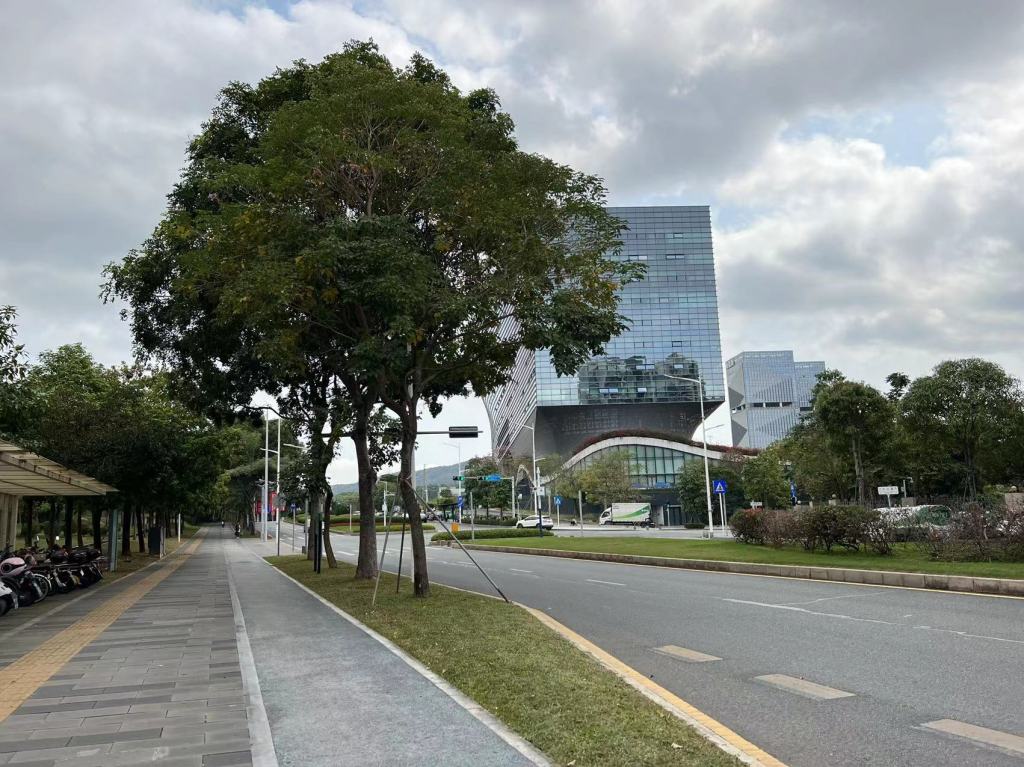
The contrasts between the inner and outer districts are not immediately apparent because they are not juxtaposed in space, but rather through time; you need to travel (at least an hour, more by public transportation) from center city to its outskirts in order to viscerally experience the lived differences between here and there. Indeed, most people don’t make the trip (unless they live in one of the new gated communities along the subway lines that transport young managers and clerks and secretary types to their offices, most likely in Futian, because close examination reveals all subway lines–especially the high-speed and direct lines–converge in the city’s center) and even then, most don’t venture beyond the lines and malls because, well, there’s no time (true) and less interest (all too true).

Continue reading

dalang commercial center

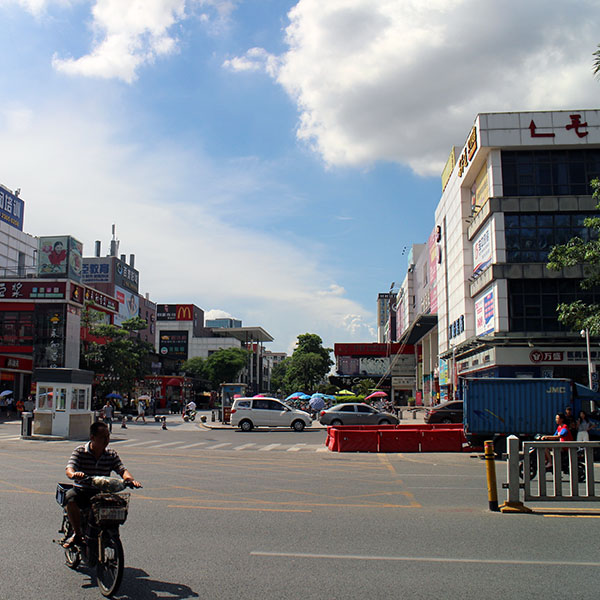
Off the beaten track (or at least a 15 minute bus ride from the Longhua subway station), Dalang remains one of the manufacturing centers of Shenzhen as well as one of the few spaces where it is still possible to see container trucks of various sizes trundling about. The landscape itself is a dense mix of industrial parks, proper urban villages, collectively held property, and limited public and commercial property. In other words, the area retains much of its morphology from when Longhua was officially a market town (镇, 1986-2004) and the entire area was developed through rural institutions.

Continue reading

bitou, or the spatial consequences of deindustrialization

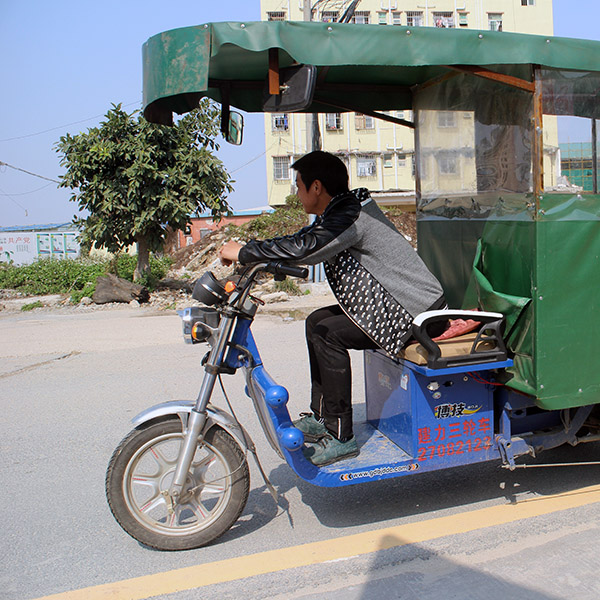
In the early spring, I arrived at the Songgang bus stop, “under the bridge”–a pedestrian overpass on the G107 expressway. The stop teemed with migrant workers and motorcycle cabbies, who screamed, “Where are you going?” Continue reading

the “village” thing

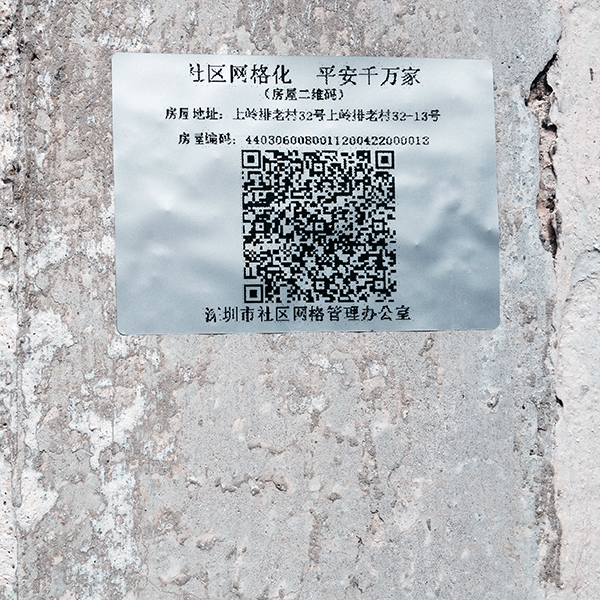
This past week, I toured Shangling Old Village (上岭村) in Dalang. Decaying villages like Shangling contextualize the “what came after” success story that is SHENZHEN! And yet. This contextualization depends upon one, standardized (and quite frankly boring) narrative of rags to riches, sudden wealth, boom boom boom, etcetera etcetera and so forth.  Continue reading