There’s much I could say about why community art programs matter, but. Sock puppets! Incredibly cute kids! Everything that matters. Here.
Tag Archives: dalang
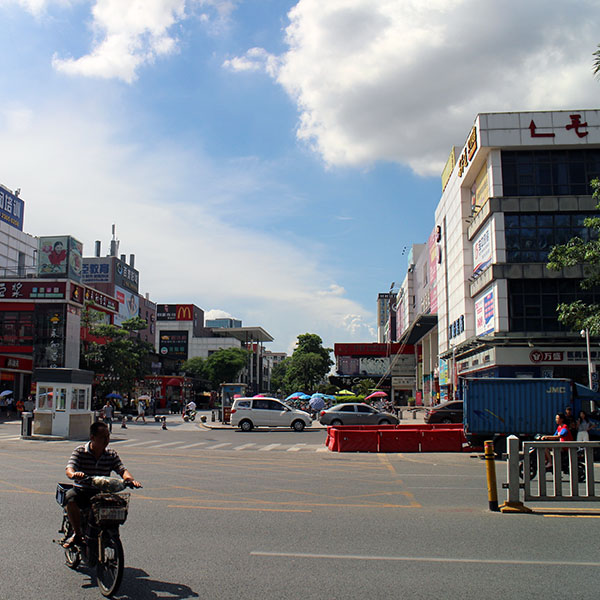
dalang commercial center
Off the beaten track (or at least a 15 minute bus ride from the Longhua subway station), Dalang remains one of the manufacturing centers of Shenzhen as well as one of the few spaces where it is still possible to see container trucks of various sizes trundling about. The landscape itself is a dense mix of industrial parks, proper urban villages, collectively held property, and limited public and commercial property. In other words, the area retains much of its morphology from when Longhua was officially a market town (镇, 1986-2004) and the entire area was developed through rural institutions.
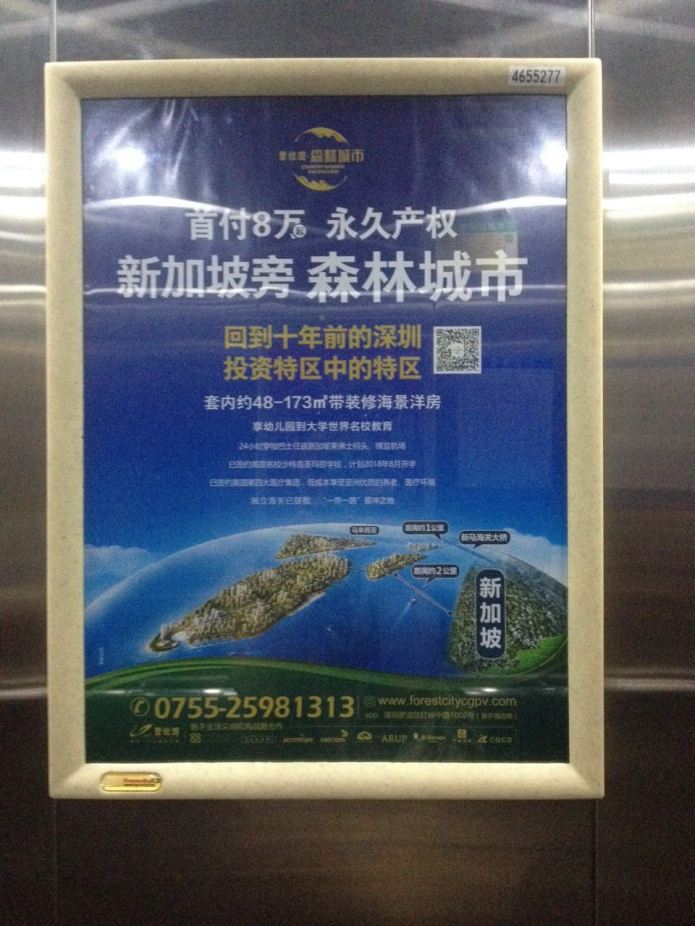
do you want to buy a house next to singapore?
Just saw this poster advertising the opportunity to purchase a house on a small Malaysian island next to Singapore. The houses are relatively large and the agent is conveniently located in Shenzhen. The appeal? One can “[R]eturn to Shenzhen ten years ago, and invest in the Special Zone of a Special Zone.”
Here’s the rub. I saw this in an apartment complex in Dalang, at least twenty minutes from the nearest subway station. Everyone wants to by a house, and even places as relatively remote as Dalang are no longer viable options for migrants, even if they have a job, and even if they have savings.
On my way from said subway station to the elevator where this advert was posted, the cabby explained that since Lift (didi) and Uber had come to Shenzhen, it was no longer profitable to drive a cab. He planned on going back home to Jiangxi. When I mentioned that it seemed more and more people were leaving the city, he agreed, saying “there noticeably less people on the street.”
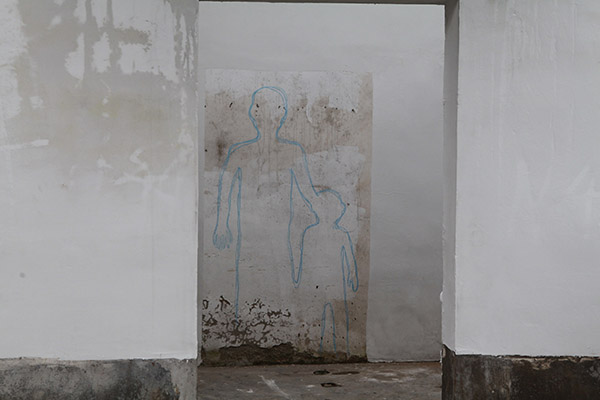
emptied out / true emptiness
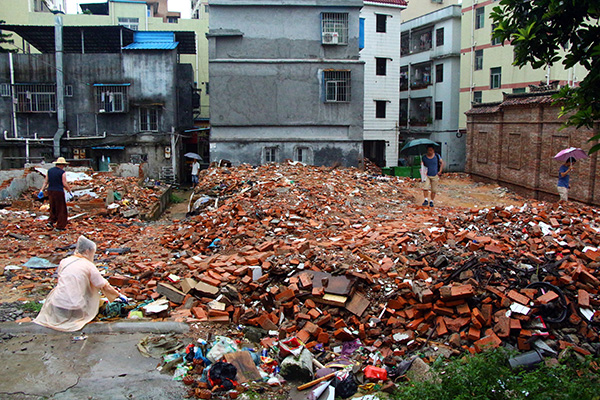
Last week, I participated in the “真空” art week. 真空 means emptied out or true emptiness. The curatorial statement (translated below) emphasizes how urban renewal is “emptying out” the villages and what remains is neither this, nor that. Almost buddhist, except we’re still yearning and true emptiness alludes us. Continue reading
Entrails
I am a freckled and pinkish, slightly overweight female. I have soft hands and I play at manual labor rather than work to earn a living. However, I am increasingly aware that this body does not obey. It aches and bursts, creams desire, flinches, hungers, sweats and thirsts. This body itches and yearns, screams and wobbles, swells and grows lumpy. It grumbles and leaks and trundles forward. But, it does not obey. Fortunately my bathroom door hides the work necessary to appear as if I were an ethereal, delicate being unencumbered by the body’s needs and its (increasing) failures. I close the door, drop my pants, piss and wipe, scour away grime and smooth my eyebrows as I squint at the face in the mirror; clear eyes, small ears, heavy cheeks, and wrinkled neck. I straighten my blouse and return to the party. Continue reading

thoughts on the spatial distribution of shenzhen’s population
How many people actually live in Shenzhen? The numbers vary. Current Shenzhen Party Secretary Ma Xingrui says 20 million. However, the administrative population supposedly hovers at 18 million, while the city itself has never admitted to more than 15 million. Rough estimates suggest only 4 million people have Shenzhen hukou, another 8 million have permanent residency, and another 5-8 million “float” unofficially within the city
These statistics obscure how Shenzhen’s urban villages spatially organize these three administrative classes. For example, Shi’ao (石凹) Villagehas a local population of 4 to 500 people and a renter population of 20,000, making the ratio of local to renters residents 1:40. The ratio of local to renter populations in Baishizhou is an astonishing 1:77. Moreover, it is clear that renters–even floaters–aren’t actually leaving the city. Instead, they are finding newer (and often) narrower niches within the village.
Much like US American suburbs which manage inequality through distance, Shenzhen’s urban villages do the hard (and socially productive) work of managing inequality within the city. The majority of floaters and a large percentage of permanent residents live in the villages and tend to work in service and the semi- and informal economies, while hukou residents and wealthier permanent residents occupy “official” housing estates and tend to work in the formal economy.
bookish
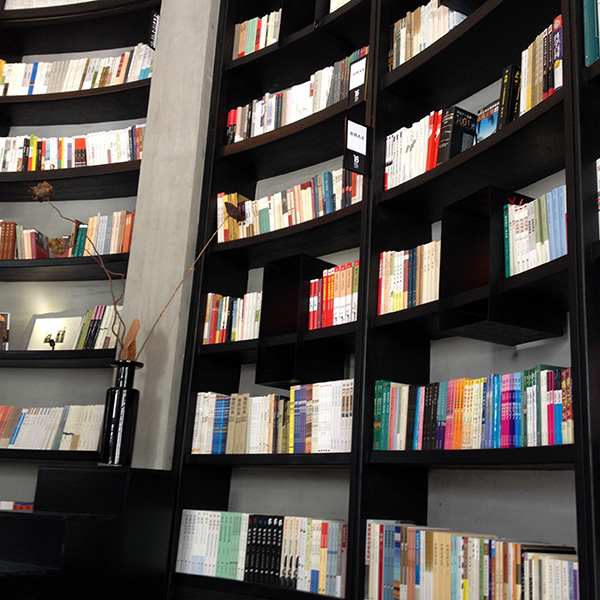
Shenzhen is a bookish city. Even a click over to the English language Alibaba site for “Book Printing in Shenzhen” suggests the extent of how many books are printed in the city. We are so awash in books that it is possible to use them instead of wallpaper when decorating. What’s more, many of my favorite cafes are not only decorated with books, but also serve as lending libraries via 青番茄, a Shenzhen based NGO. All you have to do is register online and then you are free to lend and return books at any of their almost 2,000 participating cafes in China. Continue reading
the “village” thing
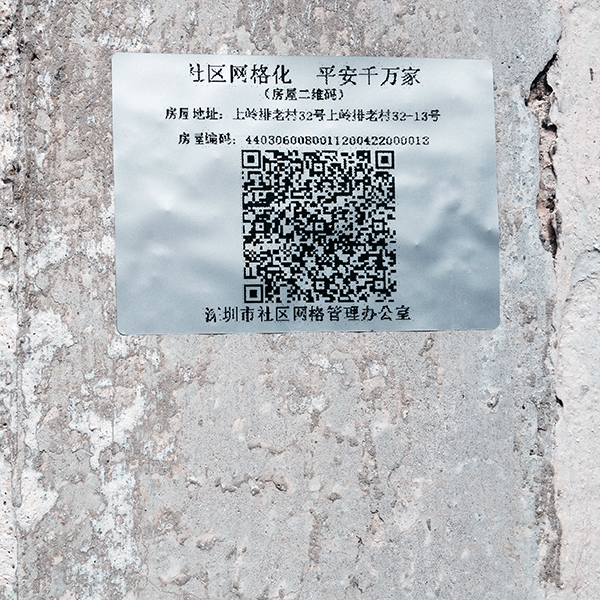
This past week, I toured Shangling Old Village (上岭村) in Dalang. Decaying villages like Shangling contextualize the “what came after” success story that is SHENZHEN! And yet. This contextualization depends upon one, standardized (and quite frankly boring) narrative of rags to riches, sudden wealth, boom boom boom, etcetera etcetera and so forth. Continue reading
dalang experimental school: manhole cover graffiti art
The Dalang Experimental School comprises elementary and middle schools for the children of migrant workers in Dalang New District. On June 8, they held a festival for their 30+ clubs, which range from art to karate and debate. The point, of course, is simple: at school in their uniforms painting, dancing, and helping each other, they look like every other young Shenzhener because they ARE just like the Shenzhen Middle School students we are working with at the Handshake for the Future exhibition. Well, except for access to high school, which is regulated through the upcoming High School Entrance exam (for a point by point on why in Shenzhen this exam is more important than the college entrance exam).
Two weekends ago, Handshake 302 collaborated with Dalang New District on the Graffiti Festival (the amazing stair mural at the Youth Dream Center). We also worked with the Experimental School to bring murals and graffiti into the schoolyard. Young Mr. Ye, a second generation Shenzhener via Gangxia, organized the event through the art club. Students started on designs early. For the festival, the club asked groups of students to submit a design proposal, 17 groups from both the elementary and middle schools made the cut.
Impressions of the festival, below, and yes, many, many pictures of kids being great:

grass and flowers: dalang
Yesterday at the Dalang Youth Dream Center, we created a large mural/graffiti image on the public steps/bench. It is a two-picture work: from the front it simply says “youth”, but from the upper levels of the dormitory, it is possible to see the larger images of flowers and cartoon monsters playing in the grass. Walking the steps gives even more chances for discovery. We were amazingly lucky with the weather; just as we finished, the skies let loose a major thunder storm. Below, a slideshow that documents the process.
 Shenzhen Noted