



So, six years after his appearance on “歌手 (The Singer),” I finally saw the youtube of Dimash Qudaibergen’s performance of Vitas’s “Opera 2.” Where have I been? His voice. His presence. And yes, his anime vibe. Seriously. If this was the kind of globalism with Chinese characteristics that Belt and Road was about, I’ld be walking the walk. But. Today, I’m grateful for the convergence of events that brought “进口小哥哥 (imported bro)” Dimash Kudabergen to Hunan TV in 2017.

Please join us in Guangzhou!
The conversation will be about beginnings, middles and endings; how do participatory art projects create a sense of time? And what’s that got to do with the history of Shenzhen and its speedy development? Inquiring minds want to know.
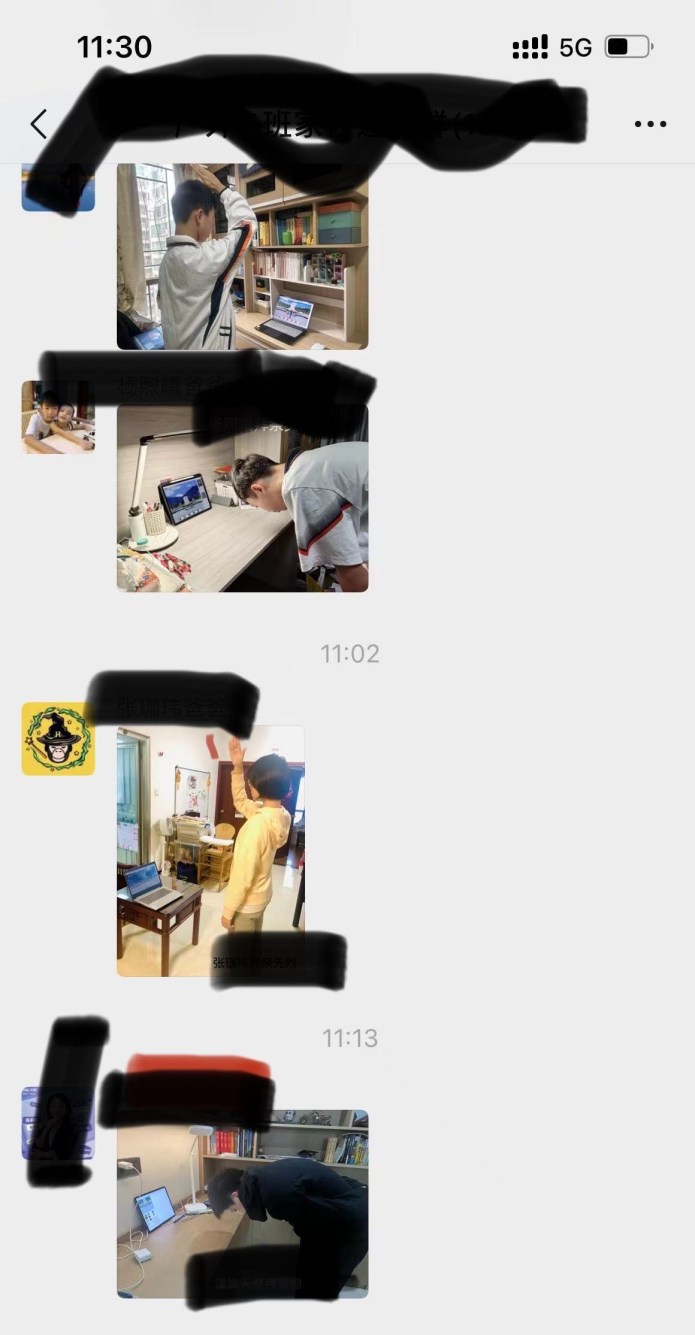
here’ the thing: for virtual surveillance to succeed, you still have to mobilize people on the ground
This morning I went for a walk through one of Nanshan’s park. About 50 meters ahead of me on the path, a woman in sporting gear was kneeling with her camera held to film her friend, who was also wearing coordinated sportswear (pastels) jog toward me. They waited for several elderly people to walk past and then “action!” I waited for the jogger to pass me, but both she and the videographer wanted to film me walking past. Was I really that much more attractive to their Shenzhen vision than the grannies? When I refused to be filmed, the woman shut off the function and commented, “Wow! Your Chinese is really good.”
Continue reading
huangbeiling
Yesterday, I walked Huangbeiling, which is located on the eastern section of Shennan Road. Before the construction of the subway system, Huangbeiling felt like the end of the accessible SEZ; there was more beyond, but getting there required a car or plans for a day trip. Today, Huangbeiling is a major transportation transit hub, linking the downtown area to the eastern coast.

Huangbeiling still feels like a golden era urban village, albeit recovering from Covid shutdowns. The layout of the village is against and up the Wutong Mountain Range, with enough nooks and crannies for unexpected encounters: a household temple to Guanyin, a mountain park with feral cats hanging out in tree branches, and good, relatively cheap food.

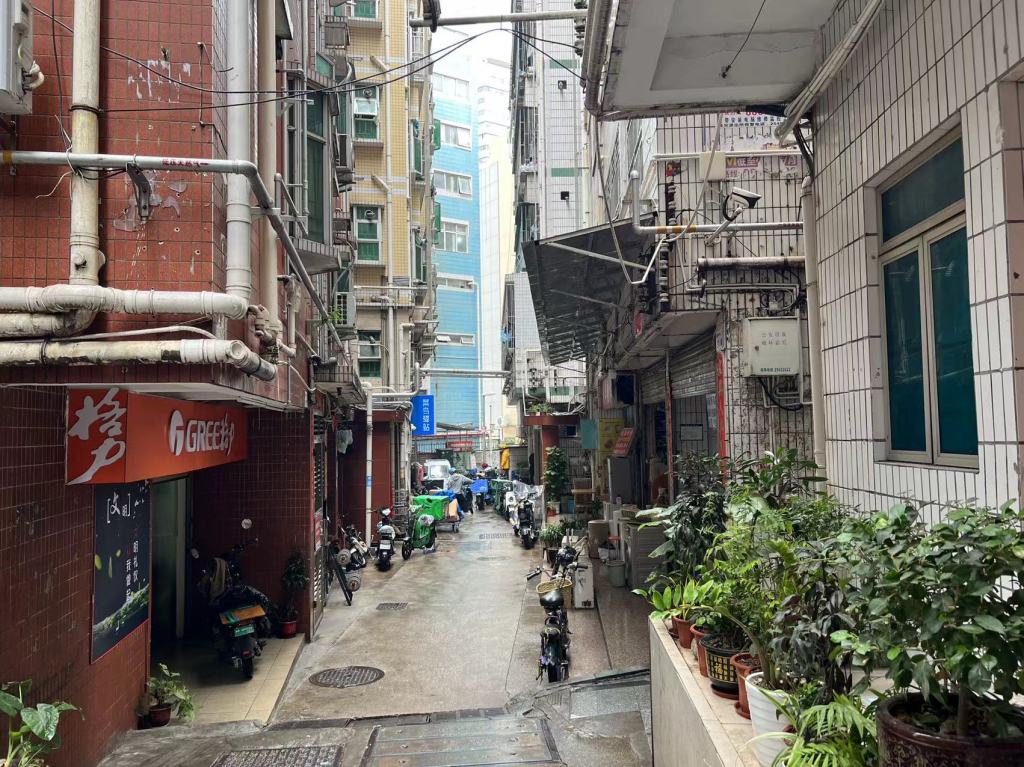


Sixteen years ago, one of the earliest Fat Bird guerrilla performances was held at the Huangbeiling pet market. Dogs and cats were just becoming fixtures–like cars and branded items–of the middle class Shenzhen lifestyle. Fat Bird “rented” a large dog cage for about five minutes before security guards and village leaders appeared and asked us to leave In the video of the post-performance interview you can also glimpse what this section of Shennan Road used to be like. After the performers were asked to leave, we jumped on a bus and went across the city to Chiwan. The short performance gives a sense of both the transformation of the area, as well as the relative openness of the city at the time compared to the present moment.
pop!
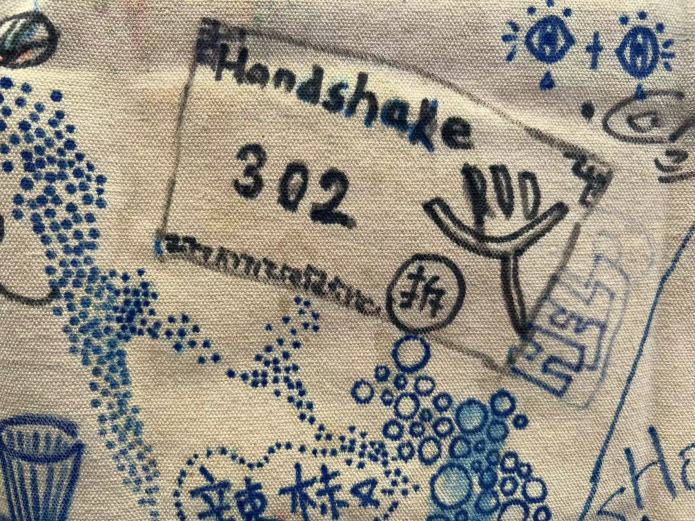
Last weekend (April 1-2), Handshake 302 set up a stand at the T-Street craft fair. We brought ten years of memories, including original bags that had been repurposed from the 2017 UABB Longhua (Dalang) venue installation “Story of Rice,” teeshirts from “Urban Flesh and Bones,” our series of walking tours, and “Mahjong Parlor,” or “exhibition in the palm of your hand.”
The stalls are lined up in the center of the pedestrian walks in the northern and southern sections of OCT Loft, allowing visitors to browse stalls, stop for a snack or settle into an alfresco coffee shop, where one can rest and watch the different people. Following the side roads a bit further into OCT brings visitors to interesting galleries like Feidi and Dade, or to Ecological Park where many art installations from previous sculpture biennales continue to entice new audiences.
Continue reading
302 pops up at OCT loft craft fair
So, this weekend we’ve brought “Mahjong Parlor” to the Overseas Chinese Town craft fair. Its our second 10th anniversary activity/ exhibition (in the palm of your hand). If you have time today or tomorrow, please stop by.


an urban village by any other name…
This week Kaiqin, Wu Dan and I have been in Xiamen for a Tiffany glass DIY workshop. The workshop was held in a gated housing estate near the tourist docks for going to Gulangyu. As we couldn’t afford to stay in nearby hotels, we found a small (40 sq meters including open area) b&b (民宿) in Shapowei (沙坡尾), which any quick google will tell you is unlike any other neighborhood in the city. It’s hip, it’s arty, and it lives like an urban village.
Continue reading
shangwei: the other artist village
Shenzhen has more art-adjacent villages than one might think. There’s Dafen, Aohu, Wutongshan, and Shangwei (上围). There’s also Baoyuan, which is not an art village per se but located next to the F518 space. So. You decide. 4? 5? Do we also include any of the villages that have veered into creative industries? Guimiao, the village next to Shenzhen University and now crumbling to the excavators of progress, for example, was once home to artists and bibliophiles. Anyway. Shangwei.
Continue reading
li liao: labor at PAM
I went to the opening of Li Liao (李燎)’s solo exhibition, Labor (劳动) at the Pingshan Art Museum. Li Liao lives and works in Shenzhen, where he and his wife are working off their large mortgage. When his wife decided she wanted to start her own company, Li says that he decided to work as a delivery boy in order to pay off one month’s mortgage payment. It took him six months to earn his keep, so to speak.
Continue readingcosplay in the park. kind of.
One of those unsettling (and the word is deliberate) ironies of the occupation of (or perhaps an ongoing preoccupation with?) Xinjiang has been the Han appropriation of Uyghur music and dance in public spaces. In Lianhuashan Park behind the Citizen’s Center, for example, people often gather for ethnicized plaza dancing. Sometimes, Indian a la Bollywood and sometimes Central Asian a la Xinjiang. The irony, of course, is if they were actually Uyghurs and not cosplay Uyghurs, there would be no public dancing, except in designated spaces. Indeed, I’m still working through how plaza dancing gets around the current policy that limits public gatherings to under 30 people. It’s as if public dancing is so much part of the public scene that even when it breaches norms and policy, the dance and the dancers remain non-threatening to the security guards and urban management types who sit nearby scrolling through their WeChat messages or drive past in golf carts.
 Shenzhen Noted