sino-british border, 1972

This short “border tour” emphasizes the training of British troupes in contrast to Chinese troupes, with clips of the Luohu border crossing as well as food and livestock being transported into the Colony from Wenjingdu.

At his youtube site, Ben Mumford has also posted 8 Hong Kong Beat documentaries, which look at how the British managed police corruption at the border. The intro to the series on the BBC webpage promises all sorts of adventure, seeming more soap opera that cinema verite.

Nine documentary programmes which take a close look at the world’s most controversial police force in action. The Royal Hong Kong Police have been accused of corruption and bribery at all levels. This series shows the job they have to do – as a British Colonial Force working among 4 1/2-million Chinese. John Norman, ex-London policeman is now a CID Inspector in Tsim Sha Tsui – Hong Kong’s Soho -Triad Territory, where you’re bought off or framed if you get too near the truth. As Norman is drawn into robbery, kidnap and murder, he shows what it is to be on the Hong Kong beat, where British policemen bow before the God Kwandai. And where the Yaumati Force now row in a Dragon Boat Race against the Triads.
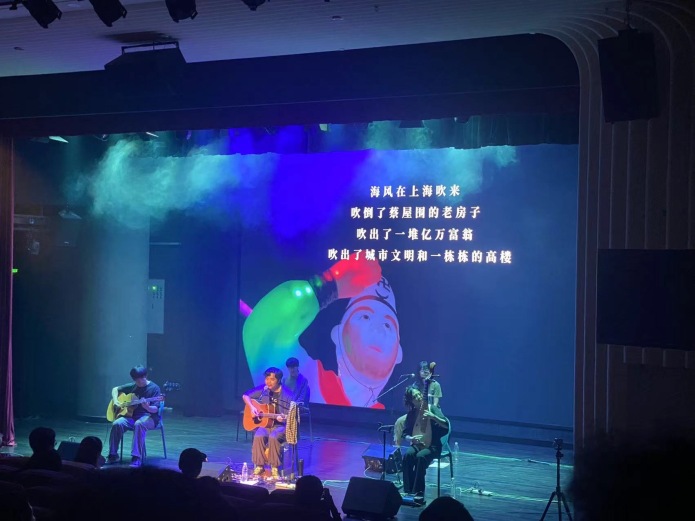
what’s the difference between a typhoon and reform and opening up?

And this is not the opening to a joke, but a loose interpretation of a stanza from a new song celebrating the Shenzhen story. The stanza is:

海风在上海吹来;吹倒了蔡屋围的老房子;吹出了一堆亿万富翁;吹出了城市文明和一栋栋的高楼, which translates as: the sea breeze blew in across the seas; blew down the old houses of Caiwuwei; blew a pile of millionaires into existence; blew urban civilization and rows of high-rises into existence.

Continue reading

Singleton Take-out

Handshake 302’s latest project, “Singleton Take-out” is now under way. Over the course of five weekends, we’re hosting a series of lunches where Handshake 302 and our guests discuss how take-out has changed and informs everyday life in Shenzhen, especially its urban villages. Our first guest was Li Liao 李燎, whose project Labor was first up at the Pingshan Art Museum. Below is an outtake from our lunch on September 16 (in Mandarin). If you’re interested in joining us, subscribe to our We Chat account and sign up!

Extreme rains in Shenzhen

Flooding in Luohu, Sept 8, 2023

huangbeiling

Yesterday, I walked Huangbeiling, which is located on the eastern section of Shennan Road. Before the construction of the subway system, Huangbeiling felt like the end of the accessible SEZ; there was more beyond, but getting there required a car or plans for a day trip. Today, Huangbeiling is a major transportation transit hub, linking the downtown area to the eastern coast.

Looking west along Shennan Road East from the Huangbeiling bus station toward Hubei Village and Dongmen.

Huangbeiling still feels like a golden era urban village, albeit recovering from Covid shutdowns. The layout of the village is against and up the Wutong Mountain Range, with enough nooks and crannies for unexpected encounters: a household temple to Guanyin, a mountain park with feral cats hanging out in tree branches, and good, relatively cheap food.

Sixteen years ago, one of the earliest Fat Bird guerrilla performances was held at the Huangbeiling pet market. Dogs and cats were just becoming fixtures–like cars and branded items–of the middle class Shenzhen lifestyle. Fat Bird “rented” a large dog cage for about five minutes before security guards and village leaders appeared and asked us to leave In the video of the post-performance interview you can also glimpse what this section of Shennan Road used to be like. After the performers were asked to leave, we jumped on a bus and went across the city to Chiwan. The short performance gives a sense of both the transformation of the area, as well as the relative openness of the city at the time compared to the present moment.

cosplay in the park. kind of.

One of those unsettling (and the word is deliberate) ironies of the occupation of (or perhaps an ongoing preoccupation with?) Xinjiang has been the Han appropriation of Uyghur music and dance in public spaces. In Lianhuashan Park behind the Citizen’s Center, for example, people often gather for ethnicized plaza dancing. Sometimes, Indian a la Bollywood and sometimes Central Asian a la Xinjiang. The irony, of course, is if they were actually Uyghurs and not cosplay Uyghurs, there would be no public dancing, except in designated spaces. Indeed, I’m still working through how plaza dancing gets around the current policy that limits public gatherings to under 30 people. It’s as if public dancing is so much part of the public scene that even when it breaches norms and policy, the dance and the dancers remain non-threatening to the security guards and urban management types who sit nearby scrolling through their WeChat messages or drive past in golf carts.

Impressions from plaza dancing in Lianhuashan Park.

a baishizhou postscript–chen chusheng

Several years before he was champion of the inaugural and influential singing competition 快乐男声 (on Hunan TV), Chen Chusheng 陈楚生 lived in Tangtou, Baishizhou. Indeed, the first stop on his musical career seems to have been Shenzhen, which in the late 1990s, early 2000s was famous for its indie and rock music scene. The musicians lived in urban villages and performed in the city’s many bars and infamous nightclubs.

The above image Shenzhen (2000) by Yu Haibo 余海波 not only gives a sense of what the city’s nightlife was like at the turn of the millennium, but also the frantic energy that characterized that scene. Of course, Chen Chusheng took a more laidback and folksy approach. His song, Baishizhou sounds almost pastoral, in stark contrast to the world outside his Tangtou apartment. And yes, circa 2000, Baishizhou was not yet linked to the urban grid and Shenzhen was still the world’s factory, relying on the highly transient residents of the villages.

Continue reading

reverse migration from shanghai?

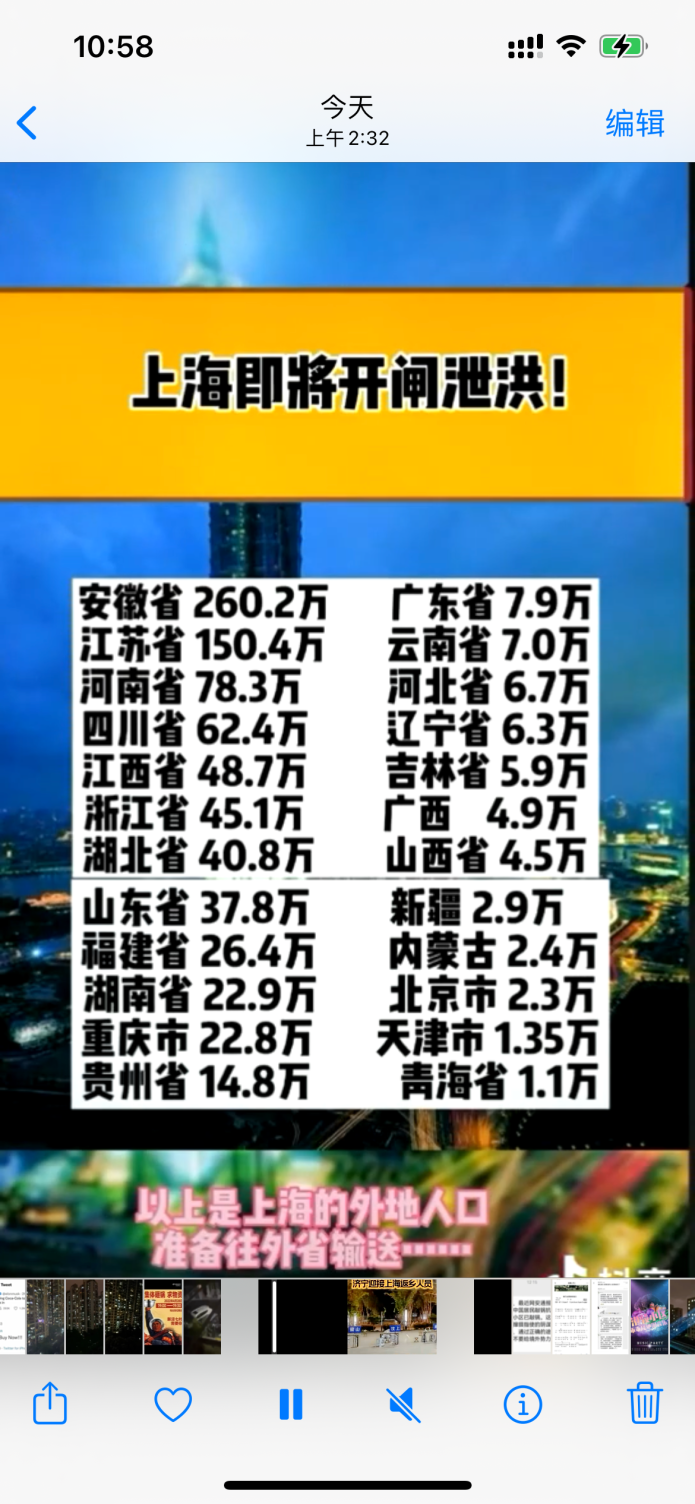
According to viral social media, reverse migration is the latest Shanghai initiative to achieve ‘zero-Covid.’ In turn, the government has explicitly denied that migrant workers are being forced to leave the city, calling these posts disinformation. That said, migrant workers can apply to return to their registered hometown, specifically their hukou residence. A TikTok video (below) includes the following data (translated from above image), suggesting that 8,630,500 people (roughly the population of NYC) could be directly impacted if migrant workers leave:

Shanghai is about to Release the Flood Gates!

Anhui:         2,602,000          Guangdong:     79,000
Jiangsu:      1,504,000          Yunnan:             70,000
Henan:            783,000          Hebei:                67,000
Sichuan:         624,000          Liaoning:           63,000
Jiangxi:           487,000          Jilin:                    59,000
Zhejiang:        451,000          Guangxi:            49,000
Hubei:             408,000          Shandong:        45,000
Shandong:     370,000          Xinjiang:            29,000
Fujian:             264,000          In. Mongolia:    24,000
Hunan:            229,000          Beijing:               23,000
Chongqing:    228,000         Tianjin:                13,500
Guizhou:         148,000          Qinghai:              11,000
Continue reading

Shanghai Music Party, 28 April 2022

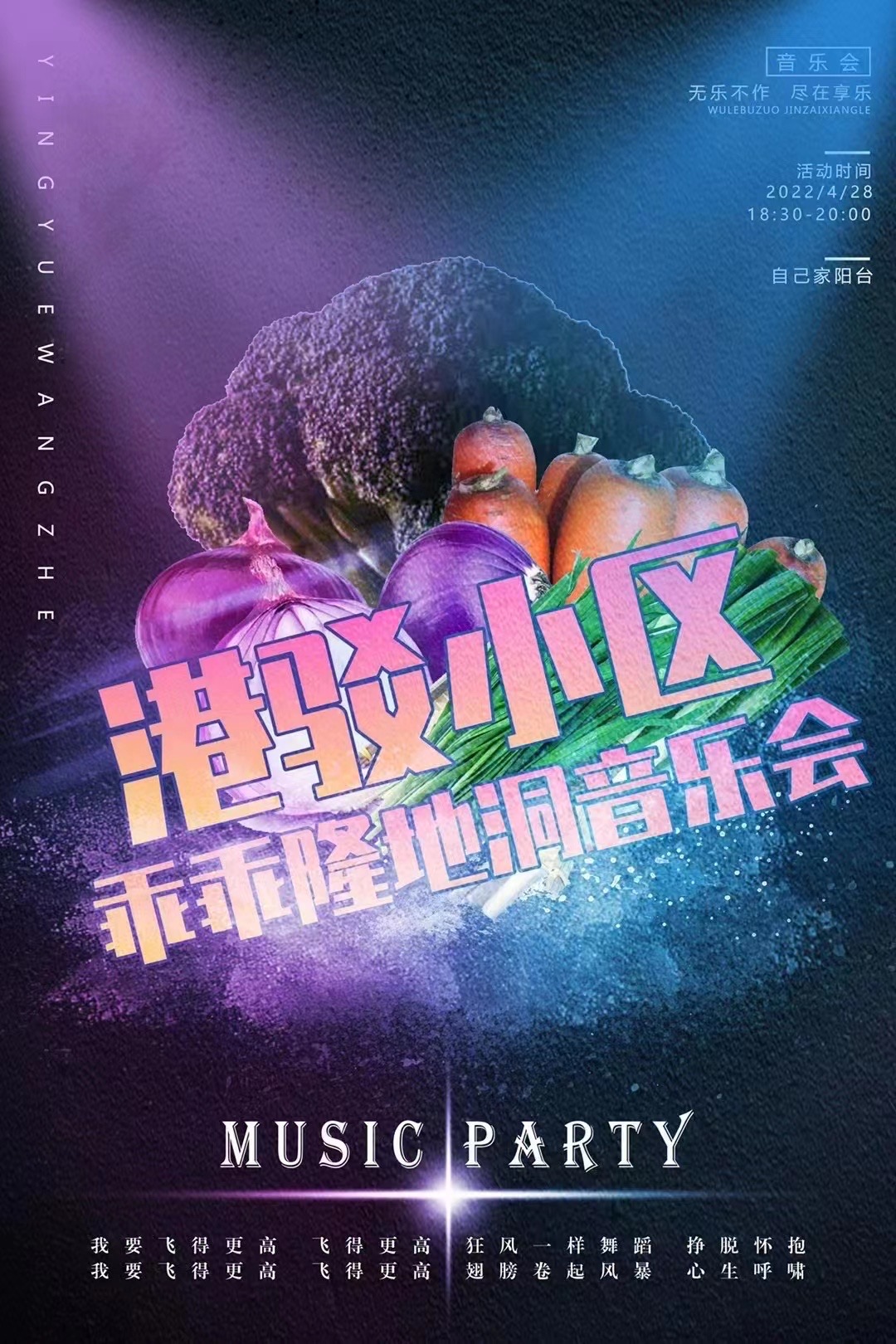
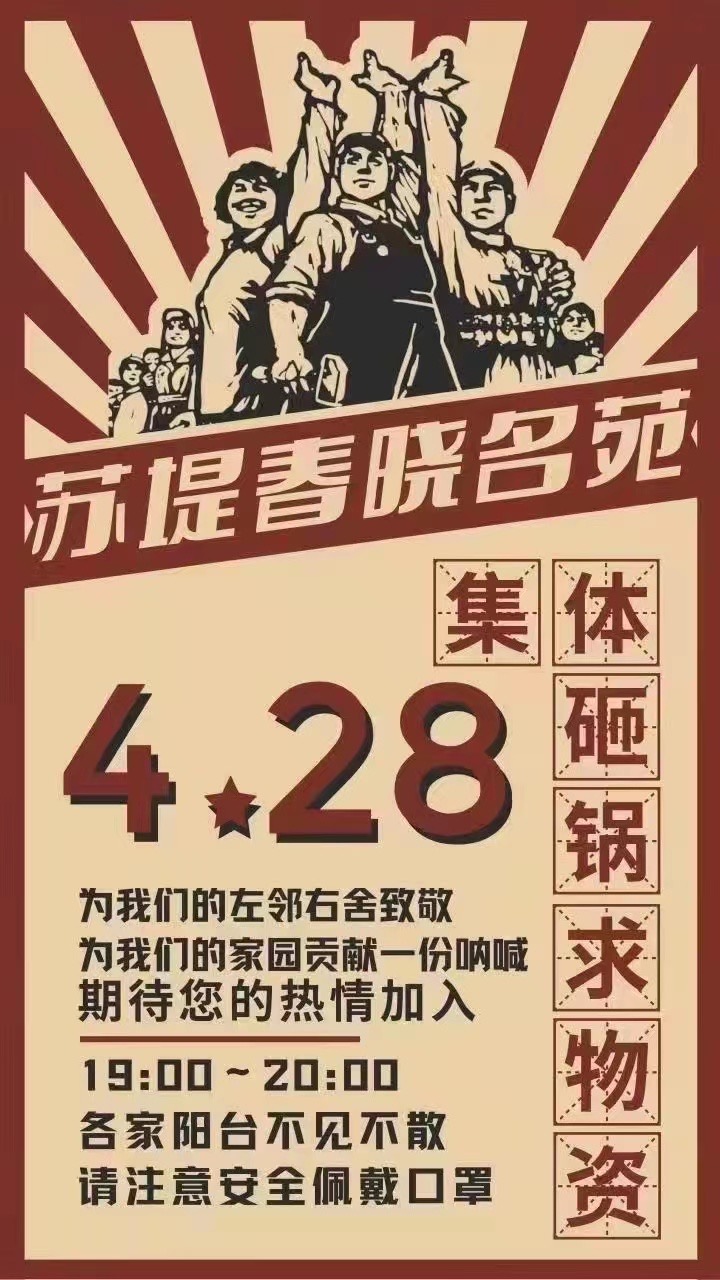
Yesterday evening between 7 to 9, depending on the housing estate, Shanghai people took to their balconies and clanged on pots and pans to demand food. The event, “Music Party” seems to have been widespread, with organizers making and circulating individualized posters, telling neighborhood participants when their group would be playing. “Music Party” allowed Shanghai residents to tactically fill the city with alternative sounds–sounds that were meaningful to them, rather than the sounds of impersonal management.

As Jing Wang observed, sound has become a critical feature of locked-down Shanghai. Robotic dogs and drones carry loudspeakers through neighborhoods, instructions blaring. On repeat. Everyday. In a city where isolation has become the new normal and cell phones mediate intimacy, the materiality of a common voice (or clamor) shared across time and space allows for the mutual recognition that makes us human. Videos of the clanging and robotic dog (and yes the ‘bitch’ speaks with a female voice) as well as some of the posters, below.

shanghai voices of spring (updated)

Today, two videos are circulating on WeChat, one “四月之声 [April Voices]” is a delicate and relentless compilation of the Shanghai crisis through telephone calls for help that remain unanswered. As one of the voices says, “I’m sorry teacher, there’s nothing I can do.” The second, “2022 上海晚春 [Late Spring in Shanghai, 2022]” is much more direct–scenes of violence put to the nihilistic, “Cheer Up London” by the Slaves. Both videos are worth taking the time to view because although their aesthetics are very different, they make the same, chilling point: Shanghai is violently divided and the party and the government (those who should be trusted) are not backing down .

Update: yesterday, all day Shanghai people continuously re-uploaded “April Voices” and the authorities continuously took it down. I has been an ongoing 24-hour battle for the right of ordinary people to tell their stories.

The version with English subtitles has been released!!