lilong update

Good friend, Jonathan Bach looked up Hilda Nagel, the name on the gravestone in one of the photos from Holy Hill. He found her listed only as the wife of Rev. A. Nagel in a 1910 directory called “List of Protestant Missionaries in China” under the heading for “Basel Missionary Society, Hong Kong, Lilong”. http://divinity-adhoc.library.yale.edu/Resources/Directories/1910_Directory.pdf. He was then able to find the above photo of Rev. A. Nagel titled “Pupils of the Boy’s Boarding School in Lilong (China)” with an annotation “Teacher Tschong, the missionary Nagel, Teacher Tschin”.

Indeed, for those interested in old photos from the Basel Mission, the USC Digital Library International Mission Photography Archive is a fabulous resource.
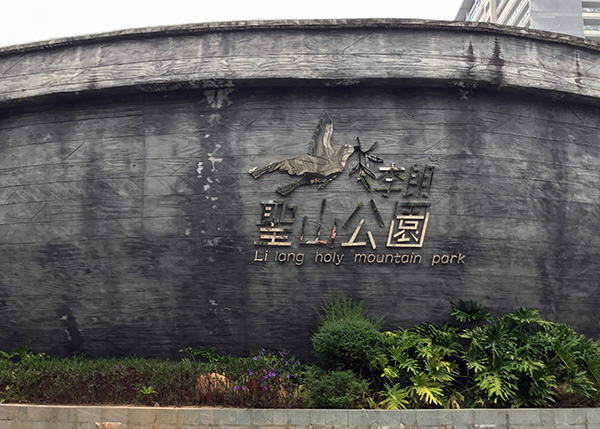
lilang holy hill

Today is Grave Sweeping Day, so I thought I’d publish something about an historic cemetery–Holy Hill (圣山), which is located in Buji.

Continue reading

houhai, impressions of.

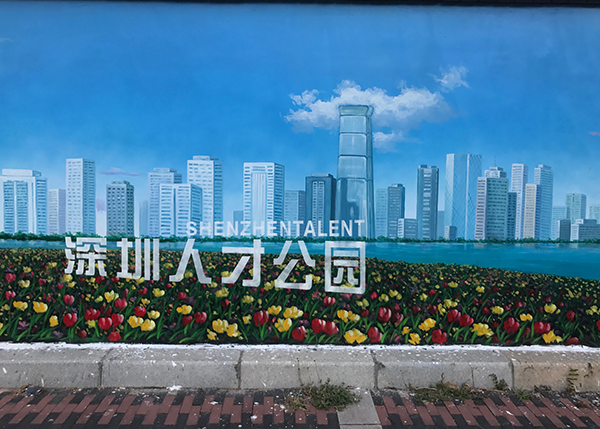
I walked from Coastal City to Shenzhen Bay Park via Talent Park. It is a stunning venture, where it is possible to experience the best of what Shenzhen offers–futuristic architecture, sparkling coastline, and expansive skies–without having to deal with the consequences thereof–overbuilding, monopolized waterways, and pollution. Indeed, as in the city’s beautiful parks, this stretch of modern living embodies the goals, aspirations, and ideologies of reform and opening.

Continue reading

90s futian, or the xiaokang quilt of days gone by…

Not so long ago and not so far away, Futian was known as Shangbu and was considered the rural burbs of up and coming Shenzhen (which was mapped as Luohu-Shangbu). But then (somewhat deus ex machina) Deng Xiaoping appeared in 1992, promising that the experiments would continue. So, during the 1990s, the SEZ boomed and Shenzhen restructured. Old Futian (well, xiaokang Futian), emerged out of all this governmental restructuring and economic booming.

Continue reading

is the era of shenzhen urban villages over?

This is a speculative post about something that has been niggling at the back of my mind this past year. Or at least since I started walking around Shenzhen after COVID restrictions lifted circa April 2020; I think the era of urban villages in Shenzhen has ended.

Continue reading

更新–renewal, 2.0 (or is it 3.0?)

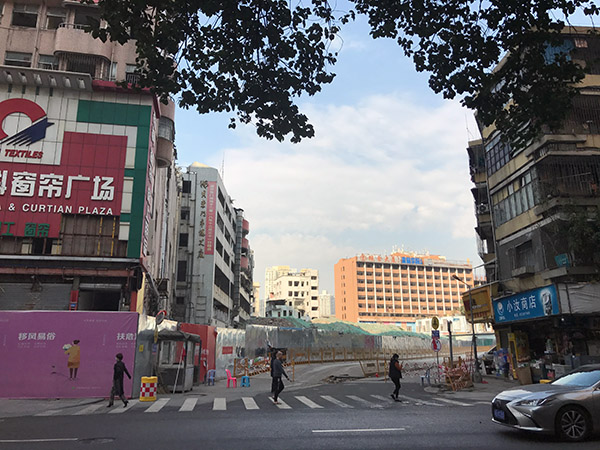
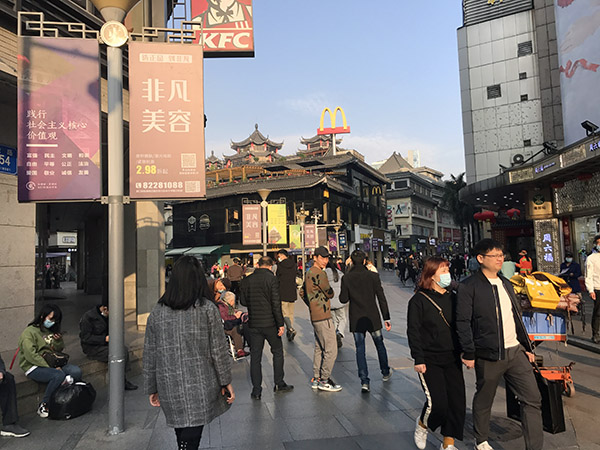
So, I realized the other day that I’ve been walking neighborhoods that have been scheduled for urban renewal without actually posting anything about them. I’m not sure if that’s because I’ve lost track of what iteration of Shenzhen planning we’re on, or if its just that construction sites blur together after awhile. At any rate, photos from a recent walk around Dongmen (东门) and Hubei Ancient Village (湖贝古村).

nantou ancient city. again.

Sometimes, I walk through older sections of the city, and I try to remember what it felt like the first time I walked there. Or, if I can’t track my emotional memories, I try to remember what this place used to look like. Who was here? What were they doing? Did I take pictures or take notes and if not, where has it all gone?

Continue reading

learning farm in zhongshan

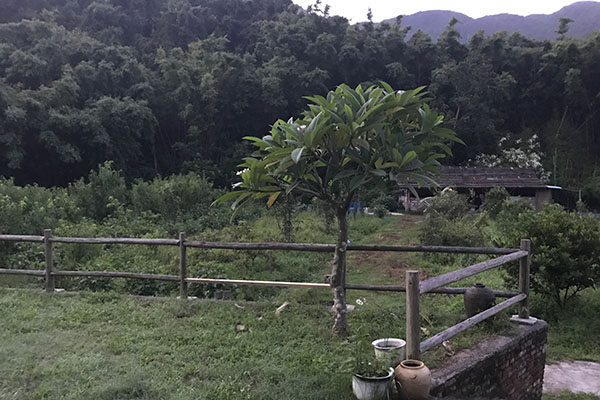
A few weeks ago, Handshake 302 visited a learning farm in Zhongshan. The farm was located in a valley near Zhuhai; five hundred years ago, the area would have been an island. There is underground spring water on the mountain, which facilitated the conversion of sand and silt runoff (from the West and North Rivers) into polders, where it was possible to grow rice and lotuses, and to cultivate fish ponds and vegetable gardens. This particular farm is too small to support a family, but large enough for children and their parents to visit and learn about organic gardening. Indeed, the municipal government has already annexed surrounding farms into its latest master plan. This farm survived because it has a “modern” purpose.

huidong: impressions of the edge

A week or so ago, we went to Huidong (惠东), one of the poorer counties in Huizhou City (惠州市). Huidong is located within the valleys of the mountain range that runs parallel to the eastern coast of Guangdong. Via mountain paths, it is a four-hour hike from Huidong to Haifeng (海丰县).

Continue reading

Chinese translation of “Learning from Shenzhen” is out!

The launch for the Chinese translation of “Learning from Shenzhen” was held at the Central Book City public area. There were several hundred in attendance and young children came up to meet the author and get an autograph. It was an exciting–and let’s be frank–unexpected reception for the translation of an academic book.