meizhou: the violence of rural (re)construction

This is the first part of a six-part essay, Meizhou: The Violence of Rural (Re)construction. Rural construction (乡建) is currently one of the most important debates in Shenzhen specifically and China more generally. As China’s “first city without villages”, Shenzhen has an important place in this debate. In fact, Shenzhen is held up by social progressives, real estate developers, and Party officials alike as a model of what rural construction should be. More locally, civic groups are beginning to organize around this issue in order to promote more just visions of the city.

Friday, September 19, 2014, we made the five-hour bus trip from Shenzhen to Meizhou. We were an assorted group of scholars, architects, and journalists, but we had joined documentary film maker Deng Shijie in common cause–to visit the Meizhou suburbs in order to bear witness to the human suffering that has resulted from current development policies. Shijie and his allies are central to a small, but meaningful citizenship movement in Shenzhen. Many of Shenzhen’s second-generation have become active in what we in the United States would call social justice issues, but which in Shenzhen operate under the glosses of philanthropy (公益) or social renewal (社会创新).

We arrived well past midnight, but were greeted warmly by villagers who are trying to voice their demands. Some want to maintain their current homes, others want more equitable compensation, and all want the government to bring out a viable and legal relocation and compensation plan. And that, of course, is the crux of the matter. The government’s plan to construct a new city notwithstanding there has been no release of a relocation plan. Instead, villagers are being bought and when that fails forced out of their residences. Two of the nastier strategies of displacement are (1) using the police and/or local thugs to harass and beat villagers until they sign off and (2) razing homes and then transferring money to villager escrow accounts. If the villagers use the money, the action is interpreted as acceptance of the government’s terms. If however the villagers do not use the money, after a five-year period the money will be returned to the Ministry of Land. There are also reports of villagers having been detained at local police stations in order to compel village heads of household to sign property transfer agreements. (For an introduction to China’s duel system of land ownership by way of Shenzhen, please see “Laying Siege to the Villages“).

The crude background to this travesty is the Chinese state’s commitment to making urbanization central to economic development and (more importantly) a criteria for promotion within the Party and government. In 2011, Meizhou began planning a new city on the rural land that was traditionally held by villages. However, urbanization directives accelerated in March this year when China released its National New Type Urbanization Plan. Subsequently, in September 2013, the Meizhou government released the Meizhou Jiangnan New City Detailed Plan (梅州江南新城详细规划) for public debate. The official discussion period was from September 24 to October 20, 2013. The plan was made available in three sites: the Meizhou Government Building, the plaza of the Jianying Park, and the municipal urban planning. However, according to villagers, the City continued to raze homesteads during this time. Additionally, the City also targeted traditional Hakka compounds and ancestral Halls. Architect Ye Yikun (叶益坤) has been the leading voice of opposition to demolishing historic architecture.

Below are images from our trip to several villages in the Meizhou suburbs.

This slideshow requires JavaScript.

The other five entries in this series are:

Part II/ Meizhou: Hoodlum Government

Part III/ Meizhou: Living Genealogies

Part IV/ Meizhou: What Gets Preserved

Part V/ Meizhou: Lessons from Shenzhen

Meizhou VI/ Meizhou: Selected Translations

constructing the countryside: kaihua, zhejiang

On Sept 17, I joined members of the Shenzhen based NGO, 观筑 (ATU Architectural Development Communication Center) on a one-day five village tour of Kaihua County (开化县) in Zhejiang. Kaihua is relatively underdeveloped with respect to the economic powerhouses, Hangzhou, Wenzhou, and Ningbo, which are all located in Zhejiang. With respect to Shenzhen, Kaihua like much of rural Zhejiang has been a source of migrant labor. In addition, the Shenzhen Zhejiang Merchants Association is active, and Zhejiang people to be found across the class and professional spectrum of immigrants.

The purpose of the trip was to deepen a conversation between the Kaihua Government and ATU about how to better pursue what is know as 乡村建设 (construction of the countryside). Kaihua is developing leisure tourism for families and yuppies from nearby Shanghai and Hangzhou. ATU has offered to provide a sustainable and relatively low-capital investment plan for the County.

A few notes about the trip.

1. The connection between Kaihua and Shenzhen happens at two levels. First, one of the ATU members is from Kaihua and was elementary school classmates with the current Party Secretary of Kaihua. However, the actual project will be institutionally mediated.

2. The conversation about constructing the countryside is a huge issue in Shenzhen, and taking shape in diverse forms that range from documentary film-making to the ATU project.

3. A Hong Kong professor and students provided a basic design principle for one of the villages, and it seemed the most ready for tourists seeking a leisurely rural excursion.

4. The villages aren’t obviously materially deprived because 30 years of remittances have paid for the construction of new homes. In turn, the villages seem, at first uncontextualized glance, to resemble US American Mac-mansions in an underpopulated suburb.

5. In point of fact, one of the impulses behind the leisure tourism plan is ongoing outmigration. The majority of Kaihua residents are grandparents and young children who have not yet or cannot (for whatever reasons) join their parents in one of the coastal cities.

6. One of the attractions of leisure tourism is 农家乐 (happy at the farmer’s home), where farmers provide guests with fresh, often organic meals. Kind of B&B with Chinese characteristics. As with American B&Bs, the point is a rural excursion without actual agriculture. Successful farmers now farm for themselves and their guests. Indeed, the point is to wash one’s feet and leave the paddy (洗脚上田), further marginalizing agricultural work and those who cultivate the rice, produce, and meat that we eat.

7. The villages are connected by a river and stretches of national forest, which may in time be connected through walking trails. But in the meantime, Kaihua might prove an interesting destination for folks with a motorcycle and curiosity about how the Chinese countryside is changing.

Below is a meander through five villages. The tour begins at a newly built resort in the national forest.

This slideshow requires JavaScript.

墙迫症–my white wall compulsions

302 will start a new project–my white wall compulsions. The title is a pun: 强迫症 means obsessive compulsive disorder, while the characters for strong (强) and wall (墙) are homonyms.

The project itself is quite simple. 302 is a one room efficiency with four white walls. We’re looking for four individuals and or teams to transform one wall in the way they have always fantasized. And you know who you are. Staring at a white wall imagining all sorts of paint and bas-relief interventions! The project begins September 27 and ends with a party on November 21. Right now we’re accepting project proposals. We will also provide 500 rmb to pay for materials. If you’re interested in claiming your white wall compulsions and in Shenzhen contact me.

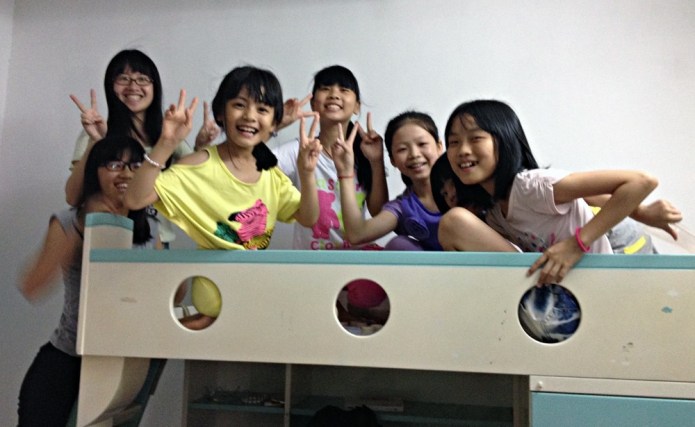
For those who’ve been wondering what’s up with community art in Shenzhen, the pictures below are from an August 29 performance in Shuiwei. The workshopped performance piece “feeling stones to cross the river” was part of the opening ceremony for the Futian International Images Festival, which celebrated documentary images and films.

This slideshow requires JavaScript.

village hack: Tadeas

Tadeas had a lovely sharing, and his engagement with Baishizhou is fun and real. Honestly joyfully playfully real. He commented, for example, that the dark brought out all sorts of imaginary monosters, such as a ten meter snake and rats so sick they had gone bald. He then handed over the key to Huihui and Qiangqiang, who will partner up for their hack. Check out Tadeas’ colorful notes at 白鼠笔记/Village Hack. Below, impressions from the afternoon.

This slideshow requires JavaScript.

mapping Chinese creativity–shenzhen vis-a-vis beijing

Several weeks ago, Shenzhen hosted the Maker Faire, bringing tech savvy makers together to explore, discuss and extend hardwire creativity and innovation. This past week, Beijing has hosted Social Innovation Week, bringing changemakers together to explore, discuss and extend social creativity and innovation. In Chinese one character separated the two events. The Shenzhen hosted 创客 or “maker guests” while in Beijing the guest list comprised 创变客 or “make change guests”.

Inquiring minds might paraphrase Gregory Bateson and ask: is this a difference that marks an important cultural difference between the two cities?

As in English, the Chinese shift from the vocabulary of “hacker” to “maker” has signaled the increasing respectability of the techno-nerds. The Chinese is even more explicit in this respect. To my knowledge, the earliest translation of “hacker” was 黑客, literally “black guest”. The term highlighted the outlaw romance of hacking at (at least) two levels. First the obvious 黑 which describes renegades and their possibly illegal activities as in the expressions “mafia (黑社会)”, “no hukou child (黑户)”, and “black heart (黑心)”. Second, 客 refers not only to guests in the modern sense of the term, but also clients in the medieval sense of the term, the dependents on a lord who would provide service in return for protection. Unlike, the English, however, the expression “changemaker” is more obviously related to the hacker movement because the word is made (!) by inserting the character 变 or change into the net-popularized expression 创客.

The more pertinent question, however, seems to be: Almost a decade after China began promoting creative industries, do the respective localizations of these two events tell us anything interesting about how Beijing and Shenzhen function within the Chinese cognitive mapping of creativity and innovation?

The pomp and circumstances of the two events did not differ radically–both were located in marginal spaces (Anhuili and Shekou, respectively) that are nevertheless within the city center, broadly defined. The demographic of the organizers was similar, with generations 80 and 90 running the show, and a shared emphasis on networking nationally and globally. The staging of talks was different. Beijing opted for TED style talks, with speakers having 15 minutes to share their projects. This was supplemented by round table discussions. In contrast, Shenzhen opted for more traditional keynotes, with salon style question and answer sessions.

The important difference seems to coalesce around funding sources and industry support. Beijing garnered support from not-for-profits and international foundations. In contrast, Shenzhen had industry support, generally through China Merchants, which is rebranding Shekou and specifically through Shenzhen based companies and international think tanks that focus on techno innovation. In other words, while young people of both cities deployed creativity to claim a space for and to legitimate the status of Generations 80 and 90, the Beijing event constituted itself with respect to society broadly defined, while Shenzhen defined society with respect to entrepreneurship narrowly defined.

Impressions from opening events, below.

This slideshow requires JavaScript.

been there, but not here–dalang

Images from a recent trip to one of the earliest (circa mid 1990s) factory areas in Dalang. I had a déjà vu moment because when I came to Shenzhen, these factories could be found throughout within the second line (guannei) churning out all sorts of goodies for export.

The point of interest? Although still a functioning industrial park, this area is already consciously “historic”. The Dalang New District Government is in process of a “love the cage, change the bird (疼笼换鸟”” redevelopment. The area surrounding the park includes the Dalang Fashion Valley and a piece of land recently purchased by Vanke for another gated community. These comparatively quaint factories will be renovated for cultural production.

So a few before pictures as the transition to after begins.

This slideshow requires JavaScript.

resolutely believing in the party

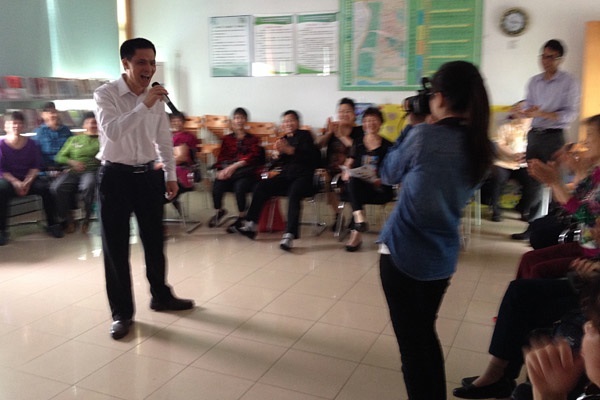
This morning I observed the Baishizhou Culture Station in action. Two groups of aunties were singing. The first group was singing Mandarin karaoke, the second group was singing an original Hakka composition entitled, “Resolutely Believing in the Party”. Later that morning the new Shahe Party Secretary came by, singing a karaoke song (“The Northern Spring”) and enjoyed the performance by the Xintang Hakka Mountain Song Chorus. Handshake 302 also presented our work to date.

The morning of community culture, including a Party Secretary karaoke moment reminded me that so much of Chinese political culture is making and maintaining good relationships between Party representatives and the represented. The pictures show the lyricist, the singing Secretary, and the Culture Center’s documentation of the event.

So here are the translated lyrics of “Resolutely Believing in the Party”. Note the definition of xiaokang–a basic material standard of well being. Note also in the picture that the lyrics have been written by hand.

Spring brings the fragrance of one hundred flowers, one hundred flowers
Everyone has a car and building, a house, a building and a house
Every kind of furniture
Three healthy meals a day, nutrition and health

Summer comes and the heat is hard to bear, the heat is hard to bear
Everyone has a fan or air conditioner, installed an air conditioner
No need to roast and sweat
We have electric slow cook pots for traditional soup, traditional soup

Fall comes and it turns cool, it turns cool
We wear fashionable clothes, fashionable clothes
Everyone carries a cell phone
Each home has internet and is linked to the world, linked to the world

Winter brings snowflakes to the mountain, snowflakes in the mountain
Reform and Opening is the promise of Spring, the promise of Spring
Resolutely believing in the Party
Beauty and happiness with the realization of xiaokiang, we’ve realized xiaokang

innovate with china…

…was the slogan of this year’s Shenzhen Maker Faire. I attended on Sunday, and then Monday afternoon joined researchers from the Institute For the Future on a tour of BGI (Beijing Genomics Institute) or “China Great Gene (华大基因)” as the name translates from the Chinese.

What did I see and learn?

That children love playing with gadgets. That most of the “products” were in fact toys. And that the most popular booths had the greatest room for serious play. In other words, the successful objects themselves structured a particular–and somehow “first”–experience. Hence, the wow moments that attracted children and adults alike.

That BGI has concentrated a massive amount of capital and resources in order to further the production of data. Moreover, as the cost of mapping genomes has dropped from $US 3B to around $US 3,000 in a little over twenty years, the data has proliferated to the point where the challenge facing researchers is technologies for storing and analyzing the data. I’m not sure what this volume of data means in terms of life experiences, but it does strike me that our imaginations constantly seek material form. And I learned the expression human augmentation, as if we are not enough.

That the Shekou Relaunch campaign has brought in interesting cultural programs to the area. In addition, these programs have been popular and attracted residents from all over the city to Shekou. So notable that–again–we’re looking at the design of experience. And all this hinges on the promulgation of culture and creativity as both the means and ends of socio-economic development.

This slideshow requires JavaScript.

shuiwei kunstkammer

The CEO of Shuiwei Holdings Ltd, Zhuang Weicai loves collecting. He has been collecting rocks, calligraphy, traditional paintings, teapots and tea, trees and Han Dynasty tiles and figurines for over twenty-five years. He even has a dinosaur skeleton. The fruit of his passion is housed in the Shuiwei Rock Art Museum, which is not a museum per se, but rather a contemporary cabinet of curiosities that reveals as much about Zhuang Weicai’s eclectic taste as it delights visitors. As a social fact, it also reconfigures how we think of collecting in an era of corporate museums.

Historically speaking, Cabinets of Curiousities (and yes, we are talking about items, rather than the feeling of curiosity) appeared in Rennaissance Europe. Precursors to the modern museum, Cabinets were nevertheless characterized by the tastes, experiences, and unexpected encounters of elites, who expressed and sought knowledge, broadly defined. Simultaneously, these collections also demonstrated the magnificence and power of a given ruler. Thus, for example, Rudolf II, Holy a roman Emperor brought dignitaries and ambassadors to his Kunstkammer in a ritual display of all that he reigned.

Cabinets of Curiousities have been studied by cultural critics and repurposed by artists. There have been extended critiques of Anthropology’s vexed relationship to the impulse to and practices of collecting. After all, many of the world’s leading natural history, ethnographic, and archaeological collections were a direct result of colonial occupation and subsequent looting slash removal of local items and their display as “curiousities” or “artifacts” in Europe and North America.

Here’s what I’m mulling today: what is the significance of Shuiwei’s Rock Art Museum?

Chronologically, the Art Rock Museum appeared well after the Rennaissance transition from individual to public collections. However, it is not a private art collection. It is a natural history collection that celebrates a traditional aesthetic that many educated Chinese have eschewed in favor of science and contemporary art. It is open to visitors throughout the week. And it really is more fun to visit than many of the stuffy museums that show off expertise rather than passion; the collection makes it obvious that Zhuang Weicai really does love rocks.

I haven’t reached a theoretical conclusion. However, I do think the Rock Art Museum does give insight into the different cultural logics that inform urban village style urbanization and official state directed urbanization. So, take an afternoon to visit and the explore Shuiwei itself. The Rock art Museum is located in the heart of Shuiwei, which is itself one of the best eateries in Shenzhen. Impressions of the Shuiwei Kunstkammer, below.

This slideshow requires JavaScript.

jiaochangwei, or the coastal economy

For those who have been following Shenzhen’s expansion, you have noted the correspondence between the establishment of an administrative category, the announcement of an economic sector, and the full on government led reappropriation of folk investments and small scale development.

The opposition in play is the contradiction between 官方 and 民间 I’ve translated 官方 as government led because the appropriating entity is often government appointed or a state owned enterprise, but there is diversity and even discord therein, as will become apparent below. I’ve translated 民间 as folk because it captures something of the quaint and small and outdated notion of the public that seems to operate during these transitions. Moreover, the public is itself an important sphere of government led action.

Dapeng constitutes Shenzhen’s one remaining strip of relatively undeveloped coastline. It has been a site of 民间 development. The forms of folk development, for example, have included seafood restaurants in Nan Ao, and the strip of cheap inns at Jiaochangwei (较场尾). Jiaochangwei is a coastal village, as is evident from the mash-up of various generations of what are colloquially known as “farmer housing (农民房). And yes, Jiaochangwei is technically an urban village, with an emphasis on village and nature, rather than urban a la Baishizhou). Previous large scale development has been undertaken by Vanke (万科) which opened Shenzhen’s first yacht clubs far, far from the city. Or so it seemed.

In theory the Dapeng Peninsula is a conservation area, but so was the original Mangrove Park. However, in 2011 the Municipality designated Dapeng a New District (discussed earlier). Since then, there has been all sorts of investment in roads and even a national level geological museum slash park. This has been part of a movement to encourage the development of the coastal economy, including government led real estate development, which (as in Shekou) involves infrastructural transformation and privatization of the coastline.

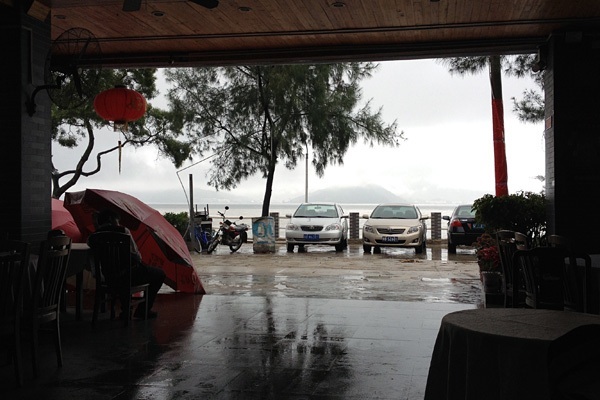
At the moment most of these areas are only accessible by car, but an express bus, the E 11 gets ordinary folk into the area and a subway line is being built. Impressions of Jiaochangwei, below. And yes, if you decide to go, go during the week. On the weekend, there can be road delays of more than an hour, and lines for restaurants and ubiquitous BBQ joints.

This slideshow requires JavaScript.