Shenzhen abruptly arrives at the edge of something new, some palatable, pulsing readiness that has been growing beneath our feet, and launches us into unanticipated desires. Or so it seems today. Continue reading

Shenzhen abruptly arrives at the edge of something new, some palatable, pulsing readiness that has been growing beneath our feet, and launches us into unanticipated desires. Or so it seems today. Continue reading

So “Oysters and Champagne” the Shajing version opened this weekend and it was quite beautiful:


Meanwhile, Handshake 302’s installation, “n=distortion” also opened at the SZ-HK Biennale:


This rhythm of Shenzhen culture can overwhelm. Suddenly, there are installations, performances, and salons everywhere. We are inundated, but frankly often too tired to enjoy the deluge.
However, as a Cantonese proverb says, “Water is wealth.”
Yes.
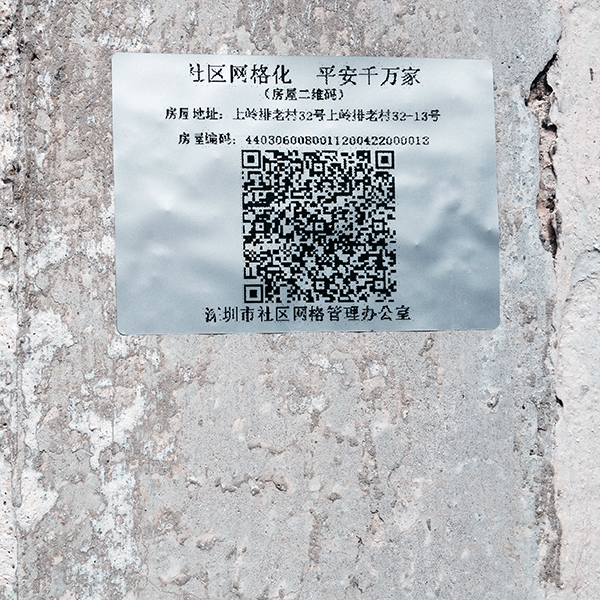
This past week, I toured Shangling Old Village (上岭村) in Dalang. Decaying villages like Shangling contextualize the “what came after” success story that is SHENZHEN! And yet. This contextualization depends upon one, standardized (and quite frankly boring) narrative of rags to riches, sudden wealth, boom boom boom, etcetera etcetera and so forth. Continue reading

A strange week that hasn’t coalesced into a statement so much as it has become fragments in search of glue; thinking as pastiche, and underneath it all a throbbing fear. Continue reading

This week I have been thinking about iterations of the “local” in two sites: the 2015 Shenzhen Hong Kong Biennale of Urbanism/Architecture and the Baishizhou Street Museum. In particular, I’m thinking about the possibility of making connections from “here” to “there” when they hinge on the distance between (a) some outside understanding of what the local might be and (b) what might be interesting to actual locals. The possibility of meaningful dialogue is further complicated when “outsiders” and “locals” are organized by global hierarchies, internal class structures, and unquestioned ideas of what might be intellectually and/or aesthetically engaging. Continue reading
Last weekend I met two young men, 18 and 19 years old, who are filming interviews with and about “Shenzhen’s Second Generation”. We talked about the actual definition of a “Shen 2 (深二),” which I have tended to think of in terms of immigrant generations. In contrast, they were specifying the term also with respect to decades: they consider the 80s and 90s generations to be members of Shen 2, while 70s kids and millennials are not. They also noted that Shekou’s Second Generation (蛇二) is even more precisely defined; these are the children of utopian Shekou, who lived in the old China Merchants housing developments, and attended the original Yucai School.
So what defines Shen 2 kids? Continue reading
So, as the Xiasha Kingkey project finishes up, another urban renovation project begins in neighboring Shangsha. Below, impressions of the Xiasha plaza, the Kingkey complex along Binhe Road, and the state of unmaking in Shangsha.
The Dalang Experimental School comprises elementary and middle schools for the children of migrant workers in Dalang New District. On June 8, they held a festival for their 30+ clubs, which range from art to karate and debate. The point, of course, is simple: at school in their uniforms painting, dancing, and helping each other, they look like every other young Shenzhener because they ARE just like the Shenzhen Middle School students we are working with at the Handshake for the Future exhibition. Well, except for access to high school, which is regulated through the upcoming High School Entrance exam (for a point by point on why in Shenzhen this exam is more important than the college entrance exam).
Two weekends ago, Handshake 302 collaborated with Dalang New District on the Graffiti Festival (the amazing stair mural at the Youth Dream Center). We also worked with the Experimental School to bring murals and graffiti into the schoolyard. Young Mr. Ye, a second generation Shenzhener via Gangxia, organized the event through the art club. Students started on designs early. For the festival, the club asked groups of students to submit a design proposal, 17 groups from both the elementary and middle schools made the cut.
Impressions of the festival, below, and yes, many, many pictures of kids being great:
I’ve said it before and now doubt will continue to repeat myself in subsequent posts: the speed at which Shenzhen is re-creating itself makes it difficult to re-member what the city has been. Not just Boom! a city appears, but Boom! all gone. These images of Shuiwan and Wanxia villages should be looked at along with yesterday’s impressions of the reclaimed land behind Seaworld and Shekou’s new coastline. The main part of this walk is along Shekou Old Street and Wanxia Road, thoroughfares that once upon a time ran parallel to the old coastline. The remains of that old times development (and yes we’re talking early 1980s) is small scale commercial fishing, unlike the marina and yachts that have been established along the new coastline.
I walked the park area and new residential area behind the Nuwa statue in Seaworld. This entire area has been reclaimed. It is startling how the loss of physical landmarks makes it difficult to remember where I’ve been because this isn’t that place.
 Shenzhen Noted