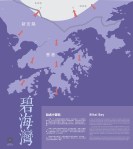
Baishizhou Soundscapes

Sunday afternoon, 4:00 at Handshake 302:

To truly listen, we must first become quiet, creating a silence proper to ourselves. When quiet, you will hear the sounds of nature. At that moment, the sound flows, and nothing remains but a trace of memory. Silence is itself the opportunity to reflect on what it means to hear.

Listening is not just a question of hearing the music, but of listening to the natural voice, which includes static. Problems come; where does the static of life come from? Why does it appear? The unavoidable sounds of daily life constitute different experiences.

During this workshop we will share sound—its creation, its documentation, and what it means to listen. We invite each participant to quiet their minds and truly listen. The screaming child and your screaming mind: are these sounds the same or different? The rustling wind and a little girls giggle: do they play your heartstrings in the same way? Listen to the soundscapes of Baishizhou and hear your heart. Beat.

interview with huang weiwen!

Happy to have my interview with Huang Weiwen, “The Urban Planning Imaginary: Lessons from Shenzhen” included in the recently published, Shenzhen: From Factory of the World to World City from the International New Towns Institute. As you can see from the index, contributors include many folks who have been involved in thinking about, debating, and planning Shenzhen.

hubei: shenzhen identity comes of age

Those of you who have been following Shenzhen media are aware that Hubei Ancient Village (湖贝古村) has become a touchstone in debates about historic preservation, pubic participation in establishing urban planning values and goals, and the place of “life (生活)” in high-end rent districts.

Continue reading

Handshake 302 interview at China Residencies

China Residencies interviewed Kaiqin and me about the ongoing residency at Handshake 302. Check out the interview and learn more about creative engagements with and in China.

line 11 mini encyclopedia: reforming the delta

The last five stations of the line 11 metro provide insights into how township and village enterprises reshaped the Pearl River Delta.

line 11 mini encyclopedia: riparian histories

As we go further north along the banks of the Pearl River, it becomes increasingly clear how rivers have shaped human settlements these past 1,000 years.

line 11 mini encyclopedia: bao’an and the second line

The second line has been a defining feature of Shenzhen and its visceral split between the inner and outer districts. Historically, Bao’an has been more important than the Weitou Isthmus.

line 11 mini encyclopedia: futian stations

Insights into what Futian was before it was the political center of the city.

the line 11 mini encyclopedia is online (and so is the subway)

For the past six months or so, I have been working on a project that illuminates Shenzhen history stop-by-stop along the new metro lines. Line 11 is up and so is the mini encyclopedia. I’ll be putting the pages up over the next week or so. Enjoy!

00站点小百科介绍

more on urban villages (with pictures)!

Folks interested in high density living in Shenzhen’s urban villages have been creating some great images about how space works across different scales. Below, a sampling from around the globe. Follow links to reports.

Li.Zhang2-2

From Li Zhang’s overview of urban villages, with a focus on Gangxia.

Continue reading