handshake 302 in the classroom

Our current project, “Shake Hands with the Future” started last week, when curator Liu He and I went to Shenzhen Middle School to talk with students about an after school project to investigate and creatively respond to the urban villages in their neighborhood. And, because Shenzhen Middle School is located right next to Dongmen, the school is also next to several of the most iconic urban villages. So very excited about what the students will bring us.

baishizhou: withering practices

The process of uprooting the northern section of Baishizhou has begun through withering practices–the removal of social nutrients in order to promote razing and evacuations as inevitable, necessary, desired. Continue reading

eyes

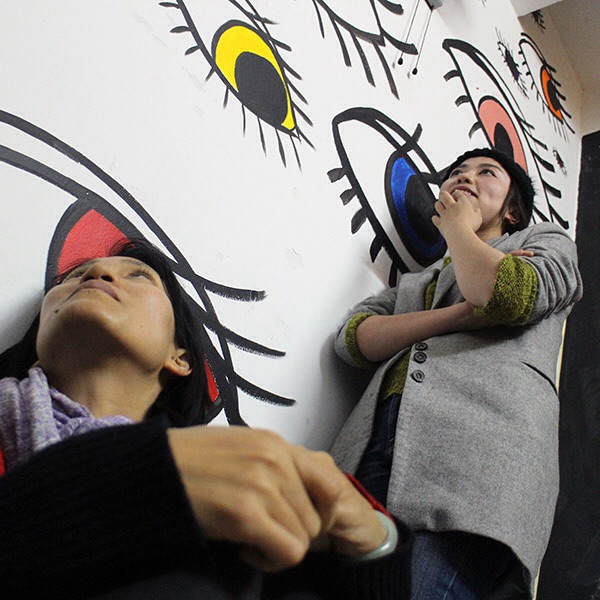
So yesterday evening at Handshake 302, we held our final independent salon for Zhang Kaiqin’s piece, “eyes”. Six projects now cover the room’s five walls, and so the exhibition “My White Wall Compulsions” is complete. We will be arranging an opening for and viewings of the exhibition over the next few weeks.

Yesterday’s conversation ranged from the meaning of a wall of eyes to the meaning of art, with a few rants along the way. The conversation, however, was respectful and mutually responsive. And this, I think, makes 302 a space of shared happiness. No small accomplishment, our grand ambitions, notwithstanding.

Images from the salon, below:

This slideshow requires JavaScript.
floating desires

Desire ravages Baishizhou.

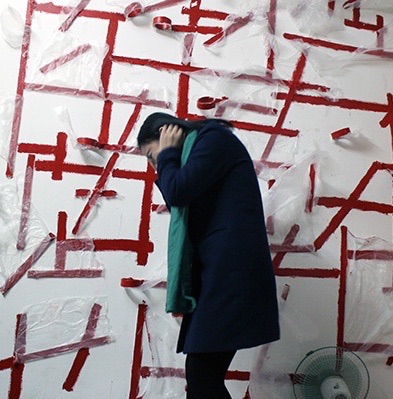
Last night at Handshake 302, Fu Honghong discussed her wall, “Floating Desires (漂浮的欲)”, the fifth installation of the series, My White Wall Compulsions (墙迫症). Fu Honghong is one of the few CZC Special Forces who lives in Baishizhou. She came to Shenzhen via a rural childhood and urban university, and now works as a graphic designer in neighboring Overseas Chinese Town. On her wall, Fu Honghong wanted to map Baishizhou in terms of the desires–to find a job, to meet a life partner, to buy a house and leave–that although immaterial, nevertheless are the reason that Baishizhou exists as it does. Continue reading

观察| 城中村,拆迁还是握手?

A visitor’s thoughts on the Handshake 302 project.

观察| 城中村,拆迁还是握手?.

handshake 302 update: my white wall compulsions, III/ threshold

This week while helping to install the next edition of “My White Wall Compulsions (墙迫症)”, Laura Belevica’s beautiful “Threshold (生死之门)”, I was struck by the beauty of collaboration within small, shared spaces. Indeed, our exploration of what can be done with the walls of an efficiency apartment has revealed unexpected vastness and implicit conversation. Continue reading

international community. china?

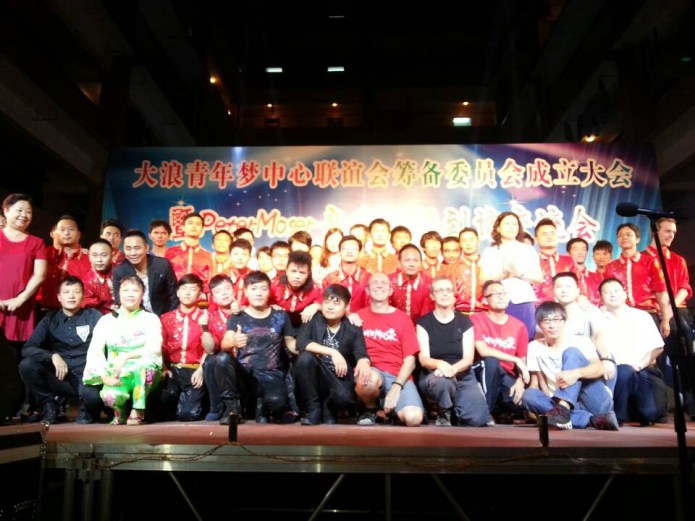
Over the weekend CZC curated a cultural exchange between the Dalang Street Office and Peter Moser of more music. A talented and inspirational music facilitator, Pete asks questions that go to the heart of community work — why this, why here? And the ever vexed question for moi (especially in light of the Hong Kong protests) — where do we draw the line between doing our work and our work becoming complicit with Party goals of social control at the expense of democracy and economic justice? Continue reading

the violence of rural (re)construction (5): lessons from shenzhen

So what am I learning about Shenzhen through my engagement with Meizhou forced evictions and the young people who are trying to figure out how to articulate new relations to their Hakka past and rural injustice? Continue reading

the violence of rural (re)construction (4): what gets preserved

Monday I joined the Meizhou preservationists in Enning Neighborhood Guangzhou, where we met to talk about how we could intervene in what was happening in Meizhou. There were two issues at stake. The first was straight-forward lay human rights–how do we help people keep their homes or guarrante a replacement home? The second was more abstract–what kind of buildings and spaces “ought” to be preserved for their historic value? Continue reading

my white wall compulsions: paint it black (I)

On Friday, October 3 at Handshake 302, we held the first salon for My White Wall Compulsions (墙迫症), “Paint It Black”.

The artist team for the first wall comprises Liu He (刘赫) and Wu Dan (吴丹), both under 25 and both curious about art and its possible articulations with and through society. Liu He is a second generation Shenzhener, whose parents came to build the SEZ before he was born. Wu Dan came to Shenzhen last year, a first generation migrant just out of college. During their first salon, Liu He talked about his anti-inspiration for “Paint It Black”.

This past summer, Liu He took time off from work to travel to some of the less travelled neidi cities. In one of the cities, he decided to take a job at a karaoke bar in order to see what it would be like to do day work (打工). He got a job as a procurer of Karaoke Bar princesses (and at the bar where he worked, hostesses who worked private rooms were so-called). The job included a three-day training session, in which the trainer was as enthusiastic and self-determined as a multi-level marketer. And in fact it turns out that procuring worked a lot like multi-level marketing–the more young, pretty women the procurers brought in, the more money they made.

Liu He left after a few days without recruiting any young women because “he couldn’t get past the moral issue”. Of the 30+ young men who had joined him for training, 12 decided to stay and work the job. Of that twelve, three were 16 years old. According to Liu He, the trainer insisted that once he stopped worrying about ethics, he could talk to pretty women and get rich. In fact, that seems to have been the point of the training: to overcome the young men’s repugnance to pimping and replace it with self-justifying desire for money and everything it buys.

The story ignited debate about what it means to leave one’s hometown and make one’s way in the world. There were two main positions, both pulsing with anger, sadness, and faintly, despair. The younger participants wanted a more honorable way of making a living, to live in such a way that they wouldn’t have to make the kind of choice that Liu He walked away from. The older participants, especially those who had worked their way out of a rural area, expressed that young people didn’t understand what was necessary in order to secure a better life for one’s children.

These two positions took a different relationship to the young pimps. The young people saw themselves and their choices in the decision to procure princesses. The older people saw the choices they had made so that their children would be protected from making those choices. No one saw themselves as a princess, a blind spot that not only hints at how gendered inequality shapes job opportunities in China, but also how difficult it is to truly see the most oppressed. After all, the young men’s decision to pimp or not to pimp still implied some kind of agency. It would have been more difficult to focus on the conditions that make young, rural women the cheapest and most convenient labor in manufacturing and service throughout the economy, even as women are markedly absent from positions of social influence and power.

Friday, October 10 at 19:00 the conversation continues when Liu He and Wu Dan present their finished wall.

This slideshow requires JavaScript.