where’re you from?

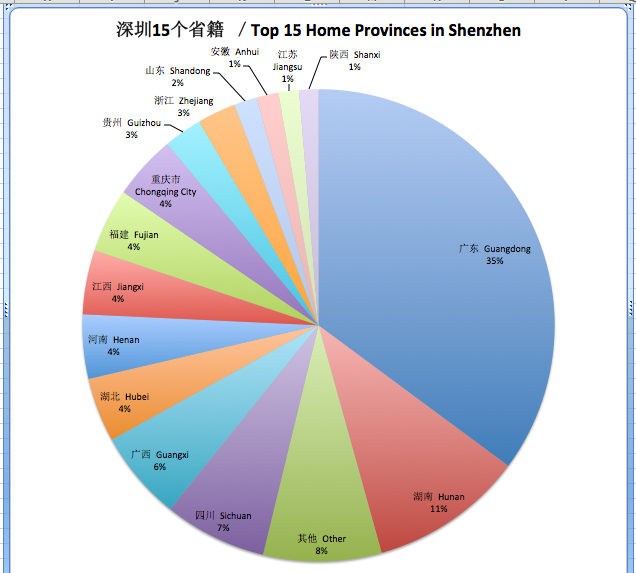
We know that Shenzhen is an immigrant city, but inquiring minds wonder: where do the immigrants come from? Based on the recent release of Shenzhen statistics (for 2015), I’ve come up with the following chart that gives a crude (very, very crude) approximation of where Shenzhen’s residents are from circa 2014. Of note, if Chongqing and Sichuan counted as one place, instead of as a city and province respectively, the area would be roughly tied with Hunan for second most common origin. And yes, this corresponds with my (again vague) impression that Guangdong, Hunan, and Sichuan/Chongqing restaurants dominate the city’s eating!

population

baishizhou demolition: the rising cost of shenzhen dreaming

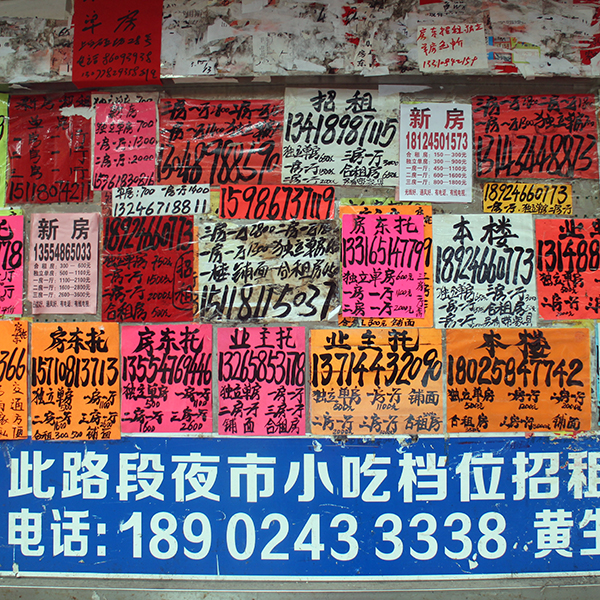
Yesterday, I heard this story: A 30-something farmer from Lanzhou came to Shenzhen in 2013 in order to make his fortune. He started out working for a relative in a Lanzhou Noodle Shop, and then after a few months decided to open his own noodle shop. After looking around for a suitable place, he decided to purchase the rental rights to a noodle shop in Baishizhou, on the western side of Shahe Road. The shop had been recently renovated and came with a hefty transfer fee—180,000 rmb with a high rent. But the man was enthusiastic. So he sold his homestead land (宅基地) as an initial investment and moved his family to Baishizhou, where they worked. Only his youngest son went to school, while his oldest didn’t go to high school so he could work in the shop. As the last of the buildings in the Shahe Industrial Park are being demolished, he is being forced out without any compensation and no way back home. Continue reading

nanting village, guangzhou

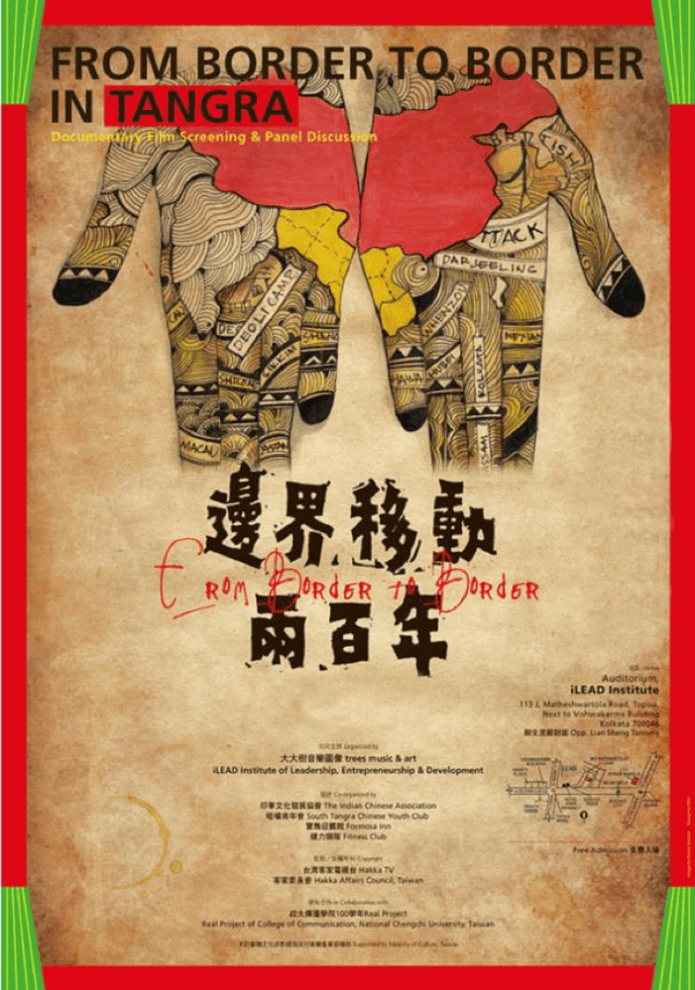
On Friday September 9, 2016, I had the privilege of visiting Nanting Village, Guangzhou with Professor Chen Xiaoyang, from the Guangzhou Academy of Fine Arts. The occasion for the visit was a screening of Zhong Shifang’s film, “From Border to Border,” a documentary on the Chinese community in Tangra Calcutta. I will discuss the film in my next post. Today, I would like to contextualize the screening of the film with a brief introduction to Nanting Village. Continue reading

shenzhen comes out in favor of new attitude toward urban villages

It’s been a long time coming. Or not. Roughly a decade after Shenzhen targeted urban villages as “dirty, chaotic, and substandard” and less than five years after Gangxia changed how we thought about compensation, the official Shenzhen press has indicated its time for the city to change how it thinks about urban villages. Continue reading

The P+V Academy

So these past few months, I have been busy setting up a public arts education program at the P+V Gallery (虔贞女校艺展馆) in Dalang. We’re calling this series of events, the P+V Academy (虔贞女校学堂). This name, of course, is an updated rendering of Pious Virgins Girls’ School and the project to create a space for alternative, minjian (民间) histories.

On Saturday, September 9, 2016 at 3 pm, we’re screening Shefong CHUNG’s “From Border to Border,” a documentary about the Hakka diaspora in India. The title, of course, alludes to the marginalization of the Hakka within both China and India. We are thrilled that the director will be joining us for the screening and discussion. If you’re in the neighborhood, join us.

Located in the middle of an urban village, the P+V Gallery is the only historically restored building in Shenzhen that offers public programing. It is truly worth a visit to experience both the city’s deep history as well as Dalang Street Office’s efforts to shape an alternative public culture. The “Children’s Art Sprouts” projects, which organizes a monthly arts course, including the sock puppets is part of the Academy’s offerings.

sock puppets!

There’s much I could say about why community art programs matter, but. Sock puppets! Incredibly cute kids! Everything that matters. Here.

This slideshow requires JavaScript.

lightscape salon

The city is man’s most consistent and on the whole, his most successful attempt to remake the world he lives in more after his heart’s desire. But, if the city is the world which man created, it is the world in which he is henceforth condemned to live. Thus, indirectly, and without any clear sense of the nature of his task in making the city man has remade himself.

                                                                                                                     -Robert Park

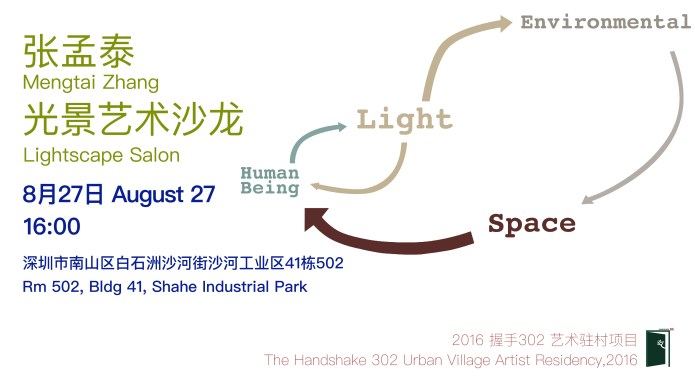
Lightscape focuses on the relationship between sensory experience and external structures within the city. Continue reading

shenzhen speed: nan’ao

I have this longing to believe that somehow what came before was less fragile and much less fleeting, more easily touched and grasped than is the present. The irony of this longing caught up with me in Nan’ao, where three generations of fishermen live side by side on a beach front urban village (that, yes, is scheduled for partial demolition and redevelopment). Continue reading

new traditions: nan’ao mazu

Yesterday, I visited the newly renovated Mazu Temple of Nanyu (南渔), which is located in Nan’ao, Dapeng (大鹏新区南澳). The temple is interesting for (at least) three reasons and the questions they beg.


  1. The temple is a local renovation of a previous existing temple. The icons from the previous temple have been moved into a nearby exhibition of the history of the village;
  2. Although the temple and the exhibition were built on land that Nanyu has claim to, the project was promoted and funded by donations from a successful Chaozhou businessman, and therefore;
  3. He contacted artisans in Chaozhou to design and build the temple according to “proper” requirements.

Questions that the temple raises include:

  1. How is “tradition” being remade at the popular level, now that long-term residents are contributing to the reconstruction?
  2. What has been the role of Chaozhou people in this reconstruction?

Chaozhou people have been involved in the reconstruction of Shenzhen tradition at two levels. First, Shenzhen is known for the shift from the planned to a market economy, but many of the people who built the literal markets (the Hubei fish market, wet markets in many villages, and the dried fish market at Nan’ao, for example) have been from Chaozhou. Secondly, many of the traditional crafts that appear in Shenzhen ancestral halls and temples have been contracted from Chaozhou, which is considered more “traditional” and therefore “authentic.”

The next post will talk about the relationship between the temple and the village. Impressions of the newly constructed Mazu Temple and the exhibition.

This slideshow requires JavaScript.
handshake 302 sound workshop

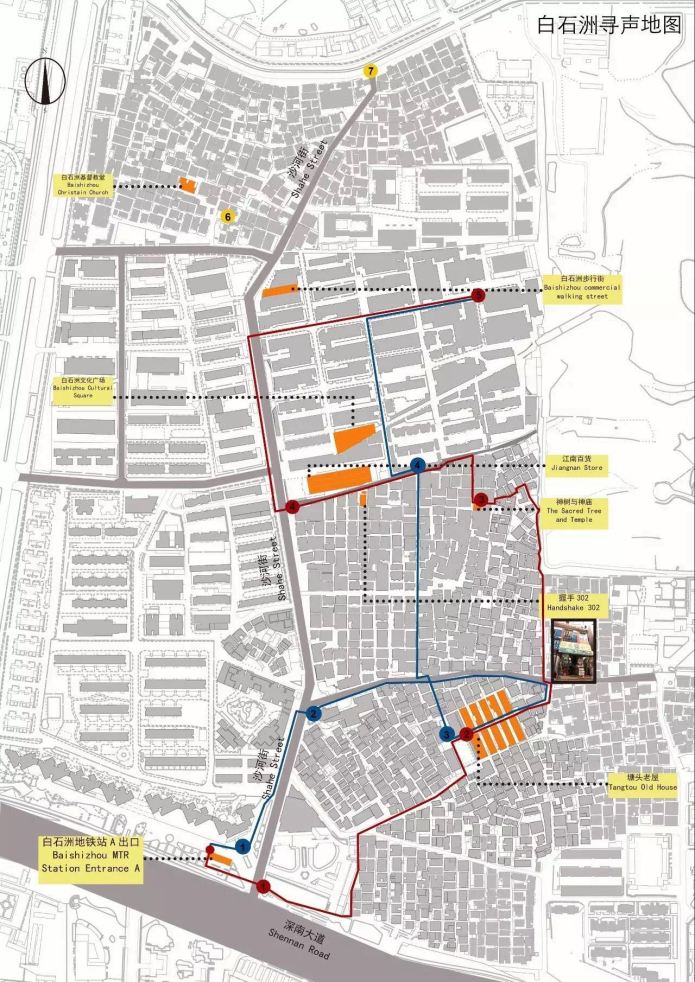
Handshake 302’s last exploration of Baishizhou was a collaboration between Handshake 302 and Shenzhen Center for Design. I comprised two parts: a silent walk through the urban village to collect sounds and a workshop discussion. Zhang Kaiqin and I led the walk (see map), while resident artist Zhang Mengtai led the workshop.

Continue reading