a victory for the common people?

So after the Municipality announced that it would suspend demolition of extant urban villages, villagers who will still have to hand their property rights over to the city took to the streets to agitate for demolitions. Because here’s the rub. The city has been using the demolitions as a way of regularizing property ownership, transforming the grays of collective ownership into the black and white of law. Now, the new plan will proceed with the regularization of property without the wealth that demolition has generated. Suddenly, there are villages facing what they clearly see as “lose-lose.” On the one hand, as the city upgrades living conditions in the handshake buildings, in perpetuity rights will become the 70 year rights of ordinary urban property. On the other hand, the transfer fees for those rights will no longer (can no longer) generate instant millionaires a la Gangxia and Dachong.

stories from the first “singleton lunch”

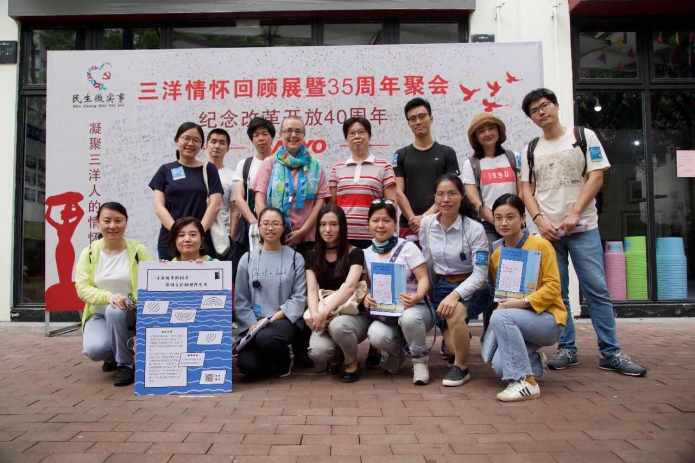
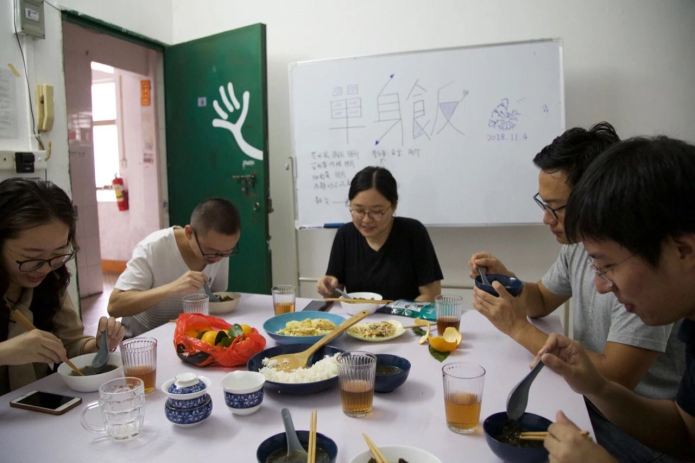
When the first “Singleton Lunch” was announced on November 1, we received 13 applications for three places. Everyone said that they were excited about the topic and we hope that in future, there will be opportunities for more friends to participate and share their ideas. (For the original article in Chinese, skip to the bottom of the post). Continue reading

shenzhen has suspended the demolition of designated urban villages

Shenzhen has just released its 2018-2025 Comprehensive Plan for Urban Villages (Old Villages) 深圳市城中村总体规划(2018-2025). Here’s the long and short of it: Shenzhen has decided to suspend the demolition of designated urban villages and instead bring the housing stock and surrounding neighborhood shops into its affordable housing program. Continue reading

hubei: bearing witness

So, Hubei Old Village isn’t being demolished, but it’s not being protected from the fallout of master plans and hammer drills. I walked the edges of the demolition area in and around New Hubei Village and the former Luohu Culture Park, which used to be one of my favorite public spaces downtown. Impressions of the withering practices that encroach on the “Old Special Zone, below.”

This slideshow requires JavaScript.

cutting edge: shekou and the construction of the global order

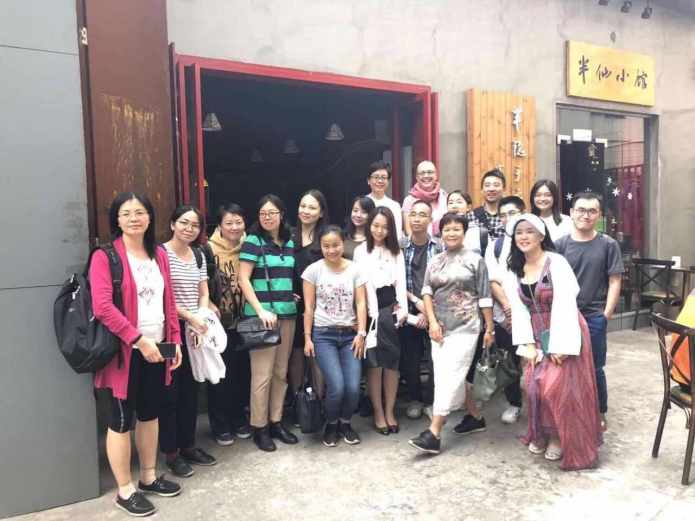
On October 27, Handshake 302 welcomed 15 Shenzhen people to participate in the second chapter of “Urban Flesh and Bones”–Shekou: Globalized Geographies. Our walk traced the original coastline of old Shekou and made several stops in the landfilled gardens of new Shekou. terms, Walking along the coastline of the Old Shekou reminds us that the “local” Shekou is actually composed of important elements such as international connectivity, industrialization, business culture and personal mobility.

5211541198849_.pic Continue reading

shenzhen wetlands

You may not be aware that there is a wetlands conservation area in downtown Shenzhen. Tucked away between Window of the World, Baishizhou, and the Binhai Expressway, the wetlands boasts the last bit of original coastline of Shenzhen Bay. Indeed, once upon a time, it was a guarded border. The city uses this small piece of land as a living classroom, inviting limited numbers of people in to learn about conservation and local ecology.

This slideshow requires JavaScript.

Continue reading

mission hills…guanlan

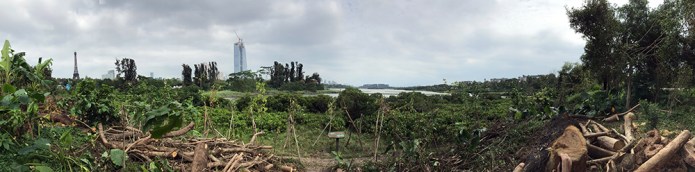
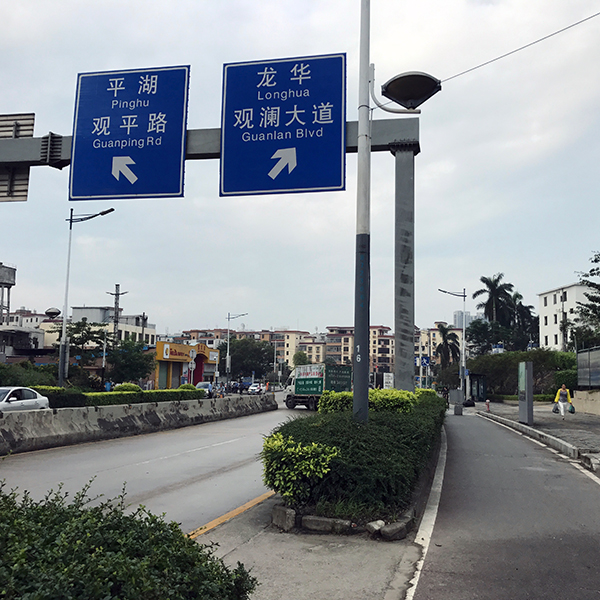
The distinction between the golf course (or “high ball field – 高球场” as it is now abbreviated) and the nearby urban villages is clearer in English than in Chinese, because the gulf course is known as Guanlan Lake High Ball Field, while the surround area is simply “Guanlan.” These fuzzy language borders matter. I know, for example, many Chinese people who use English translation to more strongly express ideas and aspirations that remain muted in Putonghua. I will be exploring these tensions–between art and craft, between hand and machine, between service and consumption, and between local and outsider–over the next two months as a participant in the Guanlan Mission Hills International Material Art Camp. Below are impressions from my first few days walking the area.

This slideshow requires JavaScript.


baishizhou: the city’s history through seven micro-environments

On October 14, 2018, Handshake 302 welcome a group of Chevening scholars to Baishizhou. We brought the Chevening scholars to seven of Baishizhou’s micro-environments. Each micro-environment not only illustrates the urban life of Shenzhen, but also represents an important moment in the city’s history. Continue reading

generations, again

The other day over lunch, a good friend expounded on the characteristics that distinguish children born in the 80s, 90s, and 00s based on what she understood of their parents, who were born in the 50s, 60s, and 70s respectively. Continue reading

the photography of he huangyou

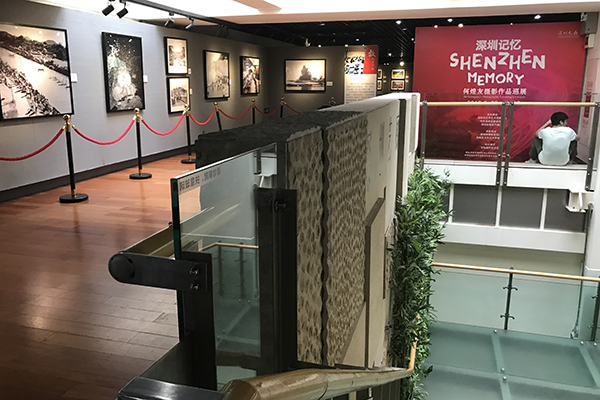
A current exhibition of the photography of He Huangyou (何煌友), Shenzhen Memory is something of a historical mashup. It includes many of He’s most-well known photographs, which have shaped our visual imagination of the Shenzhen before and at the cusp of reform. These photographs are well worth seeing in person. However, the exhibition neither contextualizes nor places the photographs in chronological order, leaving interpretation up to the viewer. This form of representation may in fact conform to what we know of how memory works–it is highly personal and unreliable–but it makes it difficult to place the images into larger histories. It feels as if we are suddenly viewing the illustrated introduction to the “fishing village to world city” narrative without bothering to mention that the exhibition includes pictures from at least three different coastlines and two different epicenters of reform (Shenzhen and Shekou).

Continue reading