emptied out / true emptiness

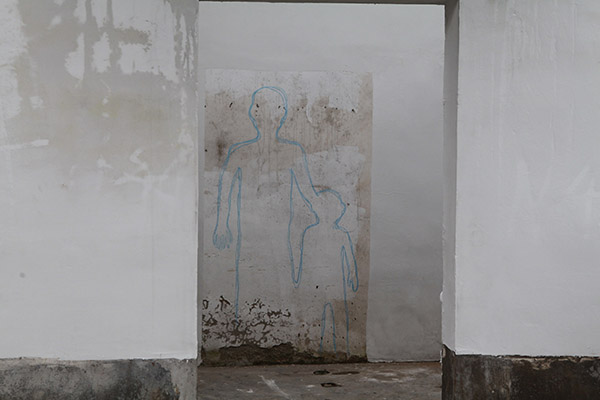
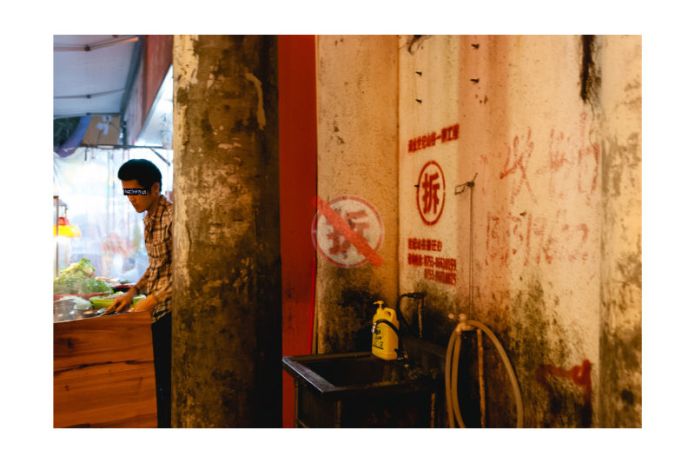
Last week, I participated in the “真空” art week. 真空  means emptied out or true emptiness. The curatorial statement (translated below) emphasizes how urban renewal is “emptying out” the villages and what remains is neither this, nor that. Almost buddhist, except we’re still yearning and true emptiness alludes us.  Continue reading

thoughts on the spatial distribution of shenzhen’s population

How many people actually live in Shenzhen? The numbers vary. Current Shenzhen Party Secretary Ma Xingrui says 20 million. However, the administrative population supposedly hovers at 18 million, while the city itself has never admitted to more than 15 million. Rough estimates suggest only 4 million people have Shenzhen hukou, another 8 million have permanent residency, and another 5-8 million “float” unofficially within the city

These statistics obscure how Shenzhen’s urban villages spatially organize these three administrative classes. For example, Shi’ao (石凹) Villagehas a local population of 4 to 500 people and a renter population of 20,000, making the ratio of local to renters residents 1:40. The ratio of local to renter populations in Baishizhou is an astonishing 1:77. Moreover, it is clear that renters–even floaters–aren’t actually leaving the city. Instead, they are finding newer (and often) narrower niches within the village.

Much like US American suburbs which manage inequality through distance, Shenzhen’s urban villages do the hard (and socially productive) work of managing inequality within the city. The majority of floaters and a large percentage of permanent residents live in the villages and tend to work in service and the semi- and informal economies, while hukou residents and wealthier permanent residents occupy “official” housing estates and tend to work in the formal economy.

Continue reading

tangtou, baishizhou,may 23, 2016

Today while walking Baishizhou, I stumbled upon surveyors from the Nanshan District government. The were beginning the measurements for compensations and consequently for the first time in roughly two years the buildings were open.

Continue reading

delhi: urban villages with indian characteristics

This week I am visiting the Centre for Policy Research to learn about their Cities of Delhi project and the politics, history, and morphology of urban villages in the National Capital Territory and neighboring Gurgaon. The trip is something of an urban village bootcamp, punctuated with visits to tourist sites and intense conversation. Continue reading

mom and pop opportunities: yet another reason the villages matter

The distribution of villages throughout Shenzhen once afforded opportunities for low capital, small scale businesses to pop up within the urban center. It also meant that  workers could find affordable housing within walking distance or short rides to their jobs. In this sense, villages were not simply gateways to the city, but also platforms that gave low-income and working class families economic opportunities that are not available outside the city center.  Continue reading

shuiwei: qingming treats

The women of Shuiwei continue to make the village, one treat at a time. For Grave Sweeping Day (清明节), they gathered in the village kitchen to make a variety of traditional snacks. The treats are steamed and vegetarian. What’s not to love?

This slideshow requires JavaScript.


baishizhou demolition scheduled

The demolition of the Shahe Industrial Park, Baishizhou (located west of Shahe Road) has been scheduled for April 30, 2016. The six-story factories are owned and managed by Shahe Enterprises and occupied by mid-size business owners. This area is the easiest to raze because it has a single property owner.

The image is from the ongoing “Don’t Raze Baishizhou Photography Exhibition” which meets every Saturday to photography Baishizhou’s residents and garner attention for the call for more equitable redevelopment.

“scold” arrives in shenzhen

Shenzhen’s most recent Party Secretary, Ma Xingrui (马兴瑞) infamously told Shenzhen and its boosters to get over the jubilation for its recent rise in international prestige. On the one hand, there is something snarky and mean spirited about Party Secretary Ma’s scolding. After all, Shenzhen’s raison d’etre has been to make a place for itself in the emergent world order and for most of its existence, Shenzhen has been ignored by Beijing-centric views of China (both in and outside China). On the other had, many agree with his assessment that Shenzhen is not yet a first rank world city.

The new Party Secretary’s surname—Ma—is a homophone with the character for “scold / tell off” (骂)”. In that spirit, the OCT Lifestyle website put out an article in which Shenzhen clearly comes in second behind world class cities such as Beijing, Hong Kong, Taiwan, Japan, and Singapore. With Beijing the comparison is about the internet. Hong Kong stands for level of globalization, Taiwan a sense of well-being, Japan for professionalism, and Singapore for the ability to attract and keep talent. In other words, Shenzhen wants to be best at all of that, which may in fact be its charm—composite rather than first rank across categories. Continue reading

dragon boat festival preparations

This past week I have been in Shuiwei learning to wrap zongzi (粽子) for the upcoming Dragon Boat Festival. What is apparent is not simply the re-invention of tradition, but also the unpaid work that women do to create that solidarity. The zongzi making takes place over 10 days—two prep days and then 8 days of wrapping and boiling. The hours are long: 6:30 a.m. to midnight or later. Of note: Continue reading

shuiwan: the past is another country

I’ve said it before and now doubt will continue to repeat myself in subsequent posts: the speed at which Shenzhen is re-creating itself makes it difficult to re-member what the city has been. Not just Boom! a city appears, but Boom! all gone. These images of Shuiwan and Wanxia villages should be looked at along with yesterday’s impressions of the reclaimed land behind Seaworld and Shekou’s new coastline. The main part of this walk is along Shekou Old Street and Wanxia Road, thoroughfares that once upon a time ran parallel to the old coastline. The remains of that old times development (and yes we’re talking early 1980s) is small scale commercial fishing, unlike the marina and yachts that have been established along the new coastline.

This slideshow requires JavaScript.