The last five stations of the line 11 metro provide insights into how township and village enterprises reshaped the Pearl River Delta.
Tag Archives: shenzhen identity


line 11 mini encyclopedia: riparian histories
As we go further north along the banks of the Pearl River, it becomes increasingly clear how rivers have shaped human settlements these past 1,000 years.


line 11 mini encyclopedia: bao’an and the second line
The second line has been a defining feature of Shenzhen and its visceral split between the inner and outer districts. Historically, Bao’an has been more important than the Weitou Isthmus.

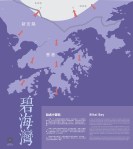

line 11 mini encyclopedia: the nantou peninsula
Once upon a time, Nantou was the Ya’men for Xin’an County, and before that for the imperial salt monopoly. It’s currently where Shen Kong integration is being seriously re-worked.


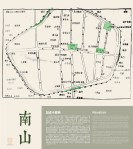

the line 11 mini encyclopedia is online (and so is the subway)
For the past six months or so, I have been working on a project that illuminates Shenzhen history stop-by-stop along the new metro lines. Line 11 is up and so is the mini encyclopedia. I’ll be putting the pages up over the next week or so. Enjoy!

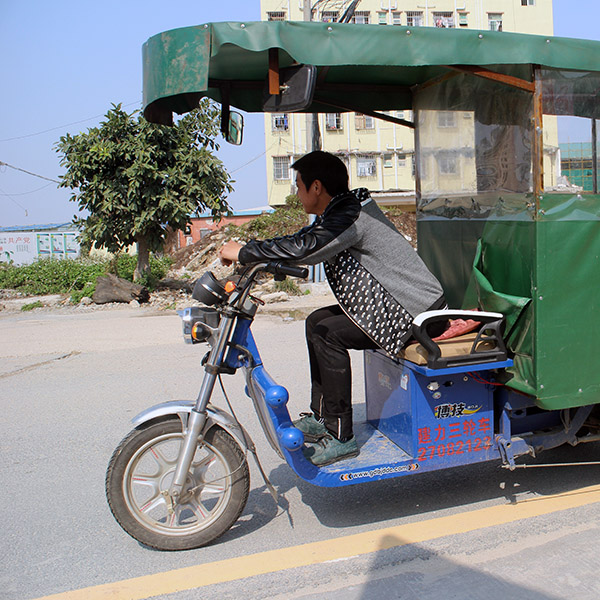
bitou, or the spatial consequences of deindustrialization
In the early spring, I arrived at the Songgang bus stop, “under the bridge”–a pedestrian overpass on the G107 expressway. The stop teemed with migrant workers and motorcycle cabbies, who screamed, “Where are you going?” Continue reading
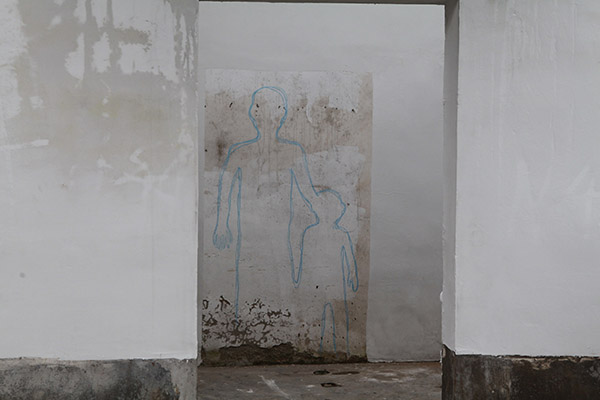
emptied out / true emptiness
Last week, I participated in the “真空” art week. 真空 means emptied out or true emptiness. The curatorial statement (translated below) emphasizes how urban renewal is “emptying out” the villages and what remains is neither this, nor that. Almost buddhist, except we’re still yearning and true emptiness alludes us. Continue reading

thoughts on the spatial distribution of shenzhen’s population
How many people actually live in Shenzhen? The numbers vary. Current Shenzhen Party Secretary Ma Xingrui says 20 million. However, the administrative population supposedly hovers at 18 million, while the city itself has never admitted to more than 15 million. Rough estimates suggest only 4 million people have Shenzhen hukou, another 8 million have permanent residency, and another 5-8 million “float” unofficially within the city
These statistics obscure how Shenzhen’s urban villages spatially organize these three administrative classes. For example, Shi’ao (石凹) Villagehas a local population of 4 to 500 people and a renter population of 20,000, making the ratio of local to renters residents 1:40. The ratio of local to renter populations in Baishizhou is an astonishing 1:77. Moreover, it is clear that renters–even floaters–aren’t actually leaving the city. Instead, they are finding newer (and often) narrower niches within the village.
Much like US American suburbs which manage inequality through distance, Shenzhen’s urban villages do the hard (and socially productive) work of managing inequality within the city. The majority of floaters and a large percentage of permanent residents live in the villages and tend to work in service and the semi- and informal economies, while hukou residents and wealthier permanent residents occupy “official” housing estates and tend to work in the formal economy.
at the cusp of renewal: old shatoujiao
The other day, I walked the streets of Old Shatoujiao, just near the entry to Zhongying Street (中英街). Traces of the past appear fragile: early 80s work unit housing, previously fashionable architecture, pedestrian and bicycle friendly streets, the lingering remains of tourism before border restrictions loosened, and clusters of mom and pop shops. Redevelopment presses in on this small bit of history, “Be farsighted and demand development,” a developer’s banner exhorts homeowners, “the faster renovation takes place, the faster you benefit.”
videos from the v&a, shekou
Happy to share the videos from “Unidentified Acts of Design,” curated by Brendan Cormier and Luisa Mengoni. Enjoy this great intro into Shenzhen design. The first is on the painters of Dafen Village.
 Shenzhen Noted