an apparatus of integration 2: the shen kong border, wutongshan south to liantang

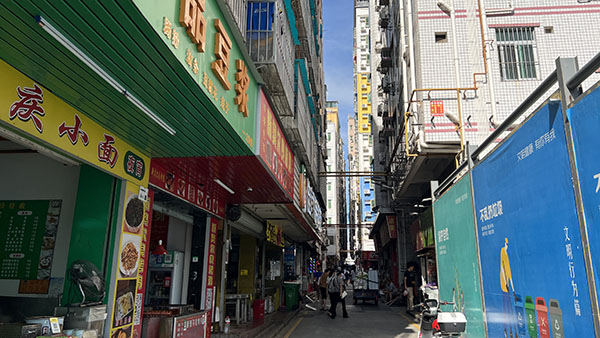
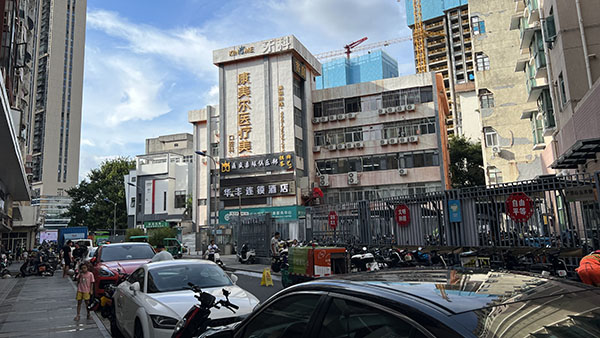
Yesterday had a wonderful time with good friend Denise exploring Shatoujiao and then the land border from Wutongshan South to Liantang subway stations (Shekou Line). Three observations (with illustrations!) and unsubstantiated speculation, below:

Continue reading

“you’re only as old as you feel”: celebrating the middle-aged

May 13, 2024 I attended a TEDish event that was jointly sponsored by Hougongfang (厚工坊) and Fenghuang Media Shenzhen (凤凰网深圳). If you drink baijiu, then you’ve probably heard of Hougongfang, a high-end brand of Moutai from Wuyeshen (五叶神), which is based in Guangdong, but brews in Maotai. if you follow Shen Kong media, then you’ve clicked a Fenghuang post or two. The company is primarily state-owned and based in Shenzhen and Hong Kong, offering Mandarin and Cantonese language programming. It is registered in the Cayman Islands. The event theme was “厚浪” which is a homophone for 后浪 (waves or next wave) and also neatly reminds us of Moutai’s (Maotai’s) historical significance, which was consolidated during the Chinese civil war and especially pronounced (chez Shenzhen) during the 1990s and naughties, when deals were sealed with toasts and no one went home sober.

For the past three years (this was the fourth event), Hougongfang has been promoting “middle age day (中年节).” The event was filmed before a live audience to be broadcast on May 25, which is the day they’ve designated for the new holiday. I know, you’re probably thinking: didn’t China establish May 25 as University Mental Health Day (525心理健康节)? And the answer is yes. And to answer your unasked question: yes it explains so much about contemporary China when today’s middle-aged magnates are promoting their contributions to society and the value of their experience on a day that had been set aside to address the mental health of the country’s anxious, overworked and often suicidal college students.

Thoughts (not all of them generous because remind you of US boomers much) below:

Continue reading

interview with caixin new media vice president zhou zhichen

Last week’s interview with 财新新传媒副总周智琛 is now up on the Caixin website as part of their 龙中对 series of interviews. “为城市立心” is about 35 minutes (no commercials) and gives a good sense of how the public debate on urban villages is now being framed, or more accurately how I’m now framing the conversation in terms of my own sojourn. To view the interview, ether use the VR code in the poster or follow this link.

langkou homecoming

A bit of housekeeping. In “Langkou Homecoming: Art Sprouts, the P+V Gallery and Future Shenzheners,” Zhang Kaiqin and I reflect on our practice at Qianzhen Girls’ School, 2016-2018. The Chinese citation is “乐把他乡变故乡——“艺术童萌”与虔贞⼥校艺展馆的未来深圳⼈”, 发表于《鹤湖⽂史辑刊》(第⼀辑),⽂物出版社,2022年11⽉。

what’s on display and who can see it?

This past week, in addition to participating in large public culture events, I also had the opportunity to visit two privately organized cultural spaces. The first was a private collection of shoushan stone carvings (寿山石) and the second was a community museum.

So some preliminary thoughts about what these spaces suggest about post COVID culture in Shenzhen.

Continue reading

material and spiritual traditions. thoughts?

Long ago and far away, I wondered when History would enter Shenzhen’s bildungsroman. And now that it has, it’s interesting to see how deeper settlements have emerged as roots for contemporary Shenzheners. The original SEZ–now the inner districts (关内)–especially Luohu (Dongmen) has become the city’s connection to Hong Kong. Indeed, it is still where you go if you want to speak Hong Kong Cantonese and eat delicious Cantonese and Chao-Shan style foods. In the outer districts, “Longgang” (and I’m using it in its circa 1990 designation, rather than picking through the new districts) is home to Hakka traditions, which are housed in the area’s great compounds (围屋、世居). In Bao’an (and yes, as a cultural homeland, we’re talking about the sliver of villages that stretch north-south between the reclaimed west coast (now Qianhai) and Bao’an Boulevard), ancestral halls are flourishing and traditions like lion dancing have been elevated to national immaterial culture status (上川黄连胜星狮舞). The Huang alliance comprises eight troups, extending from Shanghe to Fuyong.

What I’ve noticed is that this geographic distribution assumes different historical subjects which are all mushed together into some kind of “Shenzhen” identity. The implicit subject of history in Luohu, for example, are the cross-border entrepreneurs (个体户 mainly from Chao-Shan area) and their Hong Kong clientele (many who also originally hail from Chao-Shan). This first generation came in the early 1980s and transformed the old market into a gritty cross-border playground a la Tijuana. In Bao’an, the villages (now communities under a street office) have cultivated and paid for the continuation of their traditions, including pencai (盆菜) banquets, the birthdays of divinities and founding fathers, and celebrations at various scale. In contrast, in the Hakka areas, various levels of government have assumed responsibility for the compounds and are using them to promote new kinds of high culture. Pingshan Art Musuem, for example, includes the Dawan Compound (大万世居) as a satellite exhibition hall, while Longgang District has transformed the Hehu Compound (鹤湖新居) into the base of its cultural think tank, hosting outdoor lectures underneath shade trees.

So, thoughts du jour are more random associations that still make a kind of sense. Shenzhen’s culture and history are being reworked in ways that both deploy local cultural geographies and map along the city’s historic interest in establishing a new material and spiritual culture. In Luohu, the early Special Zone is re-emerging in new forms of (admittedly cleaned up) cross-border consumption; Bao’an is emerging as the locus of South China Sea diaspora connections (the lion dance, for example, is a major competition in the region), and Longgang compounds form a material platform for high end civilization, where the city’s “new guests” can strut their cultural stuff.

luohu landmarks: the border as an apparatus of integration

The Shenzhen-Hong Kong border at Luohu manifests the contradictions and aspirations of integrating the two cities. On the one hand, the border has been solidified with concrete and barbed wire, while on the other, the border is presented as an easily accessible gateway to a modern shopping experience. Indeed, the concrete and barbed wire fence that lies parallel to the border is located directly behind Luohu Plaza, as seen in the pictures below.

Continue reading

bogang, shajing, bao’an, shenzhen

Shajing is a large subdistrict in northern Bao’an. Until the road system took shape and the second line ceased to operate as a strict boundary (both circa 2003-4), most locals went to Changping, a market town in southern Dongguan when they wanted to purchase or enjoy those things that were only available in a town. Historical Shajing comprises three main areas: the oyster settlements, Bogang, and Wanfeng. Indeed, one of the pleasures of visiting a Shajing neighborhood is not only its architectural and cultural diversity, but also the reminder: Shenzhen has only become important recently. Historically, the largest settlements were located along the northwestern coastline in the Fuyong-Shajing plain.

Continue reading

embodied time

How does one count time in Shenzhen? There are five-year plans and there are different eras: the Special Zone and Shenzhen 2.0, for example, are phrases which circulate in conversations about urban planning. The also seems to be a folk calendar that counts political eras as embodied by religious figures.

Continue reading

chegongmiao to xinzhou (another futian)

The walk from Chegongmiao to Xinzhou used to be a walk from the factories to Xiasha and Shangsha, urban villages where workers and their families lived. Then there were upgrades and a spurt of entrepreneurial redevelopment. However, this area was zoned for redevelopment before the 2018 decision to halt the demolition and redevelopment of working class neighborhoods. Consequently, during the COVID years, demolition and redevelopment proceeded, blurring the borders between high- and low-income Futian. Nevertheless, a few jagged edges remain, below: