In Shenzhen, village renovation and urban renewal involve transferring land use rights from villages and housing rights from homeowners to developers, which have won project bids from the government. Importantly, the developers must negotiate compensation packages both with village corporations (if transferring collectively held property) and with individual homeowners. Compensation packages include monetary compensation for housing and land, compensation for moving expenses, and compensation for livelihood losses. Here’s the point – even though compensation for housing type and land use is standardized, compensation for moving expenses and livelihood losses are negotiated, opening a space for differential treatment and corruption. Continue reading
Tag Archives: rural urbanization

cultural homogenization in shenzhen. and not.
Most discussions of Shenzhen emphasize that as an immigrant city, Shenzhen is a Mandarin speaking outpost of national culture in the midst of Guangdong Province. However, this description glosses over the historical division of Baoan County into Cantonese and Hakka cultural areas, and how urban development focused on the SEZ (rather than the entire Municipality).
The establishment of Baoan and Longgang Districts in 1992 institutionalized these historic divisions, with a Cantonese cultural-linguistic area (Baoan District) and a Hakka cultural-linguistic area (Longgang District). At the same time, the traditional SEZ (bounded by the second line) formed the core of Mandarin national culture in the city.
Thinking about Shenzhen as a tri-cultural city enables understanding of how cultural homogenization does and does not take place. Today, I’m thinking specifically about the creation of a recognizably “rural” local identity versus an “urbane” Shenzhen identity. In the area surrounding the Universiade Village, for example, these various trends are most visible in ongoing construction and demolition projects.
Construction wise, the planned Universiade Village boasts beautiful, glass stadiums and swimming areas, which reflect urbane aesthetics. Indeed, the nearby 5-star hotels and upscale residential areas lump Shenzheners (the Mandarin nationals) with cutting edge international taste and consumption. This aesthetics contradicts that of the mid-90s generation of handshake buildings that constitute much of the Longcheng Street residential area. Architecturally, it all seems a straight-forward contradiction between rural and urbane Shenzhen, which in turn is often misread as a contradiction between Cantonese and Mandarin spheres.
In fact, walking through a small Hakka Village, like Dawei indicates how recent handshake buildings as an architectural sign of the rural are in Shenzhen. In Dawei, the handshake buildings have been built into and on top of a traditional, small Hakka compound (similar to the one in Sungang). In other words, handshake buildings create a common “rural” or “Baoan local” identity for (once culturally and linguistically distinct) Cantonese and Hakka villages only in contradistinction to a Mandarin identity.
Visual evidence in slideshow, below.
Woody Watson’s forty years on the other side of the border
I’ve just finished reading James Watson’s piece “Forty Years on the Border: Hong Kong / China” and am struck by the ongoing creation of national culture throughout the area, even before the establishment of the SEZ and concomitant migration deepened this trend. Consider Watson’s description of the Lok Ma Chau Lookout:
Stretched out in front of us is a meandering, muddy creek that constitutes the border, or what the British called “the Frontier.” On the south side, in the British zone, is a set of three, steel-link fences, topped with barbed wire. One hundred yards back from the fence are gun emplacements for Gurkha troops. Land Rovers filled with Scots Guards and the Black Watch drive by, along single-lane roads. British regiments are in full battle garb; weapons are on loaded and ready. Continue reading
Homes within homes
As Shenzhen moves forward in it’s five-year plan to clean up illegal housing, city newspapers are focusing on 房中房 – literally houses within houses. More specifically, subdivided rooms within an urban village home have become a media flashpoint of the real conflict between affordable and safe housing because even white collar workers (let alone rural migrants) are unable to find affordable and convenient housing – once the lure of urban village rentals to young professionals.
over 350,000 illegal buildings in shenzhen?
I have been reading and translating texts about the latest effort to clean up (raze and rebuild) urban villages to conform to changing definitions of what constitutes a modern global city, which is, of course, the goal of Shenzhen’s 2010-2020 overall urban plan. Below an excerpt from an online report on the results of a survey to catalogue all the illegal buildings in the urban villages. Of note: illegal status is defined historically, in other words: buildings become illegal over time (either they become dangerous or come into conflict with changing codes). Worth remembering: Shenzhen’s urban villages occupy roughly 4% of Shenzhen’s actual land, but are home to an estimated 50% of the population, and generate a significant percentage of the local economy.
去年6月2日,《深圳市人大常委会关于农村城市化历史遗留违法建筑的处理决定》(以下简称《决定》)颁布实施,为了搭上这个政策的末班车,深圳掀起了新一轮违法抢建高潮。按照此决定要求,要对全市违法建筑进行全面普查,建立违法建筑台账和数据库,并在一年内出台《决定》的实施办法。今年以来,违法建筑的信息普查工作在全市各区全面展开,实施办法的制定工作也在紧锣密鼓的进行之中。
截至今年6月2日,全市基本完成了信息普查的数据录入工作。根据信息普查数据统计结果,全市农村城市化历史遗留违法建筑普查总量为35.7万栋,建筑面积为3.92亿平方米,用地面积131平方公里;已申报了34.8万栋,申报率97.63%。与此同时,6月8日,《决定》的实施办法已经获得市政府常务会议原则通过,下一步获得市人大常委会通过后便可实施。
Translation: June 2, last year [2009], the “Shenzhen Municipality People’s Congress Standing Committee’s Decision for Handling Illegal Buildings Left from the History of Rural Urbanization” (below “Decision”) was promulgated, opening another surge of illegal construction in order to take advantage of this policy. According to Decision requirements, there would be a thorough inspection of all illegal buildings in the city to establish an archive of illegal building costs and numbers, to be finished within one year. To date, inspection of illegal buildings has been conducted throughout the city, even as the work of documentation has been accomplished with much fanfare.
By June 2, this year [2010], the basic work of gathering information and recording statistics had been completed. According to the survey results, there are 357,000 illegal buildings left from the history of rural urbanization. These buildings have a total area of 392 million square meters and take up 131 square kilometers of land. 348,000 buildings have already been reported for a report ratio of 97.63%. At the same time on June 8, the implementation of the Decision was in principal approved by the Standing Committee of the Municipal Government and will next go to the Standing Committee of the People’s Congress for final ratification. You Xiping, Xinlang Real Estate, August 17, 2010
eddies of difference
each time i visit shangshui (admittedly not all that often), i am caught off guard (again) by how much i like it precisely because the area forms an eddy of difference within hong kong. yesterday, for example, i trundled across the border to shangshui to meet with friends robin and venus who had directed me to meet them at an old style cafe, 广成冰室 in 石湖墟, a short walk from the shangshui metro. the cafe itself teemed with people eating set lunches of macaroni and beef soup, an egg sandwich, and milk coffee or tea. there were also red bean ices, pineapple rolls, and various other foods that had a definite greasy chopstick appeal. indeed, i´m thinking that in the american context, this kind of old style cafe might be more accurately translated as ¨hong kong style diner¨.
when i visit shangshui, i appreciate the low-riding buildings and narrow streets, and sidewalks occupied by fruit vendors. i enjoy the slower jostle of people window-shopping and the mom and pop scale of business. that said, i´m not sure how much shangshui´s appeal lies in it´s being relatively isolated from the glass and steel and tall looming buildings of central and admiralty. in other words, i´m not sure how much of shangshui´s appeal to me is in what it is not, rather than what it is. thus, my pleasure seemed derived from how shangshui contradicted stereotypical notions of what hong kong is.
the distinctly ¨non-urban¨ feeling i had in shangshui also made me aware of how different shangshui is from shenzhen´s urban villages, which are shenzhen´s ¨non urban¨ spaces. admittedly, ¨non urban¨ is not the same as ¨rural¨, nevertheless, shangshui, like shenzhen´s urban villages had me thinking countryside and not metropolis. and this is a difference that seems important. in shangshui, i felt the non urban to signify relative impoverishment – a form of ruralization, if not in actuality, at least ideologically. in contrast, in shenzhen, even though the urban villages actualize relative impoverishment, they also enable a transformation of rural identities and economies into something more recognizably ¨urban¨ and so the feeling is one rural urbanization.
the eddies of difference that shangshui and shenzhen´s urban villages actualize are valuable because they remind us that not only are there many ways of being human, but also that lived difference is created through human interaction. moreover, these eddies also constitute a warning; our urban environment testifies to the extent to which we unequally value rural and urban lives, despite our need for clean water and air and sources of food.
classical thinking
Many have told me that the Yi Jing is always relevant, even in Shenzhen; it’s just a question of knowing how to interpret what is already there. Consequently, I have been wondering how I might use the Yi Jing as a way of understanding Shenzhen.
According to Yuasa Yasuo (2008) divination in the Yi Jing designates the act of knowing the dao or the way. One comes to the Yi Jing when one makes a decision that will determine one’s future, but in order for the divination to be accurate, one must come to with an ethical purpose and clear intention. So defined, divination as understanding is both teleological and practical. On the one hand, the Yi Jing counsels that we interpret any event in terms of both its origin and its telos, which is often unknown, but assumed to comply with the inner logic of the events that will have led to its arising. On the other hand, the Yi Jing provides strategies for harmonizing one’s particular intention with nature and society such that negative consequences of contradiction and imbalance might be ameliorated. Together, divine understanding and action constitute the dao, an ethical unfolding of natural processes, agrarian seasons, social mores, and human intention. Thus, the Yi Jing is a book about time, its possibilities and complications; it not only anticipated Shenzhen by two thousand years, but also provides a moral ecology for narrating both the city’s history and what this history might mean beyond the righteousness of facts.
In other words, interpreting the Shenzhen built environment would be an act of divining the new world order that Shenzheners are trying to realize by constructing the city. What then are we to divine from the self-fashioning of Shenzhen’s urban villages? What are the longings that have been built into an environment that prevents them from being realized? Continue reading
redistricting – guangming and pingshan xinqu
i try to keep apace of the changes, but alas, shenzhen redistricts and i find out about it after the fact. guangming new district was carved out of baoan and pingshan was carved out of longgang. thus shenzhen now has 8 districts: within the gate (guannei or the old second line, erxian) nanshan, futian, luohu, and yantian; outside the gate (guanwai) baoan, guangming, longgang and pingshan. see map.
this redistricting seems to be a return of the repressed because during the mao years guangming and pingshan were communes. of course, all shenzhen’s districts were once upon a time communes and so the city’s administrative history might be thought of as tweaking and reshuffling extant divisions upon revisions of a traditional world order. more to the point is that this redistricting speaks
- to shenzhen’s loosely planned uneven development (some places in shenzhen really are noticeably poorer than others, which is interpreted as intended-by-the-governmenet-to-be poorer than others, thus requiring explicit recognition through the establishment of a new administrative district. first case – yantian) and
- to the city’s growth (it really is too big for simple administrative bureaucracy).
a simple point of nomenclature: i don’t understand why guangming and pingshan are “new districts (xinqu)”, rather than districts (qu). it may have something to do with actual rights and responsibilities of the new district government as being distinct from other district governments (in terms of taxation and what not), but i don’t know. or, thinking from the analagy of new villages (xincun versus cun), i hypothesize that new districts are a variation of a past government, with status change and thus the right to transform whole chunks of the political-economy. thus for example, guangming was a zhen within baoan, just as pingshan was a longgang zhen, which were subseequently elevated to neighborhood (jiedao) as part of the 2004 rural urbanization movement. but again and alas, i’m not for sure.
cutting to the chase, i ask: does anyone know the reason for why xinqu rather than a plain and simple qu? please tell.
what exactly is an urban village anyway?
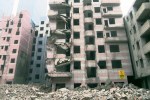
Shenzhen’s urban villages confound easy categorization precisely because they are sites where Mainland Chinese distinctions between “farmers (农民)” and “city people (市民)” have been constantly negotiated and renegotiated for over thirty years.
In the 80s and early 90s, the question facing the Shenzhen government was: how to transfer collective land to urban work units (to establish urban patterns of property ownership) while providing villagers with a livelihood. The resolution to that problem took the form of “handshake buildings (握手楼)” and village level manufacturing and commerce. These villages were called “new villages (新村)” – as in “Guimiao New Village and Xiangnan New Village, for example. However, the economic success of both the new villages and the pace of Shenzhen’s growth has meant that new villages have constantly bumped up against more intensive forms of urban expansion. Consequently, since the mid-90s, the question facing Shenzhen’s government has been: how to integrate the new villages into the city. Suddenly, the government was pursuing a policy of “[urban] village renovation (旧村改新)”. Of course, the so-called “old villages” were in fact the “new villages” of the past decade. More tellingly, the “new villages” were now called “urban villages (城中村)”, an expression which might conjure images of a massive city surrounding and absorbing a small yet resistant village.
The project to renovate Gangxia [New] Village began in 1998 with a plan to construct the Shenzhen central axis along and through Gangxia. However, it was not until 2008 that the government began negotiating with residents of Gangxia Heyuan (岗厦河园片) to transfer land from villagers to city developers. By that time, Gangxia Heyuan had 580 buildings (mostly handshake buildings) and an estimated population of 70,000 people. Obviously, most of the 70,000 inhabitants were migrant workers and not Gangxia Villagers with landrights and property holdings. Nevertheless, the government had to begin a complicated process of negotiated the terms under which Gangxia Heyuan would be transferred from Gangxia [New Village / Juweihui – and there’s a whole ‘nother story told in another post] to Shenzhen City by way of Futian District.
The crux of the matter was, of course, how to define an equitable transfer because once Gangxia Heyuan became a part of the Central Axis it would cease being an “urban village” and become an “urban center”, with all the symbolic and economic capital implied. Consequently, city reps, the development company, and the Gangxia Heyuan villagers needed to work out the amount of ratio of replacement housing to actual housing and the compensation per meter of housing to which each villager was entitled. In the end, the ratio was established at 1:082 for first floor holdings and 1:088 for second story and above. Compensation was fixed at 12,800 per meter of housing space and 23,800 per meter of commercial space.
Inquiring minds want to know: just how much richer did some villagers become anyway? Well, it depended on how much housing one owned and where it was. A villager who owned one of the 580 buildings, which might have 6-800 square meters would be entitled to anywhere from 475-600 square meters of new housing and 7.5 million to 10.2 million rmb if they only owned residential space and much, much more if commercial. In total, there are figures as high as 9 billion rmb in compensation flying through the rumor mill.
Here’s the rub. All this money seems like a lot until we go back and start factoring in the 70,000 migrant workers and several thousand Gangxia villagers who had unequal access to handshake buildings less than 20 years ago. Thus, because Gangxia New Village included unequal redistributions of handshake buildings and landuse rights, some villagers are now much much richer than others. Rumor has it that one such villager had 6,000 square meters of space, while several others had 3,000 square meters. All told (in hushed voices, of course) Gangxia is rumored to have over 20 billionaires and at least 10 residents with over 10 million in property holdings.
And it doesn’t stop there. None of this takes into account how much the real estate developers are going to earn off the wheeling and dealing that re-building Gangxia into Central Axis luxury condos, high-end commercial areas, and business centers. There are a few non-villagers who will become even richer than the few Gangxia billionaires.
So yes, urban village renovation is not only creating new landscapes, but also accelerating the pace of economic polarization in Shenzhen.
If we include Maoist attempts to ameliorate differences between rural and urban settlements, we’re looking at over sixty years of concerted negotiation of Chinese identity as a debate about rural (tradition) versus urban (modernity). Such that its possible to think of the past 100-odd years of Chinese modernization as a process of rural urbanization and concomitant forms of inequality, legislated, negotiated, and otherwise.
For the curious, the Chinese web has facts, figures, and rumors: here, here, and here.
tangtou, baishizhou

- tangtou old housing, new village

Baishizhou has the distinction of being Shenzhen’s “city that isn’t a city, village that isn’t a village (城不城,村不村).”
The first stop (bus or subway) after Windows of the World themepark, Baishizhou has come to refer to a 7.5 sq km sprawl of handshake buildings that was originally part of the “Shahe Overseas Farm (沙河华侨农场)”. This highly congested and irregularly built area is also the first stop for many new migrants to Shenzhen because of its central location, convenience, and lowest of the low priced housing.
Inquiring minds ask, “How did (one of) Shenzhen’s most beautifully landscaped high end residential, tourist and arts area (OCT) end up next to what is acknowledged to be one of the city’s largest slums?” Continue reading
 Shenzhen Noted
.svg)