怀疑: A Cross Cultural Parable

This and next weekend, the teachers of the Shenzhen University Department of Acting are performing a Chinese adaptation of Doubt: A Parable by John Patrick Shanley, or 怀疑 as it is translated. After the show, several friends approached me and asked me what I thought of the acting. I said that I had enjoyed the performance. They looked at me strangely and pressed, “No, really, what did you think?” Evidently, they didn’t like it so I asked what they thought. Answers included, “I keep hoping that they’ll make me get nervous with the anticipation of waiting to see the show.”

“And you don’t feel that way?”

Flat out, “No.”

Another mentioned that he thought the actors were doing the best they could. But. But?

“They just don’t get the story. I mean, I don’t feel it with them.”

“What about the story?” I started asking, “Is the question of Doubt/ 怀疑 important to you?”

A considering look and then, “The actors are supposed to make me care about the topic. That’s their job.”

As the title suggests, Doubt is a teaching story, figuring the incessant problematic of faith in rigidly dogmatic Sister Aloysius’s certainty that the personable Father Flynn sexually abused Donald Muller, the school’s first black student. The story is set in the Bronx, during the fall of 1964 and the historical background matters because the characters also function allegorically for larger social shifts and ruptures. In 1962, Vatican II opened, but would not close until 1965, when the Council famously challenged the relationship between the Catholic Church and the modern world, acknowledging that truth could exist outside the community and declaring that the mass could be given in vernacular languages instead of Latin. Sister Aloysius embodies these past certainties and the Church’s previously unquestioned authority in all things moral, which tended to be, well everything; she suspected children of harming themselves to play hooky and saw sexual abuse in slight gestures. In contrast, Father Flynn represents the newer, hipper face of the Church; he plays basketball, wants to sing secular Christmas carols, and likes his tea sweet, perhaps even, too sweet, hmm?

Similarly, even though Donald Muller never appears onstage, his shadowy presence signals that like the Catholic Church, New York society was also changing and nowhere more than the Bronx. In 1963, Robert Moses’ Cross Bronx Expressway was completed. The bridge displaced families and businesses, was a constant source of noise and air pollution, and catalyzed the decline of the South Bronx from a district of family neighborhoods and businesses to the poorest district in the United States, despite its proximity to Manhattan. In fact, the South Bronx erupted into American national consciousness in 1977, when during a baseball broadcast, Howard Cosell exclaimed, “Ladies and Gentlemen, the Bronx is burning!” Sister James and Mrs. Muller are left to deal with the spiritual and practical aftermath, respectively. Sister James agonizes over the meaning of faith when innocence has been shatter and Mrs. Muller begs to protect her child despite his “differences”. Donald is black and may or may not be “that way” — his father and former classmates regularly beat him because they suspect he is — although Stonewall was only five years in the future, 1969.

Contemporary history also shapes reception. In 2002, the Boston Globe broke the story of sexual abuse in the Boston Archdiocese. Shanley first staged Doubt and won the Pulitzer in 2005. Soon, productions had been mounted in Australia, Singapore, the Philippines, and New Zealand. Roman Polanski directed the play in Paris; it was also staged in Venezuela and London. In 2008, Meryl Streep and Philip Seymour Hoffmann performed the antagonists, Sister Aloysius and Father Flynn. Clearly, Shanley’s nuanced exploration of moral ambiguity resonated with English-speaking audiences precisely because it resonated at so many levels — historically, spiritually, and personally. Or as an older Catholic friend summed up his response to the play, “Of course he did it and yes, she’s a bitch. But still, none of that changes the truth…” And implicit in this statement, reverberating through our souls is the desire to believe, to have faith. And yet, we doubt. As Shanley elegantly described our situation, “For those so afflicted, only God knows their pain. Their secret. The secret of their alienating sorrow. And when such a person, as they must, howls to the sky, to God: ‘Help me!’ What if no answer comes?”

And therein lies our cross-cultural rub. For my Chinese friends there was no story except as conveyed by the actors. 怀疑 means doubt and suspect, and is often used to describe situations when someone may or may not be lying, as in, “I suspect she’s actually dating him,” or “I suspect he’s hiding something.” In the final scene, when Sister Aloysius cried, “我怀疑!” the audience seemed confused, unmoved by the Sister’s predicament. Maybe had cried, “无地自容” the audience may have understood that the foundation of her life had shifted, and she would never again act from life-affirming conviction. Perhaps not. Nevertheless, for those of us raised Irish-American Catholic, a profound chasm separates religious doubt from secular suspicions. We are taught, after all, to render unto Caesar, but in the last instance, when forced to choose, to vote our conscious, so to speak, we move within and against the heart’s fragile certainties; we yearn to be one with God and he is silent, but we must act as if he had answered our call. Thus, in the final scene, when doubt brings Sister Aloysius to despair, I understand. I am with her regardless of the quality of the acting. The acting was sufficient to move me because, as Stanley reminds us, “Doubt can be as powerful a bond and sustaining as certainty,” which I amend with the cross cultural caveat, “especially amongst former Catholics…”

The White Lady of Shiyan

Last week, I met Ye Enling, a 70-something Shiyan native. Mr. Ye worked in Overseas Chinese affairs for over twenty years, and his current interests include calligraphy, linguistics, architectural design, and social philosophy. Of note, Mr. Ye is a Hakka and has devoted much time and energy to promoting Hakka culture by collecting Shiyan mountain songs (石岩山歌), compiling vocabulary lists, recording Shiyan history, and composing essays on diverse topics. In fact, he has published three collections and a book of calligraphy.

Below, I have translated Mr. Ye’s retelling of The White Lady’s Temple on Yangtai Mountain (叶恩麟者《闲雅集》111-2页. Online Chinese versions, here and here). I find the story interesting because it places singing within the sentimental context of gendered yearnings, which continue to shape family life and personal desire. The fact that the story continues to circulate suggests that even if most Chinese professors have opted into modern academics and concomitant specialization, traditional intellectual life and knowledge production may be fading, but are nonetheless still kicking.

I also find the story interesting because when contrasted with Shenzhen’s contemporary arts or traditional culture fairs, the White Lady of Shiyan reveals the extent to which expressive creativity has been alienated from everyday life, an ongoing lament in modernist art. The living presence of this tradition dovetails with the Municipality’s ongoing promotion of Neo-Confucian mores as a strategy of governance. I had tended to think of Neo-Confucianism’s appeal in terms of an invented nostalgia for “good old days” sans hunger, warlords or opium. However, my meeting with Mr. Ye has me thinking that there may actually be a popular basis for Shenzhen’s decision to disseminate Confucian sayings at bus stops and other public places, cultural revolutions notwithstanding.

The actual content of the White Lady story is far more disturbing and has me thinking about structural analogies between the 1920s and contemporary Shenzhen. In Diary of a Madmen, which was published a mere ten years before the white lady’s story is said to have taken place,  Lu Xun gives a chilling representation of human desperation in which the only way to survive is to eat other people; the clearest Lu Xun overlap is, of course, Medicine. Similarly, today, we keep hearing stories of illegal transplants and the shady sourcing of human organs. Less than a hundred years separate workers of the south China diaspora from the neidi migration of workers to Shenzhen. And it seems that rumors of cannibalistic medical treatments continue to emerge out of the experience. Families are fractured, bodies broken, and loved ones vanish.

The White Lady’s Temple on Yangtai Mountain

All Shiyan elders remember that there was once a small temple on Yangtai Mountain and have passed on the following story about it.

In 1928, a Ye family lived in Shiyan Market. The man had gone to Indonesia and not returned. At the time, parents arranged marriages and in his absence he was married to another Ye. A year after their parents had organized the marriage, the wife prepared to go to Indonesia to be united with the husband she had never even seen. But the sea voyage was rough and the road long, and being afraid to travel alone, she looked for a companion. The Ye woman discovered that in another Shiyan village Liguang there was a white woman whose husband was also in Sanbaolong, Indonesia. The white woman was also preparing to join her husband. This white woman had skin the color of kneaded dough, with a hint of pink. No one knew if she had Caucasian blood or a skin disease. After so many years, we no longer know what her surname was or who her people were.

The white woman didn’t have a son and her husband had been overseas for many years. She decided to build a temple on Yangtai Mountain in order to pray for her husband’s safety abroad. While building the temple, she could also stand on the mountaintop and gaze toward Indonesia. It’s obvious how much she yearned for her husband! She said she would do it and she did. The white woman bought a load of bricks. Everyday, she shouldered four bundles of bricks on a carrying pole, and made the difficult trek from Liguang Village up Yangtai Mountain.

Whenever she paused to rest, she sang a mountain song in her beautiful, high-pitched voice, “Older Brother has drifted away on the sea, and hasn’t returned the years; I know the years of time and swallow them whole, no one understands how to open my heart. Standing beneath the mountaintop pines, tears, only tears. I have only one question of Heaven: When will my man return home? (阿哥出洋漂大海,三年五载不回来,线纱打结吞落肚,无人解得崖心开,崖在高山松树下,眼泪汗水落泪花,崖向苍天问句话,崖郎几时转屋家。)

When she reached the peak, she sang in a loud voice, “No one smokes these cigarettes, no seedlings growing in these fields. Younger sister dares climb these roads, younger sister dares view these skies” (无瘾唔食这支烟,无秧唔莳这块田,阿妹敢登这条路,阿妹敢看这重天。)

When the sun set in the west of the mountain, the hope of another day was extinguished. The white lady was deeply saddened and she cried while singing, “From dusk to dawn, I think of you, and my tears endlessly role down my cheeks, they water the mountain grass and drown the people below (黄昏想郎到明天,眼泪滴滴流不停,流到山上草变绿,流到山下浸死人).”

Her melancholy songs reverberated in the mountain valleys, startling birds and causing those who heard to cry. The white lady used her songs to relieve her yearning for her husband, and in this way, day after day, without any help she forced herself to shoulder the burden of bricks, ceramic tiles, lime, sand, and beams and carry them up the mountain. Only after bringing all the necessary materials did she hire a a builder. The temple was finally completed and although it was only several meters big, it brimmed with the white lady’s hard work, blood, sweat, and tears. The white lady also placed a censor and an idol in the temple. The first and fifteenth of every month, she climbed the mountain, undeterred by inclement weather, to pray to the gods and bow to Buddha, saying, “Every 15th or 16th the moon is full, I hope my heart is the same as my husband’s. I pray that the Lord of Heaven protects my husband, insuring that Older Brother makes a fortune (十五十六月光圆,崖同情郎心相连,崖求天公来保佑,保佑阿哥赚大钱).”

The white lady’s story spread throughout Shiyan, her spirit and will-power moving villagers, and many began climbing the mountain to see and burn incense. After many years, this place became rich with incense.

Later, the Ye woman received a letter from her husband saying that she should not go to Indonesia because he was returning to Tang Mountain. Accordingly, the Ye woman changed her plans and the white lady left alone for Indonesia. The white lady’s husband waited for months on the coast, but his wife had vanished without a trace and his heart was aflame with worry. He searched for her and finally got word that his wife suffered from motion sickness on the trip. As she thrashed unconscious, an evil person took advantage of the situation to kill her for her gallbladder because he had heard that white people’s gallbladders could be used for medicine. After removing her organ, he threw her body into the ocean. On hearing what had befallen his wife, the husband was overcome with grief.

To commemorate the white lady, the named the temple she had built “The White Lady’s Temple”. Unfortunately, during the Cultural Revolution, the temple was razed. Nevertheless, the moving love story of a devoted wife continues to be told.

怀德村:virtue’s rewards

It’s been a while since I’ve summarized an episode from The Transformation of Shenzhen Villages (沧海桑田深圳村庄三十年) and so today, episode 6: The Secret of Huaide Village (怀德的秘密), which puns the village’s name and also means “the secret to cherishing virtue”.

The episode opens by telling viewers that Huaide is a revolutionary village, which contributed over 40 soldiers to the People’s Liberation Army. The connection between good Party leadership, virtuous villagers, and getting rich is then personalized through the story of Pan Baliang, a Huaide villager, who fought in the Korean War, (or the Resist American War as it is known in Chinese). However, during the Cultural Revolution he was jailed because his children were abroad, and was only to be rehabilitated in 1980, when out of gratitude for his fellow villagers continued support, he petitioned the village/ brigade if he could open a factory.

In 1988, Huaide was chosen as the location for Shenzhen’s Baoan International Airport. At the time, the SEZ decided that guannei land should be saved for urban development, rejecting a proposal to build at Baishizhou, which was then considered the suburbs and choosing instead to stimulate the guanwai economy by converting Shenzhen’s largest duck farm into an international airport. The Shenzhen airport expropriated over 1,000 mu of village land and in return Huaide received a compensation package of 3.5 million yuan. The question became: should the sum be divided evenly and distributed to each villager (as many villages had chosen to do) or should the village create a jointly held corporation and invest the money in common cause?

In 1988, guanwai New Baoan County was still rural. This meant that the village was still organized as a collective brigade, which provided the organizational infrastructure for Huaide’s subsequent development as a jointly held corporation. Huaide’s current CEO and current Party Secretary, Pan Shansen earnestly explains that Huaide Party leaders understood that unless they could correctly direct the thinking of the villagers, the village was in danger of making a collective mistake. Collective and Party leaders then went to work on villagers with dissenting opinions in order to make sure that everyone was on board with the next step — using the money for capital investment to build and manage Cuigang Industrial Park. Pan Shansen then expresses his gratitude for the previous Party leaders’ foresight in using the Airport compensation to create a strong, collective economy.

Pan Shansen describes the work of creating “a center where there was previously no center” as arduous and only possible through the cooperation of the people and their government. In addition to creating a large wholesale furniture market, in 1996 Pan Shansen established a venture capital fund that provided interest free loans to young villagers who wanted to start up companies. The fund started with 1/2 million when and grew to 2 million, and loans grew from 20-50,000 per project. In 2005, this venture capital project was expanded through collaboration with Shenzhen’s rural bank, providing low interest loans of up to 300,000 yuan to Huaide Villagers. By 2010, when the documentary was made, in addition to the villages collected holdings, over 40 families had used Village venture capital to create family businesses.

Fiscal conservatism of the defining features of Huaide Village’s success. Huaide Village has its own “constitution” that requires any private investment over 5 million yuan to be approved by the village, they set up a legal aid office for villagers to consult when writing contracts, and since 1992 have not sold any village land rights. Telling, Pan Shansen makes a point of reminding documentary viewers that Huaide Villagers are farmers — to break their ties to the land and the village is tantamount to destroying what makes them who they are, regardless of how they actually make money. Land is at the heart of Huaide’s neo-Confucian CCP virtue and unlike many Shenzhen villages that no longer have collective land, Huaide still owns almost 1/2 of the land they owned before 1980. What’s more, the Village has actively purchased land rights from other Shenzhen villages, leaving its own land for future use.

The rewards of Huaide’s virtue are a neo-Confucian-socialist hybrid capitalist success story, or as it is sometimes said, villagers washed their feet and left the paddies. In addition to its village venture capitalist fund, Huaide invested in social services and local culture. Huade provides medical insurance, education, including college scholarships, and old age activities for its 700 villagers, and in 2010, its Lion Dancing Troupe was the only village level troupe to receive an invitation to perform at the opening ceremony of Belgium’s Chinese Culture Festival. And thus, the moral to this episode tallies with Shenzhen’s ongoing campaign to promote Confucian ethics: good party cadres are at heart neo-Confucians, serving their people, who become collectively rich. In turn, inquiring minds wonder: to what extent has Huaide’s ethical sensibility extended to the organization of workers’ rights in the village’s three industrial parks?

Cultural postscript: the Lion Dance Troupe is talented and fun. Check out a performance, here.

旧楼村: alleyways and crumbling bricks

This slideshow requires JavaScript.

Images from Old Loucun (旧楼村), a large swathe of crumbling tile homes, traditional brick homes, narrow roads and alleys, and mid 80s 2 and 3-storey homes. Handshakes on horizon.

Textual Logic: life as gerund

For me calligraphy has been one of the real pleasures of learning Chinese. Indeed, even when I can’t read what I’m seeing, I enjoy trying to following the line and figure out the character. Yesterday morning as part of the Textual Logic (书与法) exhibition at the OCAT Contemporary Art Terminal there was a calligraphy performance by Qiu Zhenzhong (邱振中) and Wang Dongling (王冬龄). So I was kind of “wow, calligraphy onstage. Fun.” However, it turned out that I had approached the event naively; calligraphers may or may not be fun, but the event felt like a cross between a movie star press conference and an art seminar.

The audience for the calligraphy performance was not OCAT’s typical audience who tend to have western aesthetics and a passion for conceptual art. Instead, the audience (not including the calligraphers’ respective entourages) was made up of calligraphers and folks who might be classified as calli-groupies, whose comments ranged from how the room had been set up through how the ink was mixed to how difficult it was or was not to write at this scale for so long. Indeed, it was a happy, almost fair-like event with pauses for watching and then commenting. Needless to say, the audience also complained that photographers and videographers had been given front row positions and could follow the calligrapher.

This slideshow requires JavaScript.

The level of audience participation in the exhibition struck me wonderful.  Continue reading

indie film premiere tonight

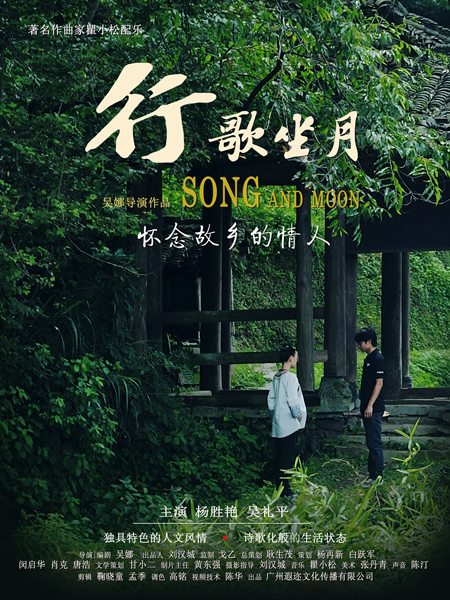
Feng Yu of Art de Vivre in Meilin (圆筒艺术空间) works to bring documentary and independent films to Shenzhen, organizing underground festivals. Tonight, Song and Moon will be premiered in a public venue. Director Wu Na is a Generation 80s ethnic Dong. She tells a story about coming of age in between Dong Village traditions and migration to Han cities to find work. So, come, view, and join Feng Yu’s efforts to bring alternative voices and images to Shenzhen screens.

14 Feb 8:00 pm

Jia Zhi Hua golden Carnival Center Cinema (嘉之华中心影城), 1/F Shenzhen Concert Hall, Behind the Civic Center, Futian

Song and Moon (行歌坐月) Drama / Color / Digital HD / Chinese and English Subtitles / 90 min / 2011 / China

Coaster Raid Biennale Retrospective

Last night, Gigi and Michael of Riptide Collective hosted the opening for Coaster Raid Shenzhen’s Biennale Retrospective. Witty and fresh the Retrospective will be up for the final week of the Biennale and is well worth a visit. Venue:

市民中心B区南门,多功能厅东侧, 地铁市民中心站B出口

Civic Center – East Hall – Area B South Gate, Subway: Civic Center Exit B

This slideshow requires JavaScript.

Photographing transformation

For those interested in the transformation of Shenzhen, the city has a wonderful assortment of documentary photographers, six of whom have been featured in the China Insights Exhibition. The impulse to document the city’s transformation is shared by many and seems, along with design, one of the primary forms of art in the city. Indeed, the popularity of documentary representation often seems a symptom of the velocity at which the city changes, as if, by documenting we might make sense of the change. Certainly, I document obsessively. Sites worth a visit:

Jia Yuchuan (贾玉川) made his name photographing Shenzhen’s transvestite culture.

Yu Haibo (余海波) has been photographing the city and its residents since 1989.

Zhang Xinmin (张新民) has been photographing migrant workers since 1988.

临摹:When is a copy not a copy?

This November, I was an assistant for the OCAT international art residency program, through which I met artists Frank Haermans and Thomas Adebahr, the artist collective of Nika Oblak and Primoz Novak, as well as curator Paula Orrell. Together, they put up the show Future Relevance, or as we translated it “明天,谁说了算?”

Interacting with the artists and curators was interesting because it inspired me to think differently about my own forays into creative ethnography and forms of representation that engage different (and frankly) wider audiences. In particular, Thomas Adebahr’s earlier work, The Benjamin Project (shown at Gallery Diet) had me thinking about contemporary art conventions that value some forms of copying and reduce other forms to “labor” albeit “skilled”. The question, of course is: how do we move across and between these social structures to create meaningful dialogue about human creativity? Continue reading

Leaves of Book – The Work of Charles La Belle

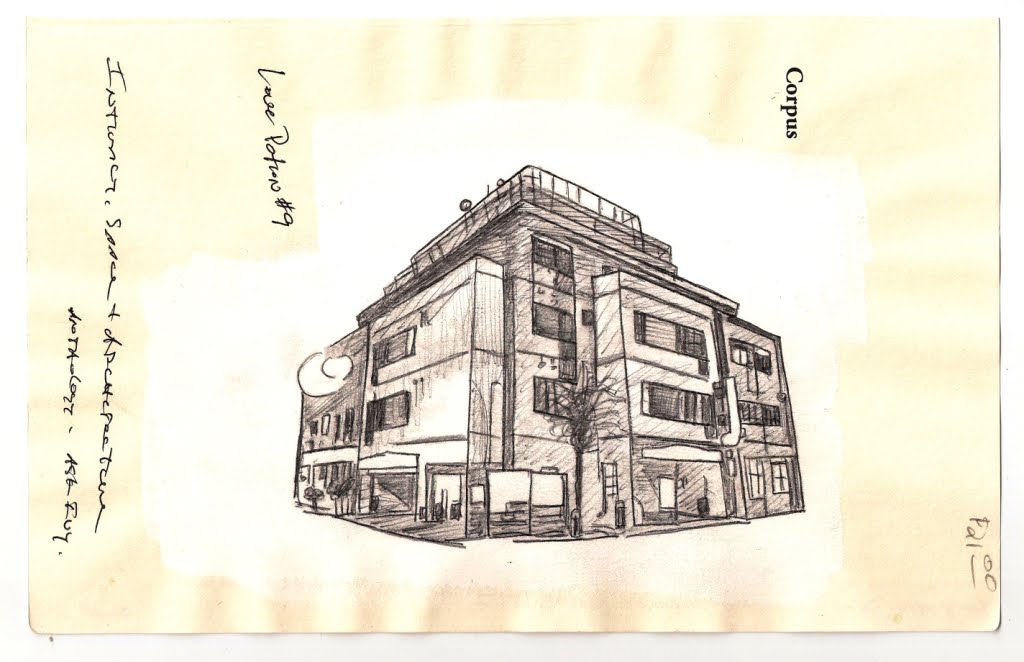
I was privileged to speak at the Dec 11, book launch for Charles La Belle‘s Corpus and Guilty. To see the show, go to Saamlung Gallery in Hong Kong. To buy a copy in Shenzhen, visit the Old Heaven Bookstore in OCT. Response, below:

Charles La Belle’s artistic process of layering time and experience in a book that is simultaneously reread and rewritten reminded me of how Walt Wittman lived and in living wrote and rewrote, Leaves of Grass. Between 1855 and 1892, Wittman quite famously published no fewer than nine different editions of Leaves; over the past fourteen years, La Belle has published two volumes that relate to one ongoing project. This intellectual ebb and flow, the sentimental return and reevaluation, self-promotion and in-your-face jouissance enabled Wittman to voice and in voicing inhabit the expanding, teeming, writhing, and destabilizing emergence of a uniquely American identity. Likewise, La Belle also performs an artistic stutter-step to more fully inhabit the unruly emergence of post Cold War, post socialist, post modern, post industrial globalizing and globalized urban identities.

“Buildings Entered,” La Belle’s life work is best aligned with Wittman’s spiritual wandering at the level of process. Like Wittman, La Belle has chosen one medium and one theme to which he constantly returns; like Wittman, La Belle grapples with the problem of transforming mere being into the well-lived – and yes, this is the ethically well-lived – life; like Wittman, La Belle accepts the immanent mysticism of ordinary human lives. The building first entered, like the open road invites each of us to inhabit the unknown.

In terms of content, however, over a century of industrial expansion and relentless capitalist urbanization separate Wittman from La Belle. Continue reading