of migrants and immigrants, shenzheners and locals: some definitions

Talking about migrant workers in China (and throughout the world’s booming mega-cities) usually means “rural to urban migration”. However, this is not the case in Shenzhen, where “urban to urban immigration” has been as fundamental to the city’s success and growth. Indeed, the diversity of Shenzhen’s migrant population complicates easy understanding of what it means to be a Shenzhener, let alone academic debates about urban belonging and ideologies of exclusion. Continue reading

opening ceremony of the first annual dalang graffiti culture festival

So. Today, Handshake 302 extended its reach and joined hands with the Dalang Street Office to curate the first annual Dalang Graffiti Culture Festival. It rained, so not much painting happened. Nevertheless, we had a great time with balloons, handprints, and a short “WeChat” play. I made the emoji box masks!

Impressions of event, below.

This slideshow requires JavaScript.

the dalang graffiti festival

Today we held the design workshop for the Dalang graffiti festival. 27 people attended the workshop, which involved creating designs for manhole covers. With the exception of one individual, none of the participants admitted to having taken any art classes outside of school; none admitted to sending their children to art classes. All were immigrants and during their self introductions, they mentioned their hometowns; one made a joke that her hometown was “too small to have English names”. Next week, participants will take their designs and begin painting manhole covers at a workers’ dormitory, a neighborhood, and a school.

Continue reading

minjian history

Inquiring minds want to know: what is minjian (民间)?

On Sunday, I became part of the scholarly committee (学术委员会) of the Devout and Chaste Girls’ School (虔贞女校)–a minjian organization. Other members in the group included architects, an archaeologist, an editor at a history journal of Bao’an District, an artist, and the Director of the Dalang Culture Office. The Dalang Vice Secretary of Culture also attended the meeting, but left early. In addition, clerical workers from the Department of Culture served tea and insured that the meeting ran smoothly. So what made us a minjian organization? Continue reading

star bright dalang: keeping it real

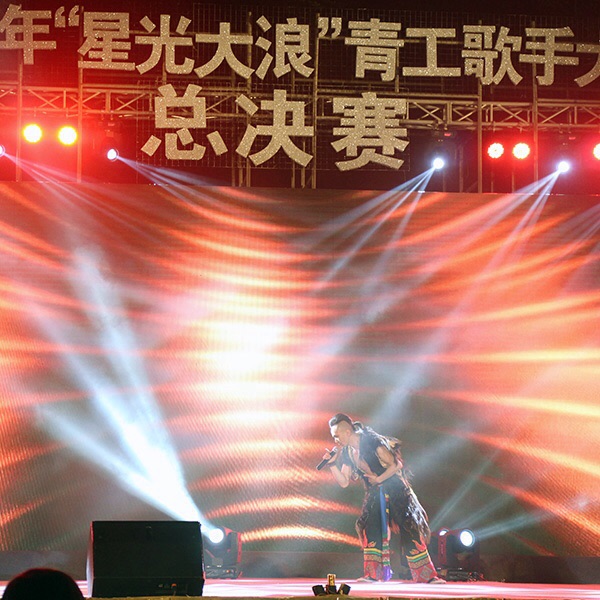
The Star Bright Dalang Singing Competition Finals took place on January 25, 2015. Despite having been abruptly postponed a week (due to government shuffles), nevertheless the production sparkled. Five LED screens adorned the temporary stage in Workers’ Park, a sixth was set up for simultaneous broadcast, lasers beamed through the nighttime sky, and glow wands had been distributed to audience members seated in the front section. The total audience was estimated to be around 3,000 people who gathered to listen to 13 migrant workers sing popular songs a la Idol. Continue reading

international community. china?

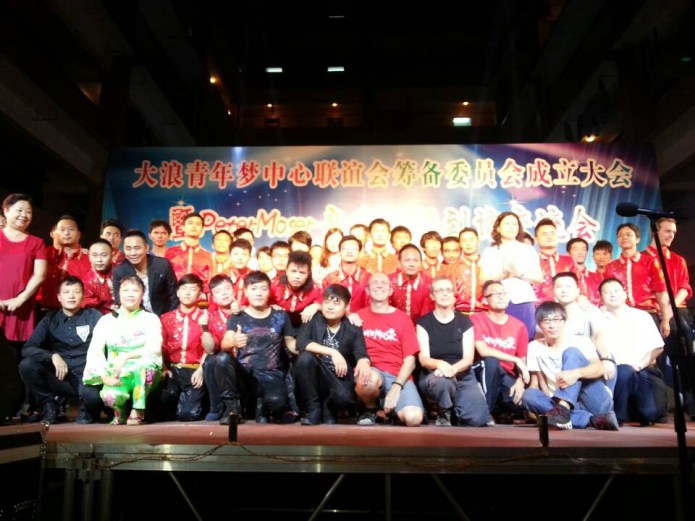
Over the weekend CZC curated a cultural exchange between the Dalang Street Office and Peter Moser of more music. A talented and inspirational music facilitator, Pete asks questions that go to the heart of community work — why this, why here? And the ever vexed question for moi (especially in light of the Hong Kong protests) — where do we draw the line between doing our work and our work becoming complicit with Party goals of social control at the expense of democracy and economic justice? Continue reading

been there, but not here–dalang

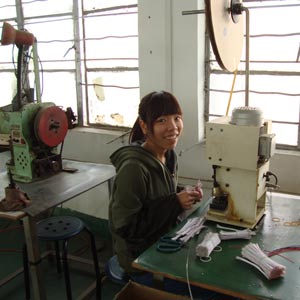
Images from a recent trip to one of the earliest (circa mid 1990s) factory areas in Dalang. I had a déjà vu moment because when I came to Shenzhen, these factories could be found throughout within the second line (guannei) churning out all sorts of goodies for export.

The point of interest? Although still a functioning industrial park, this area is already consciously “historic”. The Dalang New District Government is in process of a “love the cage, change the bird (疼笼换鸟”” redevelopment. The area surrounding the park includes the Dalang Fashion Valley and a piece of land recently purchased by Vanke for another gated community. These comparatively quaint factories will be renovated for cultural production.

So a few before pictures as the transition to after begins.

This slideshow requires JavaScript.

spizzwinks in shenzhen

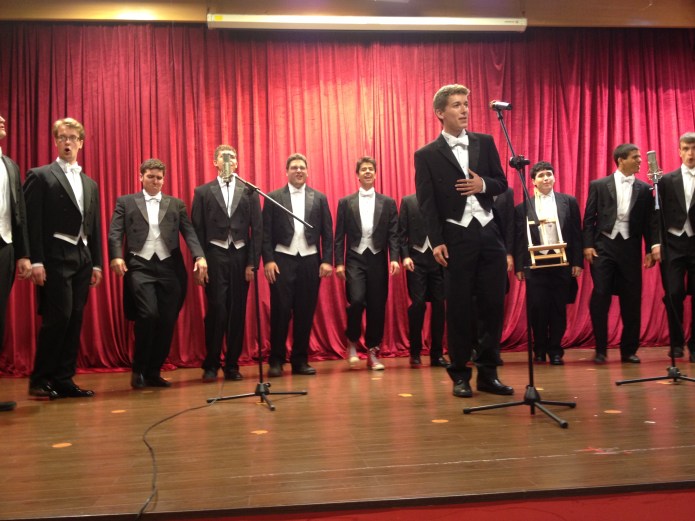
Just spent the past 2 and a half days tagging along with the Spizzwinks. They are all that. Energetic, generous with their smiles and attention, respectful, and talented. And yes, the Spizzwinks charmed and amazed three very different audiences at the Mass Arts Theater (群众艺术馆), Green Oasis School, and at the Dalang Culture Center (大浪文化馆), hopefully inspiring more people to sing and join choirs.

The hospitality of the Shenzhen hosts completed the exchange. In Shenzhen, friends arranged a large dumpling making banquet for the group, in addition to a delecious dim sum brunch before the GOS concert. In Dalang, we were taken to see a factory showroom, libraries that have been set up for workers and their families, as well as to meet the unicorn dance troupe. I was especially moved by the talent and passion of the Dalang Workers Youth Choir, whose members work during the day and practice two hours once a week. One of the troupe members works in a watch factory and handmade 17 watches, one for each Spizzwink.

This trip reminded me that successful cultural exchanges are everywhere the same: when we give all that we are, we all share in the joy.

Incomplete impressions, below.

This slideshow requires JavaScript.

what is the party’s benevolence?

In news broadcasts and interviews, old peasents frequently evoke “the Party’s benevolence (党恩)” to explain their lives. Young and hip urbanites hear these interviews as more evidence that old peasents are the dupes of corrupt officials. However, when I take the time to listen to an old peasent’s life history, it’s clear that more often than not, these peasents did benefit from the establishment of the People’s Republic.

Yesterday afternoon at the Dalang Culture Center, for example, I helped conducted interviews with Uncle Chen and Aunt Zhang for an oral history project. Both Uncle Chen and Aunt Zhang were both born into peasant families in 1930 and 1940, respectively. Auntie’s family owned three single-story houses, while Uncle had left home early because his family did not have room for him. Auntie mentioned that at the turn of the last century, her grandparents went to Singapore to work. Her mother was “brought home” as a child bride for her father. In contrast, Uncle did not mention his family except when asked about how poor his family had been, he remarked that two of his sisters had been sold to strangers, but where they ended up was unclear.

As a poor man, Uncle could not afford to marry. Instead, he went to find work in Hong Kong. In 1951, Uncle became sick and returned to his hometown, where he could recieve care. In 1952, although he had a sporadic education, Uncle was able to secure the documents necessary to join the first test for admission to the Bao’an Normal School. He passed the test and was admitted to an elementary school teachers program, which was located in the Nantou High School building. Teacher Chen emphasized the extent to which his current wellbeing was a result of the Party’s benevolence. He was assigned to teach at Langkou Elementary School, where he met Auntie.

As a young girl, Auntie stayed at home and helped her parents. However, when she was 10 years old, Auntie began attending Langkou elementary school because her father asked the school principal to allow her to bring her brother. 10 year-old Auntie strapped her brother to her back and attended classes. At lunch time she fed her brother a bottle of condensed milk that had been thinned with water. Several years later, she carried her sister to school. Altogether, Auntie carried her siblings for six years. At the end of elementary school, Auntie tested into middle school, where she studied elementary education. Auntie emphasized that her teachers like her because she was a good student. Moreover, her younger siblings were well-behaved and didn’t cry during classtime.

After Auntie graduated from middle school, she married Uncle, who was still teaching at the village school. Auntie’s mother exhorted her to marrie Uncle because he “could do anything”. Uncle could not give Auntie any presents for the marriage. However, he did have housing at the elementary school, where Auntie was also hired to teach first and third grade. The school was located near Auntie’s parents’ house. Auntie did not attribute any of her life history to the Party’s benevolence, but rather emphasized her family background and her mother’s words.

Implicit in Uncle and Auntie’s simple story were the gendered contours of rural poverty in South China, where one of the most important events of a lifetime was to continue family lines through marriage and children. Uncle and Aunt were born into South Chinese villages, where bringing in wives or selling out daughters was a common practice before 1949. However, they married 10 years after the establishment of the People’s Republic, when some policies had already restructured traditional social structures. Auntie married because her family could afford to give her an education, but not to keep her at home. In contrast, Uncle had delayed marriage until he could afford a family, which was a direct result of attending teaching school. He described that opportunity — and all that followed, a job, a house, and eventually a wife and children — as an expression of the Party’s benevolence.